Oxygen concentrations in rivers vary considerably over time and space. Together with colleagues from London, we analyzed how superstatistics and machine learning improve our understanding of the River Thames, see our latest paper in Scientific Reports:
https://t.co/zyWWLaIaat
Implementing machine learning models in critical infrastructure, including in energy systems, requires explanations and transparancy for experts and laypersons, as we argue in our latest paper published at ExEn '24: https://t.co/sSfcEJFR5t
It is great to be at #HAICON24 with my team members Qiong Huang and Ulrich Oberhofer, presenting our research using AI for Energy Systems, including physics-informed learning and reinforcement learning.
I am very proud to share that my group has two papers at this year's ACM e-energy conference in Singapore: https://t.co/irIWPd2jYO https://t.co/dGvAYVwZpM
Ich freue mich am Freitag (13.10.) ab 14:00 im Rahmen der Science Week zusammen mit @nnludwig auf der Science Bench von @wissimdialog über die Energiewende zu reden und Fragen zu beantworten. Fragen Sie nach! https://t.co/lvSF0r0wsl
Excited about machine learning? Want to support the energy transition?
We have a new opening for a Postdoc:
https://t.co/sLzDSCRK9c
(Application Deadline: 31.10.2023; early applications highly encouraged)
Toward unlocking the mysteries of power grid dynamics, a physics-inspired machine learning model reveals hidden dependencies and enables probabilistic predictions in the power system of continental Europe
@fzj_iek@UniCologne@KITKarlsruhe@Dr_B_Schaefer
https://t.co/l3d6ihszzO
Quantifying the stability of a system is central in dynamical systems, engineering and control. Together with colleagues, I explain why sometimes global stability and local stability give contrarian results.
Read the paper @PhysRevResearch
https://t.co/wpY0KNKS1C
Zusammen mit @MarcTimme habe ich einen Artikel für Spektrum der Wissenschaft verfasst: Wir zeigen wie Mathematik und Computerrechnungen uns dabei helfen das Stromnetz auszubauen und Das "Braess-Paradoxon" zu vermeiden: https://t.co/afId9x70Nn
KIT Lauf: 10 km race through KIT campus and the Hardtwald. I had a great time and a much better time than I aimed for. Thanks @KITKarlsruhe for organising.
How do regulatory changes impact electricity markets? Together with @sebastianptz and others, I explored this using explainable AI in our latest paper: https://t.co/Gr0HIyPQZM
I had the pleasure to present this last week at the ACM e-energy organized by @sig_energy.
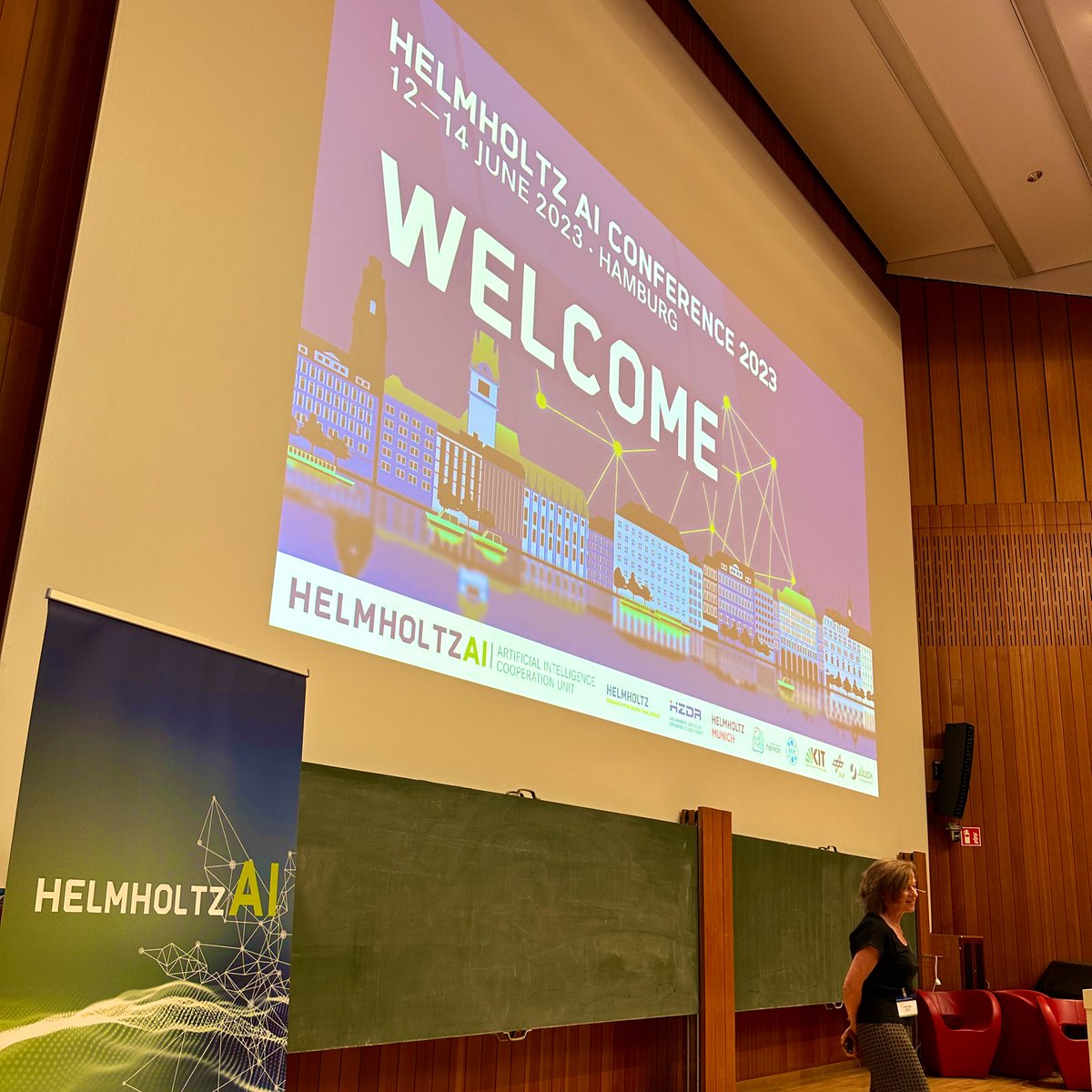
Excited that our @helmholtz_ai conference 2023 is finally starting - @desy Hamburg; our host Judith Katzy kindly kicking it off. Online stream as well available to learn about exciting research on AI in science! #helmholtzAIcon
Wir heißen T.-T. Prof. Dr. Benjamin Schäfer an der KIT-Fakultät für Informatik herzlich willkommen. Er wird sich mit Künstlicher Intelligenz für das Energiesystem beschäftigen. Zuvor leitete er am KIT bereits die Helmholtz-Nachwuchsgruppe DRACOS.
Very happy to share that I just started my new position as "Tenure-Track Professor" (Assistant Professor with tenure-track) in the field of "AI for Energy Systems" in Karlsruhe @KITKarlsruhe@KITinformatik
Forecasting the power grid dynamics on natural islands can be tricky due to limited data availability. We show that 2–4 weeks of data are typically needed to improve prediction performance beyond simple benchmarks, see our full paper in JPhys Complexity: https://t.co/PL9OOLUYpH
Understanding and modelling electricity prices is very important, especially during the energy transition or when facing a global crisis, like the ongoing war. In our recent article in Energy and AI, we show how explainable AI fuels this understanding: https://t.co/UBuERYXdHW
Shortly after Russia started its war in Ukraine, the Ukrainian and Moldovan power grids were synchronized almost seamlessly with the rest of Europe, as I show with some colleagues (incl. @LeonardoRydin, @DirkWitthaut, @PhilippBoettcher) in Energy Advances:
https://t.co/HRPUonoyeu