عندما كنت في تدريب الامتياز كنت أستغرب من أن الأطباء القساة في التعامل، سريعي الانفعال هم من يتم احترامهم...
وأن الأطباء الطيبين السهلين هم أكثر الأطباء عرضة للشكاوى...
عندما تخرجت ومارست المهنة فهمت المعادلة!
النوع الأول = النوع الثاني + الزمن
١/ توظف بالدفعة الاخيره حطوني بمحافظه كان يسبقني فيها ٨ اطباء فيه اللي نقلوا قبل مباشرتنا وفيه اللي بعدنا بكم شهر، وجابونا احنا ٥ طبيبات وحده ماشفناها من داومنا اجازة وضع وامومه، الباقي نقلوا تباعا او ايفاد دراس... ← لا حول ولا قوة الا بالله والله يعينك على الضغط
https://t.co/eGhKCVZnzH
(بطالة أطباء الأسنان)!
هو أغرب شيء عرفته صدفة في بداية ٢٠٢٦م
الغريب ان مواعيد الاسنان تصل الى عِدة شهور في المستشفيات الحكومية
(يعني هناك احتياج شديد)
والغريب اكثر ان القطاع الخاص يوظف قِلة منهم برواتب زهيدة
(بعضهم راتبه كطبيب اسنان ١٥٠٠﷼)!
هذا لغز حقيقي يجب أن تحله الوزارة.
لدي حقيبة ضائعة في احدى رحلاتكم الدولية منذ أكثر من 10 أيام ولم يتم التحديث او التواصل معي.
رفعت عدة بلاغات عند الوصول للوجهة النهائية وتواصلت معكم عدة مرات بمكالمات دولية ولا احد عارف يفيدني بمعلومة.
عليكم من الله ما تستحقون
@Saudia_Care
ما الفرق بين برنامجي الدكتوراه والماجستير من كلية طب الأسنان بجامعة الملك سعود؟
كلاهما يقبل خريجي البكالريوس
الدكتوراه مدتها ٤ سنوات + رسالة
تشمل كورسات اكثر والرسالة متطلباتها اكثر
تصنفك Senior Registrar مباشرة وبعد التخرج ب ٣ سنوات تصنف استشاري
وتصنفك اكاديميا كأستاذ مساعد بعد التخرج مباشرة
تؤهل لاختبار البورد كشهادة اضافية
الماجستير ٣ سنوات + رسالة
تصنفك أكاديميا كمحاضر
تصنفك اكلنيكيا Registrar
لكن تؤهلك لاختبار البورد وفي حال الحصول عليه تتساوى مع مؤهلات الدكتوراه اكاديميا واكلنيكيا
ميزات الدكتوراه:
عدم الحاجة لاختبار البورد
شهادة اعلى من الناحية الاكاديمية والاكلنيكية
ميزات الماجستير
أقل سنوات دراسة
أقل متطلبات للرسالة
أقل رسوم دراسية
سابقا كان يتطلب سنتين خبرة قبل تصنيف Registrar والتأهل لاختبار البورد اما الان بات ممكنا بعد التخرج مباشرة
#وزارة_التعليم تُعلن بدء التقديم لمرحلة الإقامة الطبية في تخصص طب الأسنان بجامعة كوين ميري في المملكة المتحدة، وذلك ضمن مسار الاتفاقيات الصحية.
للتقديم:
https://t.co/dRa6MgEKdu
Hypothetically, if I were a Palestinian enduring such extreme oppression—displacement, killings, starvation, and humiliation—I would likely join Hamas or a similar resistance group to fight back. Desperation fuels radicalization, as seen in historical patterns of occupation leading to armed response, though it often prolongs suffering.
@DrMahri تحصل في عظام الفكين دوناً عن غيرها لسببين رئيسيين:
١-عوامل الخطورة في الفكين اكثر من بكتيريا واجراءات جراحية
٢- لأن عملية استبدال العظم في الفكين وتحديدا الفك السفلي اعلى من غيرها.
لا اعلم سبب يقين لندرة حدوثها في الاطفال ولكن بظني بسبب قدرتهم العالية للنمو والاستشفاء
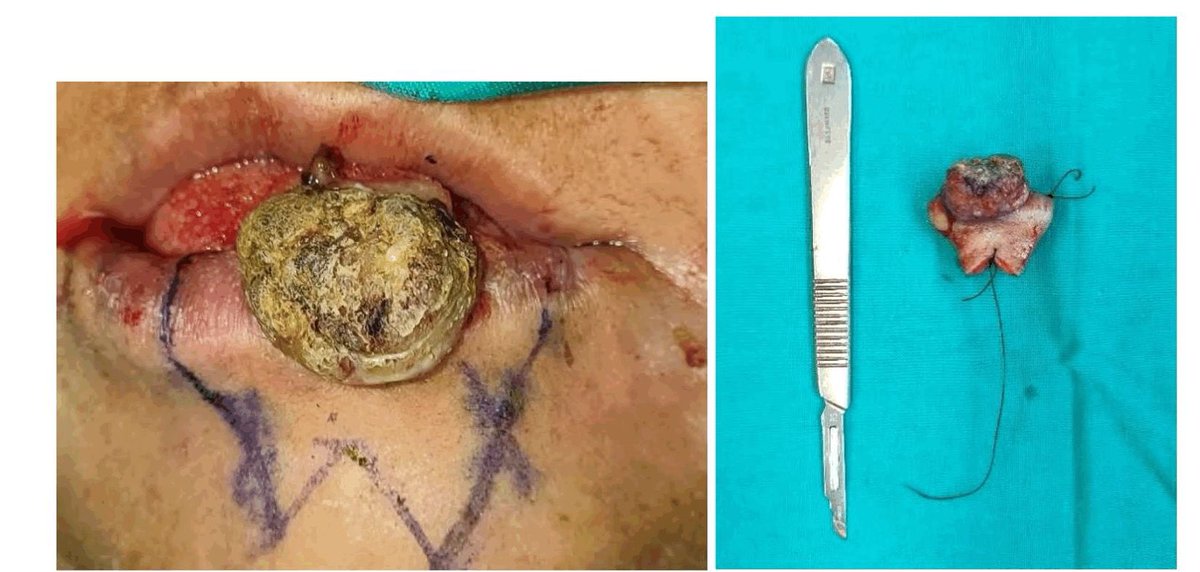
A 63 year old female patient was referred with fungating lesion in the lower lip that has rapidly enlarged over the last 5 months.
Medical History:
Hypertensive and recent history of Transient Ischaemic Attack.She is on Enalapril, Rosuvastatin, Clopidogrel and Aspirin. She is a known smoker with 10 pack year history.
Extra-oral examination:
A fungating 3x2 cm mass was noted on the lower lip with rolled borders. Clinically no palpable lymph nodes were detected
Intra-oral examination:
No mandibular bony invasion was clinically apparent. The patient had multiple periodontally compromised anterior mandibular teeth. The rest of her jaws were edentulous.
Special Investigations:
Her baseline bloods were unremarkable and she was RVD non-reactive. Chest radiograph ruled out any distant metastasis in the lungs. An incisional biopsy of the mass was performed under local anaesthesia.
Diagnosis:
Well differentiated Squamous cell carcinoma of the lower lip (T2N0M0).
Treatment plan
The plan in consultation with the multidisciplinary oncology team was to perform a wide local excision of the tumour with clear margin. Dentectomy of the lower dentition was also planned.
Procedure:
The patient underwent general anaesthesia and 1cm margin was marked out around the tumour. W-incision was marked to aid with closure of the defect post excision. Local anaesthic was infiltrated and en-bloc excision of the tumour was performed. The specimen was orientated and sent for histology .
Intra-op photograph showing incision marking as well as the specimen.
Haemostasis was achieved and there was acceptable skin laxity for closure. The defect was closed in 3 layers namely, mucosa intraorally (Vicryl 4/0), orbicularis oris muscle (Vicryl 4/0) and skin (Nylon 5/0) . Steristrip tapping was used to further support the wound. All the mandibular dentition were removed as planned.
There were no intra-operative complications.
Surgical defect of more than 50% of lower lip and post closure of defect.
Post-operative:
The patient was discharged on day 1 post op without any concerns.
Follow-up:
The patient was follow-up one-week post-surgery for removal of sutures and there were no concerns. The patient was followed up every 3 months to assess for any clinically palpable nodes and at the 3rd follow-up visit no abnormalities were detected
Five months post-op photographs showing good aesthetic outcome and no sign of recurrence in the lower lip region.