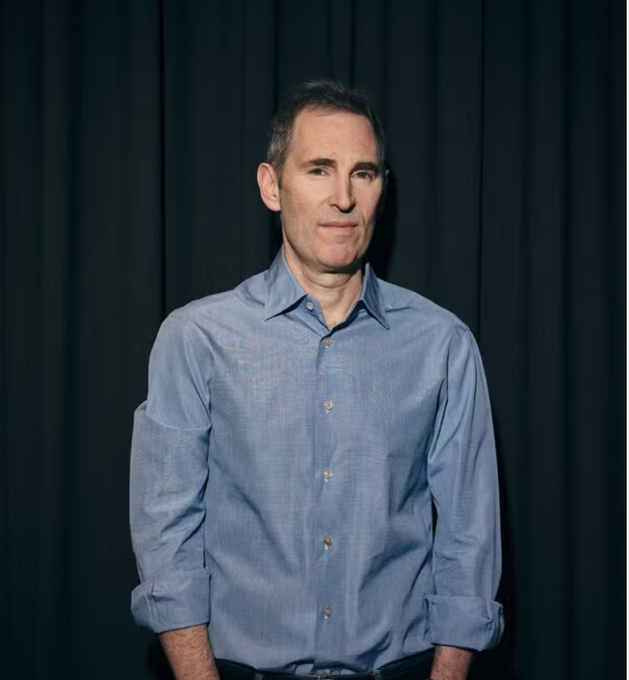
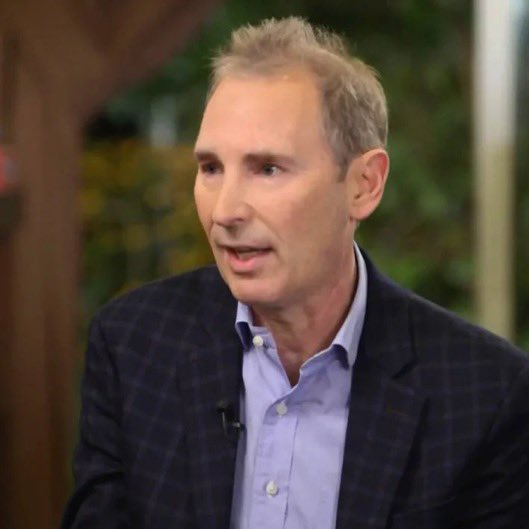
Amazon CEO Andy Jassy confirmed that AWS capacity is already sold out for 2026, largely sold out for 2027, and a meaningful portion of 2028 is also committed—despite ~$220 billion in planned CapEx this year. Customers are consuming new capacity almost as soon as it comes online, constrained mainly by data-center space, power, and memory. Jassy noted Amazon “could invest a lot more and it wouldn’t be a bad use of capital.”
This undersupply is structural: even Google Cloud has started renting third-party compute capacity because hyperscalers cannot build fast enough.
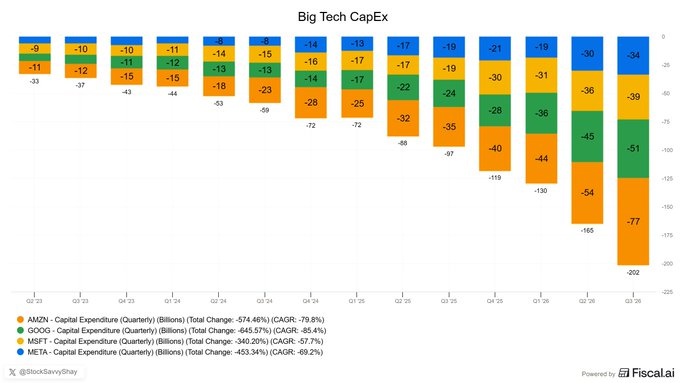
The Big 4 hyperscalers have reported their latest quarterly capital expenditures (primarily for AI data centers, servers, chips, networking, and power infrastructure), with a combined total exceeding $200 billion:
• Amazon (AMZN): ~$77B (Q3 2026 purchases of property and equipment; significantly above prior-quarter levels and analyst estimates; driven mainly by AWS and generative AI)
• Alphabet (GOOGL): ~$51B (Jul–Sep 2026)
• Microsoft (MSFT): ~$39B (latest reported quarter)
• Meta (META): ~$34B (Q3 2026, including principal payments on finance leases)
Key context: These figures reflect the ongoing AI infrastructure arms race. Amazon alone accounts for a large share and maintained its full-year 2026 cash CapEx guidance at approximately $220 billion. Collectively, the four companies’ 2026 guidance is in the range of roughly $720–745 billion (Amazon ~$220B; Alphabet $195–205B; Microsoft ~$170–175B after accounting adjustments; Meta $130–145B). Spending continues to pressure free cash flow at several of the firms while supporting rapid cloud/AI demand growth.
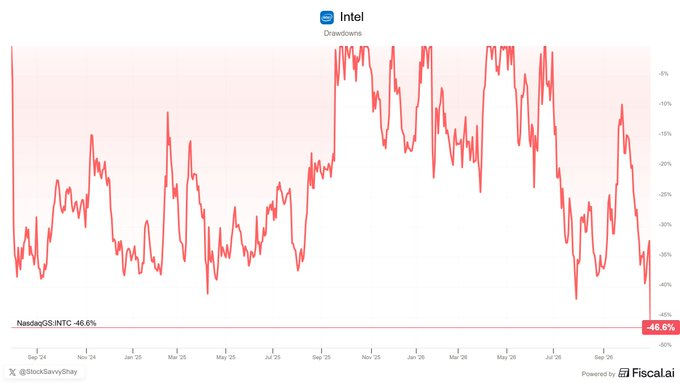
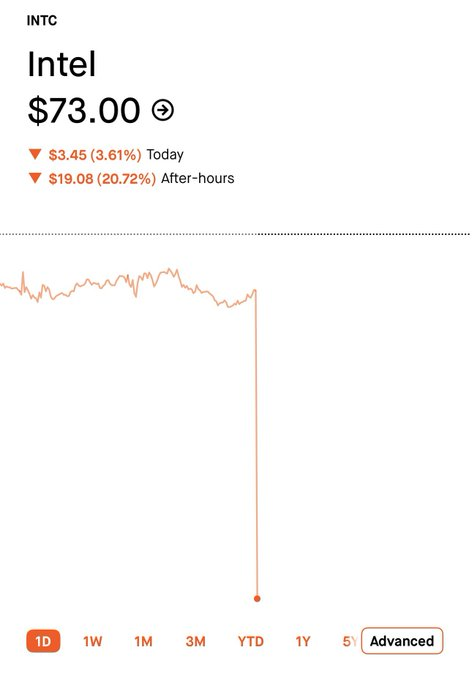
$INTC is currently experiencing its deepest drawdown in more than two years.
As of late October 2026, the stock is trading around $91–95, roughly 32–35% below its recent peak of approximately $142.35 (reached in June 2026). This marks one of the largest peak-to-trough declines the shares have seen since mid-2024.
$AMZN
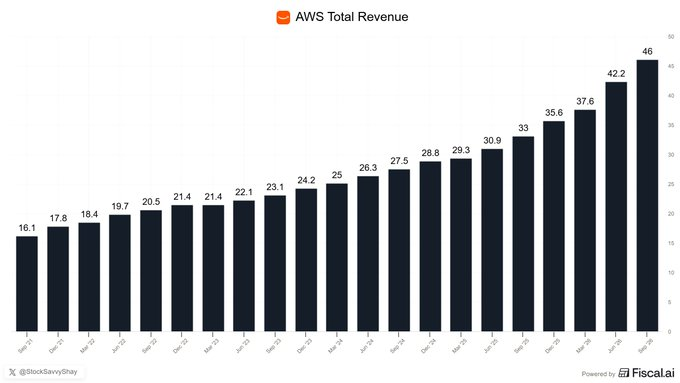
Amazon CEO Andy Jassy stated that AWS projects revenue growth of over 40% in both 2027 and 2028, even though the segment is already generating well over $100 billion annually (Q3 2026 annualized run rate reached approximately $184 billion).
With AWS capacity largely sold out through 2027 and a substantial portion of 2028 already committed, the primary constraint is no longer demand—it is execution. The key question becomes how quickly Amazon can bring additional power infrastructure and Trainium capacity online to convert this strong visibility into realized revenue.
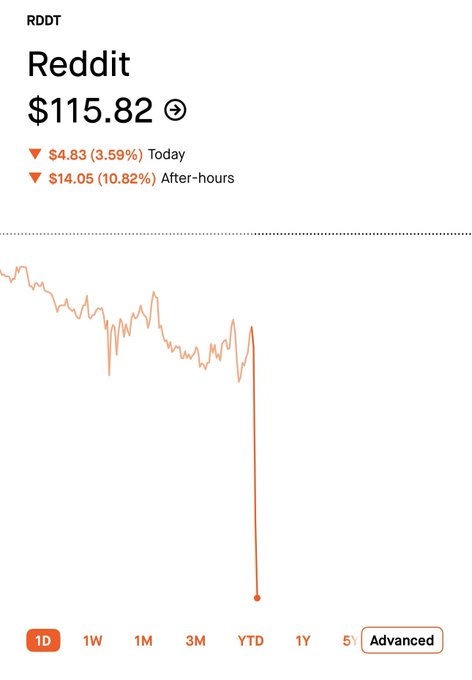
Q3 Actual ResultsMetric
Actual
Estimate
Result
Revenue
$895M
$875M
Beat (+2.3%)
EPS
$1.40
$1.33
Beat (+5.3%)
EBITDA
$402M
$397M
Beat (+1.3%)
Daily Active Users (DAUs)
130.3M
133.4M
Miss (-2.3%)
Q4 GuidanceMetric
Guidance
Estimate
Outlook
Revenue
$1.02B
$1.05B
Below (~-2.9%)
EBITDA
$495M
$509M
Below (~-2.8%)
Key Takeaway:
Strong operational beat on revenue, EPS, and EBITDA in Q3, but softer user growth and more cautious Q4 outlook.
Amazon ($AMZN) Q3 2026 Earnings SummaryAmazon reported mixed Q3 results on October 29, 2026:Revenue: $201.9 billion (slightly below estimate of ~$202.1B; +12% YoY, or +13% excluding FX)
EPS: $1.89 (missed estimate of ~$1.96)
AWS Revenue: $46.0 billion (beat estimate of ~$44.9B; +39.3% YoY — fastest growth in nearly five years, annualized run rate of $184B)
Operating Income: $28.1 billion (beat estimate of ~$26.1B; operating margin 13.9%, Amazon’s highest ever)
Key highlights: AWS continued its strong acceleration, driven by AI demand. North America and International segments also showed solid profitability gains. Net income was $20.7B ($1.89 diluted EPS), down slightly YoY mainly due to the absence of prior-year investment gains related to Anthropic.
Intel ($INTC) Q3 2026 Earnings SummaryQ3 Results
• Revenue: $16.5 billion (in line with estimates of $16.5B)
• EPS: $0.52 (beat estimates of $0.40)
• Gross Margin: 44% (beat estimates of 42%)Q4 Guidance
• Revenue: $15.5 billion (below estimates of $17.1B)
• EPS: $0.25 (below estimates of $0.43)Intel delivered a solid third-quarter performance with an earnings beat and better-than-expected profitability, but its fourth-quarter outlook came in weaker than Wall Street anticipated, particularly on revenue and earnings. This mixed report highlights ongoing execution progress alongside near-term demand or margin pressures that investors will closely watch.
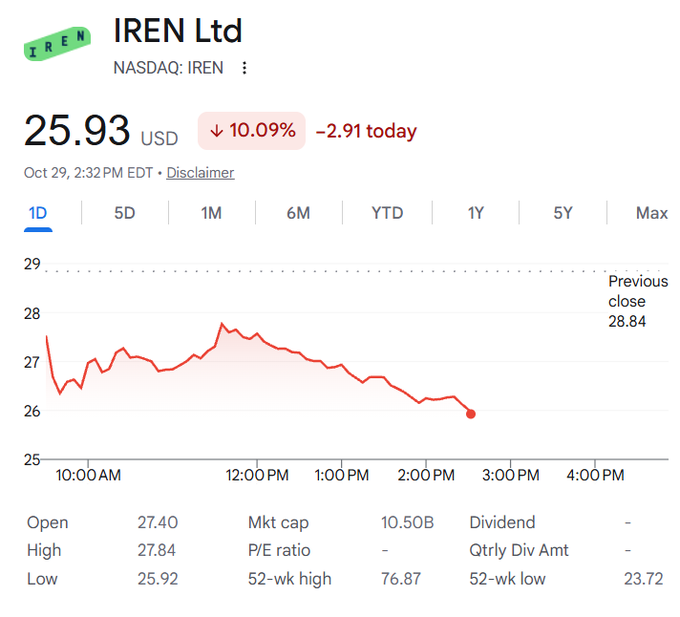
IREN Limited ($IREN) shares are down roughly 7–10% on October 29, 2026 (trading around $26 after a prior close of $28.84). The decline is part of a broader sell-off in AI infrastructure and “neocloud” stocks, driven by concerns over Microsoft’s capital-spending outlook, delayed third-party capacity, high funding costs, and execution risks amid heavy GPU/AI buildout plans.
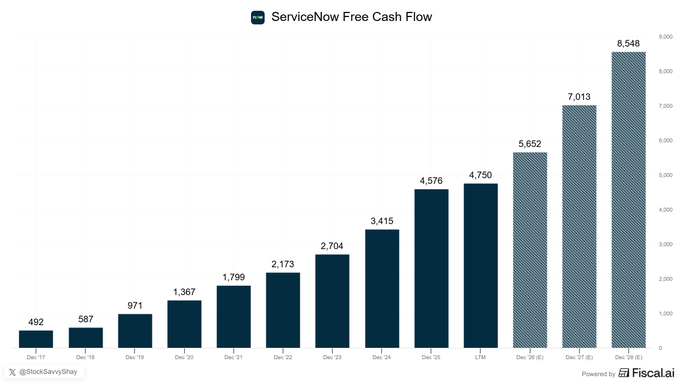
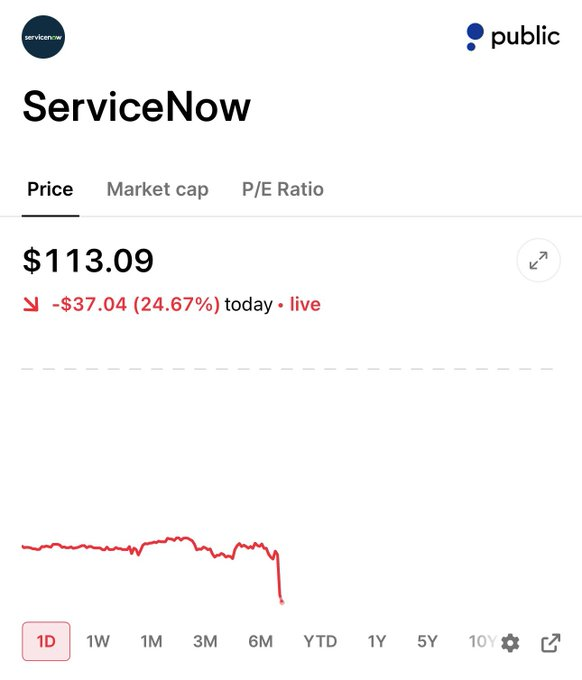
$NOW just posted its worst single-day drop on record, even as free cash flow is still projected to nearly double by 2028.
The core issue is that the market wants clearer proof AI can meaningfully accelerate the overall business. ServiceNow has raised its year-end AI ACV target from ~$1 billion at the start of 2026 to $1.7 billion, and agentic AI production usage is up 13× year-over-year. Yet these gains still need to drive faster growth in a roughly $16 billion subscription base rather than simply sustain the current mid-20% trajectory.
Rocket Lab ($RKLB) has scheduled its 99th Electron launch for next week (NET November 3, 2026), with the 100th rocket already nearing delivery to Launch Complex 1.
While the larger Neutron rocket’s debut has been delayed into 2027 due to carbon-composite manufacturing issues, Rocket Lab continues to expand its operational experience through a high Electron launch cadence and is deepening its defense relationships via multiple U.S. Space Force and other national-security contracts.
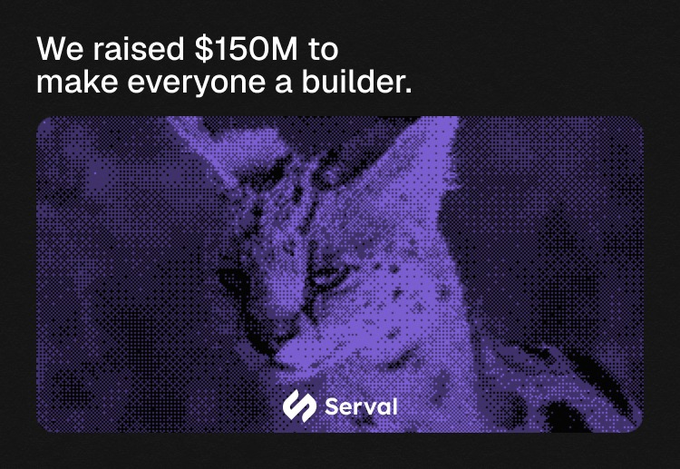
Serval has raised $150 million in a Series C round at a $3 billion valuation, led by Sequoia Capital. The funding will scale Catalyst, its AI automation agent that converts natural-language requests into secure, deterministic workflows for IT, finance, HR, and other departments.
Notably, the company plans to hire more than 100 Automation Engineers (as part of a broader push to add over 500 employees). This underscores a key industry reality: while building AI agents has become easier, the real challenge remains reliably deploying and integrating them into complex enterprise environments.
Robyn has launched an invite-only personal agentic platform that lets users create and deploy AI agents with a single sentence—no complex setup required. These agents come preloaded with the user’s context, can connect to apps, run tasks autonomously (including in the background), and deliver updates via text or the web. Founder Jenny Shao says early users report saving around 20 hours per week.
This points to a clear shift in AI toward true personal agents that operate independently and can be shared more like apps than one-off chatbots.
Meet Robyn, the personal agentic platform built around your life and work.
- Tell her what you need in one sentence. No setup, ever.
- Spin up a fleet of agents preloaded with your context that work while you sleep.
- Access it on the web or just text it.
- 20hrs/week saved per user.
I’m Jenny, and I spent 3 years working with Nobel Laureate Eric Kandel, who mapped out memory in the human brain.
We built all of that into Robyn, making it the first AI capable of taking intelligent action.
Invite only access opens today. We’re giving out 1000 invite codes. Link in first comment. Comment "Robyn" for 100 free credits.
Microsoft ($MSFT) has fully erased its post-earnings gains. After a strong Q1 FY2027 report (revenue $92.28B, +19% YoY; adjusted EPS $4.89; Azure +48% to $33.17B; free cash flow beat by ~$10B), shares jumped roughly 3–4% in after-hours and premarket trading on October 28–29. By midday on the reaction day, however, the stock has given back the entire move and is trading near or below its pre-earnings close amid broader tech weakness (Alphabet’s sharp drop and ongoing AI-capex concerns).
Mintive (formerly MintMCP) has launched agent identities on its enterprise platform. Every AI agent now receives its own independent credentials, least-privilege permissions, and dedicated audit trail. Companies can set spending limits through the LLM gateway and monitor every tool call and model interaction in real time.
This is another clear signal that granular access control for AI agents is becoming a core cybersecurity priority. When agents no longer borrow human credentials, organizations gain the ability to isolate risk, revoke access instantly, and meet compliance requirements without slowing down agent deployment.
Every AI agent at work runs with the access of whoever set it up.
That’s why security keeps saying no.
Today we’re launching @mintive: every agent gets its own identity and permissions, the same way every employee does.
We’ve raised $11M, with @cowboyvc leading our latest round.
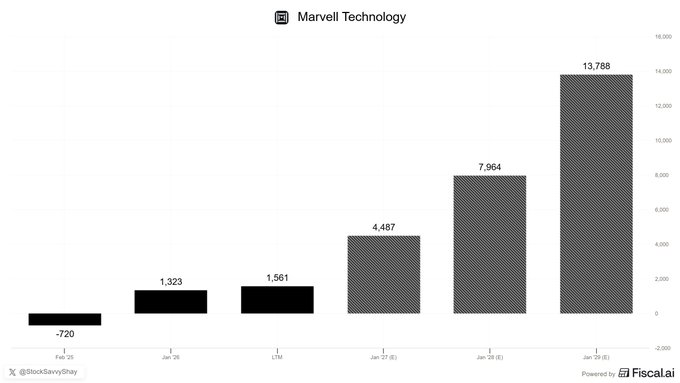
Marvell Technology ($MRVL) has outlined ambitious long-term targets, projecting operating margins of 44–46% by fiscal 2031 (alongside revenue of $70–90 billion). Analyst models and management guidance imply substantial profit expansion—potentially approaching ~$14 billion in operating profit in the later years of the decade—as the company scales its custom silicon, interconnect, and optical businesses.
This growth trajectory is fueled by sustained AI infrastructure spending from hyperscalers such as Alphabet ($GOOGL) and Microsoft ($MSFT). Against that backdrop, reports of advanced talks for Marvell to acquire Lumentum ($LITE) make strategic sense: securing laser and optical-component capacity would help address supply constraints in high-speed optical interconnects critical for AI data centers.
AST SpaceMobile ($ASTS) is showing relative strength today, rising roughly 1–4% (and briefly higher intraday) while the Nasdaq Composite falls more than 1%. The satellite-to-smartphone company continues to attract interest amid ongoing progress on spectrum access, carrier partnerships, and constellation deployment, even as broader tech and growth stocks face pressure.
Snaptrude has launched a new AI agent for architectural design that converts a building brief (or RFP) into a fully editable 3D model—complete with spatial layouts, structural elements, MEP systems, and construction-ready drawings (up to LOD 400).
This is a concrete example of AI agents advancing beyond ideation and visualization into actual early-stage engineering and documentation work in the AEC industry, while still keeping the architect in full control of every edit.
Today we're launching @snaptrude Agent, the most advanced agent for building design.
It does real design work with you, from a site to a construction-ready LOD 400 model with structure, MEP and drawings. Then can go back to your existing software with your families intact.
About a year ago we bet the company on AI. Honestly the insight came from software engineering. It wasn't long ago that autocomplete felt like a big deal, and now engineers direct agents that write a lot of the code. I think the same shift is coming to how we design buildings, and it's already started.
Most designers I meet aren't short on skill, they're short on time. Take the call every design team dreads, the client cuts the budget by 30%. Today that's a bad month for everyone. With the agent you're the director. You decide where the cost comes out, and it updates the layout, coordinates the structure and MEP, and redoes the drawings. So when design exploration gets this cheap, we go from 3 options to 300, and more options means better buildings.
Since August our users have gone through more than 140 billion tokens, and firms like Jacobs, Studio+, Kajima, VMDO, Dekker and hundreds of others use Snaptrude today. In our early access, more than 2,000 designers have run over 25,000 tasks through the agent since September.
We also built a benchmark for this, AECBench, because in AEC an almost correct answer is still wrong. It gives AI the same brief an architect would get, has its design in a real BIM model, and scores the result against the brief and against how architects review design. We're publishing the first results today, link below.
Thank you @prashanthp at @Accel and Shub and the team at @foundamental for backing us when this was still a bet, and the Snaptrude team, who built every bit of this. Really proud of you all.
Thanks to our investors, @scottbelsky, @andreasklinger, @thilokonzok, @immad, @CindyXBi, @DanilaVladi, @jmwass, rahulchaudhary, @adamecourt, Zach Ginsburg, Alex duff, Paul grossinger, really appreciate all the help along the way.
Alphabet ($GOOGL) is on track for its worst post-earnings percentage decline ever, with shares down roughly 10–11% after Q3 results. Google Cloud revenue more than doubled (up 103% year-over-year to $30.7 billion), driven by strong AI infrastructure demand and TPU sales. However, Search revenue growth slowed to 12% (from 17% in the prior quarter), contributing to a modest overall revenue miss.
The market appears to be interpreting the slower Search growth primarily as a sign of weaker demand. Part of the deceleration, however, may reflect a temporary monetization lag as more users shift to AI Mode (Google’s chatbot-style search experience). Management noted that overall Search query growth is actually at its highest rate in five years, and the company is still in the process of rolling out effective advertising within AI Mode—similar to the earlier transition from desktop to mobile.
$NOW (ServiceNow) is down ~20–25% in after-hours/premarket trading and is on pace for its worst single trading day on record — triggered by mixed Q3 results (revenue beat but EPS miss + softer guidance/backlog concerns).