ChatGPT for secrets or sensitive projects? 🤫
Dragonfire:
🔒 Your data stays ONLY on your device.
🔒 Never leaves. No central servers.
🔒 Nothing to hand over. Ever.
🔒 Privacy isn't a promise.
🔒 It's architecture.
#Dragonfire#AIPrivacy#DataSovereignty#DecentralizedAI
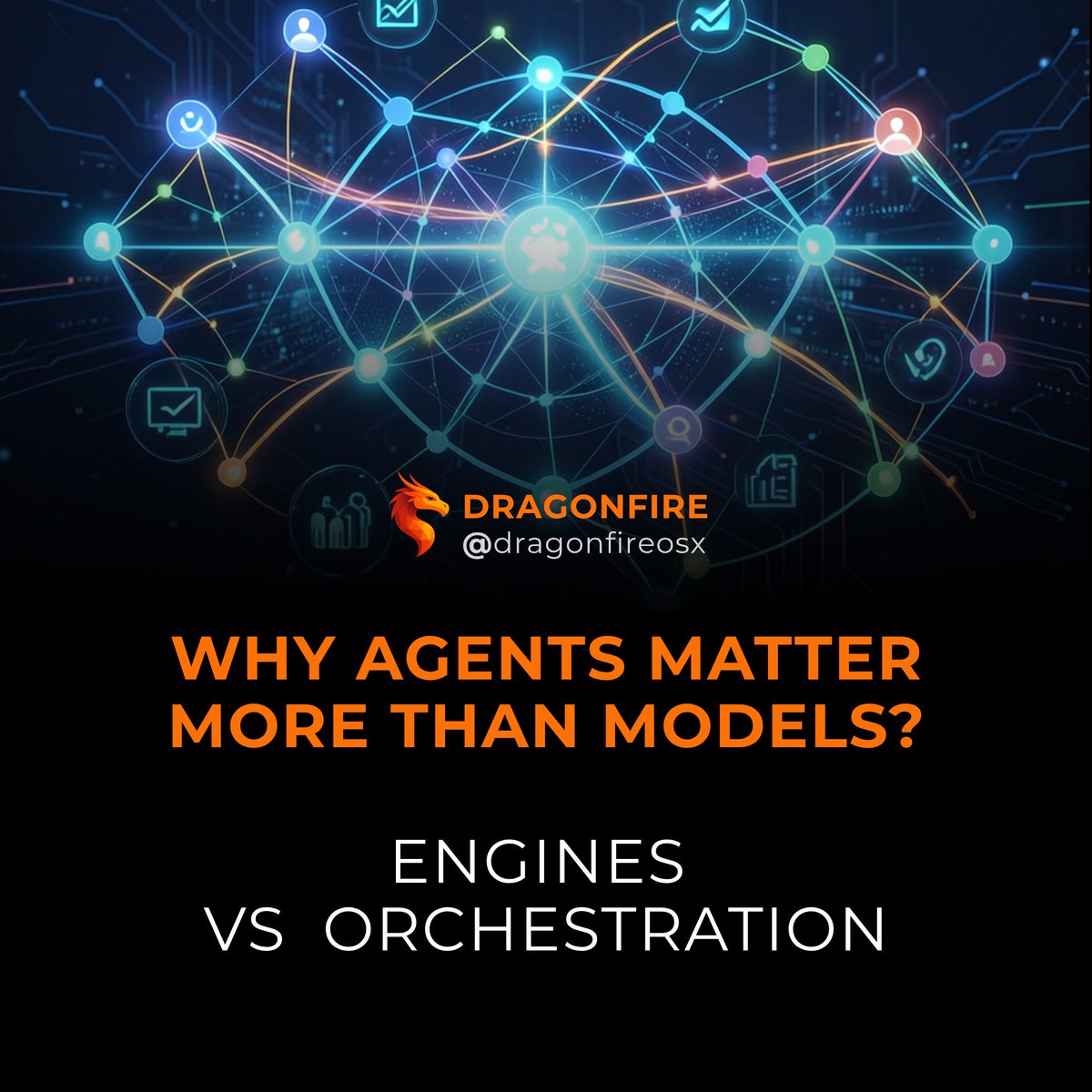
Models generate responses.
Agents manage intent, context, and coordination.
As AI systems grow more complex, the difference matters more than ever. The future isn’t just better engines — it’s better structure.
AI discussions often focus on models — which one is bigger, faster, or more capable.
But models are engines. They generate output.
The real intelligence lives in how tasks are structured, routed, and coordinated.
That’s where agents come in.
Conversations don’t disappear when they’re sent.
They’re stored, routed, and shaped by infrastructure we rarely think about. Most platforms give access, not ownership, to the space where those conversations live.
Understanding that difference matters more than people realise.
Every message is stored somewhere.
Texts, voice notes, and group chats feel personal and momentary — but they live on infrastructure that stores, routes, and governs them.
Privacy isn’t just about encryption.
It’s about where conversations actually exist.
Even the internet’s addressing system reflects this. IPv4 introduced artificial scarcity, turning access into something that could be owned, traded, and controlled.
ChatGPT for secrets or sensitive projects? 🤫
Dragonfire:
🔒 Your data stays ONLY on your device.
🔒 Never leaves. No central servers.
🔒 Nothing to hand over. Ever.
🔒 Privacy isn't a promise.
🔒 It's architecture.
#Dragonfire#AIPrivacy#DataSovereignty#DecentralizedAI
The internet isn’t free — it’s abstracted.
Costs didn’t disappear. They were shifted into advertising models, data extraction, artificial scarcity, and platform dependency.
The question isn’t whether the internet should be free.
It’s whether it should be built more honestly.