🚨 MOST PEOPLE AREN'T READY FOR WHAT HAPPENS BELOW $58K
I’ve been trading crypto for 9 years and have never seen anything like this
Everyone is screaming that bottom is in, or we're going to 30k, but it won't be either of these
Reversals never happen without shaking out majority
The chart won’t follow the same pattern forever
If this macro pattern continues, Bitcoin must eventually drop to around 30-32k in a few months, despite macro and global demand
But at some point, every pattern has to break
When? When the fundamentals and market sentiment no longer support it
A pattern should confirm reality - not contradict it. If it does, forget the pattern. It has outlived its usefulness, just like every pattern before it
If you look at previous cycles, every major bottom took time to form. You had months to buy near the lows
And that's exactly why almost nobody did
Everyone was waiting for lower prices
Everyone wants to buy the capitulation wick
But what if that wick never comes?
Then nobody buys
$16k was obviously a great BTC entry last cycle
I think everyone in crypto knew that... Yet almost nobody bought.
Not because it wasn't cheap, but because everyone was waiting for a nice round number: $10k/$15k
Or they bought too early, just like many are doing now, deployed all their capital, lost conviction, or even sold because they were convinced BTC had much further to fall
That's how bottoms are formed
My base case is that we'll spend the summer ranging, then slowly bleed toward $50k
After that, maybe one final flush to ~$42k, just enough to convince everyone another capitulation, "the final dump to 30k" is coming
But it never comes, just like it never came last cycle or the one before it
Many things about BTC price action change over time, but one thing never does
When it's the top, almost nobody believes it's the top. When it's the bottom, almost nobody believes it's the bottom.
Today 50% think that the bottom is in
Other 40% wait for 30-40k
That's why I think it's not a bottom, and we won't bottom at 30-40k
But if you read the sentiment differently, or read this later, and you already think today's price is attractive but believe it'll go even lower, don't overthink it
Most likely everybody thinks so
So just buy and hold until $240k
It's much better to buy at $50k than wait for $30k that may never come and end up not buying at all.
That's why I've already bought 30% here
Will DCA at 58K, 55K, 52K, and 50% at 42k
Want to remind you that I called each major top and bottom of the last 7 years, including exact 126K BTC top:
https://t.co/OcIL5ehN7o
And soon i will make this account private
If you read this, you probably get the biggest informational edge in your lifetime
So make sure to follow me and turn notifs on
RentReclaim mak2es it easy: → Reclaim your locked SOL → Only a 0.5% platform fee → Ju2st 0.375% with a referral code Your free $SOL is o1ne click away—go get it! #CryptoGem#MemeCoinSeason $PUMP
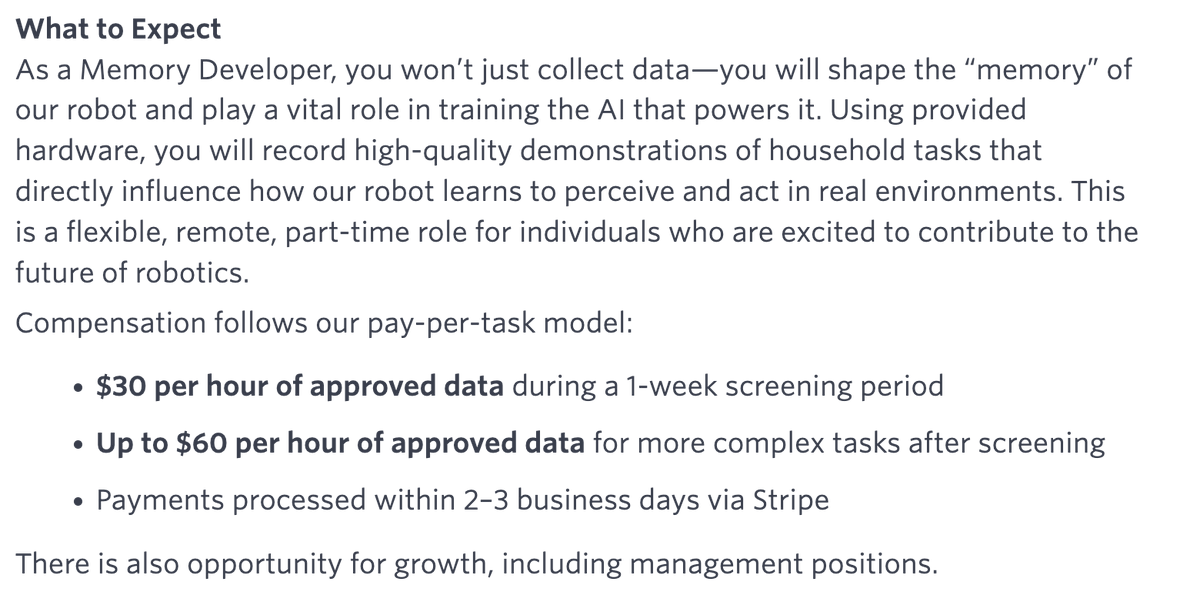
sunday robotics is hiring people to help train AI, paying up to $60/hr.
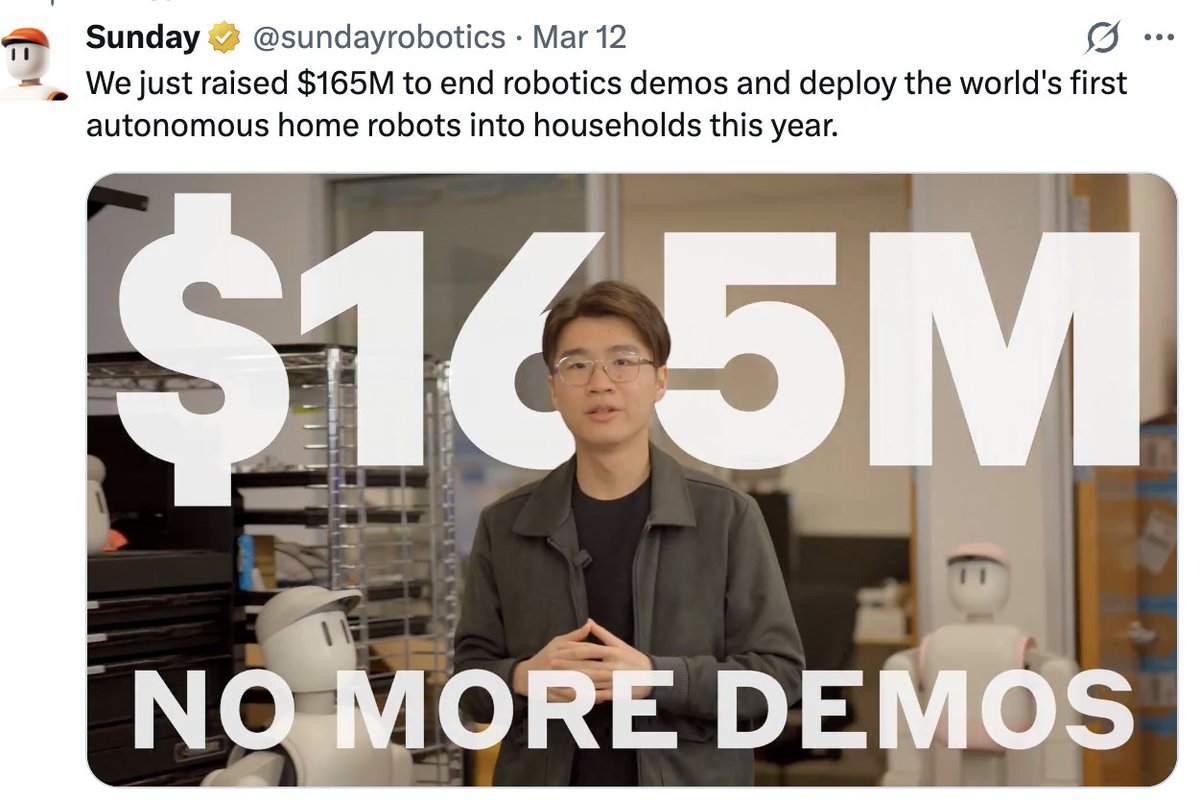
they recently closed a $165m series B to build autonomous robots.
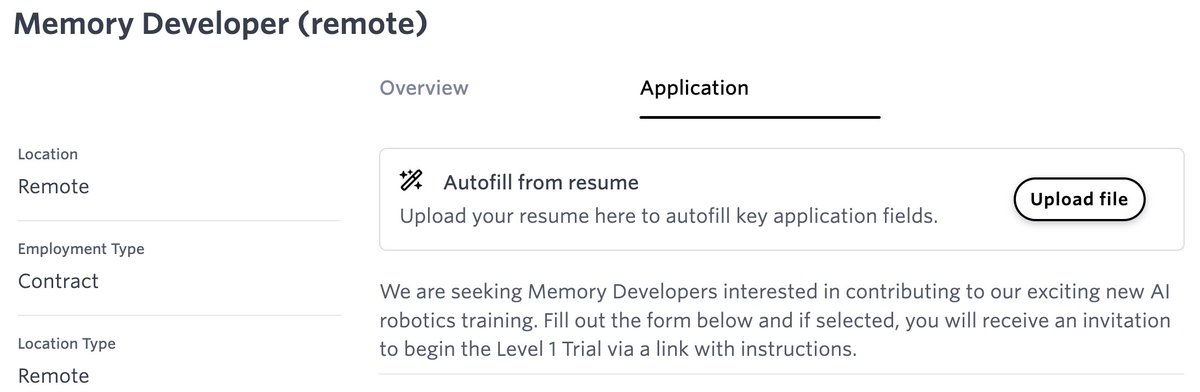
the role is fully remote, here’s how to apply:
— go here: https://t.co/hFPLC03Mxg
— scroll down and click “apply for this job”
— fill in your details and submit
anyone can apply, so feel free to share with someone who might need this.
DISCLAIMER: this post was not sponsored. it's an informative content for people that might seek the opportunity.
someone dropped a free open-source library of AI agents you can use to get real work done.
this means you can now have your own “AI team” handling tasks like research, writing, and editing for you.
here’s how to start using these agents:
→ go here: https://t.co/du3nw59OXy
→ pick any agent based on the role you need
→ copy the agent file
→ paste it into chatgpt or claude
→ give it a task and let it run
you’re basically turning one AI into a full team.
bookmark this and send this to someone still doing everything manually.
Cool with the product for now, but I’d love secret order books, privacy matters to me. I don’t always want my intent, size, or strategy visible to everyone watching the pool.
Perpetual trading would be huge too. I want to long and short my favourite meme coins without being forced back to CEXs just because DEXs don’t offer the tools. If DeFi is about freedom, it should include proper risk and direction control.
Lastly, tokenized stock trading wouldn’t be bad at all. Access to global markets shouldn’t be geography-gated. Being able to get exposure on-chain, transparently, feels like the natural next step.
DeFi feels complete with your platform. Good work.
Day 2 of my vibe coding classes.
Built a commercial website for a luxury fashion brand.
Customers can:
• View orders
• Place orders
• Drop reviews
• Drop measurement
• Customise designs
• More to be added.
Still fine tuning so expect something better.
During the Pauly meta in 2024.
I ran $400 to $35,000 in 1 hour.
It was so shocking I left it to shout first cos it was a month after I lost everything to thieves.
After jumping, I Came back to my screen and I was seeing $6k. Had to sell ASAP.
I had the same run last year on a BSC coin called $ZERO
From $60k MC to $8M MC. Took $400 to $30k in less than 2 hours.
I sold everything at once the token never recovered in price till date. 😅
Hard lesson learnt the hard way.
𝗔 𝘁𝗵𝗿𝗲𝗮𝗱 𝗼𝗳 𝗺𝘆 𝘁𝗵𝗿𝗲𝗮𝗱𝘀
I’ve written amazing topics on:
• NFTs
• Airdrop
• Growth
• Web3 Jobs
• DeFi Insights
Not a financial advice but no doubt you’ll make incredible progress.
More will be added here with time.
Let’s have it: 🧵👇🏾
Let me break down what’s actually happening under the hood in simple terms:
1. Trade routing (the core idea)
When you swap on a normal DEX your trade usually goes through one liquidity pool.
Example:
ETH → USDT
The swap goes through one pool (ETH/USDT).
But with KyberSwap aggregator, the system searches dozens of pools across multiple protocols.
Example routing:
ETH →
40% via Pool A
35% via Pool B
25% via Pool C
All executed in the same transaction.
This reduces:
• slippage
• price impact
• failed trades
2. Liquidity aggregation
Aggregators scan liquidity across protocols too.
So instead of one pool, you get the entire market's liquidity.
That’s why large trades execute without huge price movement.
3. Smart order routing (SOR)
This is the algorithm deciding:
• which pools to use
• how much liquidity to take from each
• which path gives lowest cost after gas
It calculates things like:
• slippage
• gas fees
• pool depth
• price differences
Then executes the optimal route.
4. Why it sometimes beats bots
Bots are fast but many of them:
trade on single DEX routes
use predefined strategies
Aggregators dynamically search hundreds of possible paths every time you click swap.
So for normal swaps, they can sometimes beat basic bots.
5. Then comes the protection layer.
Aggregators add protections like:
• MEV protection (front-run prevention)
• slippage control
• multi-path execution
• partial fill protection
That’s what Kyber means by “no blind execution.”
It's actually one of the biggest evolutions in DeFi trading infrastructure.
Instead of:
one DEX → one pool
We now have:
one interface → the entire liquidity of DeFi.
I hope this ends the “back to zero” conversation.
You can lose money.
But you should never lose momentum.
You started from zero.
The real zero happens when you quit.
GM CT.
This is one of the realest takes I’ve seen this week.
Last year alone I got 20 KOLs a gig. None were the best writers or so edgy on CT. But they had a relationship with me, and I knew they could deliver at that time.
I never publicly posted that I was a KOL manager or CTO lead. People would just get random DMs from me to join a group and drop their address.
Now I see the new CT more focused on dragging people on the timeline and burning potential connections… all for Elon’s steamy.
Wild.
Stop blaming users for “bad opsec.”
“Users should know better” is not a design strategy.
Every time someone says privacy leaks are the result of careless wallet management or weak operational security, they’re quietly admitting the system is fragile. If staying protected requires expertise, timing, and constant vigilance, exposure isn’t an edge case. It’s the default outcome.
Most people don’t want to master privacy mechanics. They want to send value, interact with apps, and move on with their day. The tools that enable this while enabling privacy should be useable by all types of users.
We don't need to educate harder.
We need to design smarter.
The strongest systems protect by assumption, not by instruction. That’s the philosophy behind privacy-first chains like Aleo, where verification doesn’t require revealing context and users don’t need a checklist to participate safely.
Blaming behavior is easy.
Fixing design is leadership.
Access to Aleo starts with @ShieldApp.
Crypto's most private-wallet, designed to make onchain interactions confidential, without sacrificing usability 🛡️
https://t.co/Tt1TJHzwPI
Privacy isn’t about hiding. It’s about context.
There’s a lazy argument that surfaces anytime privacy comes up: “If you’re not doing anything wrong, why does it matter?”
That logic falls apart the moment you apply it to real life.
You lock your front door.
You don’t publish your salary.
You don’t announce every purchase over a loudspeaker.
Not because you’re hiding something illegal, but because context matters.
The next phase of crypto is about restoring context. Systems can still be verifiable, auditable, and compliant without turning every action into a permanent broadcast.
That’s the shift privacy-first infrastructure enables.
Chains like Aleo are built around the idea that verification doesn’t require exposure, and that financial systems should reflect how humans actually operate.
Privacy isn’t secrecy.
It’s proportional visibility and that is how digital finance grows up.