Big launch day 🚀
We’ve been working on this playbook for months - and it’s finally live.
Subscriptions had Recharge. Loyalty had Yotpo. Until now, gifting had… nothing.
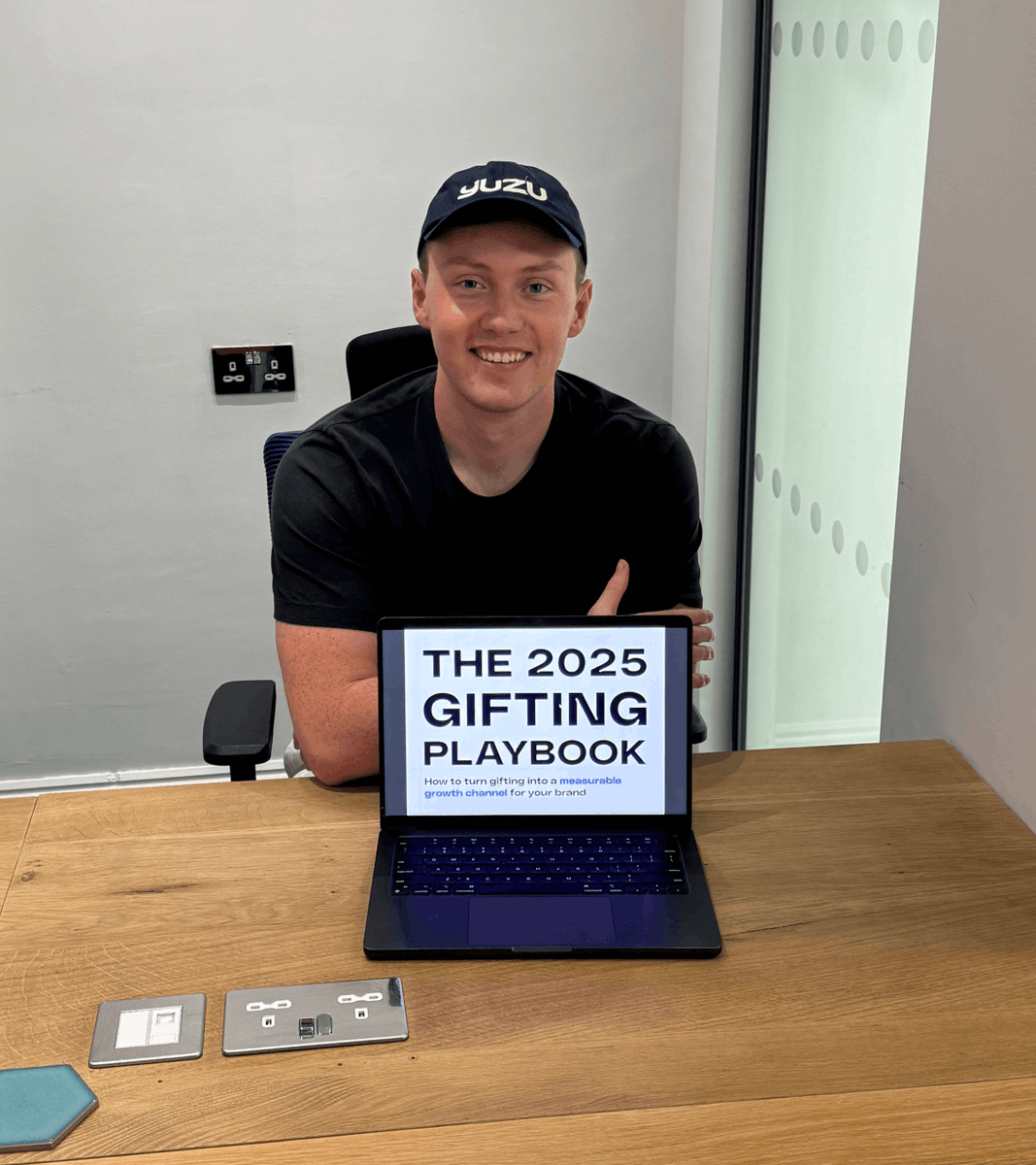
Today, with Zest, we’ve released the first Gifting Playbook: a complete guide to turning gifting from a “nice-to-have” into a measurable growth channel.
Inside you’ll find:
• The Gifting Flywheel (why every gift creates two customers)
• 8 KPIs to track gifting performance like a digital channel
• How to nail the unboxing and convert recipients into buyers
• A Q4 gifting plan you can plug straight into your brand
If subscriptions and loyalty taught us anything, it’s that the brands who move first capture the upside.
Gifting is next.
🔗 https://t.co/YVfA1052eW
If you know a brand heading into Q4 without a gifting strategy, tag them - this might be the unfair advantage they need.
How do you personalize for VIPs when you don't know they're VIPs until the order hits?
Final Boss Sour is now printing with Yuzu.
They use OuterSignal to analyze orders in real-time - identifying athletes and high-followers the moment they check out. But you can't manually add a note to those orders. By the time you realize they're worth highlighting, the box is already packed.
What Final Boss Sour is doing:
→ Real-time VIP identification via OuterSignal
→ Automatically printed personalized notes for athletes and influencers
→ Added surprises in the box (like a free hat) with a custom message
Their stack:
@Shopify@getoutersignal@Warehance
Sphere Trading Co. (3PL)
@klaviyo@getyuzu_
The best part? We were introduced by OuterSignal - but we were already building the Warehance integration. That's the power of a two-sided network: partnerships compound when you're solving the same problems from different angles.
Now we're live with Sphere and onboarding more brands across their network.
This is what real-time personalization looks like: identify the moment, act automatically, and create an experience worth sharing.
Because by the time you manually realize someone's a VIP, it's already too late.
Big launch day 🚀
We’ve been working on this playbook for months - and it’s finally live.
Subscriptions had Recharge. Loyalty had Yotpo. Until now, gifting had… nothing.
Today, with Zest, we’ve released the first Gifting Playbook: a complete guide to turning gifting from a “nice-to-have” into a measurable growth channel.
Inside you’ll find:
• The Gifting Flywheel (why every gift creates two customers)
• 8 KPIs to track gifting performance like a digital channel
• How to nail the unboxing and convert recipients into buyers
• A Q4 gifting plan you can plug straight into your brand
If subscriptions and loyalty taught us anything, it’s that the brands who move first capture the upside.
Gifting is next.
🔗 https://t.co/YVfA1052eW
If you know a brand heading into Q4 without a gifting strategy, tag them - this might be the unfair advantage they need.
Three pet brand calls in 24 hours. Same problem every time.
Ben runs a cat subscription service. Kevin's team does dog food across multiple categories. Darren's built a 70% subscription business selling vegan pet food - mostly through grassroots marketing while competitors burn cash on Meta ads.
Different products. Same challenge.
Pet parents aren't just customers. Their dogs and cats are family. And these founders know it.
But here's what's interesting - while other industries optimize for CTR, pet brands talk about relationships. They're not chasing engagement metrics.
They're trying to help someone's best friend live better.
The scaling problem isn't operational. It's emotional.
So we've been experimenting with something different. What if your loyalty program showed the customer's actual dog getting closer to their next reward? What if the insert knew it was Luna's birthday month?
Spent some time last week with @Ben_Toogood and the @tryhutch team at their 3PL facility outside London.
We've been LinkedIn mutuals for a while - I'd seen their journey from Hutch (3PL) to building @pimentohq (WMS software) internally, then spinning it out. But this was our first proper face-to-face.
Ben gave me the full tour - warehouse walkthrough, team introductions, the works. Always interesting to see how different 3PLs operate and what tech they're running.
What struck me was the parallel journey we've both been on. Different approaches to similar problems in the same space.
We explored some potential partnership angles too - always good when you find founders solving adjacent pieces of the fulfillment puzzle.
Good reminder that the best conversations happen when you get out from behind the screen and see where the work actually gets done.
Looking forward to seeing our first 3PL live together, scaling handwritten notes and gift messaging with Pack Fulfilment.
Excited to see what we can build together!!
Personalization has been the buzzword for a decade.
But what happens when shopping isn’t done by people anymore - it’s done by agents?
That future isn’t far off. As agentic buying becomes more common, digital personalization loses its power. Online tools won’t give an AI agent the “warm and fuzzies.”
But here’s the thing:
Even in an agent-driven world, someone still answers the doorbell.
Someone still opens the box.
And that makes the unboxing moment one of the last guaranteed touchpoints where personalization still lands with a human being.
That’s why I believe printed inserts have such a long runway - and why the vision of one-to-one dynamic personalization at the parcel level feels more relevant than ever.
🎥 Clip below
Personalization only works if ops teams can handle it.
That’s why we built Yuzu to sit inside the fulfillment flow - not on top of it.
On THE ECOMMERCE EDGE Podcast I explained how we think about it:
From a marketing view → every order becomes a personalized journey.
From a 3PL/WMS view → it’s no different than printing a shipping label.
For the brand → they can AB test creatives, iterate messaging, and launch new flows without disrupting operations.
The tech is optimized for warehouses first - integrated directly into WMS systems, treated like a SKU, and designed to scale without breaking during peak.
Because if personalization creates friction for ops, it’s never going to work in the real world.
🎥 Clip below
Most brands treat inserts as static.
The same piece of paper in every box.
The smartest operators?
They tailor the unboxing moment to the customer.
On THE ECOMMERCE EDGE Podcast I shared a few examples:
For subscription brands → adjust messaging by month to reduce churn.
For brands with thousands of SKUs → focus on product education + dynamic recommendations.
For location-based campaigns → add a rebate + dynamic map to drive foot traffic.
For loyalty and referrals → integrate with the apps already in play.
The unboxing moment isn’t one-size-fits-all.
It’s another channel in your retention strategy.
🎥 Clip below
Great chat with Jason on THE ECOMMERCE EDGE Podcast 🎙️
We dug into a topic I care a lot about: the unboxing moment.
Most brands obsess over ads, email flows, and retention campaigns. But the one touchpoint every single customer experiences? The parcel in their hands.
On the pod we talked about:
Why most inserts flop (and how to fix them)
How personalization turns packaging into a retention engine
Where unboxing sits in the customer journey today
Really enjoyed the conversation - thanks for having me on Jason.
🎧 Links below if you'd like to listen:
🍎 Apple: https://t.co/uCeBw24fA9
🟢 Spotify: https://t.co/tUQadXmrQ6
🟥 YouTube: https://t.co/kP8uebQGzF
Found this the other day.
Apparently I had a plan:
Sell 150 items
Make $5,000
Get A’s in Economics and Chemistry
Get jacked for summer
One part worked out.
Still working on the rest 🤣
Most ecommerce brands treat their 3PL like a landlord. A required monthly expense that they grudgingly pay and are constantly trying to minimize.
But @ChadCarleton would say the best partnerships aren’t cost centers at all — they’re revenue drivers. And he's absolutely right.
When you increase sales volume, they should get more revenue.
When they become more efficient, you should save money.
Your wins should create their wins, and vice versa.
Instead of just finding the provider with the cheapest rate, smart brands invest in better labeling, cleaner processes, and more predictable inbound shipments.
This allows their 3PL to be more efficient, which creates cost savings that eventually flow right back into the brand. It becomes a virtuous cycle.
The best logistics partners care just as much about your customer experience as you do, because they know that’s the best way to retain your business indefinitely.
The question isn't "How do I pay less?" It's "How do we both make more?"
If your vendor relationships aren't structured this way, there’s a good chance you’re spending more than you should AND leaving a lot of opportunity on the table at the same time.
How 3PLs are turning value-add requests into revenue - without adding ops complexity.
I was chatting with Jadah from 3PeeL recently about how much simpler this has become for operators.
With Yuzu:
→ We integrate directly into a 3PL’s WMS
→ No extra steps for the warehouse team
→ Automated gift messaging, influencer packs, and branded invoices
For 3PLs, it means saying “yes” to the requests that used to be painful. For brands, it’s a completely new experience - and a reason to stick around.