🪐 Can machine learning trace pathways of exoplanet formation?
New A&A paper uses unsupervised clustering to connect close-in exoplanets with pebble-accretion formation pathways.
👉#PaperDay: https://t.co/47YB3IgwBN
#Exoplanets#MachineLearning#Astrophysics#PlanetFormation
The Newtonian Fundamental Plane breaks down in the low-acceleration regime. A tight BFJR takes over.
Using ~1400 pressure-supported systems, the BFJR converges to M_bar ∝ σ⁴ around a₀. Consistent with MOND.
https://t.co/jrCZXMmG8l
New in Astronomy & Astrophysics: Our study reveals a distinct radial acceleration relation across the brightest cluster galaxies and galaxy clusters, with an acceleration scale 17x larger than in galaxies. Read more: https://t.co/7vNGdVBxT4
#paperday#astronomy#darkmatter
Starting my journey into the world of exoplanet formation — grateful to The Open University for providing such a great platform to learn and grow!
https://t.co/qswOZYKxPV
🚀 #PaperDay: We developed and validated photochemical inversion models to retrieve [O⁺] profiles from 630.0 nm airglow emissions, advancing the study of the mid-latitude ionosphere. Published in Geoscience Letters! 📄✨
👉 Read it: https://t.co/PcBoHiWkqX
#Ionosphere#Science
I’m incredibly honored to serve as a coach with Loren Chang for these amazing teams and so proud of their achievements! 🌙🏆
Pre-9th Mission Idea Contest: 1st Place
2024 RunSpace Innovation Challenge: Winning Team
Your hard work and dedication continue to inspire! 💪✨
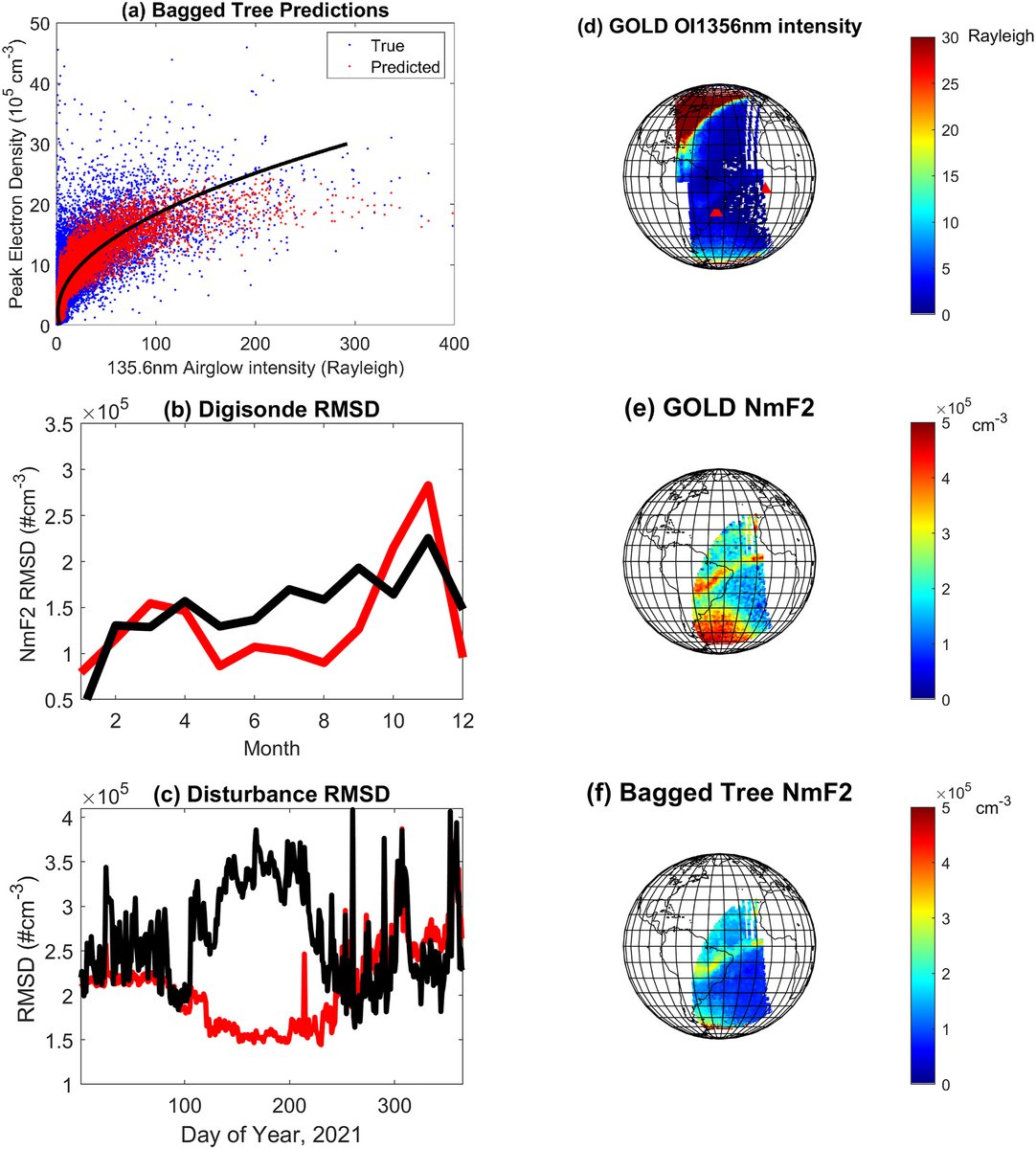
#paperday: A new method to estimate the ionospheric peak density from nighttime airglow intensity using the Bagged Trees method of the machine learning technique. Accepted for Publicaiton in Earth and Space Science. 👉Read it here: https://t.co/Mo6WRE5MPr
#paperday: "The velocity dispersion profiles from the MaNGA survey were categorized into four groups — flat, declining, ascending, and irregular — using machine learning techniques." Accepted for Publication in RAS Techniques and Instruments. Read it here: https://t.co/L1DyH9vsbM
Published in #RASTI RAS Techniques & Instruments: "Classifying MaNGA velocity dispersion profiles by machine learning", Duann et al. This is Fig. 1: for the caption & to read the paper visit https://t.co/ffm1LrzCQi
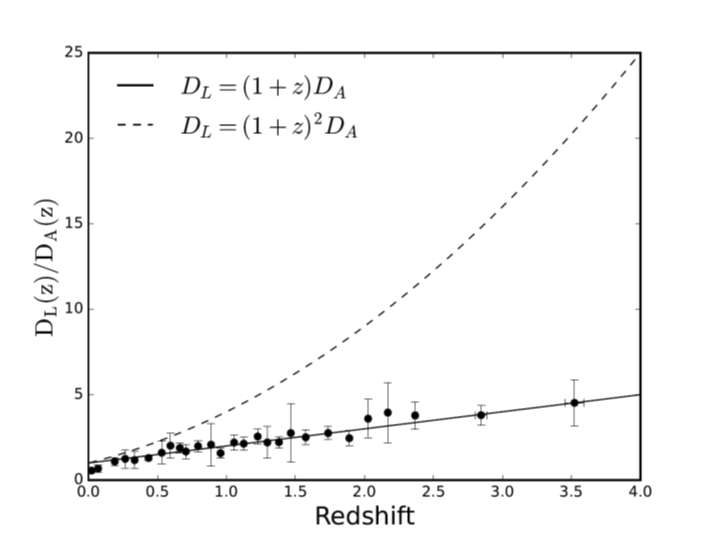
#NewPaper published in ApJ Letters by @AAS_Publishing, reports a weird phenomenon: the evolution of radio sources precisely mimics a nonexpanding universe. Major results are in the plot. A thread explains it. Read it at: https://t.co/OnNc1VTYEN
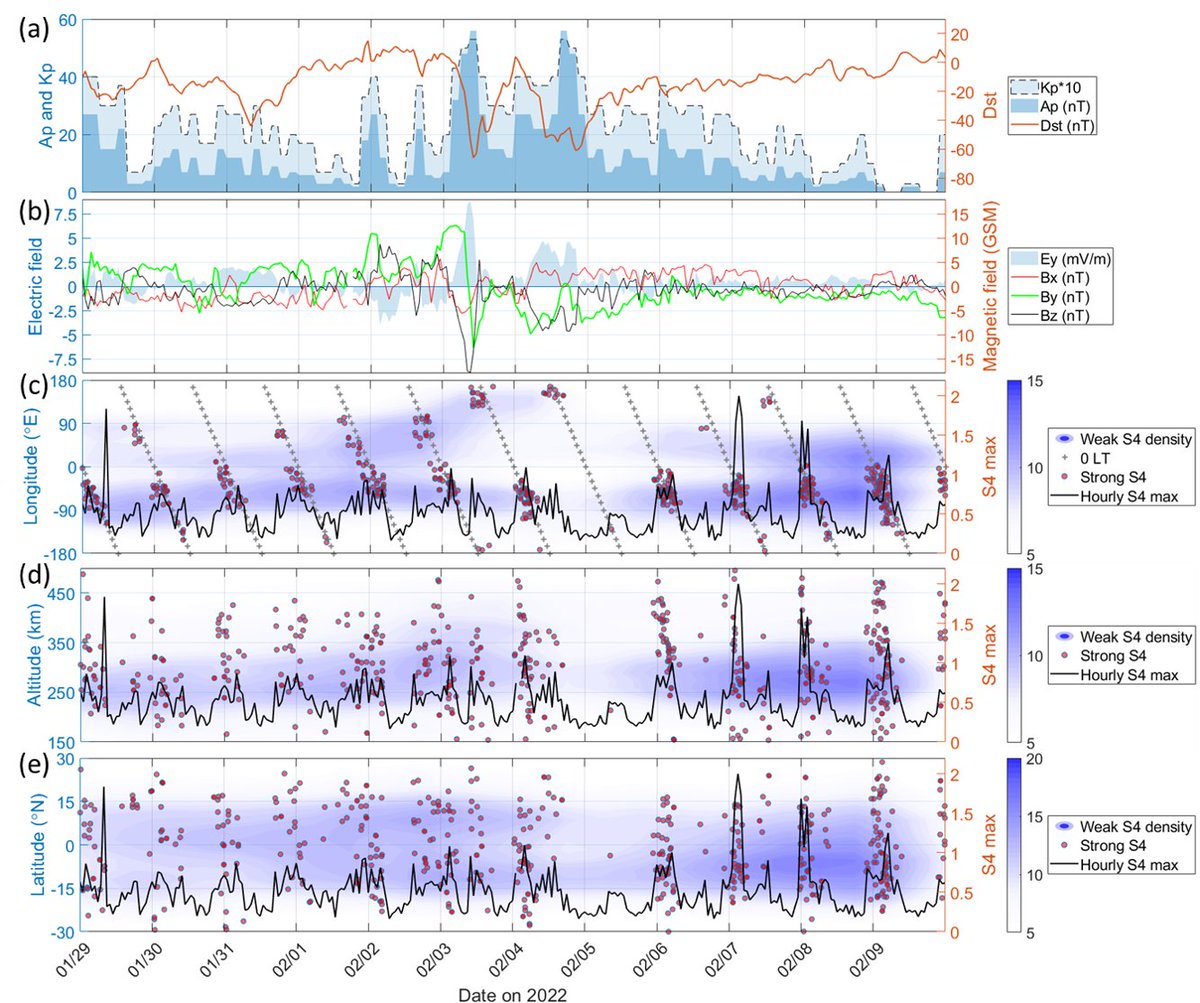
#paperday: "The concurrent loss of SpaceX Starlink during geomagnetic storms provides a unique opportunity to study ionospheric irregularities." Accepted for Publication in Advances in Space Research (ASR). Read it here: https://t.co/asAf3TryHD
#paperday: "The velocity dispersion profiles from the MaNGA survey were categorized into four groups — flat, declining, ascending, and irregular — using machine learning techniques." Accepted for Publication in RAS Techniques and Instruments. Read it here: https://t.co/L1DyH9vsbM
New paper published in Advances in Space Research!
Variability and distribution of nighttime equatorial to mid latitude ionospheric irregularities and vertical plasma drift observed by FORMOSAT-5 AIP in-situ measurements from 2017 – 2020
https://t.co/oX6K2dpSsz
You know that how-to for writing Nature abstracts?
I had a go at making one for lay summaries. Check it out...
(more detail and accessible version in the thread)
A tight mass-velocity dispersion relation (MVDR; black solid line) was found on the BCG-cluster scale, albeit at a larger acceleration scale. Moreover, MaNGA BCGs display almost flat velocity dispersion profiles, even in the innermost region.
https://t.co/mx1TK9zgSL








![DuannYi's tweet photo. 🚀 #PaperDay: We developed and validated photochemical inversion models to retrieve [O⁺] profiles from 630.0 nm airglow emissions, advancing the study of the mid-latitude ionosphere. Published in Geoscience Letters! 📄✨
👉 Read it: https://t.co/PcBoHiWkqX
#Ionosphere #Science https://t.co/M14vZXPRCA](https://pbs.twimg.com/media/GfPDXhiaYAEHDb3.jpg)