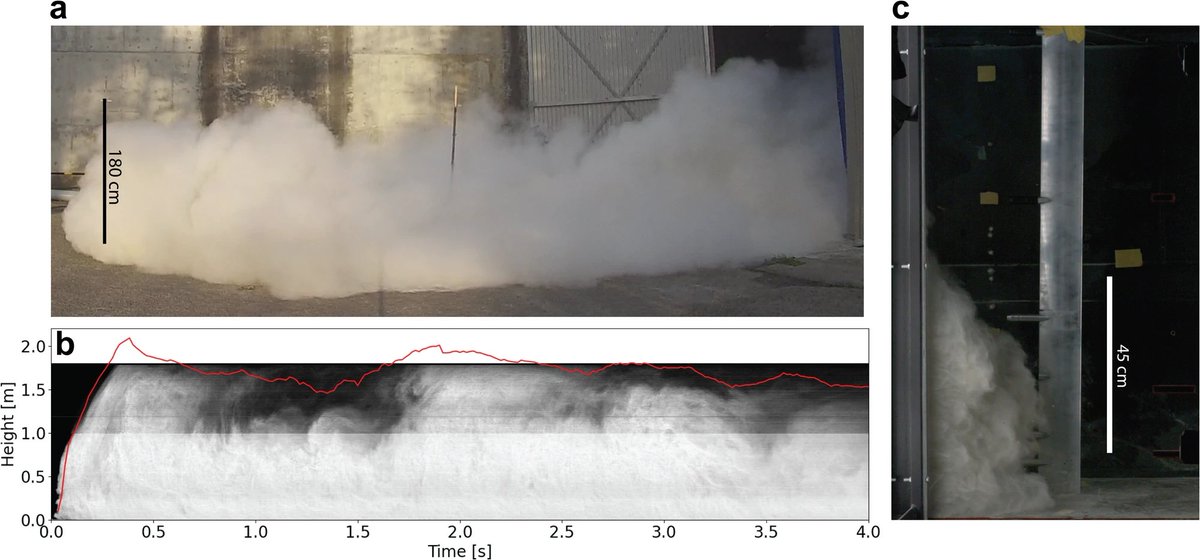
🔊Internal amplification of the dynamic pressure in dilute pyroclastic currents suggests that flow-building interactions are stronger when multiphase flow dynamics are accounted for.
@Duhle3 @ecpbrear @DufekLab@EMeiburg@VolcanicRiskNZ@MasseyUni
🔗https://t.co/yI1vXGwTnv
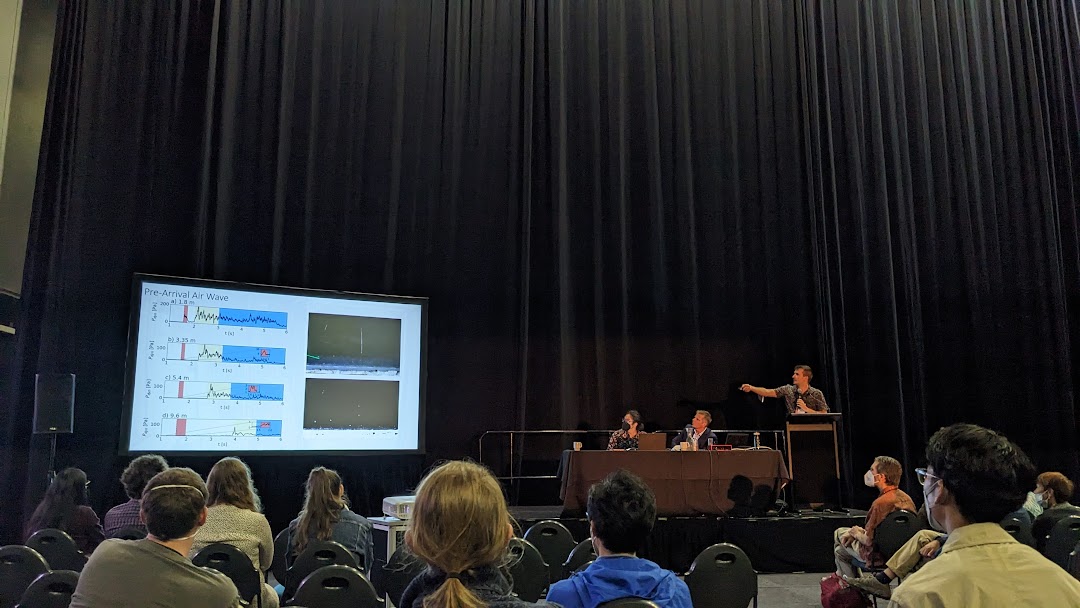
Yesterday I had the opportunity to present parts of my PhD research at the #IUGG conference. This time I presented results on the vertical structure of dilute #PyroclasticDensityCurrents. I enjoyed great talks and meeting researchers from around the world.
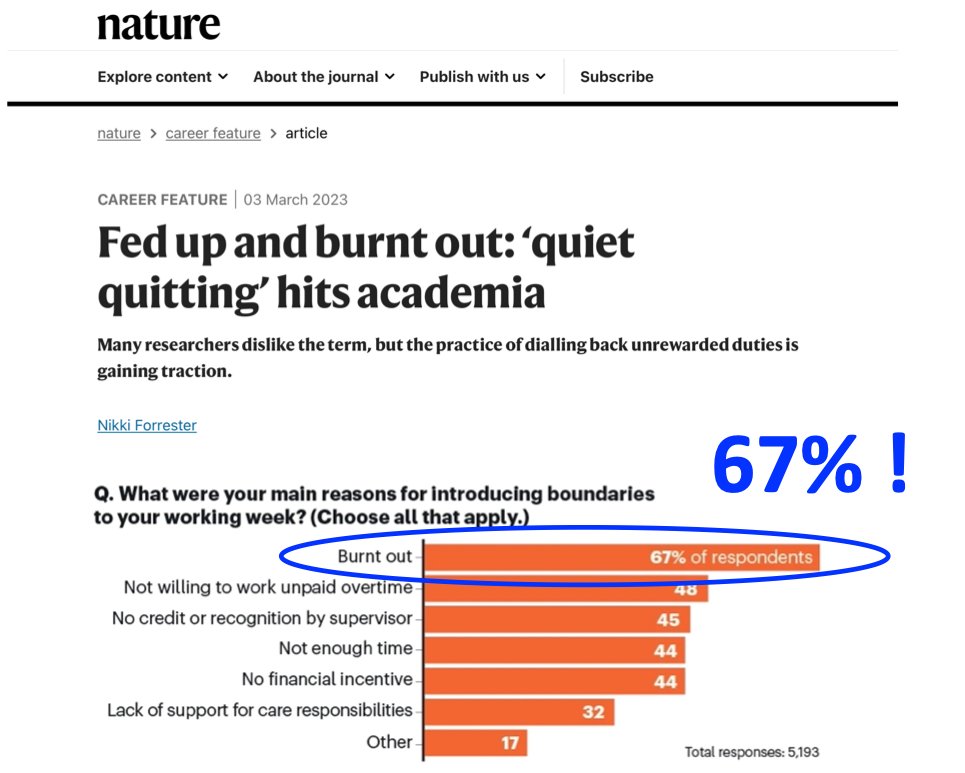
No reward - no duties. 75% of respondents have reduced the hours spent on academic duties since 2020 (Nature polls).
Mostly due to burnout and unwillingness to work for free.
This included attending conferences, peer reviewing manuscripts and grant proposals, committees, mentoring and even teaching.
Why?
Because scientists are tired of not being able to do #science.
- Students are tired of being unappreciated and overloaded
- Faculties are tired of “community duties” that become overwhelming (conferences, committees, reviewing, outreach, etc)
And everyone is tired of small salaries, zero empathy and little credit.
The problem is greatly summarized by Isabel Müller (in the article):
“There’s so little acknowledgement that people have difficult, complicated lives outside of work.”
A year ago, Nature described how PhD students don’t want to be postdocs and faculties are leaving academia. Now, we see that those who stayed are trying to resist the system from the inside.
But the problem is - the system is too rigid, too traditional and too elitist.
So, as a community, we can change it only by raising our voices and expressing distaste with the status quo. I applaud Nature for writing about these issues so regularly. The academic world has too many interdependent parts which should be addressed concurrently.
This is why we should stay united and strong as a community.
Regarding the academic environment we all hope to have, I loved how Isabel Müller put it in the article:
- I hope it becomes the new normal to say: “My life matters. My work is an important part, but I decide what my life looks like, not my employer”.
#AcademicTwitter #education
Today an article about my PhD work at @CENunihh and receiving the Günter Bock Prize from the @dgg_news was published in the newspaper from my home region @Kreiszeitung . Check out the article on the link below (it's in German though).
https://t.co/MppLlBKHli
Throwback to #IAVCEI2023 in Rotorua, were I presented our research linking multiphase turbulence and the destructiveness pyroclastic currents. A publication of this is in preparation and will hopefully be accessible soon. #turbulence#volcanology#multiphasephysics#fluiddynamics
@mhusnirizal @VolcanicRiskNZ The setup is designed to reproduce fully scaled PDCs in a controlled environment. Details on design and scaling are explained in Lube et al. (2015). PELE is currently used to benchmark numerical models.
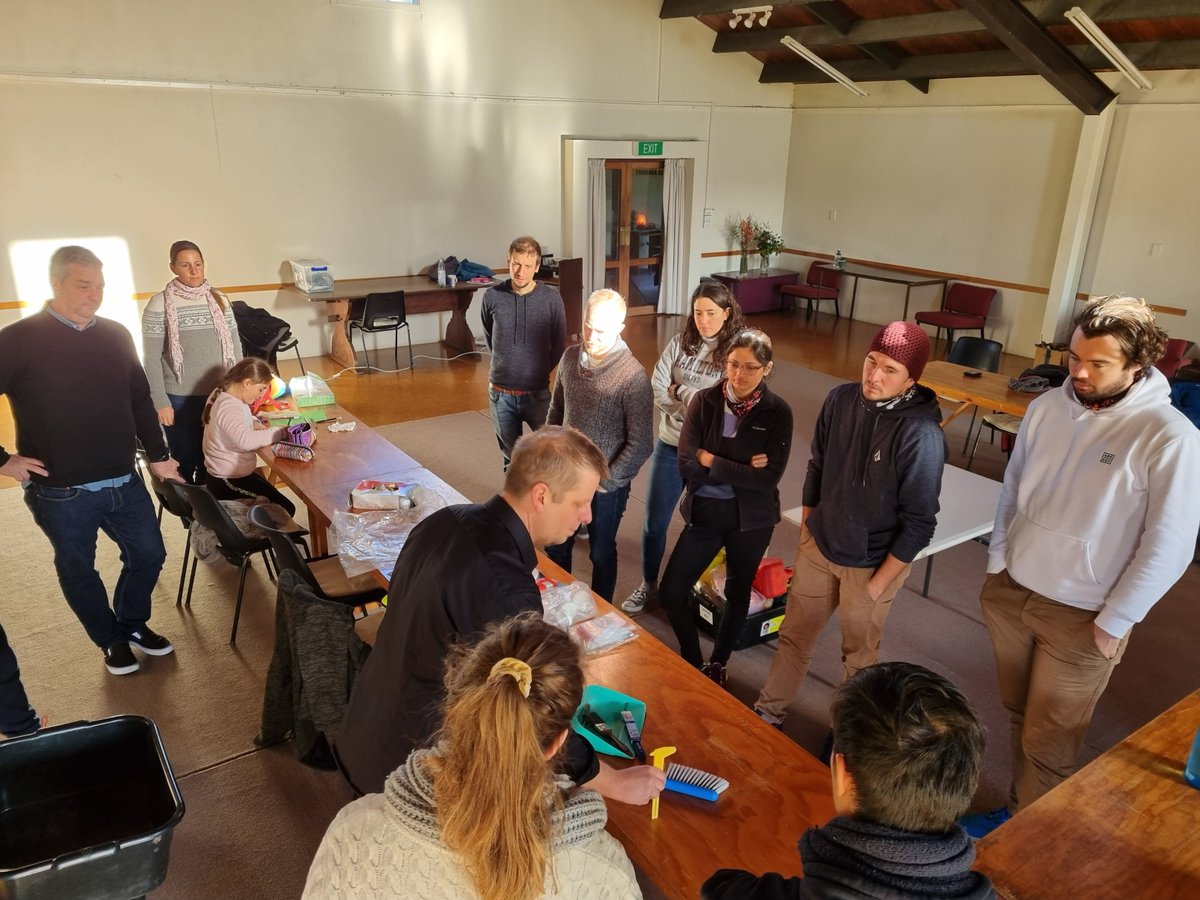
Our physical #volcanology team had an early start on Sunday morning for another #PDC experiment using the #PELE facility. This #experiment involved 200 kg of volcanic ash from #Taupo heated to 120°C and took months of preparation by our #PhD and #MSc students @MasseyUni
@Sojiro_Fukuda @Roberto_Fndz @VolcanicRiskNZ@MasseyUni@Volcanologist We are measuring different parameters along vertical profiles to understand the vertical structure of the flows better. This includes concentrations, grainsize distributions, velocities, dynamic pressures, and temperature.
And we use natural volcanic material.