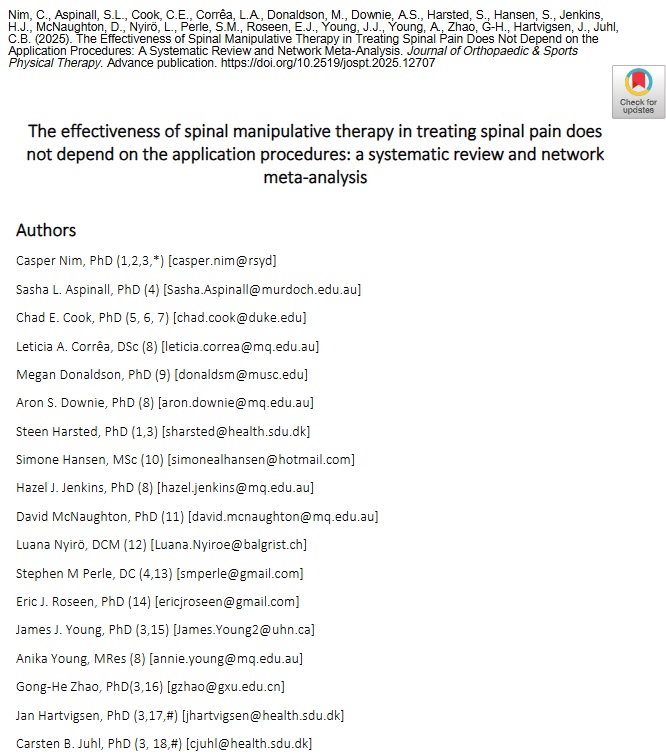
CONVERGE speaker: This presentation addresses the intricacies of patient safety and adverse events of SMT from an innovative approach merging clinical and basic sciences - It will deepen your understanding of manipulative therapy forces and how it relates to safety!
CONVERGE speaker: This presentation explores mechanisms of manual therapy and their role in patient outcomes. It emphasizes mechanistic research, clinical trials, and the importance of understanding what drives patient outcomes to inform personalized and effective care.
CONVERGE Plenary will explore mechanisms of SMT which can clarify when and why therapeutic techniques are effective. But what are mechanisms and how does one find them? The plenary will share insights from recent philosophical research on mechanisms in the life sciences.
New paper on categorizing mechanisms. A notable step toward understanding whether mechanisms research is applicable to clinical practice. https://t.co/bTbtgo5ZAt
Two new blogs on the Duke CEMMT website https://t.co/epJjXRrgfL 1) Is myofascial pain syndrome a legitimate primary diagnosis and 2) risk of bias measures can be biased. Contributions from @DamianKeter and Ken Learman. We would love to hear your thoughts. Nearly 30 blog posts.
CEMMT and AAOMPT have partnered and the "hand's one, hand's off" podcasts are available on both sites. Check out our newly edited site here: https://t.co/NZ8dc4FjaW
CEMMT has over 500 paper summaries involving multiple study types and body regions. Each paper has a summary of the findings and strengths and weaknesses. All available for free. https://t.co/N5vICLI86S
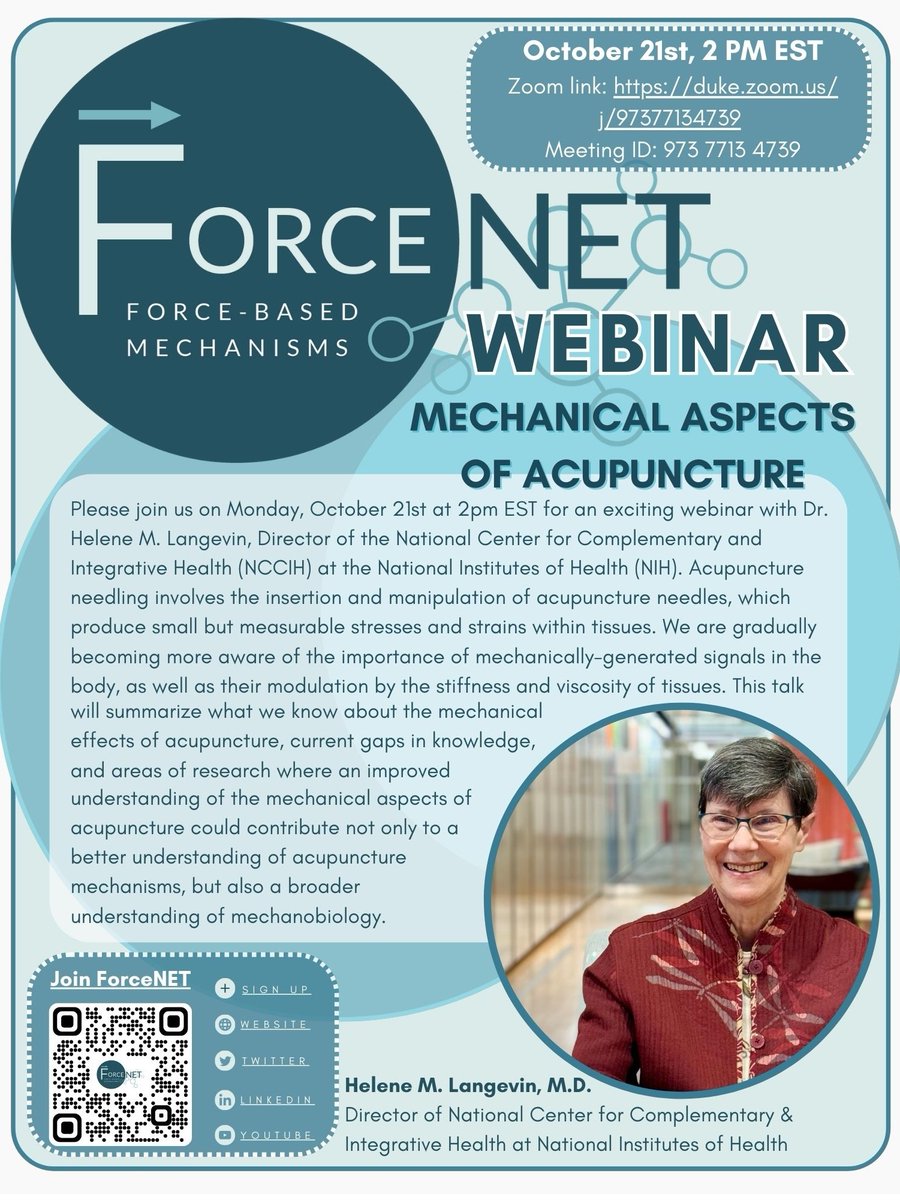
Join us (@ForceNET5) on Monday, October 21st at 2PM EDT for a free webinar from Director of NCCIH Dr. Helene Langevin; the topic - the mechanical aspects of acupuncture. https://t.co/Li0FI78mUQ
@RobinLarssonRPT Yes, the authors state "However, it must be remembered that RCTs are not an appropriate study design for detecting rare, serious AEs, and thus no conclusion can be drawn about the causal association between cervical manipulation and serious AEs"
"In conclusion, HVLA manipulations do not pose a greater risk of mild or moderate AEs than do various control interventions such as mobilizations, sham manipulations, or exercises". https://t.co/2GpWNldRBO
In the conclusion of this open access paper https://t.co/r9eTzFftJl the authors give recommendations on how to describe the mechanisms of spine manipulation to patients.
Cervical vs. cervicothoracic or thoracic spinal manipulation: outcomes are disability and ROM. Similar findings for ROM but not disability. https://t.co/FS3pVTVm85