We're the Heitman lab at @DukeMGM. We're interested in sexual reproduction and the emergence and evolution of microbial pathogens. Account run by lab members.
Excited to share our new preprint on confirming the essentiality of four genes in mating-type locus in Cryptococcus neoformans! MYO2, although predicted to be essential, is dispensable for cell viability and important for cytokinesis and pathogenicity. https://t.co/DFhGA2funz
In the latest @PNASNews , we discovered that RNAi-loss is more common than expected in the global population of Cryptococcus neoformans, driving distinct evolutionary paths: hypermutation via transposon accumulation or survival without hypermutation. https://t.co/EuKVZNS0F1
Check out our latest preprint on RNAi epimutations!🧬https://t.co/Ju7jj1vD7x Our team has shown how spontaneous RNAi-based epimutations conferring drug resistance in a human fungal pathogen are transmitted to the next generation following sexual reproduction. More details? ▶️🧵
🚨New Preprint🚨
Can signaling cascades modulate expression status even before turning genes on and off in the nucleus?
We studied and found a direct role of calcium-responsive calcineurin signaling in RNAi at P-bodies, governing gene expression levels.
https://t.co/md26o4Budy
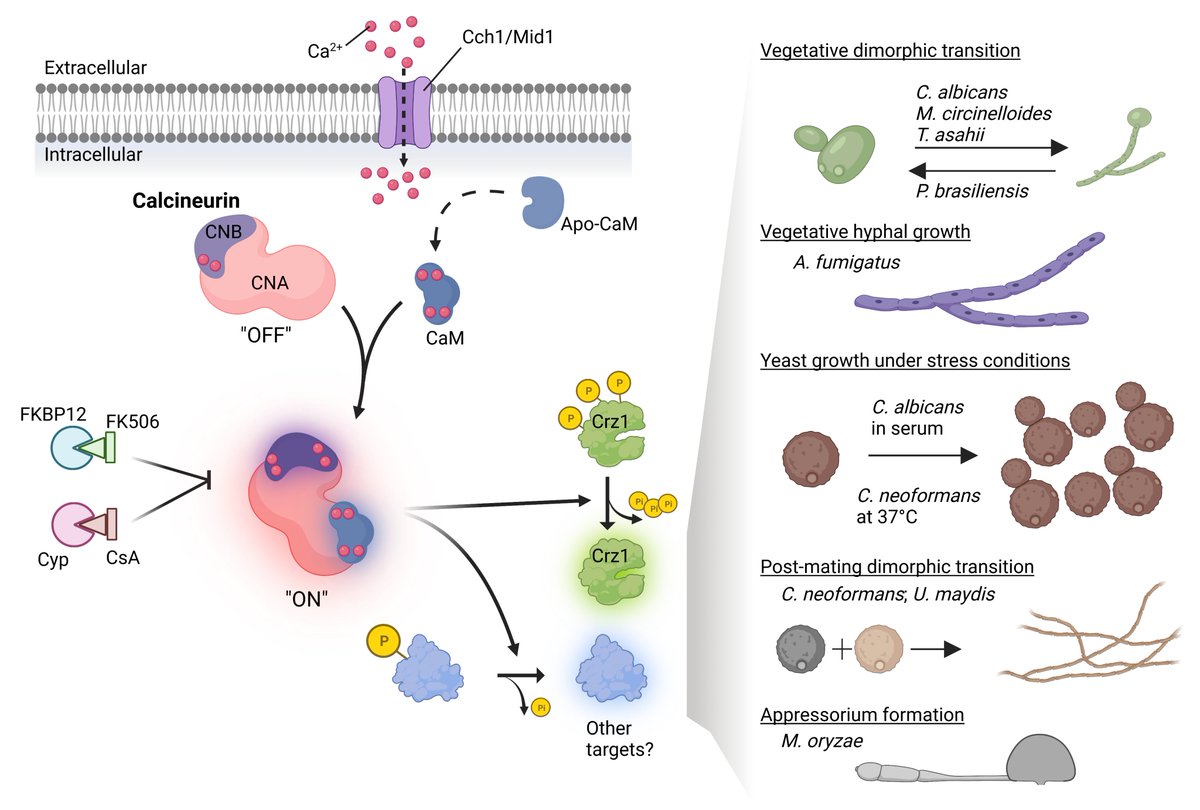
The latest @PLOSPathogens Pearls article by @VikasYadavSci is now out. He reviews the essential roles of calcineurin in the virulence of #fungal pathogens of animals and plants and discusses what future studies should focus on to target this Achilles heel.
https://t.co/UzjnFUHAZo
We wrote a review on the importance of stress-responsive calcium-calcineurin signaling in fungal pathogens and how understanding this signaling cascade can be extremely fruitful. Read on -
Calcineurin: The Achilles’ heel of fungal pathogens
https://t.co/eTRC6Pn7zr
The study highlights the importance of active surveillance of IFDs and the collaboration between mycologists and clinicians, and calls for research on innovative approaches to diagnostic tools and new antifungals that can improve the global survival rates associated with IFDs.
While the overall incidence of major IFDs and their mortality rate remained relatively stable, the study observed increased fungemia in older population (mainly due to infections by C. albicans), as well as concurrent IFD infections.
The study highlights the importance of active surveillance of IFDs and the collaboration between mycologists and clinicians, calls for research on innovative approaches, include diagnostic tools and new antifungals, that can improve the global survival rates associated with IFDs.
While the overall incidence of major IFDs and their mortality rate remained relatively stable, the study observed increased fungemia in older population (mainly due to infections by C. albicans), as well as concurrent IFD infections.
Using surveillance data collected by the French National Reference Center for Invasive Mycoses and Antifungals, a recent report in mBio by the French Mycoses Study Group provides an updated comprehensive overview on the epidemiology of invasive fungal diseases (IFDs) in France.
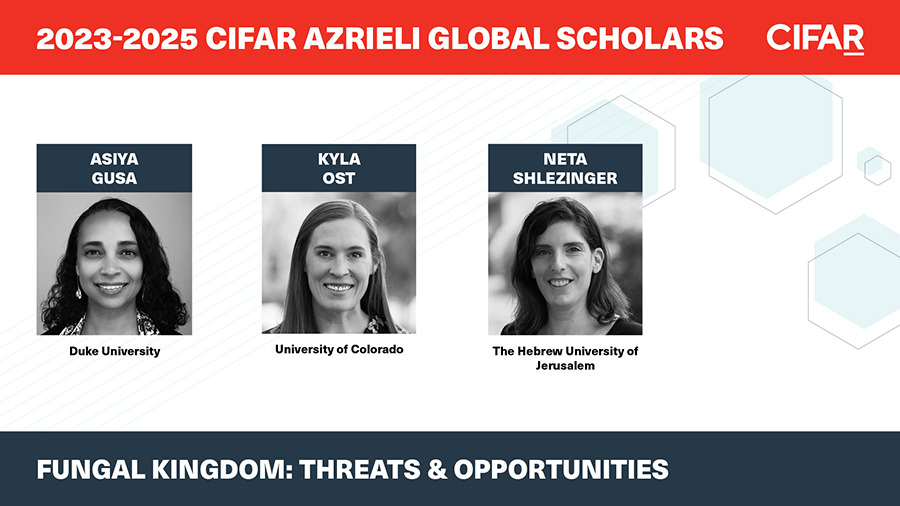
Fungal Kingdom: Threats & Opportunities welcomes Asiya Gusa (@AsiyaGusa, @DukeU), Kyla Ost (@KylaOst, @CUAnschutz) and Neta Shlezinger (@ShlezingerLab, @HebrewU).
https://t.co/0WosN6yBGv
Congratulations to two leading luminaries in fungal genetics, Amy Gladfelter and Regine Kahmann, on their recent election to the American Academy of Arts and Sciences!!!
https://t.co/JjVp88OZQr
https://t.co/dGs5HKZhZ3
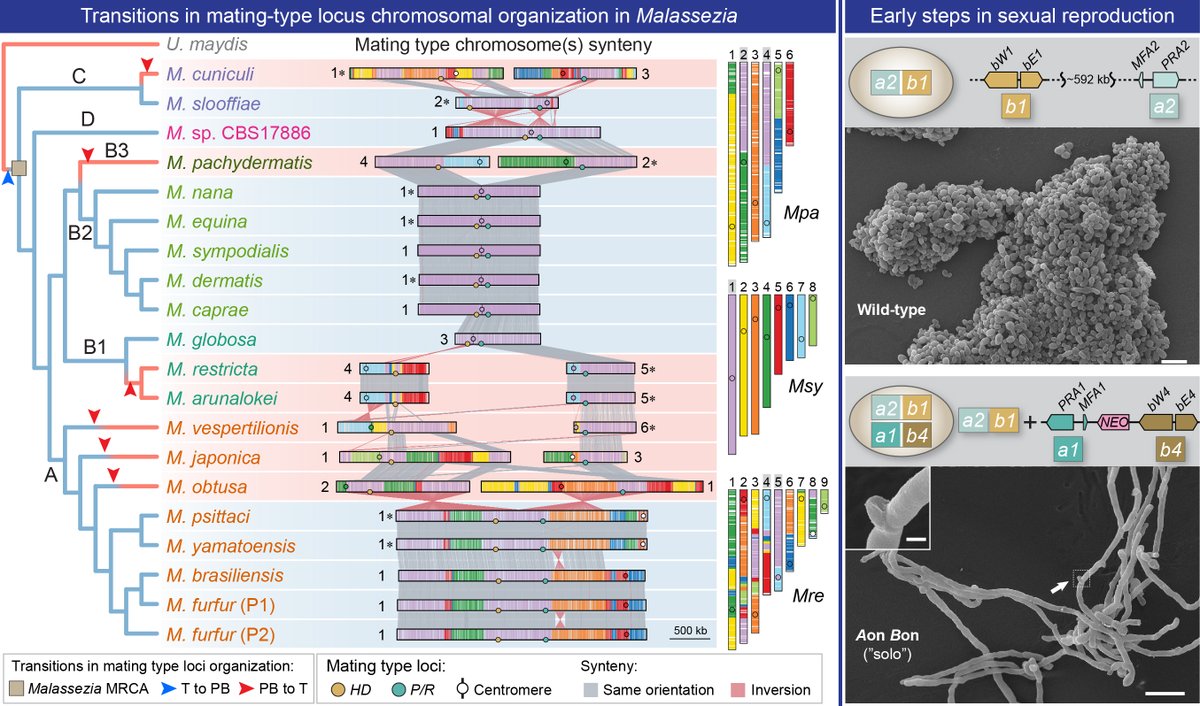
Excited to share our new preprint on transitions in mating-type locus chromosomal organization in Malassezia and early steps in sexual reproduction https://t.co/cJ5AmGGKFx. Kudos to @MarcoACoelho1, @giuseppe_ianiri and @MrciaDavidPalm1, and all authors, for their contributions.
An updated version is now available for the study from @magwenelab, which uses the interaction between amoeba and human fungal pathogen Cryptococcus neoformans to test the “accidental pathogen” hypothesis. https://t.co/1M9M2gapmZ
Congratulations to Allan Jacobson and Lynne Maquat who received the 2023 Gruber Genetics Prize for landmark studies on nonsense mediated mRNA decay. Allan founded PTC Therapeutics which developed drugs used globally to treat human genetic diseases.
Our review about evolution of sex - "the queen of all problems in evolutionary biology" through a microbial perspective was just published in @PNASNews.
@DukeHeitman#fungi#evolution
https://t.co/yLJTFTc8Mj
Hope you enjoy reading it!
A microbial perspective on the evolution of sex focussing on variations of sexual reproduction in #fungi is out now in @PNASNews. This is the inaugural article by Joe, as a National Academy of Sciences member. https://t.co/5DSJJQYfhA