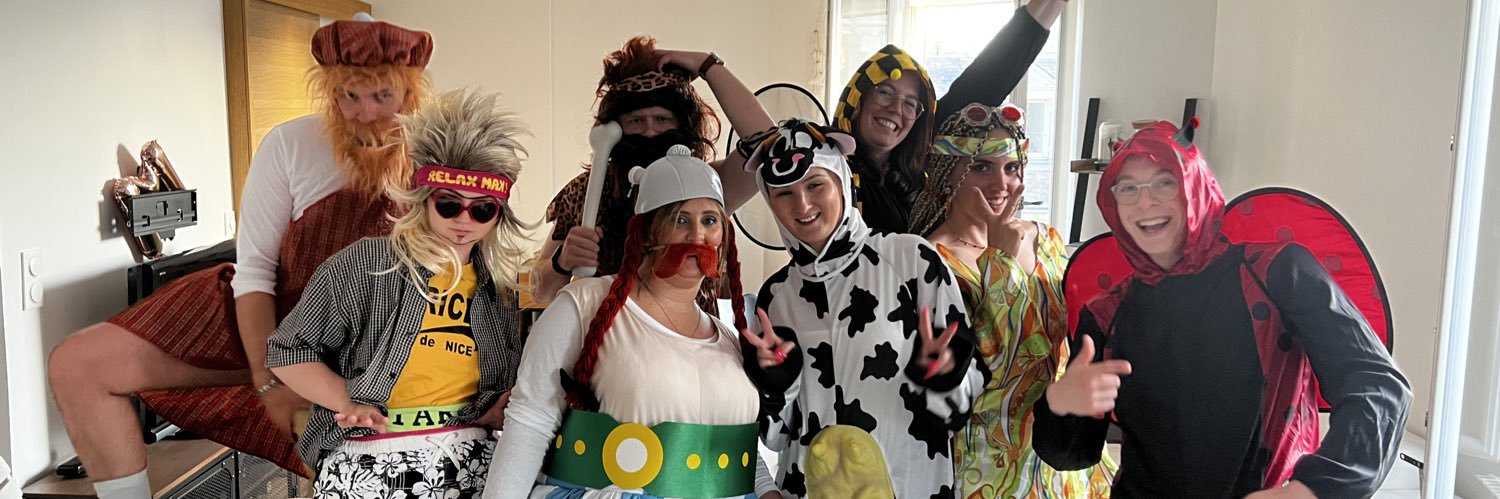
Vous ne tolerez pas les roux, les gros, les gays, les trans, les noirs, les arabes, les asiatiques, les femmes... mais vous voulez vivre avec des vampires et des sirenes mdr je donne pas 1 an a ces espece pour que les humains les fasse disparaitre
Estas dos tortugas gigantes han estado peleando entre sí durante más de 120 años.
Según el zoológico, una tortuga robó la comida de la otra hace 120 años, y desde ese día se convirtieron en enemigas.
No ha habido un solo día en que no peleen durante 2–3 minutos😂
The cat humanity betrayed: Félicette
France. A small cat living on the streets was dragged into a fate she never chose.
The French space agency gathered 14 cats from the streets of Paris to select one to send into space.
Félicette was one of them. She was trained for months.
Electrodes were implanted in her brain. She was spun in centrifuges. Kept in pressure chambers.
On October 18, 1963, she was placed inside a rocket. No one asked for her consent.
After launch, she spent 15 minutes in space.
Her brain activity was recorded. Every breath monitored. Every reaction noted. She was valuable to scientists, but only as a test subject.
The capsule landed. Félicette survived.
And her reward? A few months later, she was killed so her brain tissue could be examined.
Then scientists admitted: they learned nothing from the experiment. Félicette died for nothing.
For decades, even her name was forgotten.
She was called “Astrocat” and erased. The French space program gained critical data thanks to her, yet she didn’t even have a statue bearing her name for years.
In 2019, after a campaign started by students at the University of Cambridge, a memorial was finally built. 56 years later.
Félicette never volunteered. She didn’t deserve any of this. Yet she went down in history, along with humanity’s shame.
On behalf of humanity, I’m sorry, Félicette. Because of our selfishness, you lost your short life for nothing. Please forgive us. 😭💔
Cuando abrimos el testamento de mi abuela, nadie se lo creyó:
Me lo había dejado TODO a mí.
La casa.
Las joyas.
Los ahorros.
Todo.
En la notaría, el silencio duró dos segundos.
Luego empezaron:
“Esto tiene que estar mal.”
“Seguro que la manipulaste.”
“Vamos a impugnar, esto no es justo.”
Mi madre no me miraba.
Mi tío apretaba los papeles como si se los fueran a quitar.
Yo solo pensaba:
“¿Por qué a mí?”
El notario repitió, imperturbable:
“Su abuela lo dejó muy claro. No hay duda jurídica.”
Pero el problema no era la ley.
Era el ego.
Esa misma noche empezaron los mensajes:
“Tú sabes que la abuela no era consciente.”
“Lo normal es repartirlo entre todos.”
“Si no compartes, rompes la familia.”
La familia ya estaba rota.
Solo que el dinero la había dejado en evidencia.
Una semana después, me llamó el cura del barrio:
“Tu abuela me dejó algo para ti. Dijo que vinieras cuando empezaran a decir que eras una aprovechada.”
Tragué saliva.
“¿Te dejó más cosas?”
“Digamos que te dejó munición.”
Al día siguiente fui a la parroquia.
Me llevó a una sala pequeña… y cuando abrió una puerta del fondo, me quedé parada.
Orcas eat great white sharks. They hunt seals, dolphins, and baby whales. They have never killed a single human in the open ocean. Not once, in all of recorded history.
An orca's brain weighs up to 15 pounds. Yours weighs about 3. They have roughly double the brain cells we do in the regions that handle complex thought. A neuroscientist at Emory named Lori Marino put an orca brain in an MRI and found these animals can tell different species apart underwater. They do it by sending out clicks that bounce off everything around them and come back as a kind of 3D sound map (this is called echolocation). From 500 feet away, an orca knows you're a human and not a seal. It skips you on purpose.
The answer is culture. Orcas around the world are divided into at least 10 separate populations, each with its own food rules, its own language, and its own way of hunting. All of it learned from their mothers. One population eats only fish. Another eats only marine mammals like seals and sea lions. These two populations can live in the exact same water and never swap a single meal. A baby orca learns what food is from its mother, and that list stays the same for life.
In the Pacific Northwest, one population called the Southern Residents eats almost nothing but Chinook salmon. Scientists have documented them killing harbor porpoises 78 times over six decades, carrying the dead porpoises in their mouths, and never once eating them. Even when the group was starving. A 2023 study in Marine Mammal Science looked at all 78 cases and concluded it was play. These orcas would rather go hungry than eat something their culture says isn't food.
Researchers studying whale behavior in 2001 found that orca cultural traditions "appear to have no parallel outside humans." Each family group has its own dialect, its own version of the language. Calves spend about two years just learning how to make all the sounds their family uses. Mothers will slow down a hunt on purpose so their young can watch.
In 2005, a 12-year-old kid was swimming in Helm Bay, Alaska when an orca came at him full speed. At the very last second, the orca seemed to realize it was charging a human. It bent its entire body in half and turned back to open water. In captivity, it goes differently. SeaWorld's Tilikum killed three people during his life in a concrete tank. Research from 2016, published in the journal Animals, traced it to psychological collapse from being locked away from the family bonds orcas need to stay stable.
I think calling this a "mystery" undersells the science. Orcas decide what to eat based on culture, not instinct. No orca mother has ever taught her calf to hunt humans, so no orca hunts humans. Only about 75 of those salmon-eating Southern Residents are still alive. Their pregnancy failure rate is 69% because we've destroyed their salmon runs. They won't break their food culture to survive. Whether we care enough to protect theirs is the part that actually matters.
Des nouvelles 72h après le tweet :
- Une enquête a été ouverte (basicfit)
- elle a lu les commentaires bienveillants
- et surtout elle va revenir s’entraîner le matin
Merci à tous sérieux c’est du jamais vu avec l’ampleur du tweet tout à été si rapide
Histoire vraie.
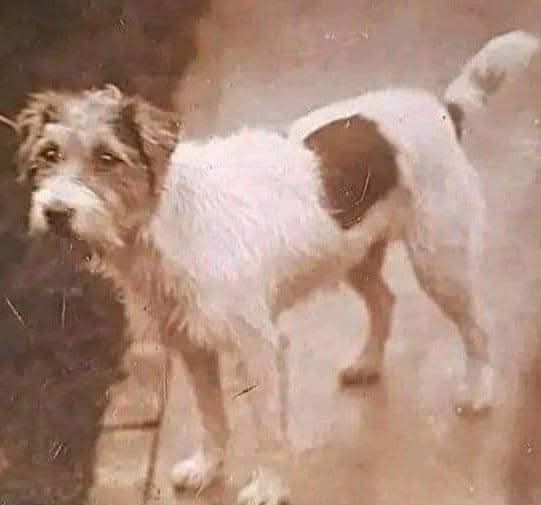
Ce chien s'appelait Gunner. Mon oncle l'avait ramené de la Seconde Guerre mondiale. Il avait été élevé et dormait sous le canon anti-aérien de mon oncle. L'équipe du canon partageait ses rations pour le nourrir. Quand il a eu 18 mois, mon oncle disait qu'il se levait et regardait le ciel. S'il se recouchait, ils savaient que tout allait bien. S'il grognait et hérissait le poil, ils se mettaient en position. Il reconnaissait le bruit des avions allemands et mon oncle disait qu'il ne s'était jamais trompé. Il disait que Gunner valait mieux que n'importe quel système d'alerte précoce. Je suis probablement le seul de la famille à connaître encore cette histoire, alors j'ai pensé la raconter avant qu'elle ne se perde à jamais, comme tant d'histoires de cette époque doivent l'être. Merci de l'avoir lue.
Il était iranien. Il s'appelait Mohammad Mehdi Karami. Il avait 22 ans en 2022 quand le régime défendu par Rima Hassan l'a pendu. Son crime : préférer les garçons. Chez LFI, on défend évidemment les LGBT, sauf quand c'est un régime ami qui les assassine.