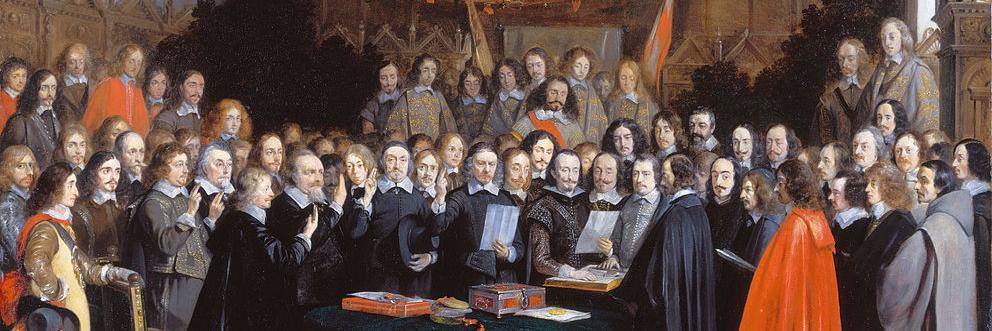
G7 nations agree to significantly expand military support for Ukraine
The G7 nations have agreed to step up military aid to Ukraine. This includes the delivery of additional air defense equipment, new air defense systems, interceptor missiles, and long-range weapons.
The joint statement on Ukraine contains no mention of negotiations, a ceasefire, or a peaceful resolution to the conflict.
The focus is on continuing to support Ukraine, strengthening its position on the battlefield, and increasing pressure on Russia.
The document underscores the need to give Ukraine fresh momentum to counter Russian aggression.
Fascinating argument by Bloomberg's top energy analyst Javier Blas 👇: he argues that China effectively saved the world economy during the Iran war by absorbing the brunt of the global oil supply shock on its own, without visible economic damage.
According to his calculations, China "cut its average daily waterborne oil imports by the same amount as the combined oil consumption of Germany, France and the UK."
And, still according to Blas, they "did so without suffering economic harm" because they could rely on many levers: their huge strategic petroleum reserve, a massive surge in EV usage, their remaining coal-fired electricity capacity, and coal-to-chemicals replacing lost feedstocks.
Had China not been ready to absorb that blow, a good argument can be made that the economic damage to the West, and the world at large, would have spiraled far beyond what we saw.
Effectively, China's energy strategy at all levels (petroleum reserves, EVs, etc.) and its ability to withstand huge supply shocks paid off for everyone, not just for them.
It sounds awfully familiar: in 2008 too it was China's stimulus package and continuous buying of US Treasuries that averted a complete breakdown of the global financial system.
So twice in 20 years the country the West loves to present as a "threat" to the global economy effectively saved it from a US-made global economic disaster 🤷
🚨🇺🇸🇮🇷 The markets celebrated the moment Hormuz reopened toll-free, but the agreement behind that headline may be far weaker than anyone wants to admit...
The MOU that supposedly ended the standoff was reportedly signed without Israel or the Gulf states agreeing to the terms, which leaves one question hanging over everything: if Israel strikes Hezbollah the morning after signing, what stops Iran from shutting the strait all over again?
Maersk has already refused to change a single shipping route because of it.
Then comes the bombshell:
The roughly $300 billion in war reparations now being floated may be expected from the Gulf states themselves, the same countries that were bystanders and still got hammered, with Qatar's LNG facilities permanently damaged and three quarters of its economy tied to energy.
That is where my guest, former Goldman Sachs commodities chief Jeffrey Currie, makes his sharpest point.
He argues the entire post-war bargain, oil priced in dollars and protected by the US Navy, has quietly broken, and that the world is sliding from strategic alliances into purely transactional ones.
He contrasts it with 1991, when American power left the world in awe, and calls this moment the exact inverse, a superpower visibly stepping back while a multipolar order takes its place.
He also breaks down why oil is trading below where it sat the day the war began, why capital is pouring into tech and the SpaceX IPO, and why he believes markets have stopped telling the truth.
Full conversation below.
@CommodMkt
🚨 BREAKING: Fox News confirms a massive strategic humiliation for the Trump administration.
Despite constantly boasting about American military supremacy, Washington was literally forced to sign a deal just to beg Iran to reopen the vital Strait of Hormuz!
**Breaking** David Grusch: "I have seen photos of UFO Crash Retrievals" 👽🛸
"This is the most earth shattering thing that changed my world view"
"They were everything from flying discs to egg shape craft & every other morphology"
"They landed or crashed on the surface of the earth"
UFO Disclosure just escalated to a new level.
🚨ExxonMobil is internally studying Woodside Energy as an acquisition target.
Woodside ADRs jumped 6% on the news.
After a $60 billion Pioneer deal, Exxon may be about to make the biggest LNG bet in industry history 🇦🇺⚡
Bloomberg reported ExxonMobil has been running internal M&A scenarios on multiple targets Woodside Energy is among them.
No offer yet, but the market reaction says investors think the logic is real.
Why Woodside fits Exxon's playbook perfectly?
North West Shelf, Pluto LNG, Scarborough Pluto Train 2 (under development).
Browse gas resources.
60–70% of Woodside's revenue is LNG, flowing into Japan, Korea, China on long-term contracts.
Exxon already runs LNG out of QatarEnergy, Golden Pass (Texas, >18 mtpa), PNG and Mozambique.
Adding Australia completes the global LNG map every major basin, every major Asian buyer.
What Exxon is actually building?🧱
Pioneer gave Exxon the Permian.
The signal after closing: more M&A where long life, large scale assets can anchor decades of cash flow.
Woodside is exactly that a Tier-1 operator with long-life gas in the world's highest-value LNG market. 💰
⚠️Woodside is Australia's flagship upstream company.
Any US supermajor takeover goes through Australian foreign investment and national interest review.
A full deal would likely be a multi tens of billions transaction comparable to Pioneer in scale.
💡also Shell, bp, TotalEnergies... Every major is trying to lock in long-term LNG volume for Asia right now because the Iran war just made every buyer in the world want contracts signed yesterday.
The race to own premium LNG supply is accelerating.
Woodside is one of the last mega prizes available.
(subscribe to my newsletter link in my bio)
🚨Greece just doubled its US LNG offtake from Venture Global to 1 million tons per year for 20 years.
This is about routing American LNG into Ukraine, Bulgaria, Romania, Hungary and beyond.
The Vertical Corridor is being filled 🇬🇷🇺🇸⚡
Atlantic-SEE LNG Trade the AKTOR/DEPA Commercial JV set up specifically for this purpose expanded its SPA with Venture Global LNG from 0.5 to 1.0 mtpa, starting 2030.
Venture Global already holds 25% of regasification capacity at the Alexandroupolis FSRU in northern Greece.
That terminal connects directly into the Vertical Corridor.
What the Vertical Corridor actually is?
A south to north gas motorway built on reversed Trans Balkan Pipeline flows and upgraded interconnectors.
Capacity: up to 10 bcm/year once complete.
Route: Greek LNG terminals → Bulgaria → Romania → Hungary → Slovakia → Moldova → Ukraine.
Designed explicitly to replace Russian pipeline gas in the Balkans🌍
Greece's pivot is already advanced.
60–70% of Greece's LNG imports in 2024 were already from the US
Alexandroupolis, Revithoussa, upgraded interconnectors Greece has built the infrastructure to monetise transit, not just consume.
Why Venture Global keeps signing?
Most EU utilities are avoiding 20-year SPAs right now.
Venture Global is locking them in anyway Greece, Romania, Germany, France.
Long-term volume anchors project finance.
Every SPA signed is a brick in the Calcasieu Pass 2 and CP Express funding stack💰
1 mtpa is modest, but it anchors a corridor that can scale to 10 bcm/year.
The architecture replacing Russian gas in Eastern Europe is being built contract by contract.
Greece is the foundation.
Today, I’m releasing never before seen intelligence revealing new evidence of past US government funding for more than 120 biolabs in over 30 countries, including Ukraine.
In support of President Trump‘s Executive Order to end federal funding of dangerous gain of function research around the world, and increase transparency and accountability, ODNI will continue working with partners across the Administration to identify where these labs are, what pathogens they contain, and what “research” is being conducted.
https://t.co/pLMD0krc69
🇮🇷🇺🇸 Iran's @MehrnewsCom out with details of "the 14-point draft" of the MOU, as per "a source close to the Iranian negotiating team:"
▪️Permanent and immediate cessation of war on all fronts, including Lebanon.
▪️America's commitment to non-interference in Iran's internal affairs and respect for the sovereignty of the Islamic Republic of Iran.
▪️Complete lifting of the naval blockade within 30 days
▪️America's commitment to withdrawing its forces from around Iran
▪️Reopening the Strait of Hormuz within 30 days with Iranian arrangements
▪️Suspension of sanctions on the sale of oil, petrochemical products and derivatives and full access for Iran to its financial resources.
▪️The need for the United States and its allies to present reconstruction plans for Iran worth at least $300 billion.
▪️60 days of negotiations to reach a final agreement based on nuclear issues and the complete lifting of primary, secondary, US sanctions and resolutions of the UN Security Council and the Board of Governors of the International Atomic Energy Agency
▪️Reiterating Iran's commitment in the NPT not to produce nuclear weapons
▪️During the negotiations, the United States has committed not to increase its forces in the region and will not impose new sanctions.
▪️Release $24 billion in blocked Iranian funds during the 60-day period of final negotiations. Half of this amount must be made available to Iran before the negotiations begin.
▪️Establishing a monitoring mechanism to implement the agreement.
▪️The final agreement will be approved by a UN Security Council resolution.
▪️The final negotiations will not begin before the release of half of Iran's frozen funds, the suspension of Iran's oil sanctions, and the lifting of the naval blockade. The final agreement will be made solely on the fate of enriched materials and enrichment, the lifting of sanctions, and the Iranian economic reconstruction program. Discussions about Iran's missile program and support for resistance groups have been definitively removed from the agenda.
"As the Foreign Ministry spokesperson announced, this text still needs to be reviewed and finalized by the relevant institutions in Iran."
This is a really fascinating paper that everyone interested in China's industrial policy should read.
It destroys so many myths (see below), and is written by deeply credible people who conducted over three years of fieldwork in China and interviewed 60+ Chinese officials, entrepreneurs, and engineers. When it comes to China studies, it literally doesn't get more rigorous than this.
First myth it destroys: contrary to popular belief, Beijing's industrial policy didn't build the companies that became China's EV champions. They rose largely **despite** it, through its cracks.
For sure, Beijing did favor EVs as an industry and pushed hard for it but their big bet was SOEs (State Owned Enterprises): research grants, pilot programs, licenses, cheap credit - virtually all of it flowed to state firms.
The result? China's actual EV champions - BYD, Geely, NIO, XPeng, Li Auto, etc. - are overwhelmingly private firms that succeeded despite Beijing favoring their SOE competitors.
How so? Because, when favoring SOEs, the central government didn't just pick winning companies, it picked winning cities, each SOE being anchored in a specific city: Shanghai (SAIC), Changchun (FAW), Wuhan-Shiyan (Dongfeng), etc.
Which means that every city not on the list, that wanted a piece of the auto boom, had only one option left: team up with private entrepreneurs who were equally excluded from central government favor.
That's what truly fueled China's EV miracle: an alliance of the excluded, between local private entrepreneurs and local mayors.
This is the biggest misconception this paper destroys: the reality is that the "Chinese state capitalism" that many in the West think powered the EV boom actually tried to block many of these companies from existing. In effect, it was closer to an obstacle course that local actors (mayors and provinces) learned to game.
Geely - now the third largest automaker in China - is a fantastic example of this.
First of all, it started off illegal since, to build passenger cars, you had to have a central government license and they couldn't get one. Zhejiang Province told them to go ahead regardless because the province had hundreds of auto parts suppliers but no carmaker of its own.
It's only a couple of years later, recognizing the fait-accompli that Geely was producing cars and was competitive, that the central government admitted them to the National Sedan Catalog - effectively legalizing them retroactively because there were facts on the ground.
Then there was the Volvo acquisition in 2010, which is fair to say - looking back - proved to be the most strategically valuable acquisition in Chinese automotive history. Despite it being presented at the time (and still described this way today) as "China buying Volvo", all 3 major state-backed banks in China (Export-Import Bank, China Development Bank, Bank of China) refused to finance the deal. The only state-bank money Geely managed to get was a $200 million loan from a provincial branch of China Construction Bank - a tiny fraction of what the deal required.
Geely actually did the deal with Goldman Sachs money via Hong Kong plus loans and equity from four local governments (Chengdu, Zhangjiakou, Daqing, Shanghai's Jiading district), each of which bought in by securing a Volvo plant or headquarters for itself.
In effect, the doors that Beijing controlled were largely closed to Geely, but it made it because the doors subnational actors controlled were opened.
Which all means this paper destroys another very common myth: the big merit of the central government in all this was to be relatively chill about it, to NOT be dictatorial.
I just imagine if that had happened in France and you had - say - the mayor of Lyon or Marseilles open, fund and promote an unlicensed carmaker against Renault: the préfet would shut it down within weeks, and the mayor would be lucky to escape prosecution.
That's the irony: on industrial policy, the supposedly "totalitarian" Chinese state proved more tolerant of local defiance than most Western liberal democracies would be. Beijing's greatest contribution to the EV miracle wasn't the plan - it was looking the other way while the plan was being violated.
To be sure, the paper doesn't hide the costs of this system: ferocious local competition also produced what's known today in China as "involution" (内卷-Neijuan, basically a hypercompetitive price war), as well as some spectacular failures. For instance one county lost 6.6 billion yuan on a carmaker that never really made cars.
But that's precisely the point: this is a high-risk, high-reward model of decentralized experimentation, the very opposite of the careful central planning Westerners imagine.
I've repeated this countless times but it bears repeating again: the single greatest misconception people have about China is - probably because we wrongly associate communism with centralized control - that it is a monolith run from Beijing. Some even say it's run by "one man."
The reality is the exact opposite: China is, in practice, one of the most decentralized countries on earth. Roughly 85% of government spending in China happens at the subnational level - against about 30% in the average OECD country (and even less in France, which is actually one of the most centrally controlled countries on earth). A Chinese mayor commands fiscal resources, land, investment funds and policy latitude that virtually no Western mayor could dream of.
Last but not least, I'd be remiss not to mention what the paper has to say on the positive legacy of Mao and its role in the rise of EVs (given I myself wrote an article titled "Mao's economic record wasn't bad, actually": https://t.co/1NZgHqBHwg).
When it comes to China myths, none is more entrenched than the idea that Mao left behind nothing but ruins.
This paper confirms a key argument of my article: Mao's deliberate dispersal of industry across China (during the Great Leap Forward and Cultural Revolution decentralizations) left dozens of cities with their own small auto works. Inefficient, yes - but these scattered factories survived into the 1990s and became the seed stock of everything that followed: the industrial base, the engineers, and the production licenses that EV startups would use to enter the market.
The paper even says it outright: the fragmentation that industrial policy "sought to eradicate" is "precisely" what "ironically enabled" the EV sector's rapid rise.
This is exactly the mechanism I described in my Mao article: structures built in the Mao era - communes becoming township governments, commune enterprises becoming TVEs, Third Front factories seeding interior industrialization - became load-bearing foundations of the reform miracle.
Fittingly, the spark for China's first municipal carmaker adventure was literally a TVE (Township and Village Enterprise), the institutional descendants of Mao's commune enterprises: Tongbao, a kit-car maker in Wuhu whose success stunned local officials into building what became Chery (one of China's biggest carmakers today). You can't tell the story of China's EV miracle without crediting the legacy of Mao.
What's the biggest lesson in all this for Western policymakers?
The obvious one is that the part of industrial policy that most people assume China does and that they sometimes want to copy - i.e. the state picking winners - is actually the part that failed.
The part that did succeed is the China nobody in the West believes exists: a radically decentralized system with a high degree of tolerance for disobedience and experimentation.
We imagine China as a country where nothing happens without Beijing's approval when the reality is closer to the opposite: China's EV miracle happened precisely because localities asked for forgiveness rather than permission.
All in all, and this is the lesson I often come back to, this is yet another illustration of the importance of understanding China for what it is as opposed to the caricature we've built of it. This matters whichever "camp" you're in. If you see China as a rival, you can't compete with someone you don't understand. If you see them as a source of lessons, you can't emulate what you've misunderstood. Whatever you want from China - to compete with it or learn from it - the entry fee is the same: genuinely understanding it.
@dostalondrej Mám konspirační teorii: Kallasovou do čela ESVČ dali schválně, aby se znemožnila a spolu s ní vykuchali celou službu :D takové "plans within plans" :D :D