Black Death
The Black Death was a catastrophic pandemic of bubonic plague that ravaged Europe, Asia, and North Africa between 1347 and 1351. Caused by the bacterium Yersinia pestis and transmitted mainly by fleas on rats, it killed tens of millions and reshaped medieval society, economy, and culture. It remains one of the deadliest events in recorded history.
Key facts
-Date: 1347–1351
-Cause: Yersinia pestis bacterium (bubonic plague)
-Estimated deaths: 25–50 million in Europe; up to 200 million worldwide
-Mortality rate: 30–60% of affected population
-Primary vector: Fleas carried by black rats
Origins and spread
The pandemic likely began in Central Asia, near modern Mongolia, where plague-infected rodents carried Y. pestis along trade routes such as the Silk Road. In 1347, it reached the port of Messina, Sicily, via Genoese ships from the Black Sea region. From there it spread rapidly through Italy, France, England, Spain, and Scandinavia, reaching Russia by 1351. Poor sanitation, crowded towns, and extensive trade networks accelerated transmission.
Symptoms and forms
Victims of the bubonic form suffered fever, chills, and painfully swollen lymph nodes (“buboes”), with dark skin blotches giving rise to the term “Black Death.” Pneumonic and septicemic variants infected the lungs or bloodstream, spreading person-to-person and killing within days. Without treatment, mortality reached nearly 100% in the latter two forms.
Social and economic impact
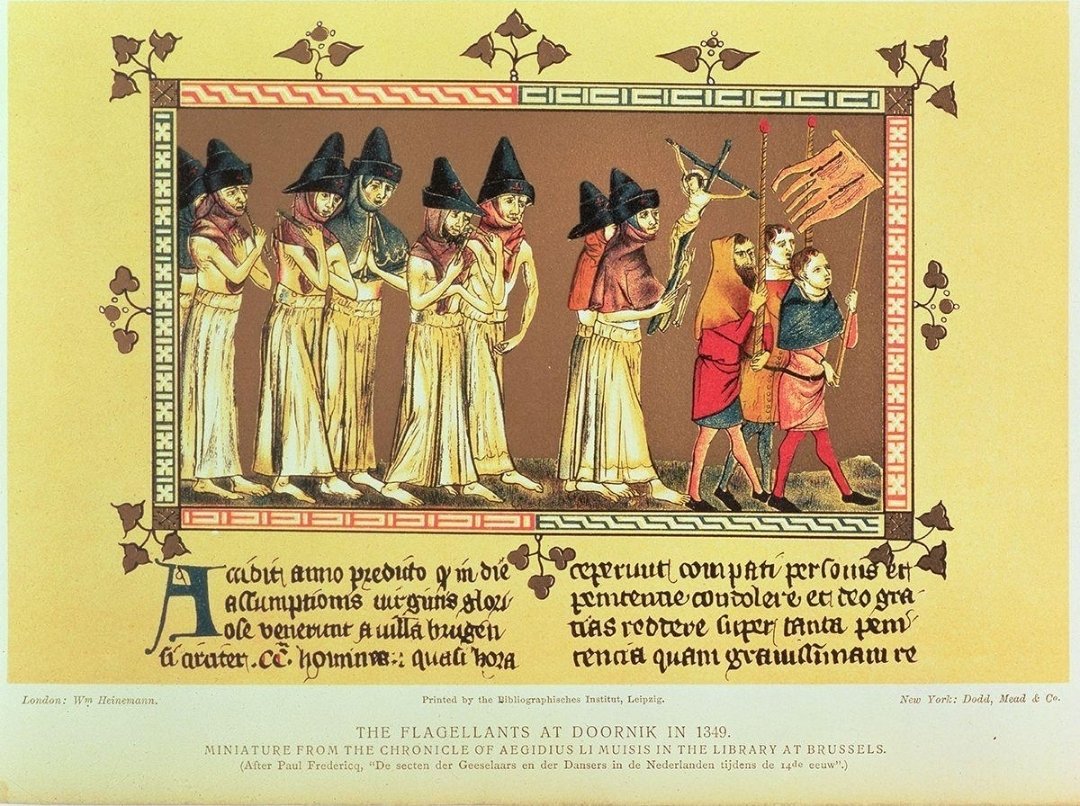
The death toll caused acute labor shortages and collapsed the feudal system in many areas. Surviving peasants demanded higher wages and better conditions, spurring long-term economic mobility. Urban decline, halted wars, and reduced agricultural output followed. The Church’s inability to halt the plague weakened its authority, while religious movements like the Flagellants and outbreaks of anti-Semitic violence revealed deep social unrest.
Cultural and historical legacy
The Black Death transformed European thought and art, inspiring macabre imagery such as the “Danse Macabre” and shaping literature from The Decameron onward. Its demographic and intellectual aftermath hastened the decline of medieval structures and contributed to the social changes that led to the Renaissance.
Genghis Khan
Genghis Khan (born Temüjin, c. 1162 – August 18, 1227) was the founder and first Great Khan of the Mongol Empire, which became the largest contiguous land empire in history. Rising from tribal obscurity, he unified the nomadic clans of Mongolia and launched campaigns that reshaped Eurasia politically, demographically, and culturally.
Key facts
-Born: c. 1162, near Lake Baikal, Mongolia
-Died: August 18, 1227, during campaign against Western Xia
-Birth name: Temüjin (Temuchin)
-Title assumed: “Genghis Khan,” meaning “universal ruler,” 1206
-Empire extent: From the Pacific to the Caspian Sea at his death
Early life and rise
Born into the Borjigin clan, Temüjin endured hardship after his father’s poisoning and family exile. Through charisma and alliances, he gathered loyal companions and defeated rival tribes. In 1206, after consolidating Mongol factions, a council of chieftains proclaimed him Genghis Khan. He reorganized tribal society into merit-based military units, curbing clan rivalries and forging a unified Mongol nation
Conquests and governance
Genghis Khan’s disciplined cavalry used composite bows, feigned retreats, and psychological warfare to overpower adversaries. His armies overran Jin dynasty (1115–1234) China, Central Asia, and the Khwarazmian Empire, devastating cities yet fostering trade across Eurasia. He introduced the Yassa code of law, a postal-relay network (Yam), and relative religious tolerance, laying foundations for the “Pax Mongolica.”
Death and succession
Genghis Khan died during a campaign against Western Xia; the cause remains uncertain. He was buried secretly near the Onon River. His third son, Ögödei, succeeded him as Great Khan and continued expanding the empire into Europe and the Middle East.
Legacy and impact
Though responsible for mass destruction—modern estimates cite up to 40 million deaths—Genghis Khan’s empire enabled unprecedented exchange along the Silk Road. Genetic studies suggest about 0.5 percent of men worldwide may descend from his lineage, reflecting his vast dynastic reach. In modern Mongolia he is revered as a nation-founding hero, while globally he endures as both conqueror and state-builder.
The siege
The siege began on April 6, 1453, lasting nearly eight weeks. Despite formidable defenses—the triple Theodosian Walls and the chain blocking the Golden Horn—the Byzantines were vastly outnumbered. Venetian and Genoese allies provided limited support, with Genoese commander Giovanni Giustiniani Longo leading land defenses. Ottoman cannon bombardment gradually weakened the walls, and Mehmed’s fleet bypassed the harbor chain by hauling ships overland into the Golden Horn.
The final assault and capture
Before dawn on May 29, coordinated land and sea attacks breached the walls near the Gate of St. Romanus. Emperor Constantine XI fell in battle, reportedly fighting among his soldiers. Ottoman troops flooded into the city, leading to looting and widespread destruction. Mehmed II soon entered in triumph, halted the sack, and converted the Hagia Sophia into a mosque, symbolizing the city’s transformation.
Aftermath and significance
Mehmed relocated the Ottoman capital from Edirne to Constantinople and repopulated it with diverse peoples, laying the foundations of a cosmopolitan metropolis. For Europe, the fall marked the end of the medieval Byzantine world and is often seen as the event that closed the Middle Ages. The flight of Greek scholars to Italy contributed to the Renaissance, while disrupted trade with Asia spurred exploration that led to new sea routes and the Age of Discovery.
Fall of Constantinople
The Fall of Constantinople (May 29, 1453) was the conquest of the Byzantine capital by the Ottoman Empire under Sultan Mehmed II. It ended the Byzantine Empire after more than a thousand years of existence and transformed the city—renamed Istanbul—into the new Ottoman capital, reshaping the balance of power between East and West.
Key facts
-Date: May 29, 1453
-Location: Constantinople (modern Istanbul, Türkiye)
-Belligerents: Byzantine Empire vs. Ottoman Empire
-Key leaders: Emperor Constantine XI Palaiologos; Sultan Mehmed II (“the Conqueror”)
-Result: Ottoman victory; fall of the Byzantine Empire
Background
By the mid-15th century, the Byzantine Empire had shrunk to Constantinople and a few enclaves. The Ottomans, having expanded across Anatolia and the Balkans, surrounded the city. Determined to complete his father’s ambitions, Mehmed II built the fortress Rumeli Hisarı on the Bosporus to cut off maritime aid and assembled a large army equipped with heavy artillery designed by the Hungarian engineer Urban.