Happy holidays from the team at @E4LTweets! We hope you have a joyful and restful break. We’ll also be having a break over the holiday period. See you in the new year!
Our guides were also a hit with educators. Here are the most downloaded guides of the year: [4/4]
🧮Improving maths in the early years (3-7 years)
🔄A school's guide to implementation
🎯Planning for impact
🧑🤝🧑Effective behaviour supports in schools
👩🏫Making best use of TAs.
… and here are the most popular approaches from the Early Childhood Education Toolkit in 2023: [3/4]
1. Communication and language approaches
2. Self-regulation strategies
3. Play based learning
Our Toolkits are a great way to learn more about evidence-based approaches. These are the most popular approaches from the Teaching & Learning Toolkit for schools for the year: [2/4]
1. Collaborative learning approaches
2. Feedback
3. Metacognition and self-regulated learning
It’s been a busy year so we’ve collated the key resources, articles and updates from E4L in 2023 in case you missed them! https://t.co/3tu54DSX1U🧵[1/4]
Our *NEW* '7-step model for working scientifically’ tool provides a framework to help primary science teachers build students' independence when working scientifically. Download: https://t.co/D5HldQ79s2
This week we are taking time to reflect on a big year. Here is a snapshot of the @E4L tweets story from 2023. Keep your eyes out for our eNews this week which looks back at the year that was.
Sign up if you don’t already receive our eNews: https://t.co/Zs5DltmcwG
Looking to implement evidence-based approaches to maths in your primary school next year? E4L's NEW 'Planning for impact in primary maths' draws together E4L resources to help you identify priorities, access evidence and plan effective implementation. https://t.co/0Npr4MHUg6
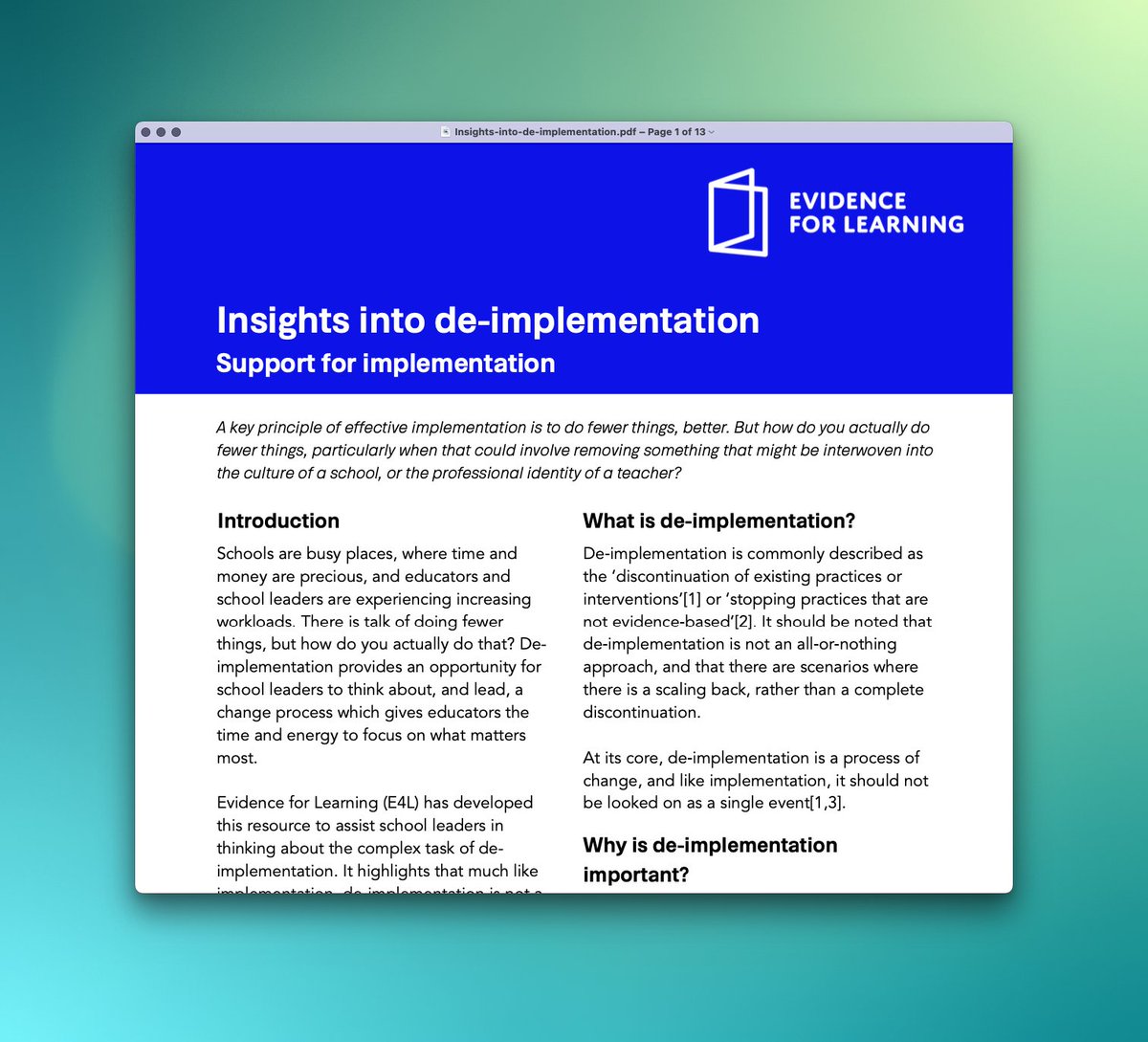
Got a spare 2 minutes? We’ve got a new short version of our video on the mechanisms likely to make PD effective.
Watch it now and then follow this link to learn more: https://t.co/vF8kf1euJT
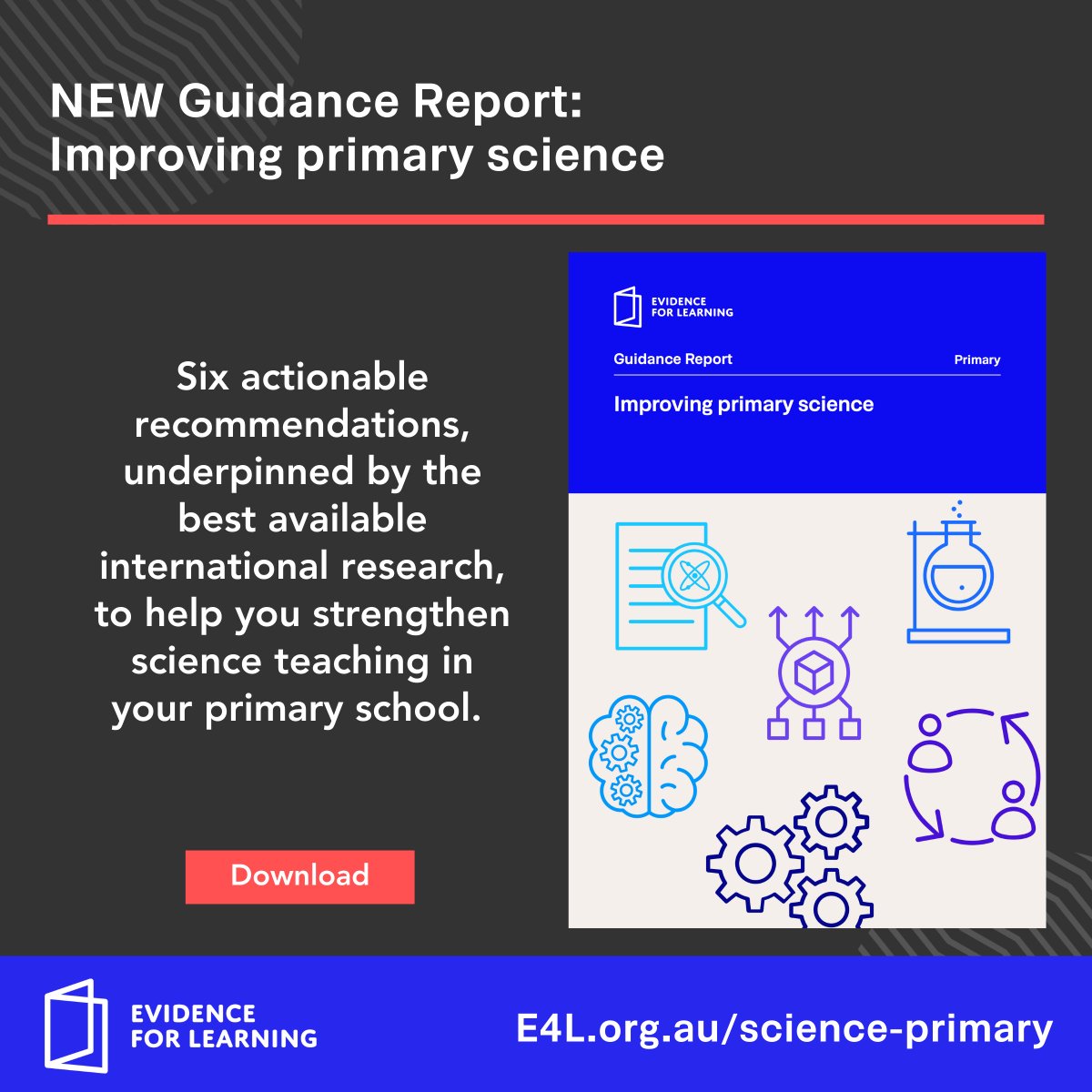
ICYMI our NEW ‘Improving primary science’ Guidance Report is an accessible overview of the best available research with clear, actionable recommendations. Download now: https://t.co/HCSC2Kh3sT
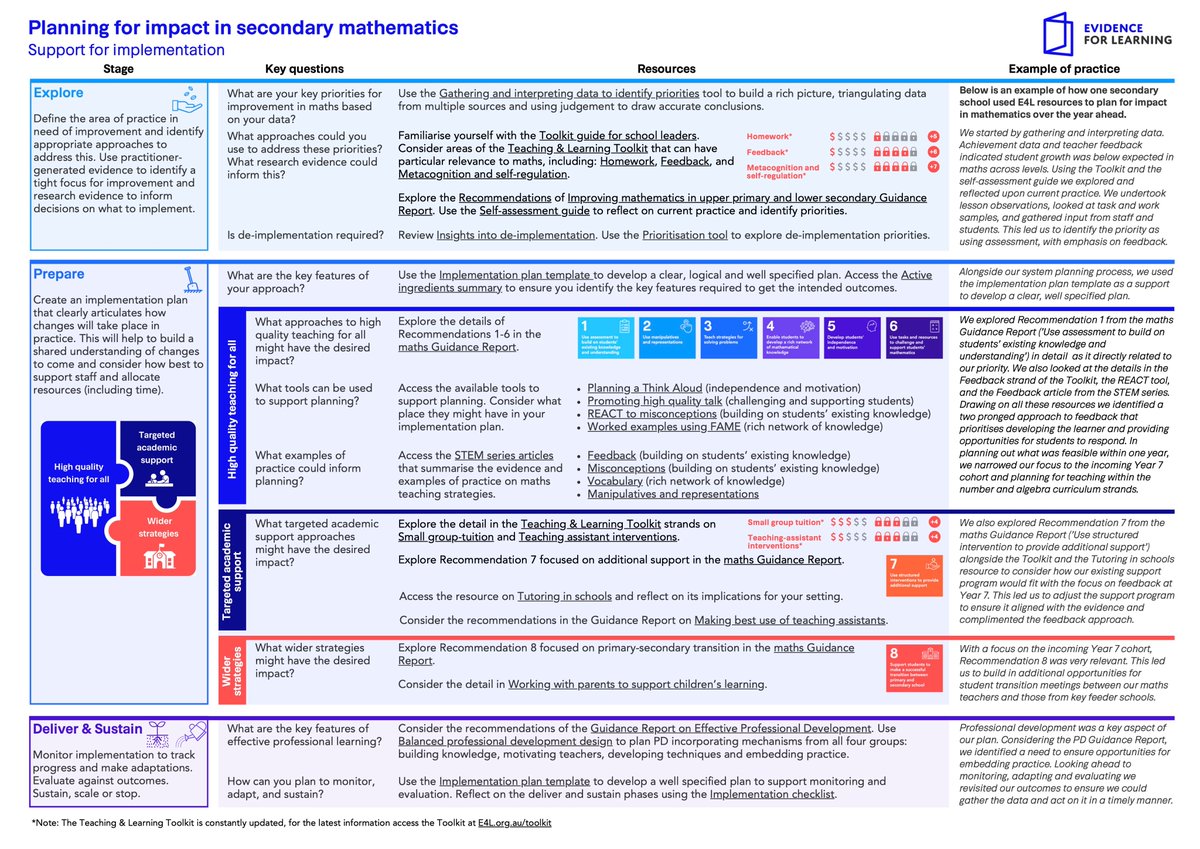
Does your secondary school have maths as an improvement priority for 2024? The 'Planning for impact in secondary maths' one-pager from @E4Ltweets draws together evidence-informed resources on mathematics & effective implementation supported by an example https://t.co/z6mQOpgrXl
Linking science learning to relevant, real-world contexts can support primary school students’ scientific development. Find out more in @E4Ltweet’s brand-new Guidance Report on how to improve science teaching in primary schools.
Download now: https://t.co/HCSC2Kh3sT
Explicitly teaching scientific words that have another everyday meaning & showing how they can be used in different contexts can support primary school students to actively participate in science learning.
Find out more in @E4Ltweets NEW Guidance Report: https://t.co/HCSC2Kh3sT
Planning professional development (PD) for 2024? We know that designing and selecting PD that’s likely to enhance practice can be challenging, so we have a NEW video showcasing PD mechanisms and explaining how they may be incorporated into effective PD: https://t.co/WaN4wOfXhb
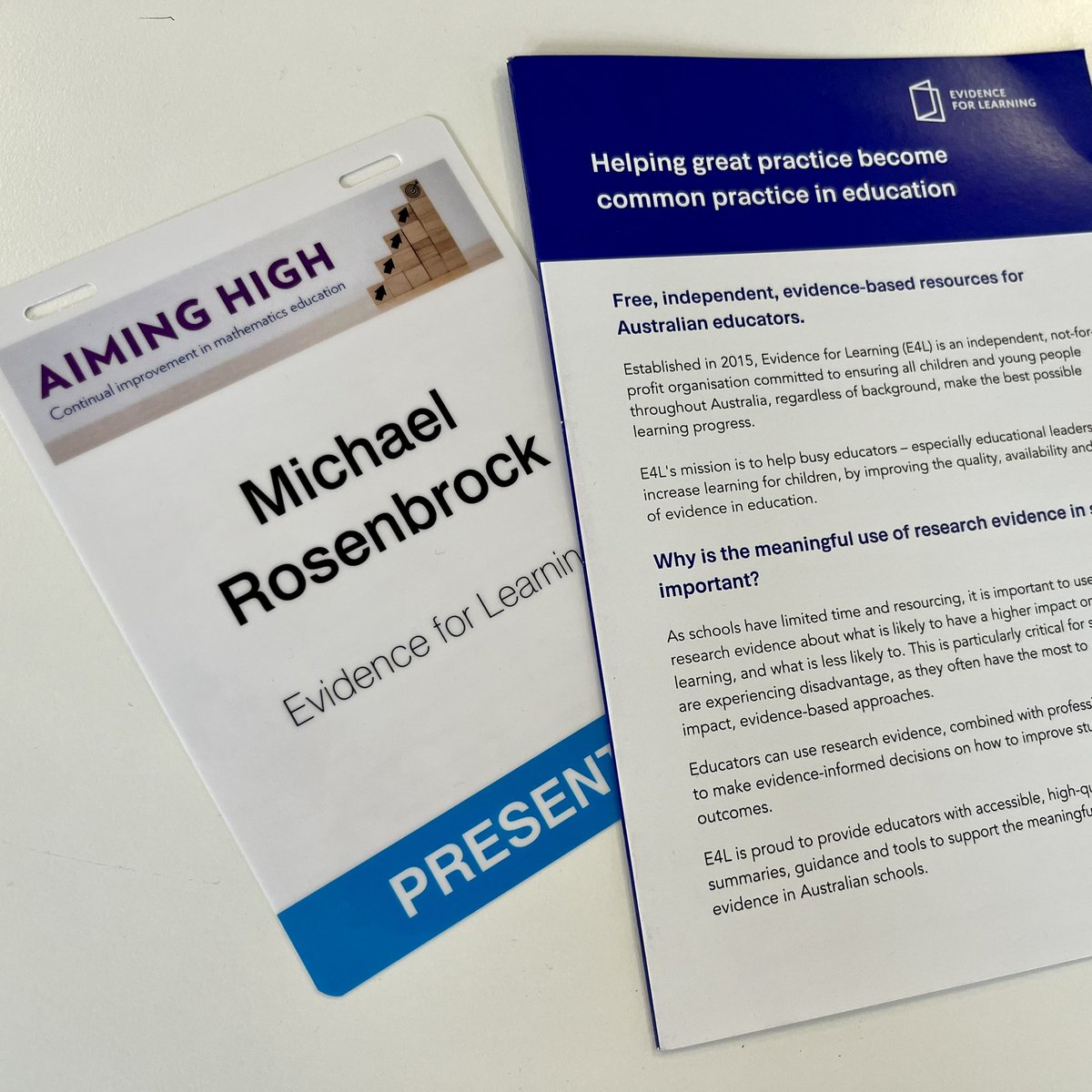
Lots of interest in putting evidence to work in maths teaching in my session for @E4Ltweets at @maths_vic#MAVCON. We explored evidence informed practice, the Teaching & Learning Toolkit, the maths Guidance Reports and supporting tools. https://t.co/GnSlY66l1p
Wondering how to improve your primary school’s approach to teaching science? Our NEW ‘Reflecting on practice’ tool supports teachers & leaders to reflect on the recommendations in ‘Improving primary science’ & plan next steps for their setting.
Download: https://t.co/HCSC2Kh3sT
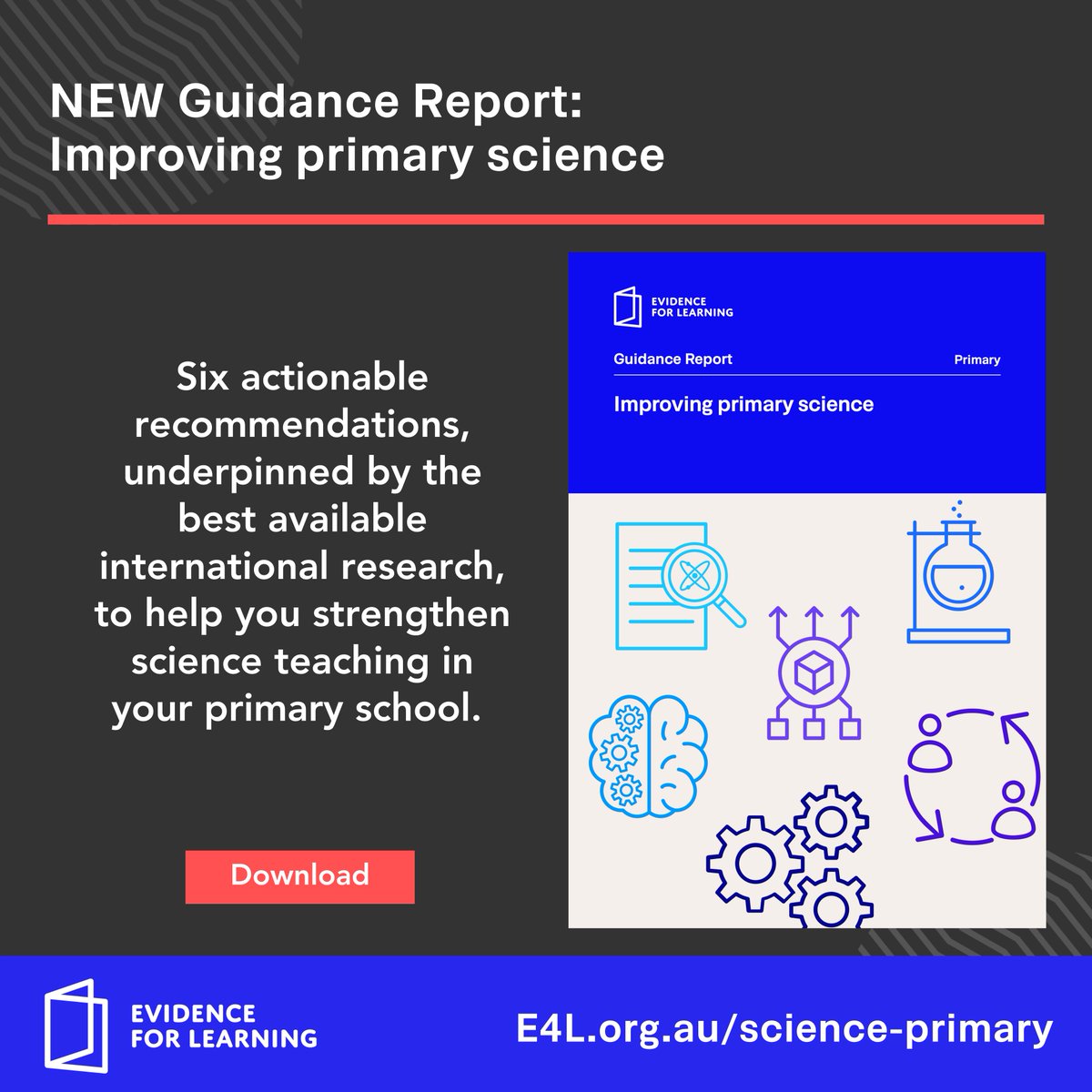
*NEW* Guidance Report: ‘Improving primary science’. Six actionable recommendations, underpinned by the best available international research, to help you strengthen science teaching in your primary school.
Download now: https://t.co/HCSC2Kh3sT
Learn more about these shifts, and the opportunities to support the better use of education evidence in education policy and practice: https://t.co/3J6z8e4woF [5/5]
3. A focus on practice: attention has moved from policy to educators and their practice. While evidence use in practice is important there is an important role for policymakers to develop capacity to support a system of evidence generation, mobilisation and use in education.[4/5]