Hundreds of thousands of people gathered today in the Bangladeshi capital, Dhaka, to join the #MarchforGaza organized by the Palestine Solidarity Movement.
Chief Adviser Professor Muhammad Yunus has invited top US businessman and Chief Executive Officer of SpaceX @elonmusk to visit Bangladesh and launch Starlink satellite service in the country.
#Bangladesh#ChiefAdviser#Starlink
On International Mother Language Day, British High Commissioner @HCSarahCooke reads from a Bengali text that has strong links to the 🇬🇧.
Listen below and see which text comes to mind 👇
Chief Adviser Professor Muhammad Yunus speaks at a meeting of National Consensus Building Commission with political parties at the Foreign Service Academy on Saturday, February 15, 2025.
#Bangladesh#ChiefAdviser
"Bangladesh’s former Government and security and intelligence services, alongside violent elements associated with the Awami League party, systematically engaged in a range of serious human rights violations during last year’s student-led protests, a report by the UN Human Rights Office has found. Drawing on testimony of senior officials and other evidence, it also found an official policy to attack and violently repress anti-Government protesters and sympathisers, raising concerns as to crimes against humanity requiring urgent further criminal investigation."
Below is the press release that accompanied the publication of the report by the UN Human Rights Office looking at events in Bangladesh between 1 July to 15 August 2024, and in particular the then Awami League government's violent response to protests.
----------
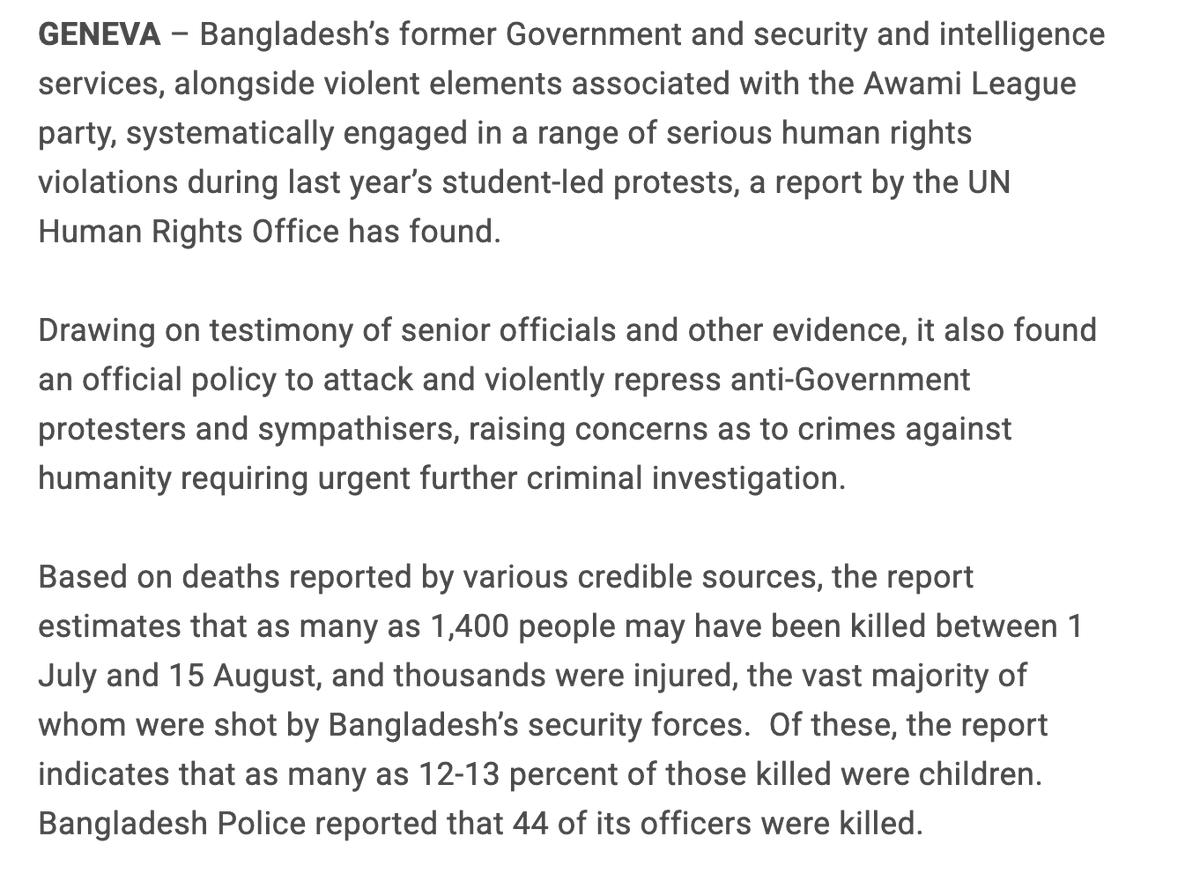
GENEVA – Bangladesh’s former Government and security and intelligence services, alongside violent elements associated with the Awami League party, systematically engaged in a range of serious human rights violations during last year’s student-led protests, a report by the UN Human Rights Office has found.
Drawing on testimony of senior officials and other evidence, it also found an official policy to attack and violently repress anti-Government protesters and sympathisers, raising concerns as to crimes against humanity requiring urgent further criminal investigation.
Based on deaths reported by various credible sources, the report estimates that as many as 1,400 people may have been killed between 1 July and 15 August, and thousands were injured, the vast majority of whom were shot by Bangladesh’s security forces. Of these, the report indicates that as many as 12-13 percent of those killed were children. Bangladesh Police reported that 44 of its officers were killed.
The protests were triggered by the High Court’s decision to reinstate a quota system in public service jobs but were rooted in much broader grievances arising from destructive and corrupt politics and governance that had entrenched economic inequalities. To remain in power, the former Government tried systematically to suppress these protests with increasingly violent means, the report finds.
“The brutal response was a calculated and well-coordinated strategy by the former Government to hold onto power in the face of mass opposition,” said UN Human Rights Chief Volker Turk. “There are reasonable grounds to believe hundreds of extrajudicial killings, extensive arbitrary arrests and detentions, and torture, were carried out with the knowledge, coordination and direction of the political leadership and senior security officials as part of a strategy to suppress the protests.”
“The testimonies and evidence we gathered paint a disturbing picture of rampant State violence and targeted killings, that are amongst the most serious violations of human rights, and which may also constitute international crimes. Accountability and justice are essential for national healing and for the future of Bangladesh,” he added.
At the request of the Chief Advisor of the Interim Government, Mohammed Yunus, the UN Human Rights Office in September dispatched a team to Bangladesh, including human rights investigators, a forensics physician and a weapons expert, to conduct an independent and impartial factfinding into the deadly events.
The Interim Government extended significant cooperation with the inquiry, granted the access that was requested, and provided substantial documentation.
Former senior officials directly involved in handling the protests and other inside sources described how the former Prime Minister and other senior officials directed and oversaw a series of large-scale operations, in which security and intelligence forces shot and killed protesters or arbitrarily arrested and tortured them.
The report found patterns of security forces deliberately and impermissibly killing or maiming protesters, including incidents where people were shot at point-blank range.
The report examined in detail the emblematic case of Abu Sayed, among others, who was filmed shouting “shoot me” at police with his arms spread wide apart at a protest at Begum Rokeya University in Rangpur. Using video footage, images and geolocation technology, investigators reconstructed his killing to corroborate testimonies of how it occurred. A forensic analysis concluded his injuries were consistent with his having been shot at least twice with shotguns loaded with metal pellets, from a distance of about 14 metres. The report concludes there are reasonable grounds to believe that Abu Sayed was the victim of a deliberate extrajudicial killing by the police.
Having been at the forefront of the early protests, women, including protest leaders, were also subjected to arbitrary arrests, torture and ill-treatment and attacks by security forces and Awami League supporters. The report documents gender-based violence, including physical assaults and threats of rape, aimed at deterring women from participating in protests.
It also found police and other security forces killed and maimed children, and subjected them to arbitrary arrest, detention in inhumane conditions and torture. In one of several deadly cases documented, a 12-year-old protester in Dhanmondi died from internal bleeding caused by some 200 metal shot pellets. Also among those killed were very young children who were brought by their parents to protests, or who were shot as bystanders. In one case in Narayanganj, a six-year-old girl was killed by a bullet to the head while standing on the roof of her building observing violent clashes at a protest.
On 5 August – the final and one of the deadliest days of the protests – a 12-year-old boy who was shot by the police in Azampur recalled that police were “firing everywhere like rainfall”. He described seeing at least a dozen dead bodies.
The report also documents cases in which security forces denied or obstructed critical medical care for injured protesters, interrogated patients and collected their fingerprints in hospitals, intimidated medical personnel and seized hospital CCTV footage without due process, in an apparent effort to identify protesters and to conceal evidence of the extent of violence by State forces.
It also documents troubling instances of retaliatory killings and other serious revenge violence targeting Awami League officials and supporters, police and media, as the former Government started to lose control of the country. Hindus, Ahmadiyya Muslims and indigenous people from the Chittagong Hill Tracts were also subjected to human rights abuses. While some 100 arrests in relation to attacks on distinct religious and indigenous groups have reportedly been made, the perpetrators of many other acts of revenge violence and attacks on such groups still enjoy impunity, the report says.
The report provides a detailed set of recommendations to reform the security and justice sectors, abolish a host of repressive laws and institutions designed to stifle civic and political dissent, and implement broader changes to the political system and economic governance.
“The best way forward for Bangladesh is to face the horrific wrongs committed during this period, through a comprehensive process of truth-telling, healing and accountability, and to redress the legacy of serious human rights violations and ensure they can never happen again,” the High Commissioner said. “My Office stands ready to assist in this vital national accountability and reform process.”
see: https://t.co/Qmu0dU40nu
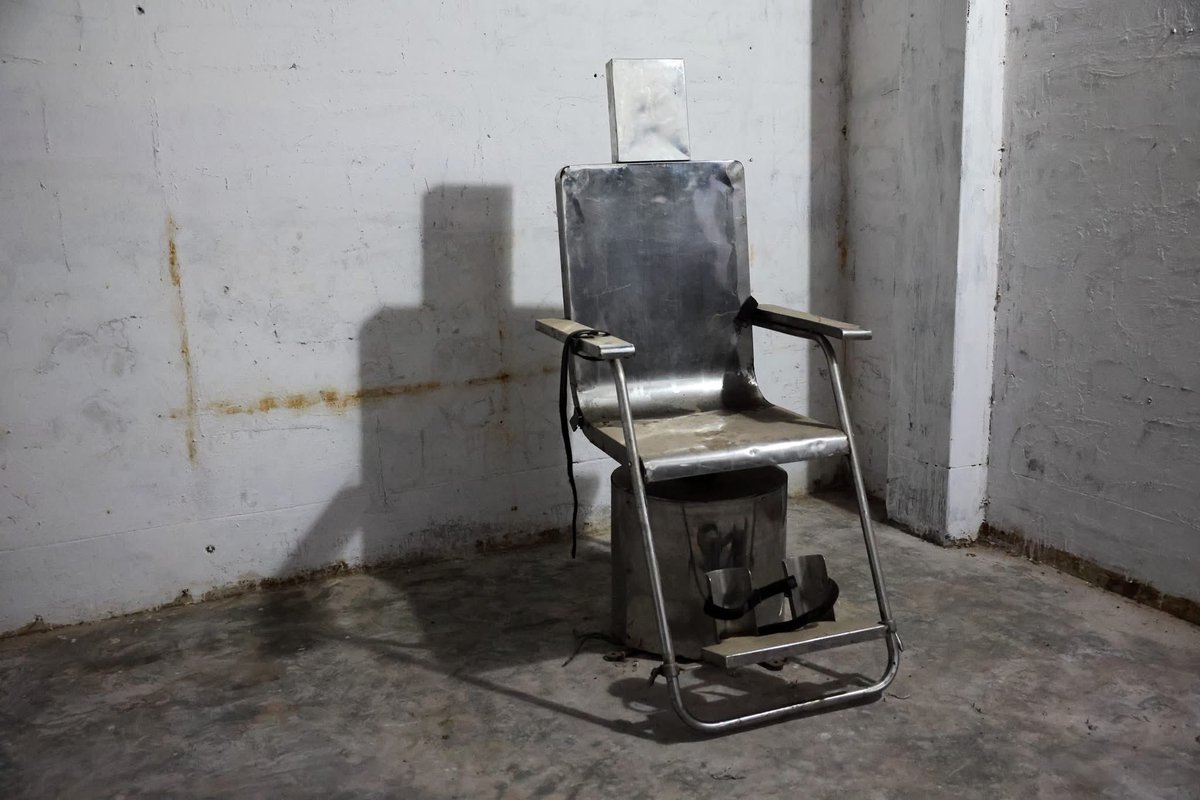
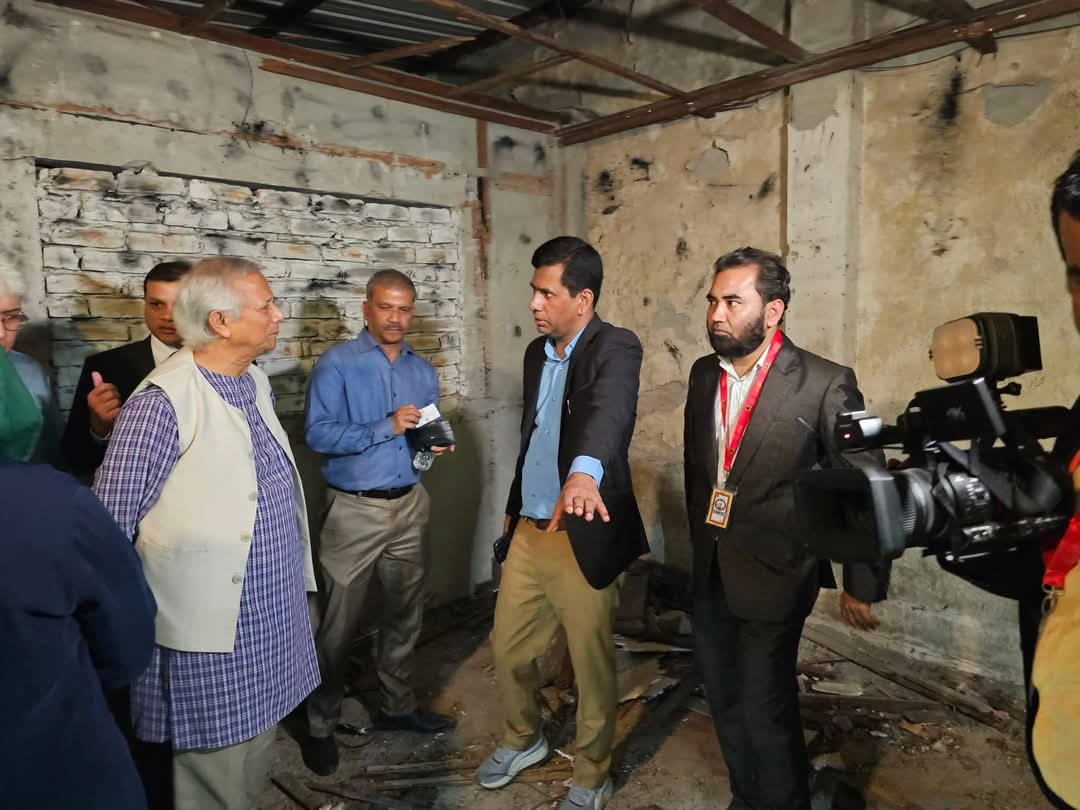
Chief Adviser Prof. Muhammad Yunus visited three former torture cells and secret prisons in Dhaka (Agargaon, Kachukhet, and Uttara) on Wednesday. He was accompanied by the Advisory Council, Commission of Inquiry on Enforced Disappearances, victims, and media. #ChiefAdviser
ড. মুহাম্মদ ইউনূস আজ আয়নাঘর পরিদর্শন করেন।ফ্যাসিস্ট হাসিনার নির্যাতনের ভিক্টিমরা তাদের শনাক্তকৃত স্থানগুলোতে দাঁড়িয়ে বিভীষিকাময় অভিজ্ঞতার কথা জানান। উপদেষ্টারা জানান, নাহিদ ও আসিফ আন্দোলনের সময় গুম হয়ে এখানে বন্দি ছিলেন এবং সেই সময়ের ভয়াবহ দিনগুলোর স্মৃতিচারণ করেন।
You are the change-makers who reshaped history and set the path for a NEW BANGLADESH. The world salutes you as Bangladesh is crowned Country of the Year 2024 by The Economist! 🇧🇩
CONGRATULATIONS & Happy New Year!
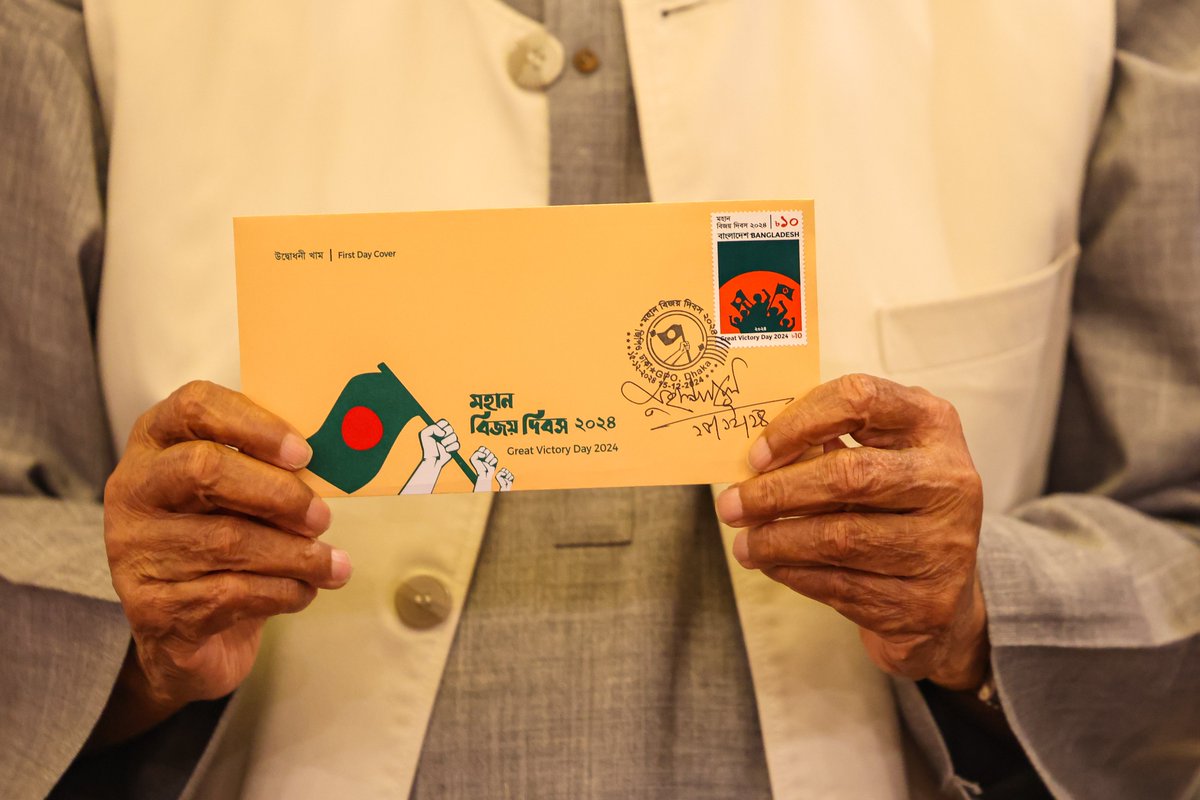
মহান বিজয় দিবস উপলক্ষে অন্তর্বর্তীকালীন সরকারের প্রধান উপদেষ্টা প্রফেসর মুহাম্মদ ইউনূস ১০ টাকা মূল্যমানের একটি স্মারক ডাক টিকিট অবমুক্ত করেছেন। একই সঙ্গে ১০ টাকা মূল্যমানের উদ্বোধনী খাম ও ৫ টাকা মূল্যমানের একটি ডাটাকার্ডও অবমুক্ত করেন তিনি।
#Bangladesh#ChiefAdviser
Chief Adviser Professor Muhammad Yunus on Saturday pays tribute to martyred intellectuals at martyred intellectual memorial in Mirpur, Dhaka.
#Bangladesh#ChiefAdviser
Bangladesh won the second consecutive title by defeating India in the final of the Under-19 Asia Cup. Congratulations have been extended by the Honorable Adviser of the Ministry of Youth and Sports, Mr. Asif Mahmud Shojib Bhuyain.
(-Admin)