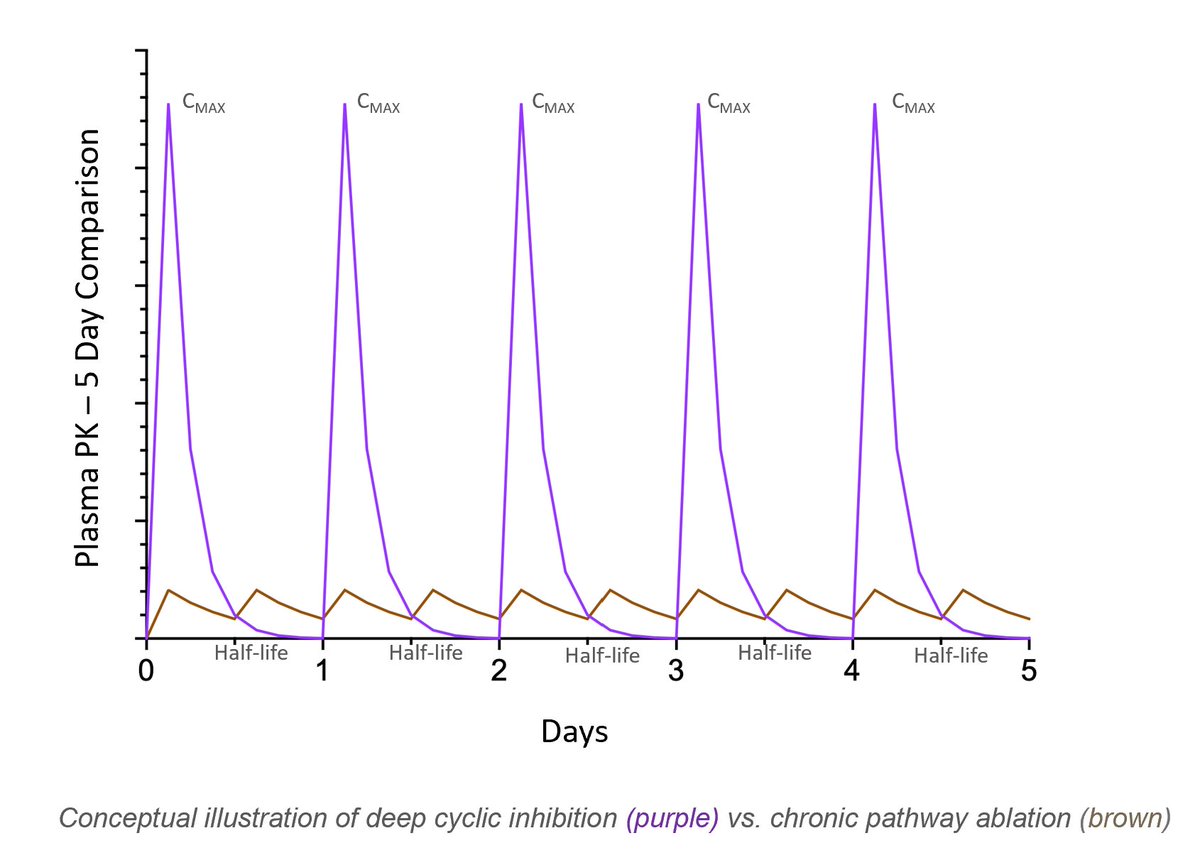
We’re presenting at the 7th Annual RAS-Targeted Drug Development Summit at 4:15pmET today. The presentation will review preclinical data on Deep Cyclic Inhibitors, a promising approach to advanced cancer therapy.
We are pleased to appoint Thomas Schall, Ph.D. as Chairman of our Board with >30yrs drug discovery and development experience and a strong track record of guiding through growth, innovation, and value creation. Learn more: https://t.co/ajHSzEtdha
#Biotech#Leadership#Growth
On 9/25 we will announce updated data for atebimetinib in #PancreaticCancer, followed by a poster at @PanCAN Scientific Summit. $IMRX is looking forward to sharing this data with the oncology community. Learn more: https://t.co/7tsmG2DwZZ
$IMRX entered into a definitive securities purchase agreement for a private placement of securities to investors that is expected to result in up front gross proceeds to the Company of approximately $25 million, before deducting fees and expenses. https://t.co/138WoL5QB8
#ASCO25 delivered powerful data, bold ideas, and meaningful conversations across #oncology. Our team leveraged the opportunity to exchange perspectives with peers who share our focus on driving meaningful change for people living with #cancer through scientific innovation. @ASCO
We look forward to attending #BIO2025 to connect with peers across the #pharmaceutical and #biotech sectors. Interested in learning more about partnering opportunities? We welcome you to schedule a meeting with the $IMRX team through the BIO Partnering™ mobile app.
🧬 Helping cancer patients live longer and feel better.
🏥 @Immuneering is a clinical-stage oncology company developing medicines to help outpace cancer.
💜 Thank you for helping to rewrite futures, $IMRX!
Today $IMRX announced a clinical supply agreement with @Regeneron, supporting evaluation of IMM-1-104 in combo with #Libtayo in patients with #RASmutant#NSCLC.
Read the press release here: https://t.co/oQ4KZPPMyL
Today we announced that the first patient has been dosed in our Phase 2a clinical trial of IMM-1-104 in RAS-mutant solid tumors. This study is evaluating IMM-1-104 as monotherapy and in combination with chemotherapy in #PDAC#NSCLC & #melanoma. Read more: https://t.co/u81fvaBZSu
This week our management team will participate in a fireside chat at the Guggenheim 6th Annual Biotechnology Conference on 2/7 at 1:00pm ET, discussing our business strategy and our pipeline of medicines targeting MAPK driven tumors.
Today we presented new preclinical data that support the potential of IMM-1-104 & IMM-6-415 as single agents & in combination regimens across a wide range of MAPK-driven tumor types, including those with RAS or RAF mutations: https://t.co/tKSTONS9cz #Targets23
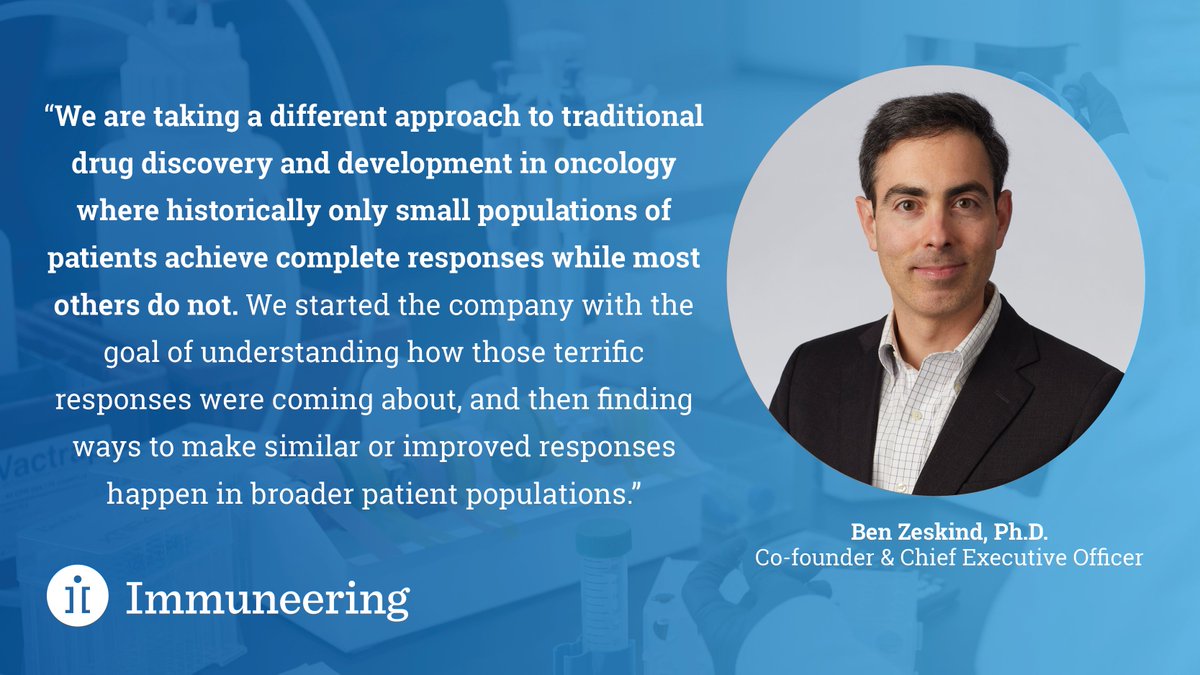
#ICYMI Our CEO Ben Zeskind, Ph.D., was featured in an exclusive interview with @BioTuesdays, sharing insights into an approach we refer to as #UniversalRAS. Read more to learn how we’re exploring a different path to oncology: https://t.co/yuQG02qY2v #RASMutations
Our approach to deep cyclic inhibition is designed to spare healthy cells and potentially limit adaptive resistance, with the aim of preventing MEK-reactivation and improving tolerability and activity. Learn more about our approach: https://t.co/GTlNIciorQ
We’re #Hiring! Become an integral part of Immuneering by spearheading, growing and developing robust regulatory processes and procedures as our Director of Regulatory Affairs. Learn more and apply today: https://t.co/pi3TDUP1Hb
Today we announced the completion of the dose-escalation portion of the Phase 1/2a study for our lead asset, IMM-1-104, in patients with RAS-mutant, advanced solid tumors. For more information, see our press release: https://t.co/yohJ7V0LuO
Meet us in Boston at #BIO2023! Our CSO Brett Hall, PhD, and CBO E.B. Brakewood will be onsite to discuss our universal-RAS therapy & will be available for 1x1 meetings throughout the week. Learn more: https://t.co/LQsJch8clX @IamBiotech
#RASmutations are common in many types of cancer and are often found in the early stages of cancer development. When these genes mutate, they can cause the RAS proteins to become overactive and promote uncontrolled cell growth, which can lead to the formation of tumors.