📢 Burn Severity Predicts Cervical Wound Complications After Tracheostomy
A new EBJ study found that cervical burn depth—not tracheostomy timing or grafting strategy—was the key predictor of wound-healing disturbances.
🔗 https://t.co/rX9AGjwZ06
#BurnCare#BurnSurgery#EBJ
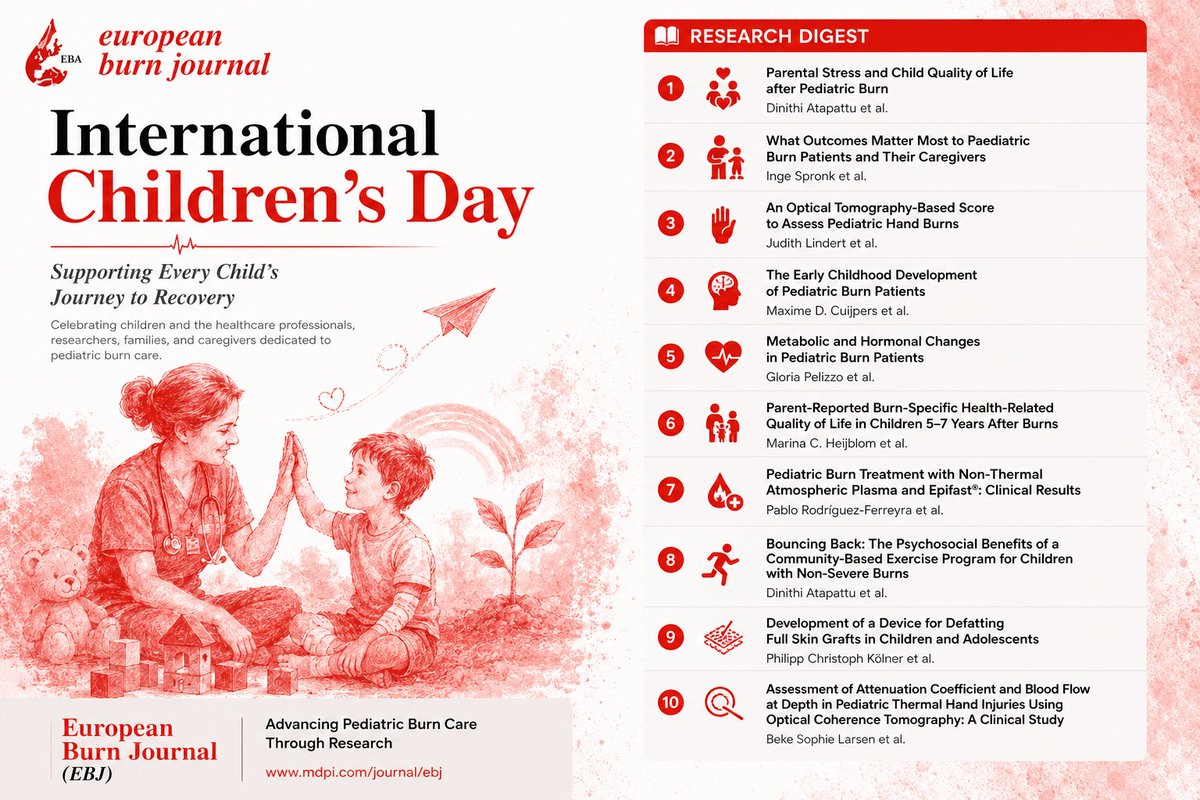
🎈 Happy International Children's Day!
EBJ celebrates children worldwide and thanks all healthcare professionals, researchers, families, and caregivers working to improve pediatric burn care.
📖 Explore our collection of pediatric burn research:
https://t.co/BkOJLlDsSf
📊Measuring Fatigue After Burn Injury
A new EBJ study validates the Fatigue Severity Scale (FSS) in adult burn survivors, demonstrating strong reliability and high concurrent validity with the Brief Fatigue Inventory.
🔗 https://t.co/54QQjLqxu4
#BurnRehabilitation#PROMs#EBJ
🔥 95% TBSA burns. No donor sites left.
A new EBJ case report describes how skin isografts from a monozygotic twin enabled survival, full healing, and a return to family life after one of the most extensive burn injuries reported.
🔗 https://t.co/16mj6opHHG
🏃 Exercise training improved strength and cardiovascular fitness in adults recovering from burns >1 year post-injury in a new EBJ pilot trial by Dr. Tyler Jerome Osborne’s team.
🔗 https://t.co/TLKqpwBAin
#BurnRehabilitation#BurnRecovery#EBJ
🚨 EBJ Scope Update!
EBJ has expanded its scope to better reflect advances in burn research.
🔬 Now welcoming:
• Molecular & cellular studies
• Preclinical & animal research
• Frostbite
📢 Announcement: https://t.co/gTpnwGDAdU
🔗 New Ami & Scope: https://t.co/ThntwcN1Ve
🎉 Dr. Fredrik Huss appointed Associate Editor-in-Chief of the European Burn Journal!
👏 Congratulations!
🔗 Editorial Board: https://t.co/k7ZIrLgqM8
🔗 Special Issue: https://t.co/3tbrf7mnLQ
#BurnCare#WoundCare#TissueEngineering#AcademicPublishing
🌐 What do patients want from online scar information?
A new EBJ qualitative study highlights gaps in reliability, readability, and psychosocial support in digital scar resources—while emphasizing the value of peer support and patient-centered design.
🔗 https://t.co/gjs4v50vuQ
🔥 What drives outcomes after burn rehab?
A new EBJ study shows mixed-depth burns—not rehab frequency—are the strongest predictors of scar and functional outcomes. Findings also highlight the impact of confounding by indication in observational studies.🔗 https://t.co/nOppam59Ub
📢The first Reviewer Board of European Burn Journal (EBJ) is now live!
Recognizing reviewers for their consistent, high-quality, and timely reports—thank you for your valuable contributions 🙏
🔎 https://t.co/nPvKX3Dmh3
🔥 The 1st Issue of EBJ for 2026 is now live!
Featuring 19 peer-reviewed articles on:
• Clinical & critical management
• Diagnostics, imaging & AI
• Outcomes & prognostic factors
• Rehabilitation & recovery
🔗 https://t.co/HXGWqgCpMo
🔔 Subscribe: https://t.co/bMTtfBMH84
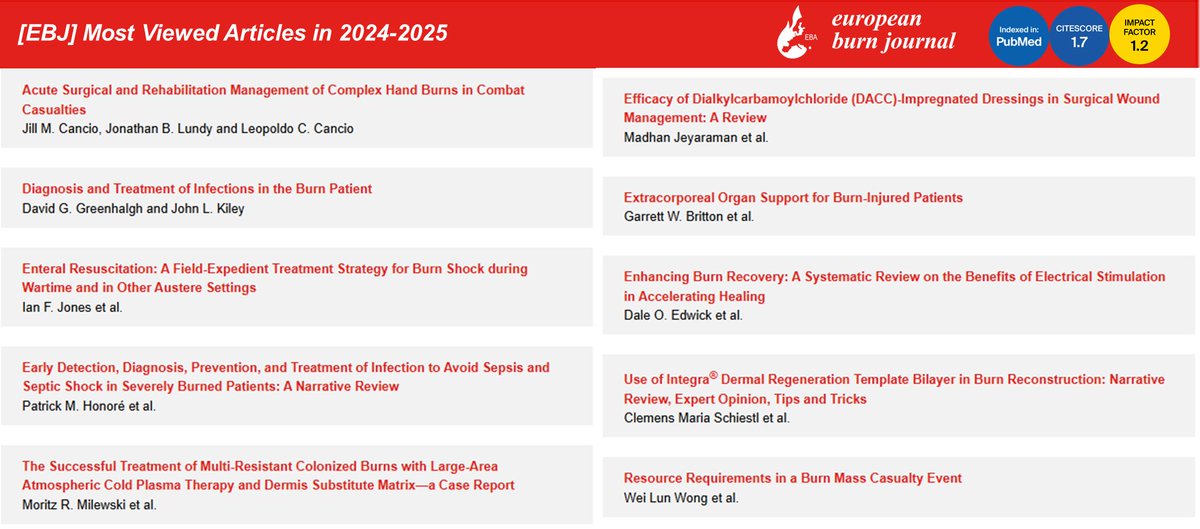
🔥 EBJ’s Most Viewed Articles (2024–2025)
What burn research topics are readers exploring most?
👇 Explore the collection
https://t.co/aourvk8oXC
📰 Subscribe
https://t.co/bMTtfBMH84
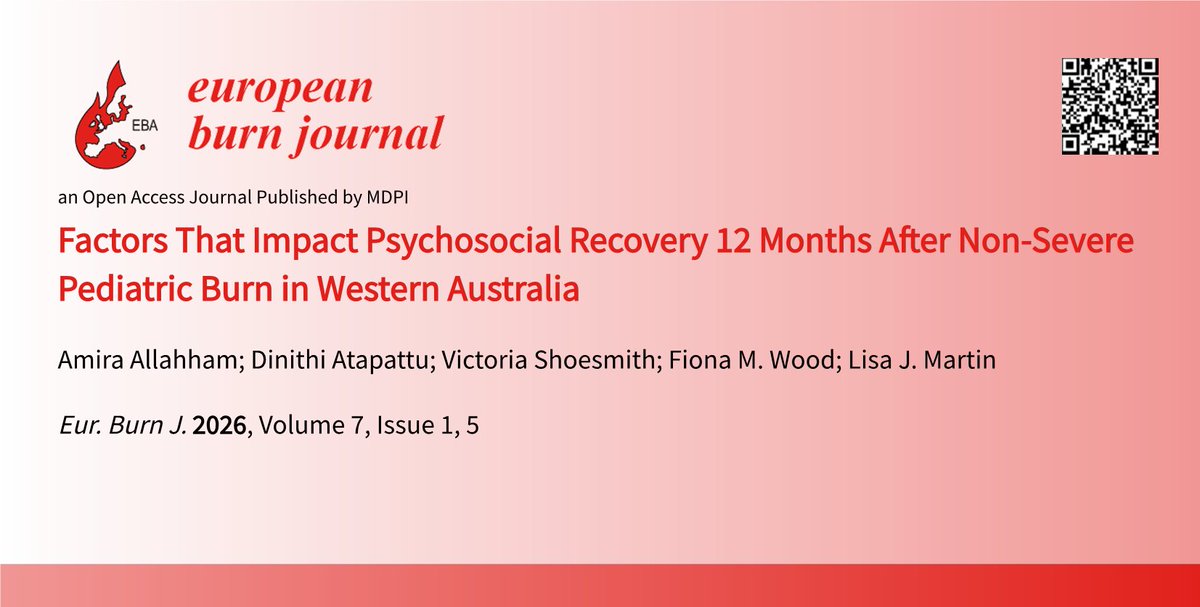
🔥 Small Burns, Lasting Impact?
A new EBJ study shows that 57% of children with non-severe burns still experience QoL impacts 12 months post-injury. Female, upper-limb burns, and cultural diversity were associated with greater psychosocial effects.
🔗 https://t.co/fHm7M0sloQ
This article belongs to the Special Issue Innovative Applications and Challenges of Emerging Materials and Technologies in Burn Treatment:https://t.co/3tbrf7mnLQ
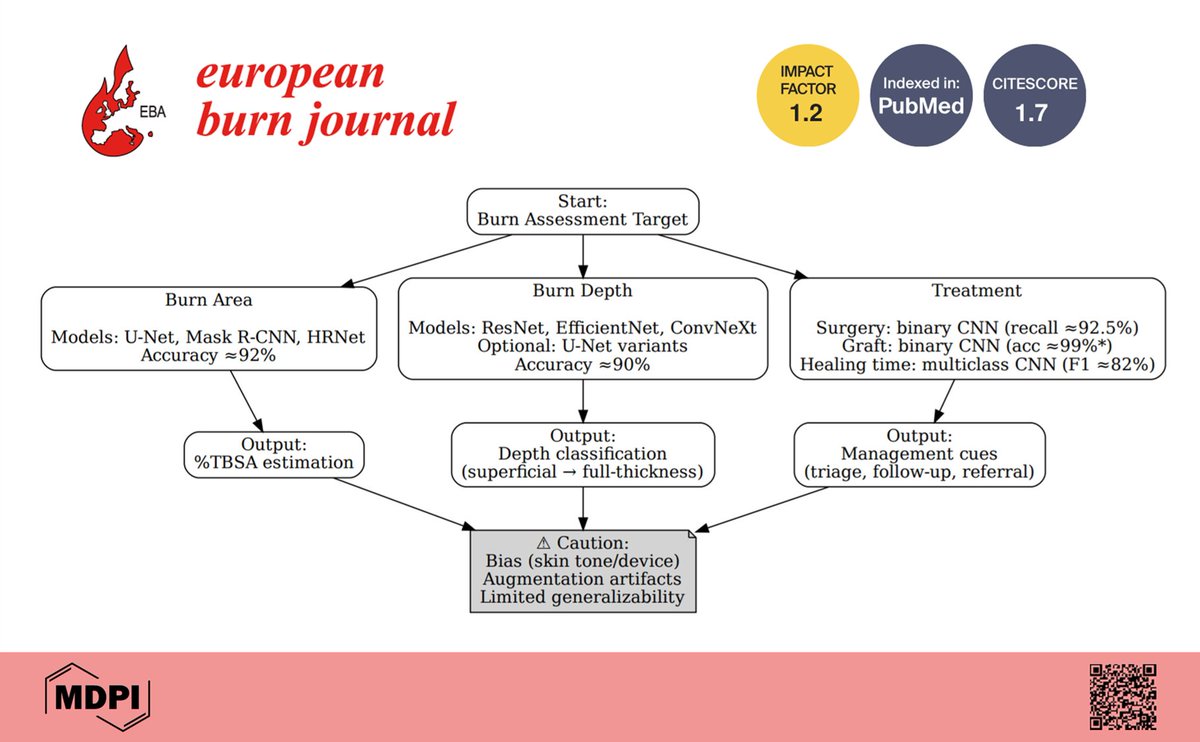
🤖 Can AI Improve Burn Assessment?
A new EBJ scoping review analyzed 24 studies using CNNs for burn size (TBSA) and depth assessment. Results show promising accuracy—but dataset variability and limited validation remain key challenges.
🔗 https://t.co/1ng9qU2iVy