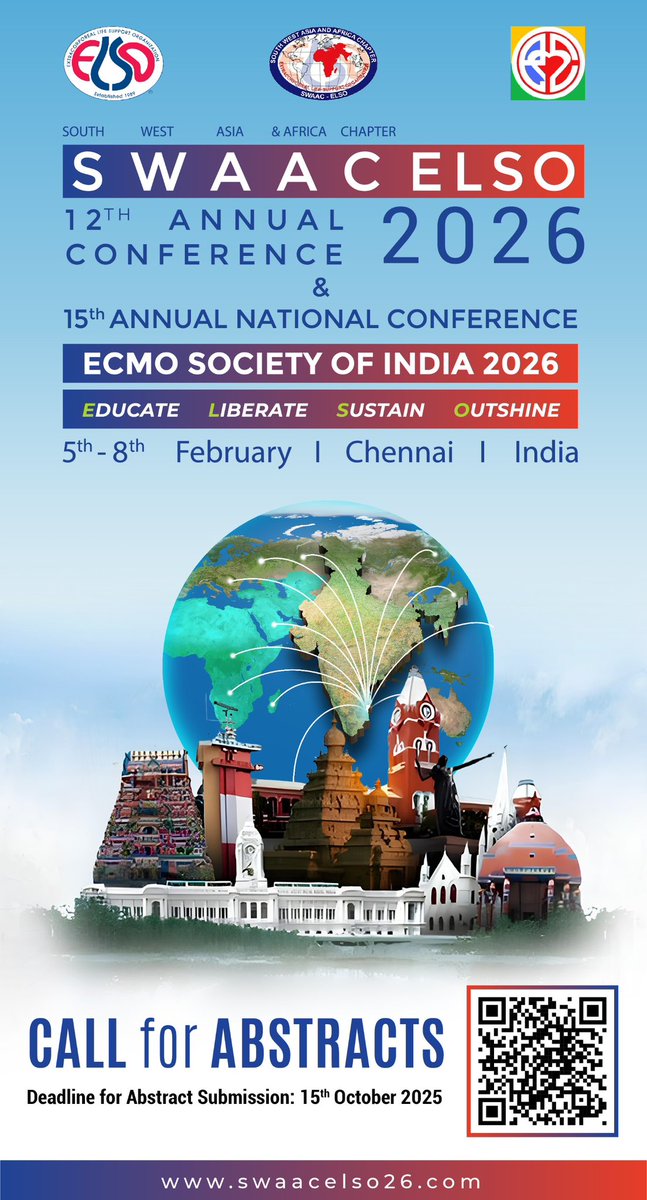
Don't forget to register for the ASAIO 72nd Annual Conference held on June 17-20, 2026, at Marriott Harbor Beach Hotel, Fort Lauderdale, Florida.
Registration: Early Bird Deadline – Monday, May 04, 2026
Housing: Deadline – Monday, May 25, 2026
Link: https://t.co/FZRM6TviWU
Please join us on this amazing comprehensive two days ECMO summit in Doha. World experts gather to deliver the most recent advances in the art and science of ECLS with 15 CME points at the largest simulation and education facility in the region.
https://t.co/cNIRNGlQpS
The long-awaited guidelines are finally here!
✨ ELSO Guidline on Pregnant and Peripartum ECMO ✨
Enjoy the read and stay updated with the latest best practices.
https://t.co/pS3EROy4ge
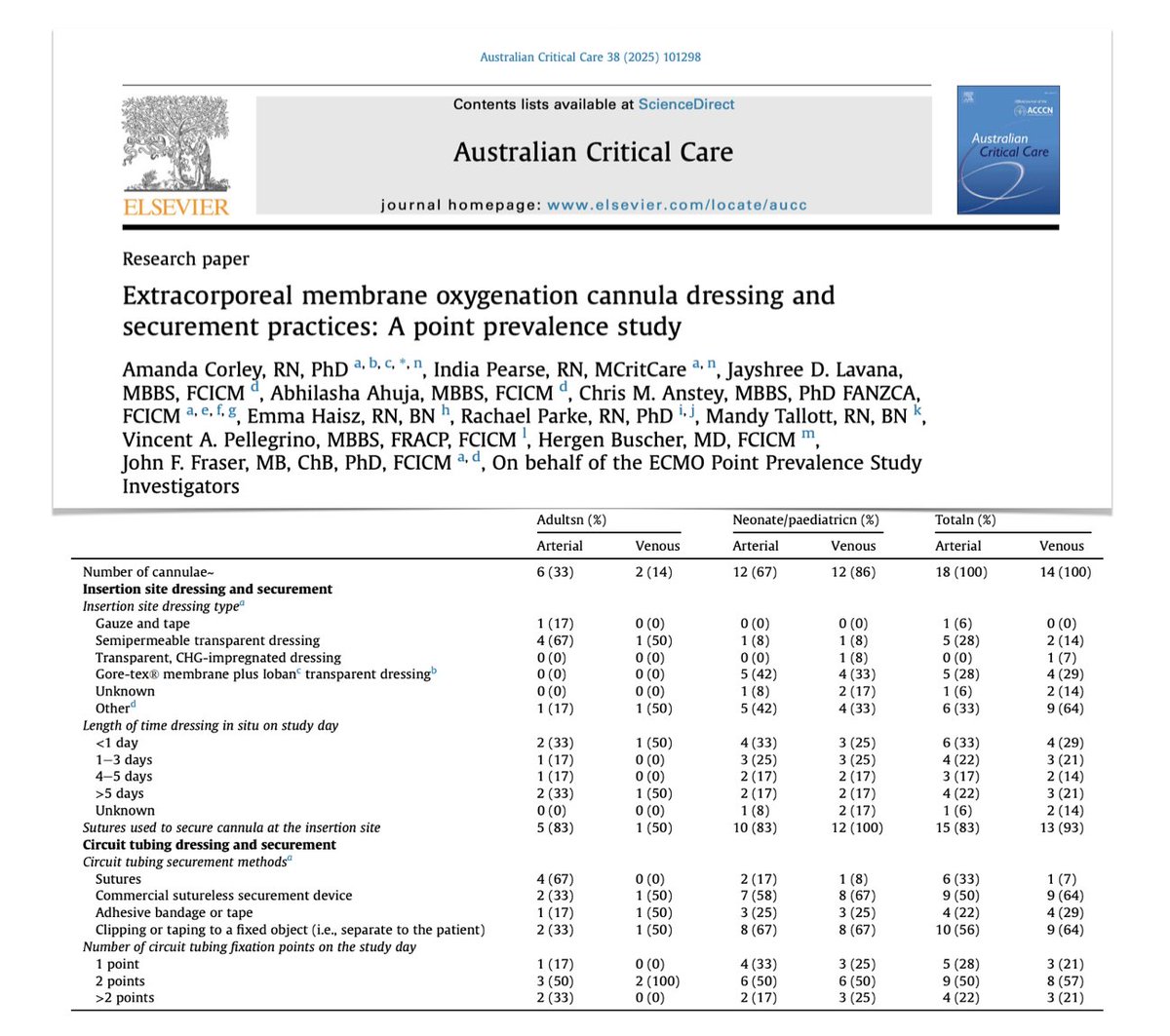
#ECMO cannula/tubing dressing & securement
🔍 current practices in 🇦🇺 & 🇳🇿
⚖️ peripheral insertion sites mostly managed with transparent semipermeable dressing, central less uniformly dressed
🪡 sutures used at insertion site in neo/peds > adults
🩹 tubings mostly secured using sutureless devices
📋 82% centres had local policy, but low adherence
Lack of specific evidence based guidance results in variable practices across ICUs
#FOAMcc #FOANed #FOAMecmo
🔓 https://t.co/EIml0tJ3gx
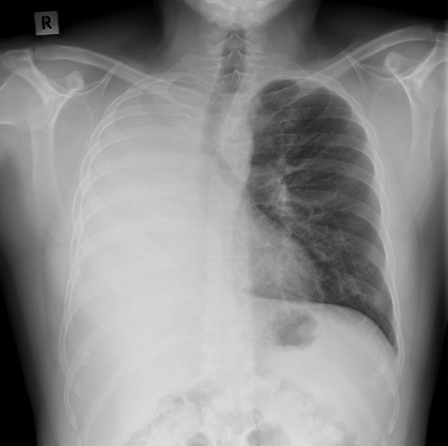
Ultrasound in Pulmonary Embolism
Individual signs (DVT, pleural-based lung infarcts, RV dilation) are specific but not sensitive.
Crit Care Clin 41 (2025) 455–479 https://t.co/UJI9yTsFvP
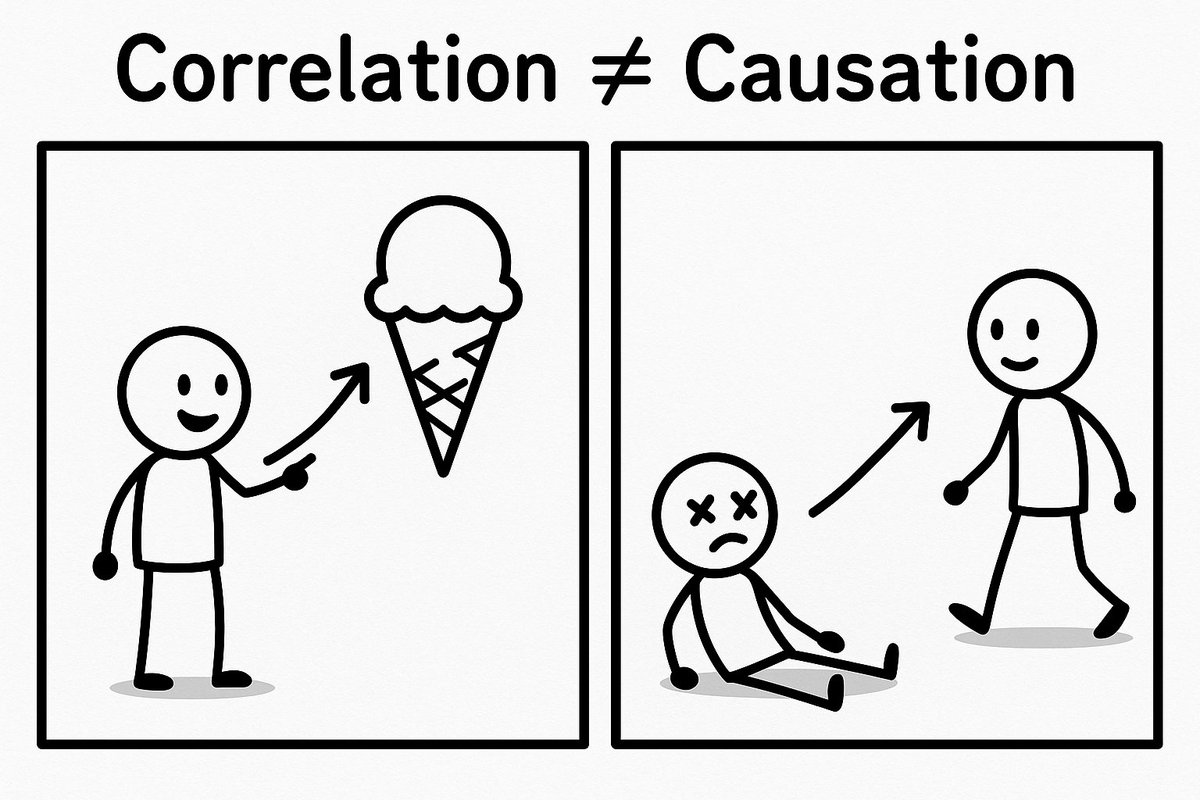
(5/5) Low PF ratios associated with benefit from proning in ARDS, yet, it is likely not the PF ratio improvement with proning that causes benefit to patients.
This one is a bit more complex. Studies like PROSEVA have shown that in ARDS low PF ratios (severe ARDS with worst hypoxia) likely derive the most benefit from proning.
Interestingly, however, improvement in PF ratio after proning is NOT correlated with the improved outcomes we see from proning!
This is important when trying to decide whether to re-prone patients after their initial prone. I tend to favor re-proning REGARDLESS of how the PF ratio responds if there is some other physiologic benefit we could capture with proning: compliance, secretion clearance, improvement in atelectasis / collapse etc.
(4/5) Low albumin levels are associated with increased mortality for critically ill patients, yet do not cause it (despite common belief!)
We see hypoalbuminemia as part of critical illness all the time. This had led some people to aggressively replace albumin in the ICU for many critically ill patients... this doesn't help.
In fact, albumin replacement can cause problems especially as it leaks into the interstitium and increases interstial oncotic pressure. This makes it harder to diurese patients later.
(3/5) Hyperglycemia is associated with increased infections in the ICU, but likely does not cause them.
This is a common one. Numerous studies have demonstrated and association between hyperglycemia and infection rate and superficially it makes sense. Glucose = food for bacteria.
This neglects the fact that Stress Hyperglycemia FROM infection or worsened critical illness is an unmeasured confounder.
RCTs looking at very tight glycemic control have not demonstrated reductions in infections and may be associated with harm.
(2/5) Mechanical Ventilation is associated with mortality, but does not directly cause the increased mortality observed.
This came out in COVID that 'ventilators kill people'. Ventilators are only associated with mortality as the sickest people with the worst respiratory failure (who have highest chance of dying) end up the ventilator.
(1/5) Elevated Lactate is correlated with mortality YET itself, does not cause harm.
People give fluids to "clear the lactate" as if the lactate is toxic. It isn't. Lactate is a cardiac fuel source and actually an inotrope when infused in animal studies.
Lactate generation is often associated with worse illness either through aerobic (catecholamine) or anaerobic (true tissue ischemia/hypoxia --> rarer than we think).
It’s only 4 weeks until @ICS_updates#SOA25 🥳
This is one of many things I am excited to watch this year.
Looking forward to hearing ‘fluid overload’ reframed as ‘iatrogenic hypervolaemia’, maybe 🤔
#sayithowitis
Sign 5: They've just coded.
This sounds stupid, I know, but patients post ROSC even if their vitals are 'normal' are at super high risk of re-arresting until the underlying cause of their first arrest is fixed. Don't get lulled into a sense of security after you have ROSC... they are about to code until proven otherwise!
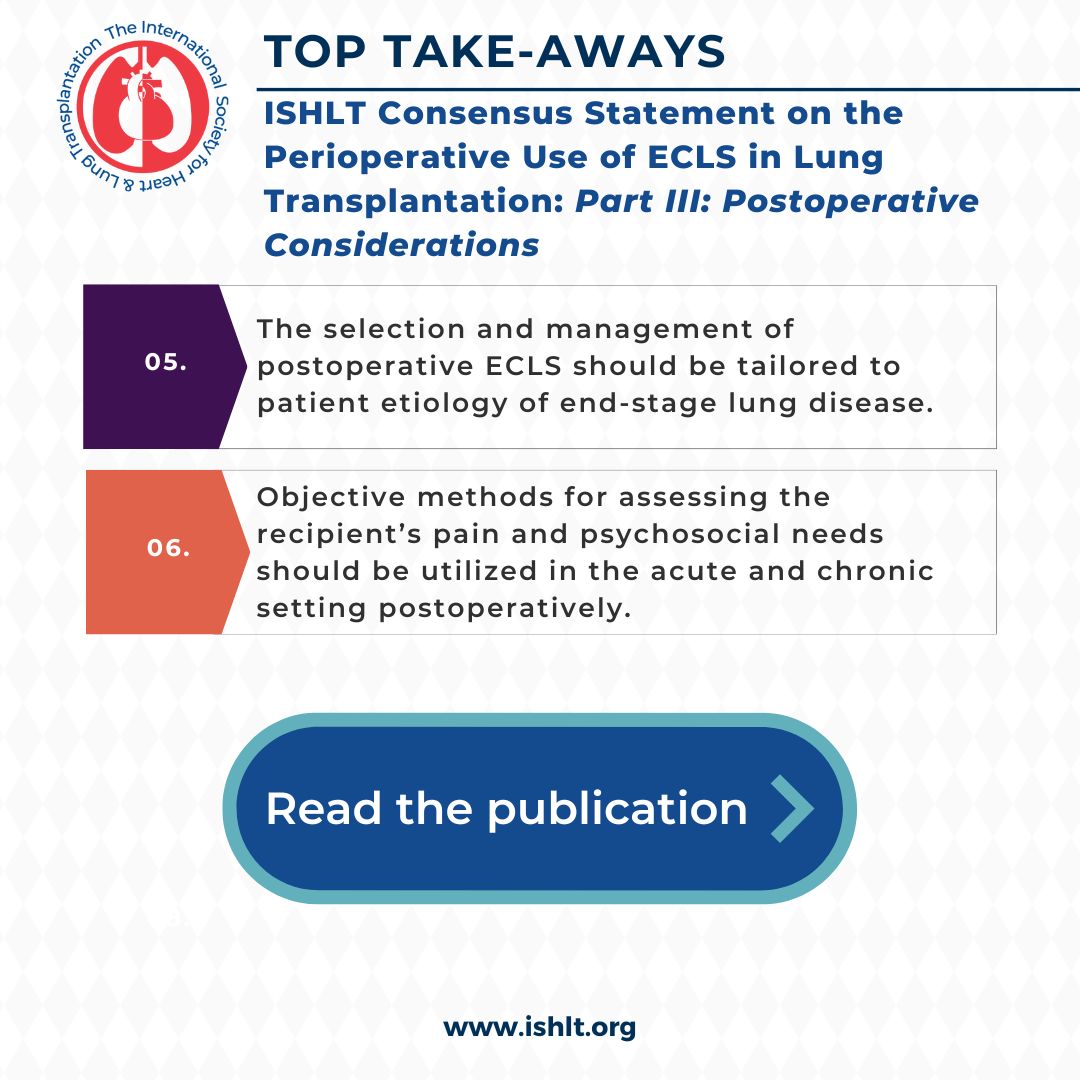
The @ISHLT Consensus Statement on periop use of #ECLS in lung #transplantation: III - Postoperative Considerations
🫁 planning: criteria for postoperative #ECLS
🫁 postoperative ECLS implementation
🫁 management
🫁 ECLS rescue outcomes, weaning criteria, novel multicenter registry expansion
#FOAMcc #FOAMecmo
🔓 https://t.co/TqPouuz24n
PS Part II Intraoperative Considerations available at
🔓 https://t.co/CpF1yVmpKO