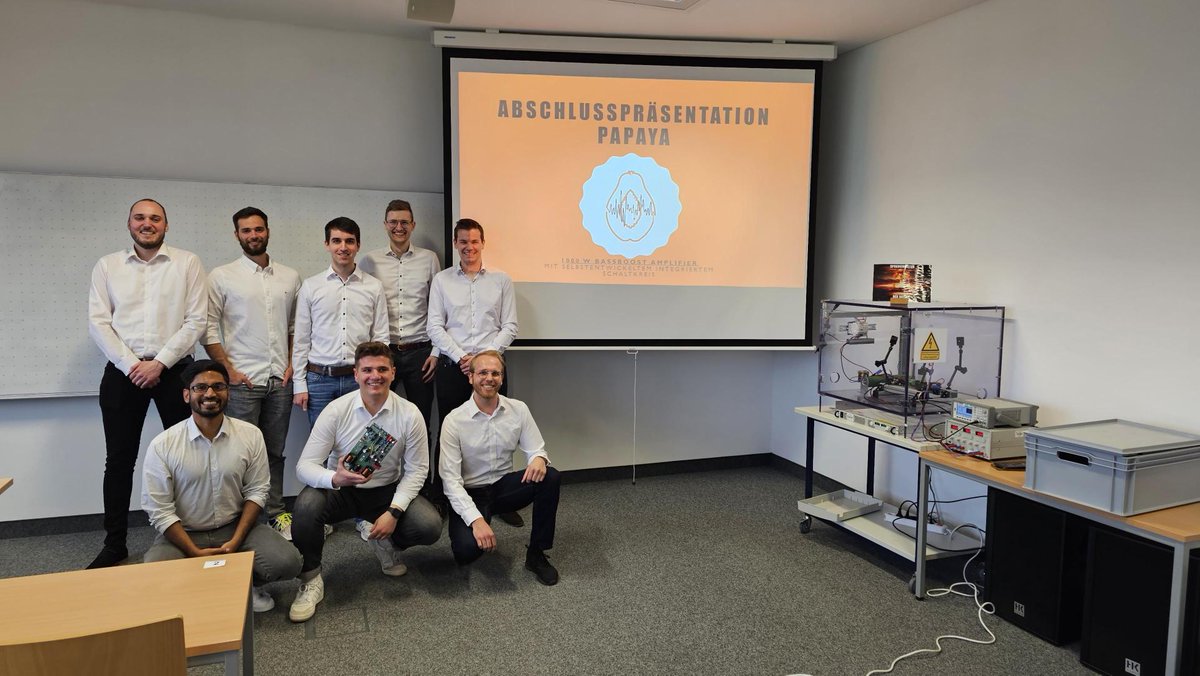
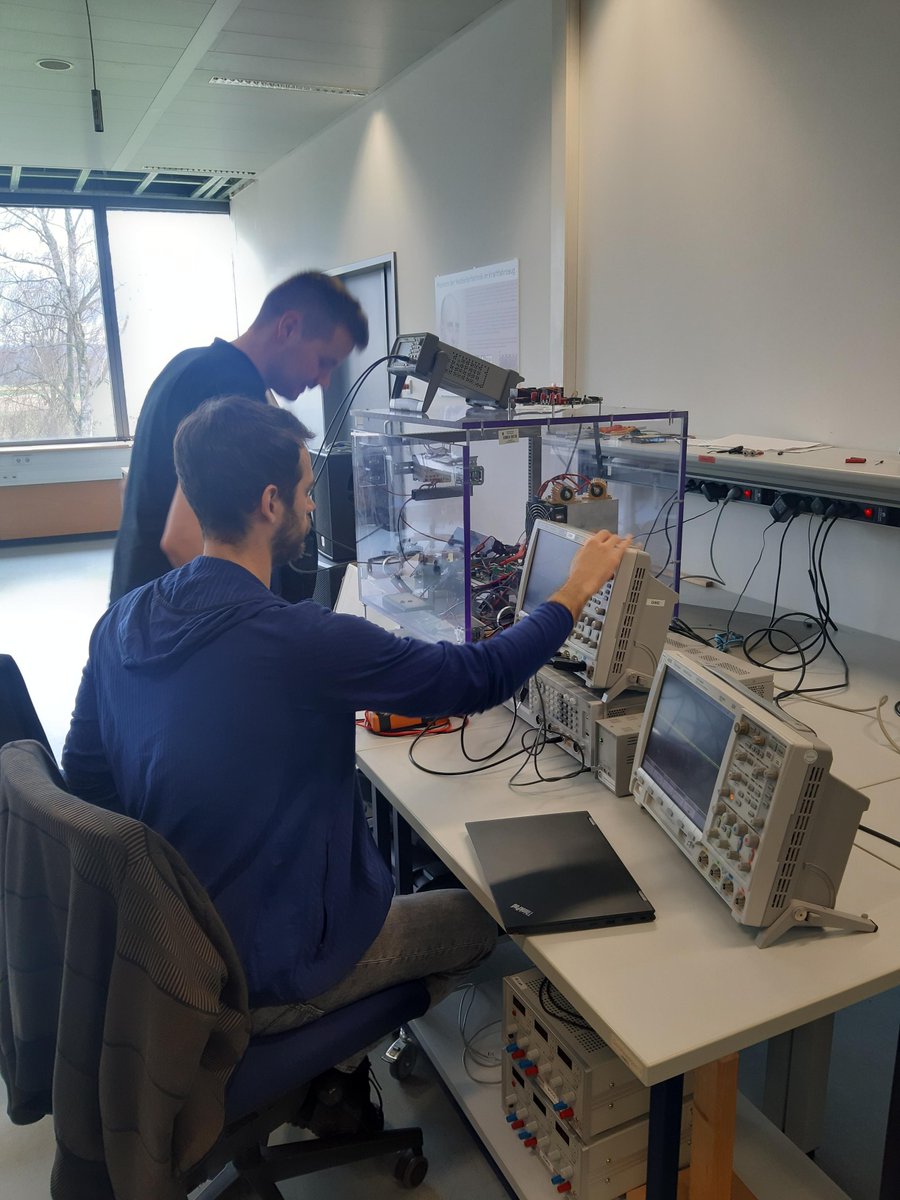
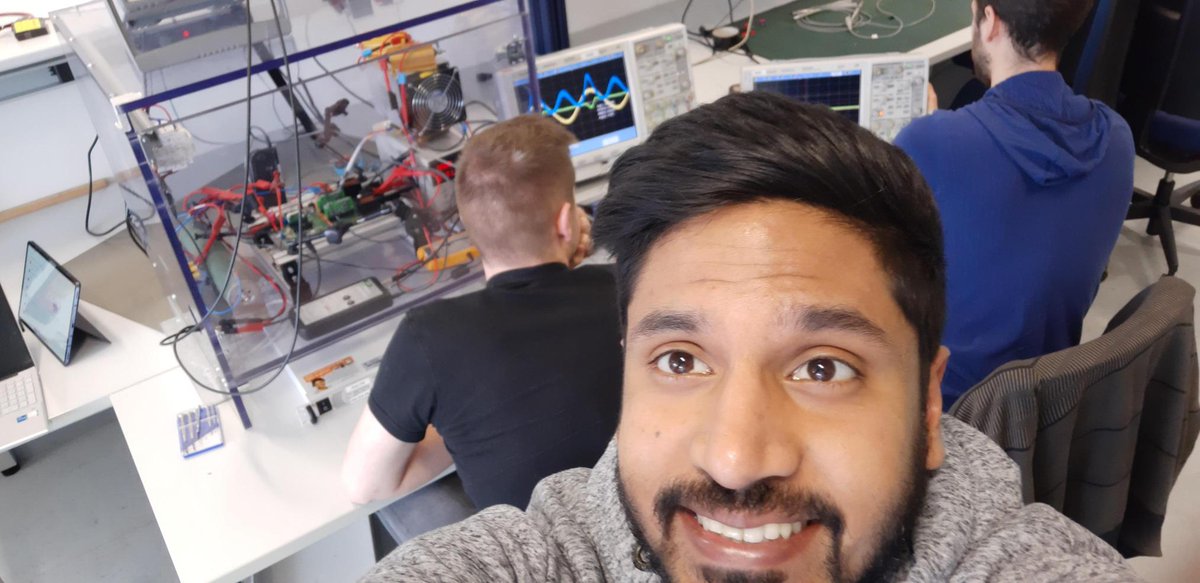
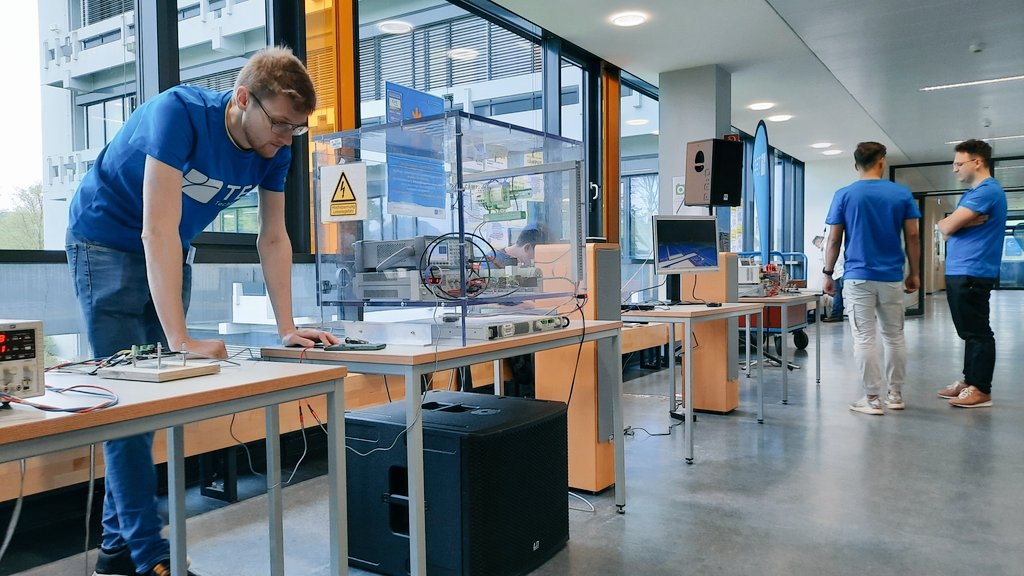
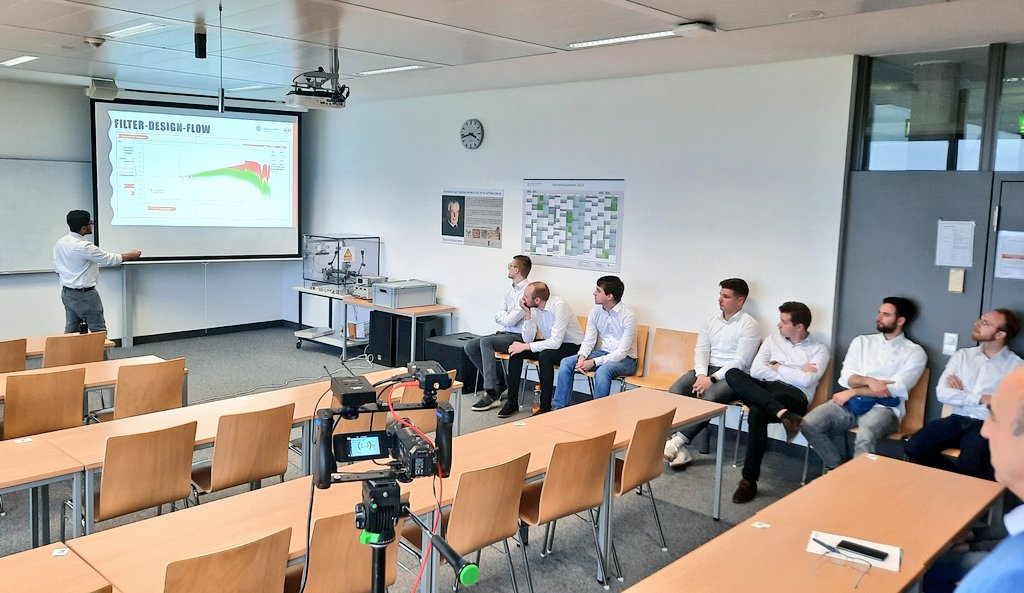
Yesterday we had the open day @HS_Reutlingen . Our project manager Alexander Timm presented our 1kW Class D amplifier and answered questions. In addition, he was able to impress our visitors with the audio presentations.👍
#Powerelectronics#Microelectronics@ElectronicsDrv
While we have completed the 1 kW Class D power amplifier project, it is worth taking a look at projects @ElectronicsDrv in progress.
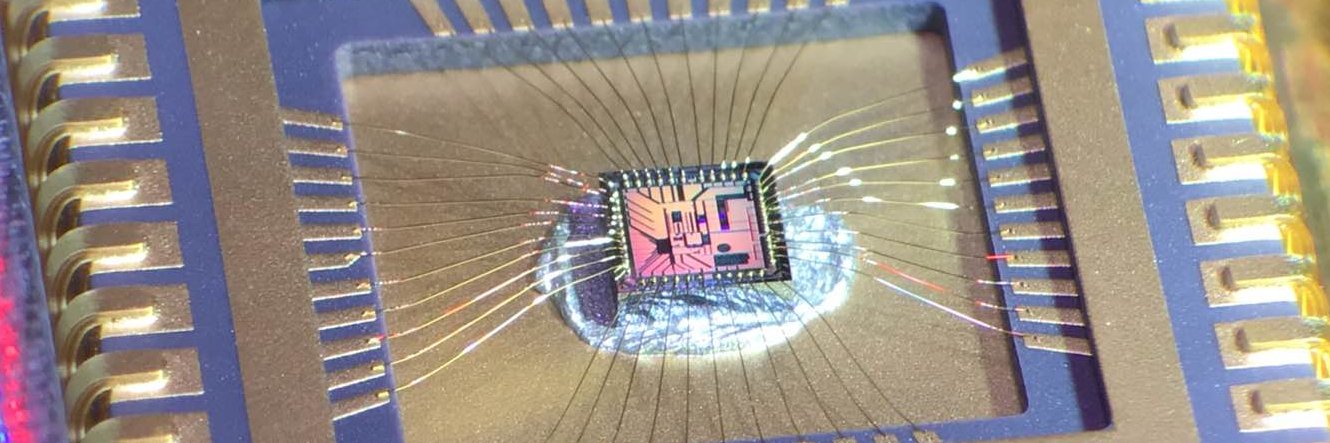
While team @EDRT_RIDE is working on a smart e-motor control system, the main focus of @EDRT_TIGER is on a parameter adjustable #GaN driver IC👏
This video shows a short summary of our project with an audio demonstration from our final presentation.
We say thank you to our professors, supervisors and followers for your support!
#Powerelectronics#Microelectronics@ElectronicsDrv
@HS_Reutlingen
We have made it. Final presentation is over and our system meets the requirements and even a little bit beyond. We say thank you to our professors and supervisors for the incredible support! Now it's time for the reward: its celebration time.😀
#Microelectronics@ElectronicsDrv
@EDRT_TIGER Eine Idee wäre dass sich auf Grund der Form der Flasche, sich ein Sog bzw. Kraft hinter der Flasche bildet wegen den Schallwellen, sodass die resultierende Kraft zum Lautsprecher zeigt. Im Prinzip ähnlich wie bei Flügeln und der Luftströmung um die Flügel.
While we were fine tuning our integrator of the Class D amplifier for the final presentation yesterday, we noticed an interesting scientific phenomenon.
While the filled bottle was repelled by the bass speaker, the unfilled bottle was actually pulled towards it. Funny isn't it?😀
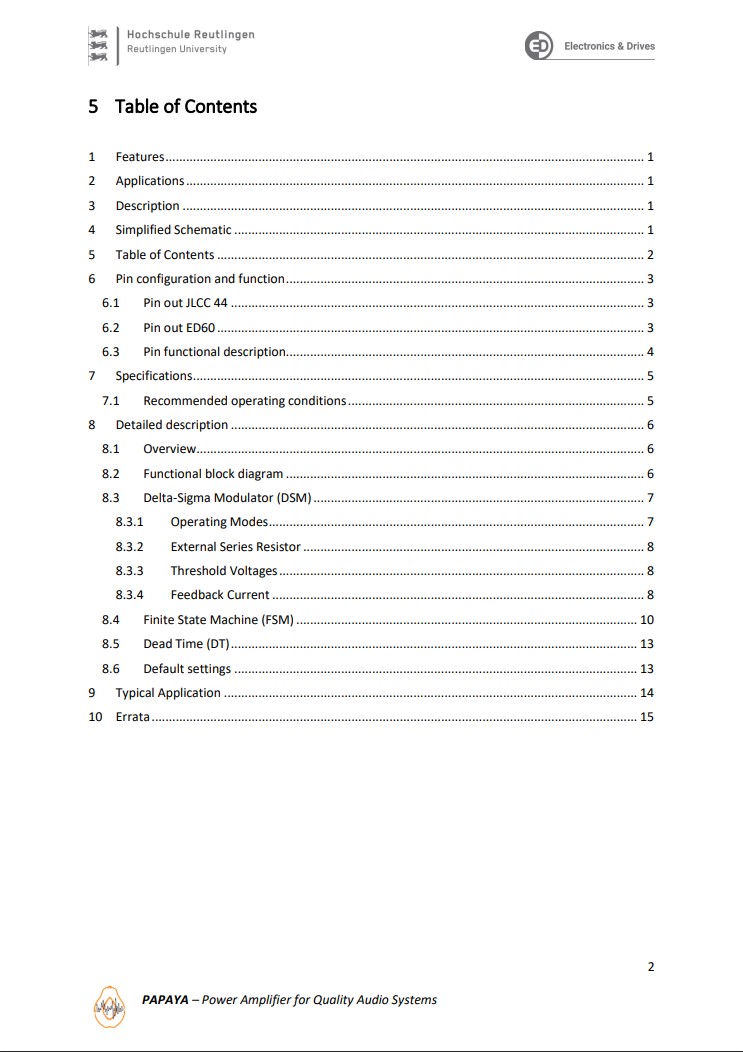
A very important point at the end of our project is the data sheet. This describes the system and contains all the information about it. Here you can see a preview of the first two pages including the summary.
#Powerelectronics#Microelectronics@ElectronicsDrv
@HS_Reutlingen
@ciceroalisson@ElectronicsDrv @HS_Reutlingen This modular design is also a main feature on our board, which makes our work a pioneer project at the university. Good luck with your project, we hope we could inspire you😃
Greetings, Joe from Team PAPAYA
We succeeded with our last test session - Our 1 kW bass booster works and meets the requirements.
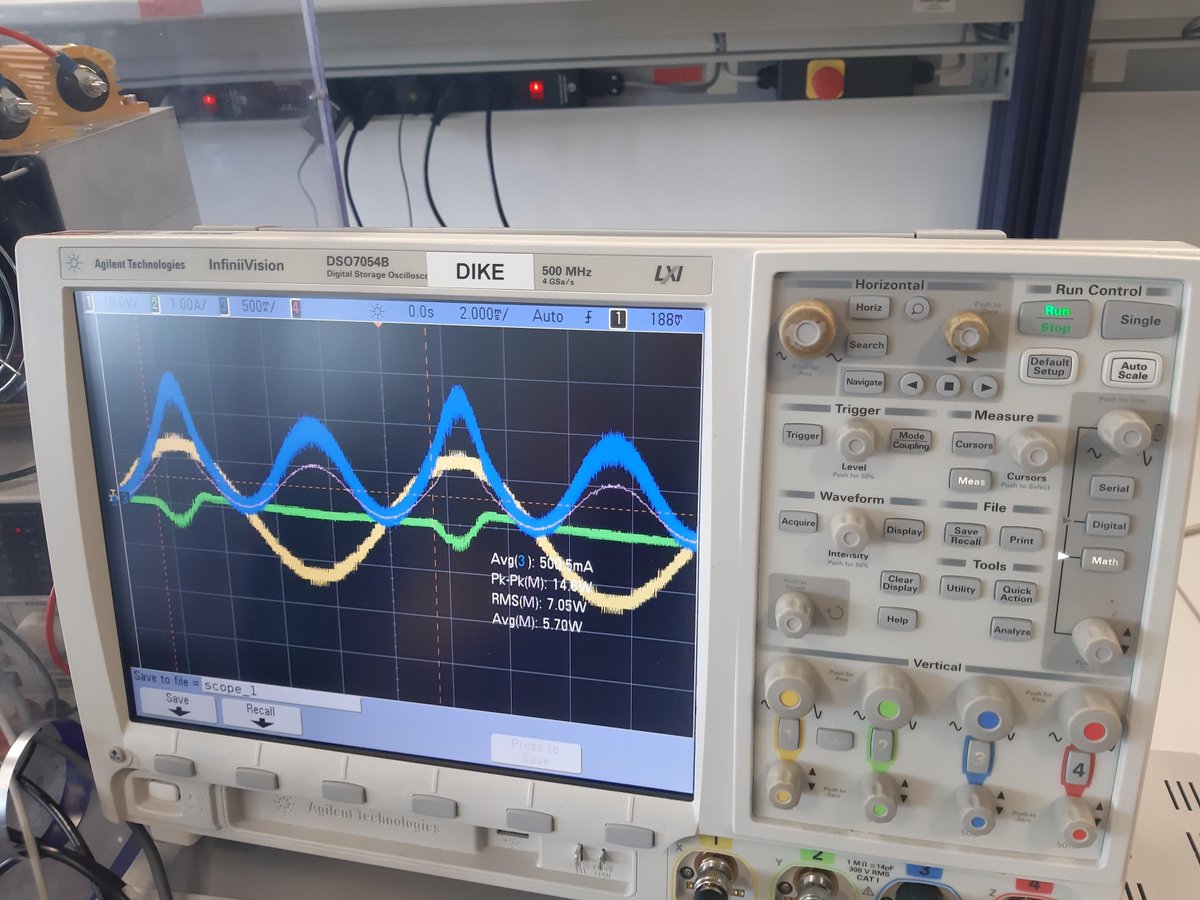
1 year of work summarised in a picture with signals! Stay tuned and see how we finish the project!
#1004Watt#GaN#Powerelectronics#Microelectronics@ElectronicsDrv @HS_Reutlingen
@ciceroalisson@ElectronicsDrv @HS_Reutlingen Thank you for the positive feedback. Yes, we have connected both our integrated chip on a module on the low voltage side and the half-bridge modules on the high voltage side via PCI.
@ciceroalisson@ElectronicsDrv @HS_Reutlingen However, we have not tested this yet; the voltage tested so far that is definitely withstood under laboratory conditions is 400V.
Greetings from Joe - Member of Team @EDRT_PAPAYA & student of @ElectronicsDrv ✌️
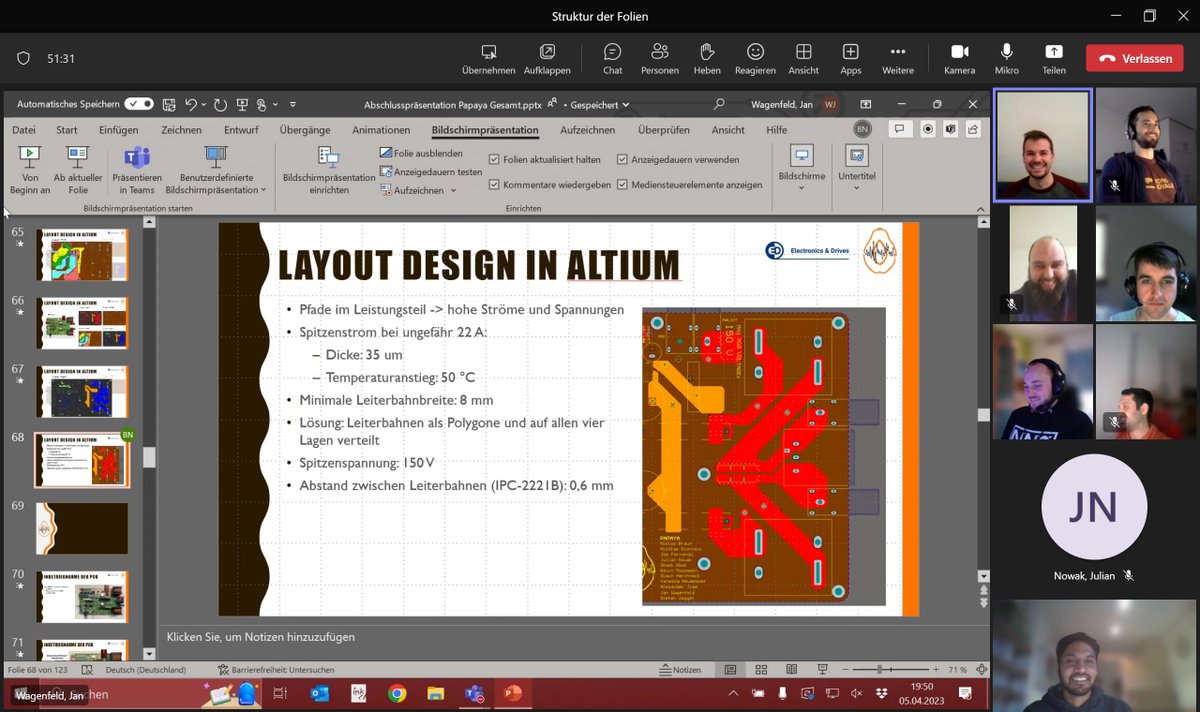
@ciceroalisson@ElectronicsDrv @HS_Reutlingen We have decided on 20°C max. temperature increase, so we get about 20A through the PBMIF connector per connection.
For the insulation voltages, we followed DIN VDE 0110 part 1 or IEC 664-1/10.92 and designed the distances between the connections for 1000V.
Final presentation preparation!
Today was the first meeting and there are many more to come. Final presentation is on 19th of April and will be uploaded to youtube. Stay tuned for the last steps of our journey!
#Powerelectronics#Microelectronics@ElectronicsDrv
@HS_Reutlingen
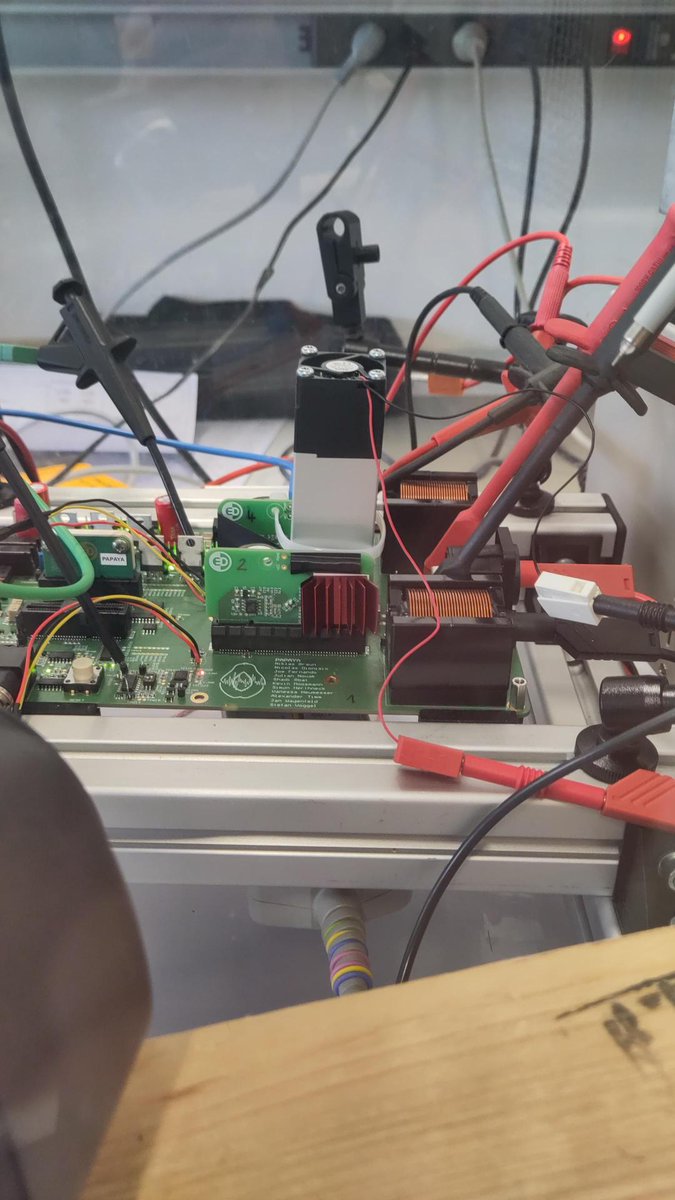
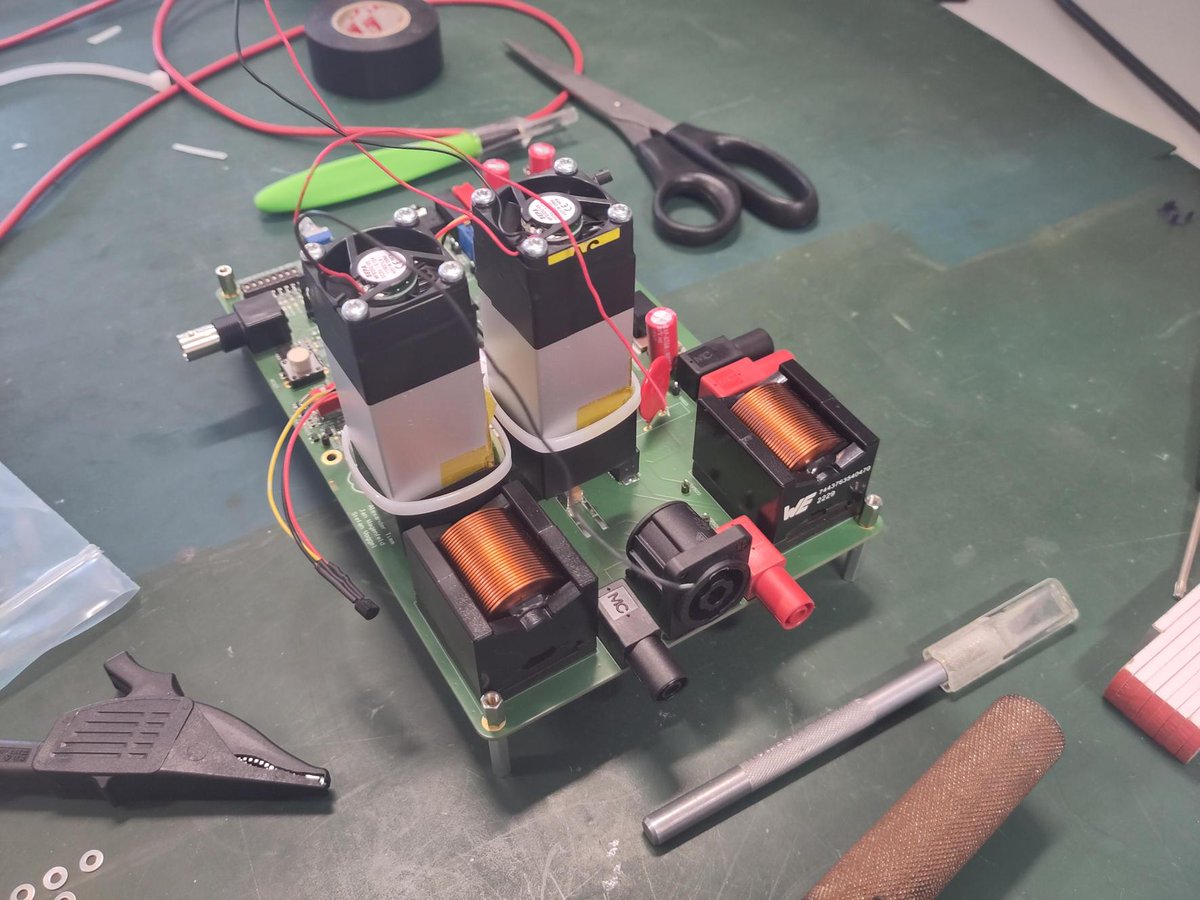
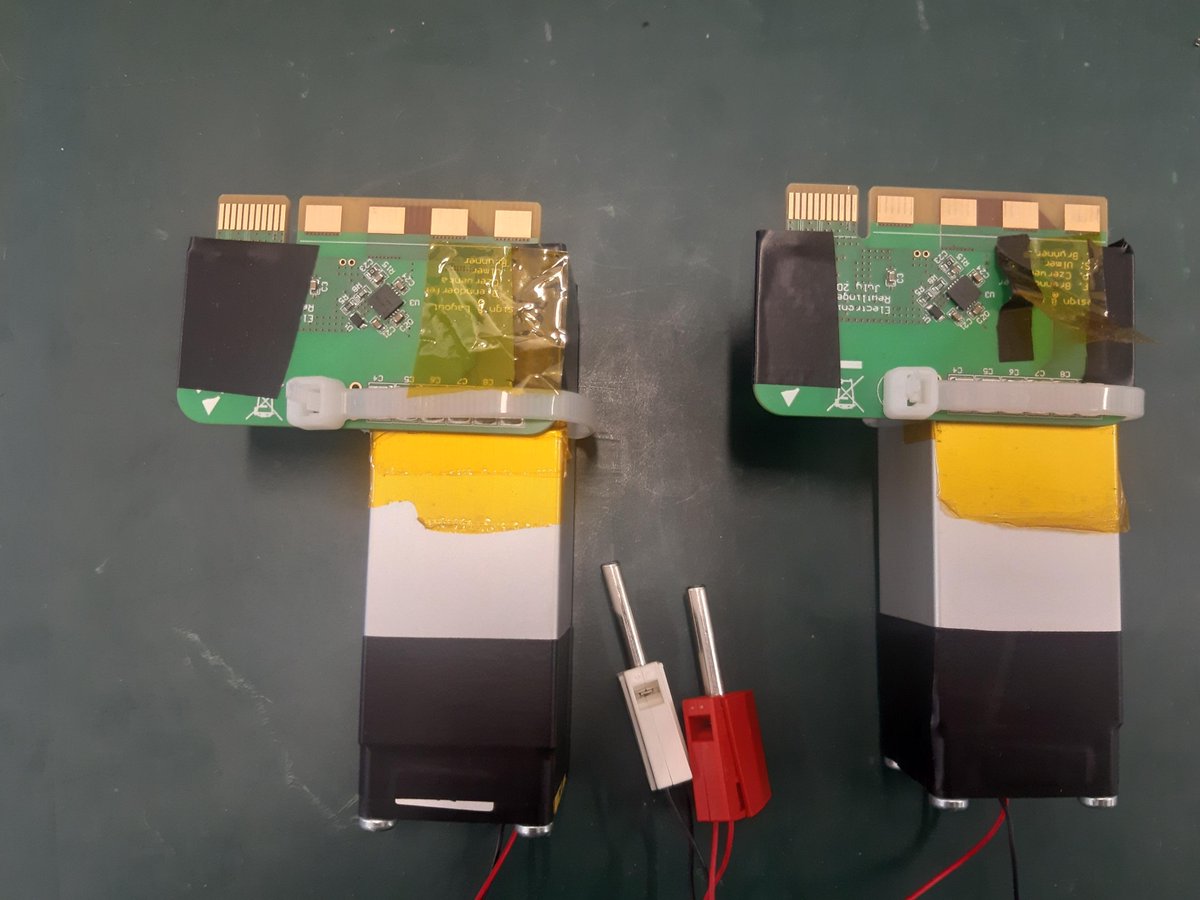
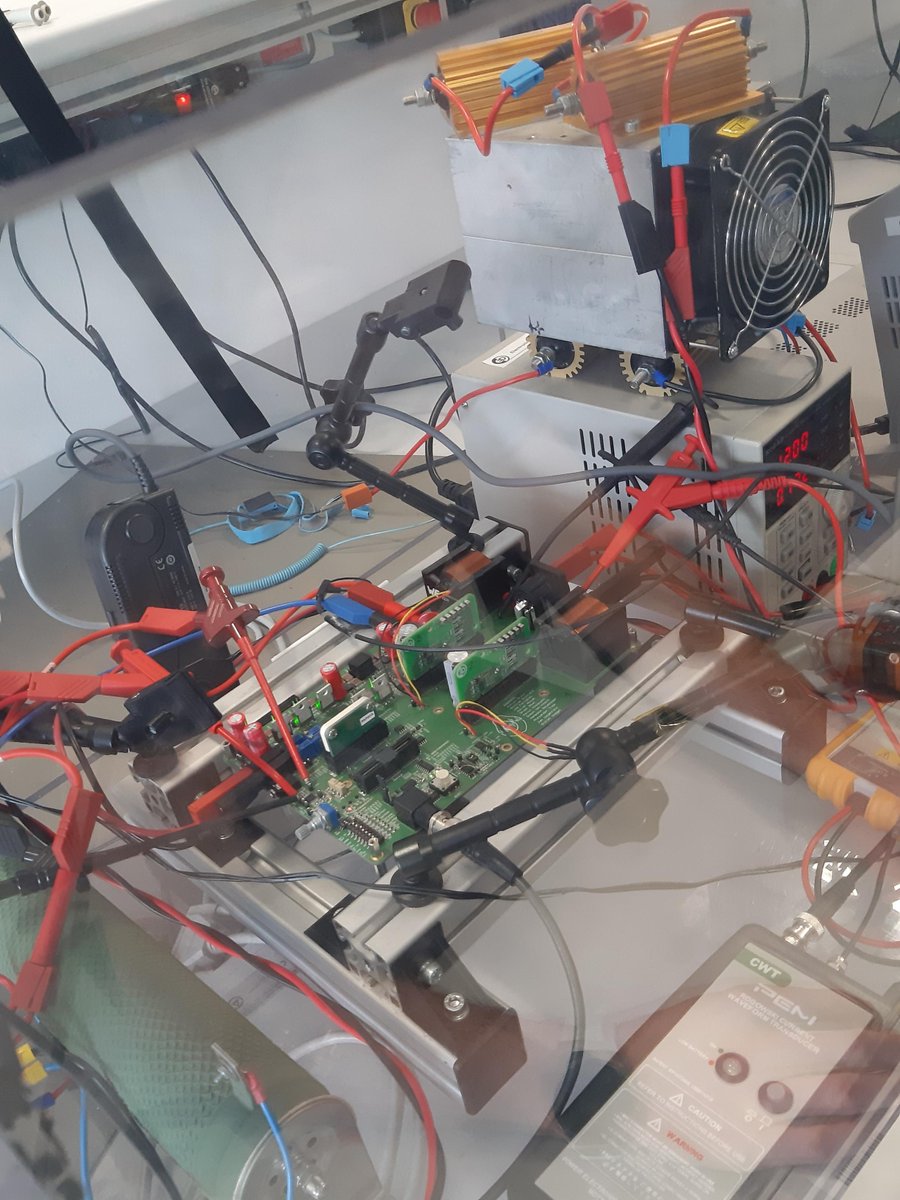
To protect our GaN transistors at the performance test we use 2 large cooling units. These should cool down the half bridge modules with the transistors so that we have no overheating symptoms. Stay tuned for results!
#Powerelectronics#Microelectronics@ElectronicsDrv
Error eradication in the last days: The ground got affected repeatedly. It was due to the correct ground connection in connection with the several respective connected test tools.
Finally the big performance test can start. Stay tuned!
#Microelectronics@ElectronicsDrv
The protection circuit we have managed to implement monitors the intermediate circuit voltage, the current consumption and the temperatures of the GaN-Transistors and switches off the GaN -Modules when triggered and enters the respective error mode.
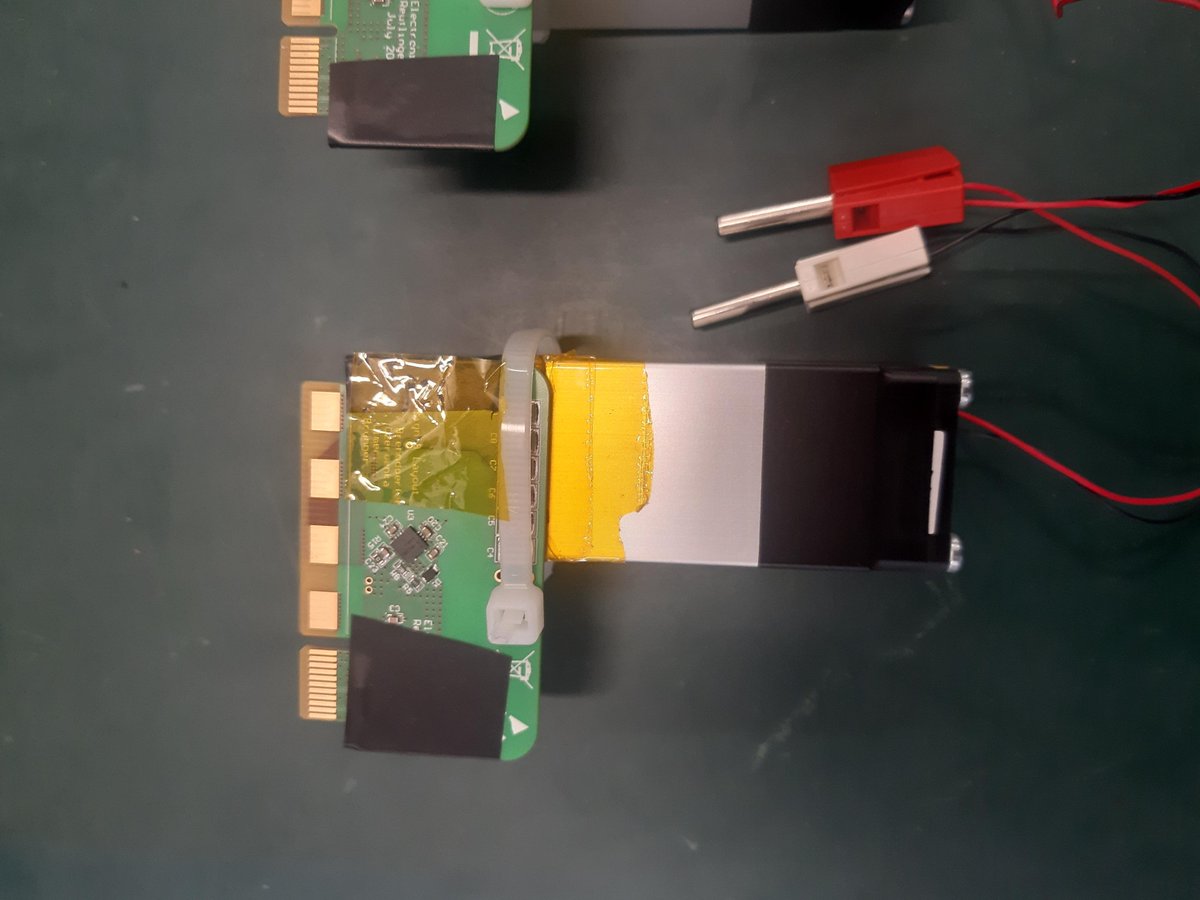
Beyond our requirements we implemented a protection circuit. Among other features, the temperature of the GaN transistors can be monitored and go into emergency mode when triggered. In the photos, we are testing the temperature sensors.
#Microelectronics@ElectronicsDrv