@TBourany In ABM the aggr. equilibrium, when it exists, is emergent (in a computational sense), it isn't imposed by a modeller playing like a fictitious auctioneer. And no, it isn't true that ABMs do not pass the Lucas critique.
Mio intervento su @Dissonanze_riv. Nella transizione climatica, gli approcci dominanti consistono nel creare mercati (ETS) o nel correggere esternalità con (dis-)incentivi fiscali. "Price vs. Quantity" di Weitzman aiuta a capire perché serva un intervento pubblico su larga scala.
Quando il caldo estremo minaccia salute e vite, lo Stato dovrebbe garantire meccanismi di protezione accessibili a tutti. La protezione dalle temperature estreme non può rimanere un’opportunità individuale https://t.co/CC5kDf6lVX
@BharatKChandar@erikbryn@RuyuChen That is exactly what we should expect. For a proposal regarding the analytical framework, see here: https://t.co/AALF8pgG1F
A long long journey has eventually reached its final destination.
New paper out in Industrial and Corporate Change: "The worth of connections: an assessment of the impact of interlocking directorates on resource allocation" with Enrico Cristofoletti.
A 🧵 1/
7/ The broader lesson: not all financial distortions generate large aggregate l'ossessione. When favoritism is systematically directed toward firma that are already produttive, micro-level distortions need not translate intro substantial macro-level misallocation.
@dottorpax È esattamente il punto di Agrawal et al. (2019; 2025) e di Autor and Thompson (2025): genAI fa "prediction", che senza "judgement" e "expertise" serve a poco. genAI è una "bycicle for the mind".
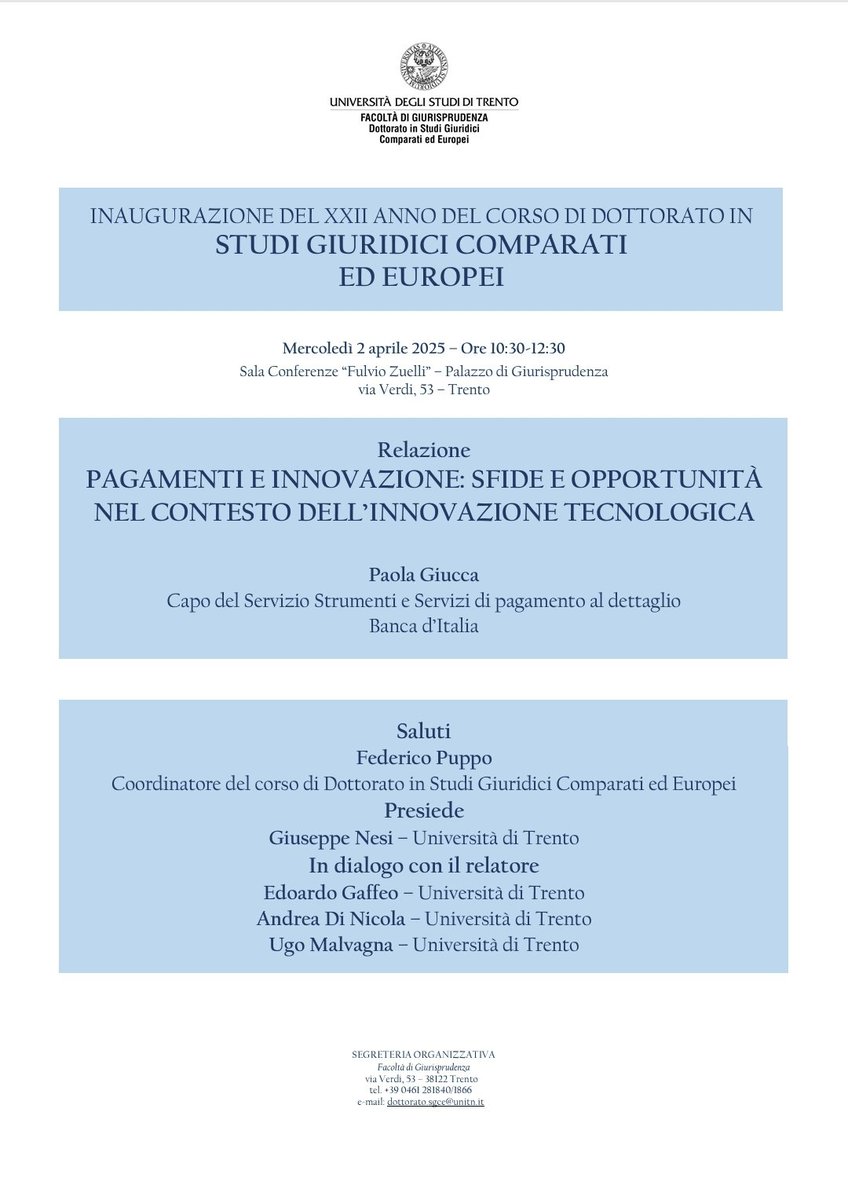
Central Bank Digital Currencies, blockchain per i sistemi di pagamenti, sovranità finanziaria in area Euro ... il prossimo 2 aprile, all'inaugurazione del 22° ciclo del Dottorato in Studi Giuridici Comparati ed Europei di UniTN. Grazie ai colleghi di Giurisprudenza per l'invito