🎊 A New Chapter Begins! 📖 We're thrilled to announce a new editorial team at The European Journal of International Security - and some BIG changes to come! 🚀 Stay tuned as we unveil our vision for advancing scholarship and shaping the future of security research! #EJIS@MYBISA
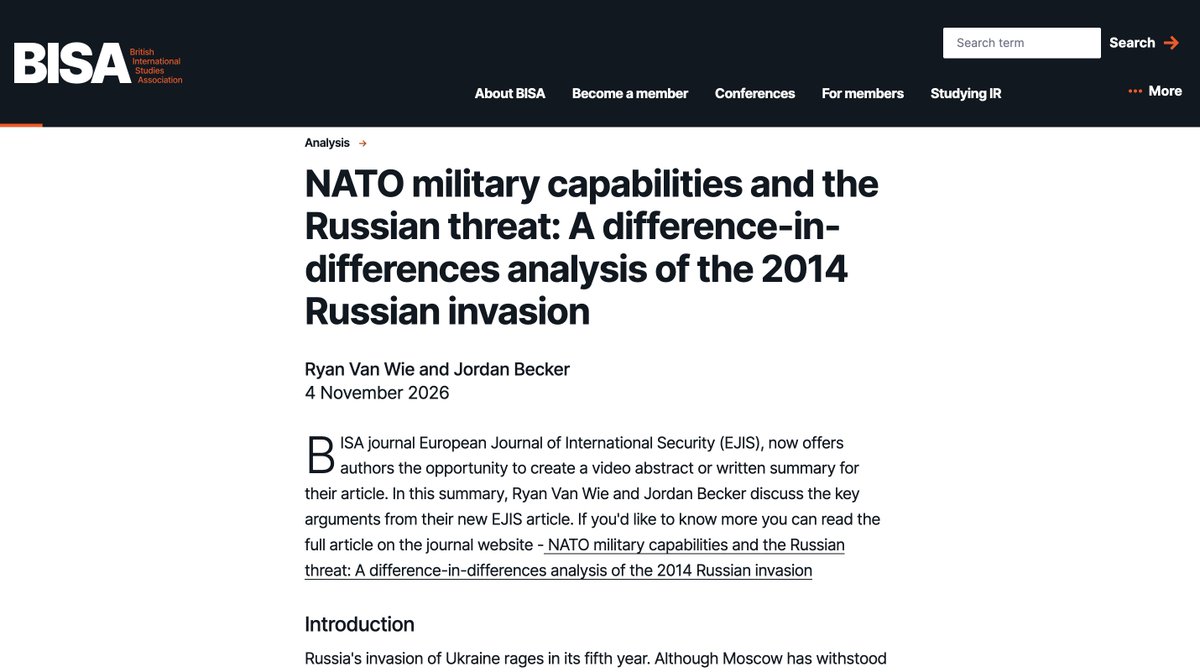
🚀 We now offer authors the opportunity to create a video abstract or written summary for their article. Our first EJIS written article summary, by Ryan Van Wie and Jordan Becker, is now online:
https://t.co/gVXl9iKOYb
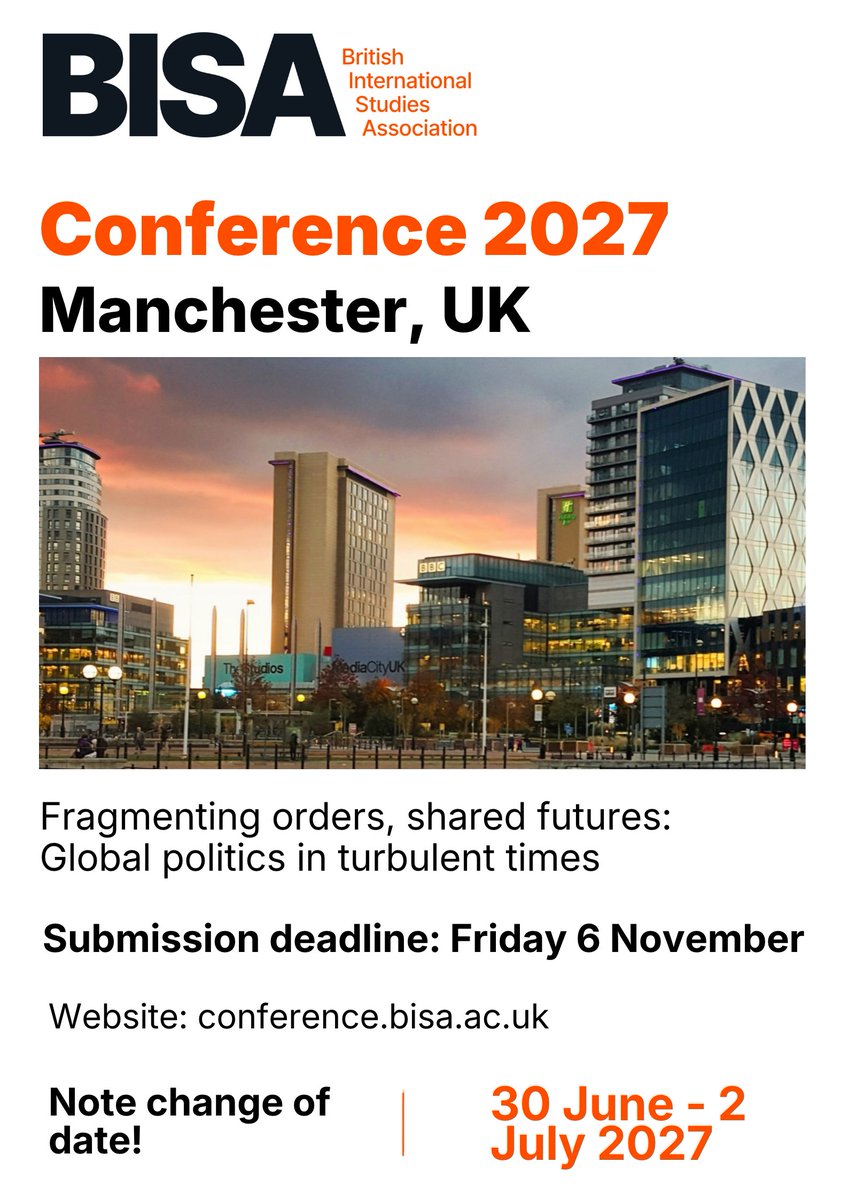
LAST WEEK to get your #BISA2027abstract, roundtable and panel submissions in 📣
'Fragmenting orders, shared futures: Global politics in turbulent times' 🎉
Get your submissions in now - deadline is Friday! 👉https://t.co/caSL8d8Q0Y
@julietdryden.bsky.social Juanita Elias
🇷🇺🪖 NEW: "NATO military capabilities and the Russian threat: A difference-in-differences analysis of the 2014 Russian invasion" from Ryan Van Wie & Jordan Becker.
��� Open access - read here: https://t.co/5MEIUYe5YW
Japan aims at a MOD&METI-led legal entity to strengthen the defense industrial base, innovation, support exports, and economic growth via defense industry. Facilities may be nationalized.
A prescient article w/@Alice_DellEra soon out on @EJIntSec.
https://t.co/NQXZB4Os7O
🪖 "When do armed forces support or resist domestic policing tasks?" by @mazziottidicels.
Read this superb article, in full, for free: https://t.co/35mkl1DJ2k
Glad to see our article now in the latest @EJIntSec issue.
W/@MichalSmetana3, @Lauren_Sukin, & @mVranka, we use a survey experiment to show that, in some scenarios, elite views in US & UK on nuclear use can be influenced by public opinion.
#OpenAccess: https://t.co/8O5kEiBxRz
Today, 35 international journals have joined an initiative stating that we prefer Intellectual Authorship over Artificial intelligence: IA over AI. Read statement and see our fellow signatories here: https://t.co/BaZtymtcAi
🇳🇴🪖 NEW: "The autonomy–abandonment dilemma: Why umbrella states oppose their nuclear patron" by Adelina Trolle Andersen (@Forsvaret_no).
👉 Open access - read in full for free: https://t.co/qQ9cLO4tYu
🇩🇪 NEW: "Opening through closure: Selectivity and organisational coupling at Germany’s Federal Academy for Security Policy (BAKS)" by Christian Opitz.
📚👉 Open access and available here: https://t.co/QIQMzUcDlO
في الرابط ورقة مميزة منشورة في @EJIntSec شارك في إعدادها العزيز @BilalSalaymeh
تتناول التحولات التي يشهدها مفهوم الأمن الدولي، وتكشف عن العودة التدريجية إلى المقاربات التي تتمحور حول الدولة والسيادة الوطنية مقابل تراجع المقاربات المتمحورة حول الإنسان.
https://t.co/yATVFY0ryF
🪖📚 NEW and open access: "When do armed forces support or resist domestic policing tasks?" by @mazziottidicels (@IRSEM1).
🚀👉 Read here - for free: https://t.co/35mkl1DbcM
#FromtheIvoryTower | Despite shared maritime security interests, has India-EU cooperation in this sector remained elusive?
A recent study published in the European Journal of International Security (@EJIntSec) argues that sustained EU–India engagement in the Western Indian Ocean (WIO) has not produced deeper cooperation in maritime security.
To compare the EU's & India's preferred methods of engagement, the study titled ‘Institutional choice and the limits of security governance: EU–India maritime cooperation in the Western Indian Ocean’, by Philipp Gieg (@PhilippGieg) and Abhishek Mishra (@Mishraesque), examined governmental arrangements and ad hoc coalitions, drawing on practitioner interviews, policy documents, official statements, datasets and secondary sources.
They found that the EU’s preferred starting point is formal institutions that align with its emphasis on legal authority, legitimacy, and established rules. But due to high transaction costs, limited flexibility and reduced visibility, it also focuses on informal arrangements like the Critical Maritime Routes Indian Ocean (CRIMARIO) or the Shared Awareness and Deconfliction (SHADE) programme.
Meanwhile, India has played a much larger role in creating and participating in informal arrangements that give it the scope to shape agendas and participation while keeping sovereignty costs low, found the study.
Simply put, the EU tends to treat informality as a complement to a largely formal, legitimacy-oriented approach, while India relies more heavily on informal formats for flexibility, agenda-setting, and sovereignty preservation.
The authors describe the resulting pattern as “functional coexistence without institutional consolidation.”
You can read our full breakdown of the study here: https://t.co/4WSquqoejQ
Follow for more such updates.
#maritimesecurity #maritimecooperation #IndiaEUpartnership #Indiamaritimesecurity #EuropeanUnion
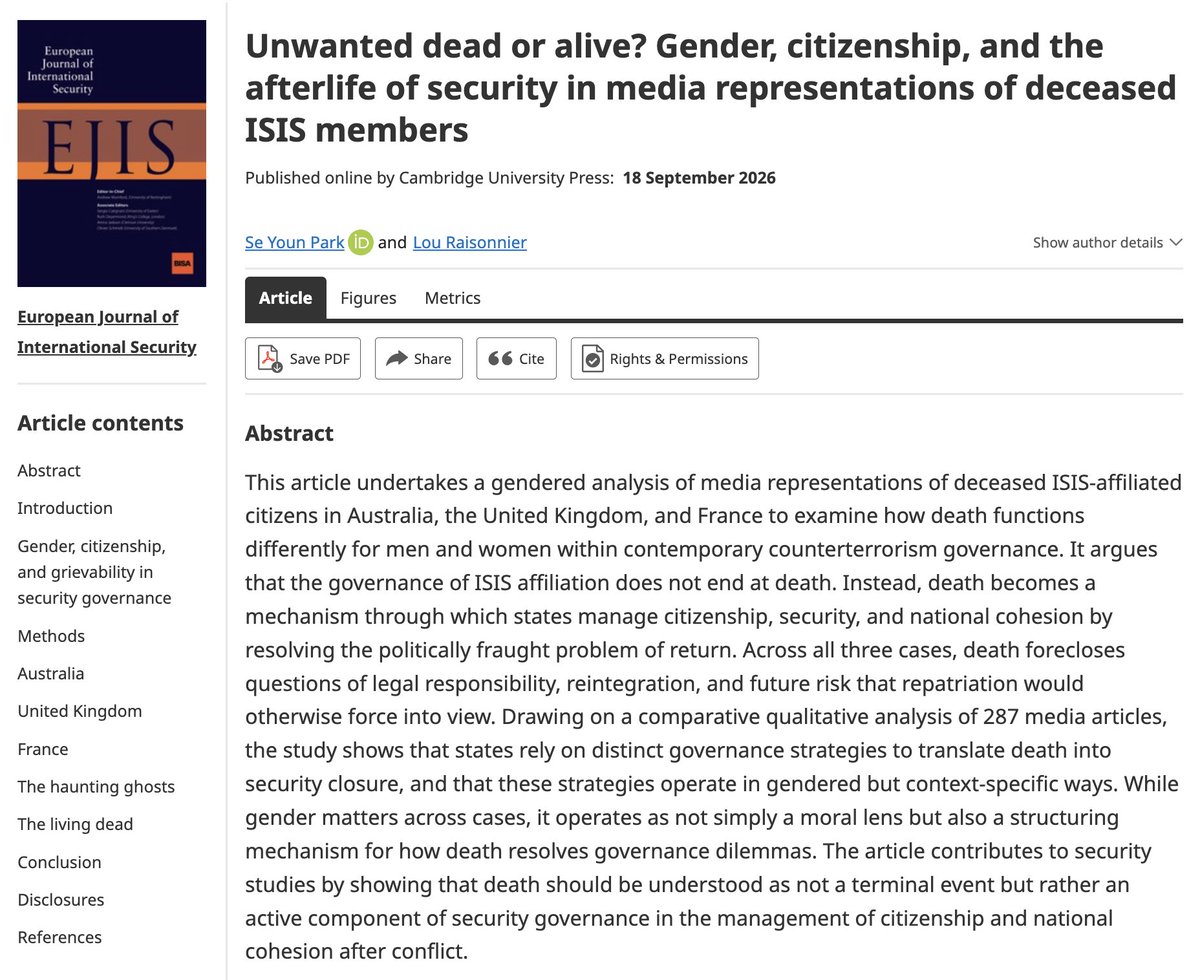
📚 NEW: "Unwanted dead or alive? Gender, citizenship, and the afterlife of security in media representations of deceased ISIS members" from Se Youn Park (@UniofAdelaide) & Lou Raisonnier (@KingsCollegeLon).
🚀👉 Open access - read here: https://t.co/AI20PFqp2t
🎉We are OPEN now for abstract, roundtable and panel submissions for #BISA2027 🎉
'Fragmenting orders, shared futures: Global politics in turbulent times' 🌎
Submit here now! 👉 https://t.co/caSL8d8Q0Y
@SimonRushton8@JulietDryden
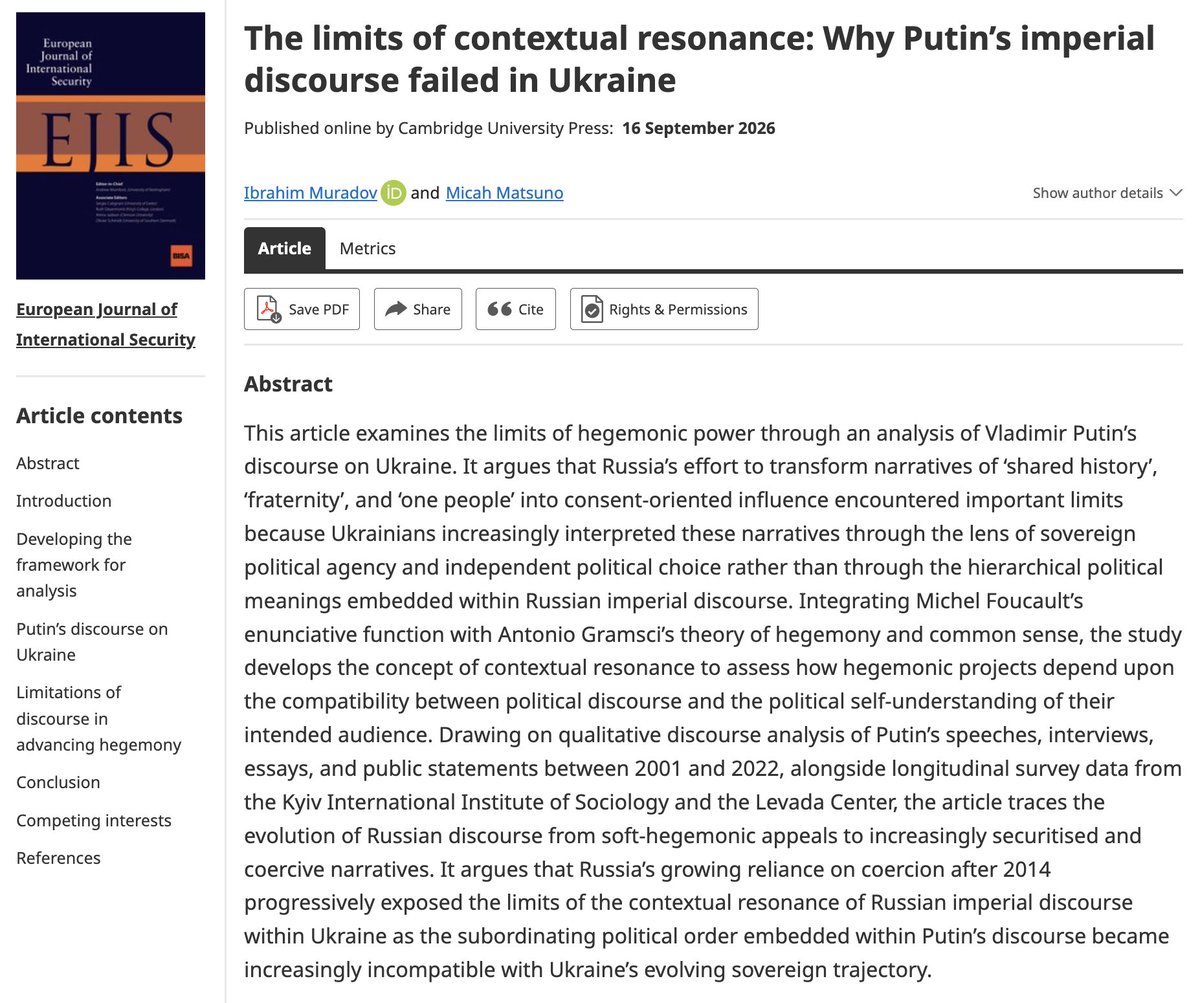
🇺🇦🇷🇺 NEW: "The limits of contextual resonance: Why Putin’s imperial discourse failed in Ukraine" by Ibrahim Muradov and Micah Matsuno (@UBC).
📚👉 Open access - read here: https://t.co/oFx28mq2W4
📣 #BISA2027 date change - 30 June - 2 July 📣
Recently announced Oasis concerts coinciding with original conference dates have had a significant impact on hotel availability and prices for delegates. The move will help keep the conference accessible
👉 https://t.co/kELpTsMrm2
My new open-access article is out in the @EJIntSec
Why do armed forces sometimes support domestic policing—and resist it at other times? I examine the Italian Army and Operation Strade Sicure (2008–24).
https://t.co/rfgpFPDil9
How “International Security” is being redefined amid shifting global order?
Check our latest publication w/ @SaraHellmuller & Fanny Badache
"What is in a Word? Discourse and Practice of International Security in a New World"
Just published @EJIntSec
https://t.co/Ftz6Ub8pav