Clean LinkedIn Post (ready to copy-paste):
Thought-provoking analysis on Venezuela’s current situation and the broader implications of U.S. intervention.
In “Venezuela at a Crossroads: Cautionary Lessons on Intervention,” Dr. Christopher Zambakari examines the January 2026 U.S. military operation that led to the capture of President Nicolás Maduro. Framed by the Trump administration as a law enforcement action (building on prior indictments for narco-terrorism), the piece explores the legal architecture—including precedents like the 1989 Panama operation—tensions with international norms (e.g., UN Charter), executive power vs. congressional oversight, and historical U.S. interventions in Latin America.
Key points from the article:
•The operation revives fundamental questions about sovereignty, constitutional authority, and the durability of the rules-based international order in an era of great-power competition.
•The U.S. frames the intervention as a transnational law enforcement action rather than an act of war, allowing it to bypass congressional approval under the War Powers Resolution while drawing on precedents like the Noriega capture in Panama.
•It highlights the persistent tension between international legal norms (e.g., UN Charter prohibitions) and broad interpretations of U.S. executive power, supported by Office of Legal Counsel memos.
•Historical context shows this fits a long pattern of U.S. interventions in Latin America (over 40 since 1898), raising risks to regional stability and inviting reciprocal actions by other powers.
•While acknowledging the Maduro regime’s crises, the piece cautions about the challenges ahead for any transition and the potential erosion of global governance norms.
Zambakari highlights the risks to sovereignty, regional stability, and the rules-based order, while noting the complex realities of great-power competition and the challenges ahead for any transition. A timely read for anyone following EM credit, geopolitics, and Latin America dynamics.
Highly recommended—especially Part 1 of this insightful three-part series.
Credit to author: Dr. Christopher Zambakari, MBA, MIS, LP.D. (Doctor of Law and Policy from Northeastern University), Founder & CEO of The Zambakari Advisory, Hartley B. and Ruth B. Barker Endowed Rotary Peace Fellow, and expert in international law, security, governance, conflict management, and state-building.
Link: https://t.co/3z9YvUQMva
#Venezuela #EmergingMarkets #Geopolitics #LatinAmerica
Francis Fukuyama recently shared a compelling piece titled “The Myth of Authoritarian Efficiency” by political scientists Jørgen Møller and Svend-Erik Skaaning (Aarhus University / V-Dem project).
The article dismantles the popular notion that authoritarian regimes—particularly China—are simply better at “getting things done.” Drawing on historical data and comparative evidence, the authors argue that democracies consistently outperform autocracies over the long term across critical domains:
• Military effectiveness: Democracies have won more than 80% of wars since 1815. Greater legitimacy enables citizens to make greater sacrifices, and democratic alliances prove more durable.
• Economic performance: While autocracies can drive catch-up growth to middle-income levels, they struggle to transition to innovation-driven, knowledge economies that require rule of law, intellectual property protection, and open debate. High-quality democracies show a modest but robust long-run growth advantage.
• Avoiding catastrophe: Autocracies periodically produce large-scale man-made disasters (Mao’s Great Leap Forward, Soviet collectivization). Institutional checks and public scrutiny in democracies make comparable failures rare.
• Crisis management & environment: Transparency, independent science, and accountability lead to better outcomes on pandemics, climate policy, and environmental indicators. China’s zero-COVID flip-flop and overstated economic statistics illustrate the risks of centralized, unaccountable decision-making.
The authors acknowledge democracies can be slow and messy, but emphasize that self-correction mechanisms ultimately make them more resilient and effective than systems that concentrate power without feedback loops.
Francis Fukuyama, author of the landmark book The End of History and the Last Man, continues to spark important conversations about the enduring strengths of liberal democracy in an era of renewed authoritarian confidence.
Full article (highly recommended):
https://t.co/rdLYptPLnY
What’s your take—do you see evidence of this “myth” playing out in emerging markets or great-power competition today?
#Democracy #Geopolitics #China #EmergingMarkets #InternationalRelations #PoliticalEconomy
Today in emerging markets history...
June 2006: Kuwait Debates Reform, Succession, and the Future of Gulf Governance
By June 2006, Kuwait found itself navigating a pivotal moment in its political evolution. While many of its Gulf neighbors remained firmly anchored in traditional monarchical structures, Kuwait was engaged in vigorous debates over parliamentary authority, electoral reform, and the balance of power between elected institutions and the ruling family.
The immediate backdrop was an unprecedented succession crisis earlier that year. Following the death of Emir Jaber Al-Ahmad Al-Sabah, the National Assembly played a historic role in resolving a dispute within the ruling Al Sabah family, ultimately confirming Sabah Al-Ahmad Al-Jaber Al-Sabah as the country's new ruler. The episode demonstrated the unusual strength of Kuwait's parliament compared with other Gulf monarchies.
By June, attention had shifted toward broader political reforms. Opposition groups and reform-minded legislators were pressing for changes to the electoral system, arguing that larger electoral districts would reduce patronage and strengthen representative government. The resulting debates highlighted a central question in Kuwaiti politics: how to reconcile traditional monarchical authority with growing demands for accountability and participation.
The broader regional environment made these discussions particularly noteworthy. The Iraq War continued just across Kuwait's northern border, reshaping security calculations throughout the Gulf. Meanwhile, high oil prices were generating enormous revenues across the region, fueling economic growth while raising questions about governance, modernization, and political reform.
Globally, 2006 was a period of relative economic optimism before the financial crisis that would emerge two years later. Energy-exporting states enjoyed strong fiscal positions, and many observers believed the Middle East might be entering a new era of gradual political opening.
Historically, June 2006 represents an important chapter in Kuwait's distinctive political development. While not a revolution or dramatic transition, the debates surrounding succession and parliamentary reform underscored Kuwait's role as one of the Gulf's most politically pluralistic states—a country seeking to balance tradition, legitimacy, and representative governance in a rapidly changing region.
Today in emerging markets history...
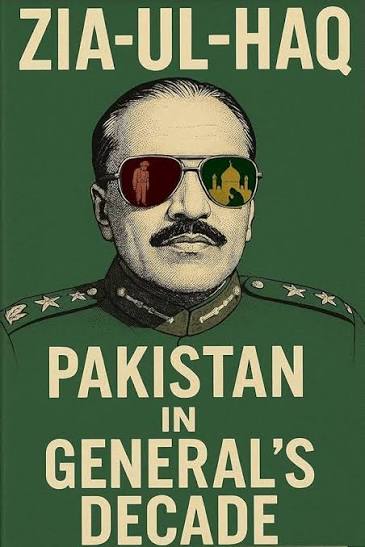
June 1988: The Final Months of Zia-ul-Haq's Pakistan
By June 1988, Pakistan stood at a political crossroads. After nearly eleven years of military rule, President Muhammad Zia-ul-Haq was navigating a period of intense political maneuvering as questions about succession, democratization, and the future of the state grew increasingly urgent.
Zia had come to power through a military coup in 1977 that ousted Prime Minister Zulfikar Ali Bhutto, who was later executed following a controversial trial. During the ensuing decade, Zia reshaped Pakistan through a combination of military rule, Islamization policies, and close alignment with the United States during the Soviet-Afghan War.
By mid-1988, however, the political landscape was shifting. Earlier that year, Zia had unexpectedly dissolved parliament and dismissed Prime Minister Muhammad Khan Junejo, reigniting uncertainty about the country's democratic future. Opposition figures, including Benazir Bhutto, were mobilizing in anticipation of future elections, while the military establishment weighed its options regarding a post-Zia political order.
The international backdrop was equally dramatic. The Cold War was entering its final phase. Soviet leader Mikhail Gorbachev was pursuing reforms at home, while Soviet forces were preparing to withdraw from neighboring Afghanistan after nearly a decade of war. Pakistan had been a frontline state in that conflict, serving as a critical conduit for U.S. and Saudi support to the Afghan mujahideen.
Few observers knew that the end was near. On August 17, 1988, only weeks later, Zia would die in a mysterious plane crash, abruptly transforming Pakistan's political trajectory.
Historically, June 1988 represents the final chapter of one of Pakistan's most consequential military regimes. The uncertainty and maneuvering of those months would shape the country's transition back toward electoral politics and influence civil-military relations for decades to come.
Today in emerging markets history...
June 1950: Brazil Prepares to Host the World (Cup)
By June 1950, Brazil was preparing for what many believed would be its grand arrival on the global stage. The country was weeks away from hosting the 1950 FIFA World Cup, the first World Cup held after World War II, and the event carried significance far beyond sport. For Brazilian leaders and much of the public, it represented a powerful symbol of national modernization, economic progress, and international prestige.
The centerpiece of these ambitions was the newly constructed Maracanã Stadium in Rio de Janeiro. At the time, it was the largest stadium in the world and a monument to Brazil's confidence in its future. Politicians, journalists, and intellectuals saw the tournament as an opportunity to showcase a rapidly urbanizing nation that aspired to join the ranks of the world's leading powers.
The country itself was undergoing important political change. President Eurico Gaspar Dutra presided over a democratic government following the end of the Estado Novo dictatorship of Getúlio Vargas. Economic development, industrialization, and national integration were increasingly central themes of public life.
The broader international context was equally dramatic. The Cold War was intensifying, and only weeks later the Korean War would erupt, transforming global geopolitics. Europe was rebuilding from the devastation of World War II, while newly independent nations across Asia and the developing world were beginning to redefine the international order.
Against this backdrop, Brazil viewed the World Cup as evidence that it belonged among the rising nations of the postwar era. The tournament became a projection of national ambition—a statement that Brazil was no longer a distant exporter of coffee and commodities but a modern country with global aspirations.
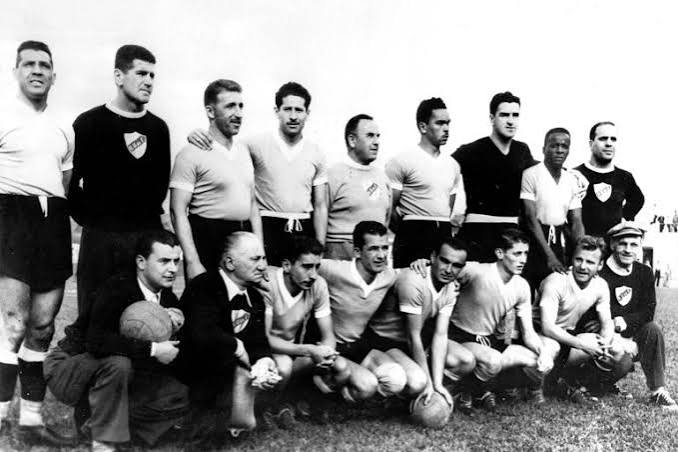
Historically, June 1950 captures a moment of extraordinary optimism. Although the tournament would later end in heartbreak with the famous defeat to Uruguay known as the Maracanazo, the preparations themselves reflected a nation increasingly confident about its future and its place in the world.
Today in emerging markets history...
June 1990: Ukrainian Nationalism Gains Momentum as the Soviet Union Begins to Unravel
By June 1990, the political foundations of the Soviet Union were beginning to crack, and nowhere was this more evident than in Ukraine. As reforms initiated by Soviet leader Mikhail Gorbachev loosened political controls, Ukrainian nationalist and democratic movements gained strength, challenging decades of centralized rule from Moscow.
The catalyst was not a single event but a growing wave of political awakening. Organizations such as Rukh, the Popular Movement of Ukraine, mobilized citizens around demands for greater autonomy, cultural rights, environmental accountability, and ultimately national sovereignty. Public demonstrations drew increasingly large crowds, while newly elected reform-minded deputies began pressing for political change within the Ukrainian Soviet Socialist Republic.
The memory of historical grievances also played an important role. Many Ukrainians were revisiting long-suppressed discussions of Stalin-era repression, the Holodomor famine of the 1930s, and the environmental consequences of the Chernobyl disaster, which had deeply undermined confidence in Soviet governance.
The broader international context was extraordinary. Across Eastern Europe, communist regimes were collapsing with remarkable speed. The Fall of the Berlin Wall had occurred only months earlier. Democratic governments had emerged in Poland, Hungary, and Czechoslovakia, while Germany was moving toward reunification. The Cold War order that had defined global politics for nearly half a century was rapidly dissolving.
In Ukraine, these developments fueled a growing conviction that political destiny should no longer be determined in Moscow. Within weeks, the Ukrainian parliament would adopt the Declaration of State Sovereignty, a crucial milestone on the path toward independence.
Historically, June 1990 represents a turning point in the emergence of modern Ukraine. What began as a movement for greater autonomy soon evolved into a struggle for full statehood, culminating in independence in 1991 and laying the foundations for a national identity that continues to shape European geopolitics today.
Peru’s Politics: A Chaotic Punchline, But the Economy Keeps Chugging?
In a sharp New Yorker piece, Daniel Alarcón captures Peru’s profound political dysfunction ahead of the June 7 runoff election (Keiko Fujimori vs. Roberto Sánchez, from a chaotic first round with 36 candidates).
Key highlights:
•Peru is on track for its 9th president in a decade—only the third elected. Recent short-lived leaders include one who quickly scrubbed misogynistic tweets and another pushing child marriage. Four ex-presidents imprisoned; over 90% of Peruvians distrust the government.
•Congress dominates amid revolving-door executives, often aligned with local interests tied to illicit activities. This has led to fiscal guardrail erosion, unfinished public projects (nearly half since 2012), underfunded scholarships, and permanent spending commitments that could strain the budget if commodity prices falter.
Yet, macro indicators remain surprisingly resilient:
•Strong growth (3.4% last year, outperforming many regional peers), record foreign reserves (~30% of GDP), low inflation, and robust debt metrics.
•Driven by near-peak gold/copper prices and mining investment—legal exports alone massive, plus informal/illegal sectors.
•Economist Carolina Trivelli notes the “pretty snapshot” but warns of underperformance relative to commodity tailwinds, poor execution on infrastructure/education/health, and vulnerability to shocks like El Niño.
The article’s core tension: Politics decoupled from the economy—for now. But chronic instability, corruption, and short-termism risk long-term damage, eroding public trust and investment capacity. As political scientist Alberto Vergara observes, in Peru, “caring about politics is not rational.”
For EM credit folks, Peru remains a fascinating case of commodity-driven resilience amid institutional fragility. Sovereign and corporate credits (esp. mining-related) have held up, but governance risks loom large for sustainability. The runoff winner will likely lack a strong mandate, with Congress retaining outsized power.
Worth a read for anyone following LatAm: https://t.co/IhpPD88xgn
What are your thoughts on Peru’s decoupling—or the next risks on the horizon? #EmergingMarkets #LatAm #PeruPolitics #CreditStrategy
Excellent new op-ed by Josephine Lechartre (@JoLechartre) in The National Interest on the structural challenges facing any potential transition in Venezuela.
Lechartre makes a compelling case that Venezuela is not simply transitioning from authoritarian rule—it is transitioning from a criminalized state. Under Chávez and Maduro, illicit networks (notably the fragmented Cartel de Los Soles and links to groups such as Tren de Aragua and Mexico’s Sinaloa Cartel) were deliberately cultivated within segments of the military, security apparatus, and political elites to secure loyalty and control. Removing Maduro does not automatically dismantle these embedded structures.
She draws sharp lessons from Guatemala’s CICIG (the UN-backed International Commission against Impunity), which successfully targeted “macro-criminality”—the institutional ties between organized crime, elites, and state institutions—delivering prosecutions, stronger judicial capacity, and a meaningful reduction in violence before political backlash led to its dismantling.
For Venezuela, she argues that sustainable democratization and economic normalization will require a tailored international mechanism (with broad regional and multilateral backing, not a unilateral U.S.-led effort) focused on dismantling these state-crime linkages. Critical design considerations include a politically viable narrower mandate, smart sequencing that starts at mid-level networks to build capacity and support, and elements of conditional accountability or reconciliation to encourage cooperation.
As someone who has covered Venezuela’s credit and political-risk landscape for years, this piece is a timely reminder that institutional integrity and the rule of law are foundational to any durable recovery—not secondary issues that can be addressed later. Without confronting these criminalized networks, the risks of persistent corruption, violence, and failed consolidation remain high (as Mexico’s post-2000 experience with groups like Los Zetas illustrates).
Highly recommended reading for anyone following LatAm geopolitics, governance, and emerging markets:
https://t.co/A4f3YPW1yl
What are your views on the sequencing of accountability versus reconciliation in complex transitions like this?
#Venezuela #EmergingMarkets #LatAm #PoliticalRisk #Governance #RuleOfLaw
Brazil, China, and the Risks of Economic Dependence
A thought-provoking article by Arturo McFields in The Hill raises an important question for investors and policymakers alike: at what point does a successful economic partnership become a strategic dependency?
The author argues that Brazil's growing economic, financial, and technological ties with China have created vulnerabilities that deserve greater scrutiny. China is now Brazil's largest trading partner and a dominant buyer of key exports such as soybeans, iron ore, beef, and other commodities. Chinese investment has also expanded into energy, infrastructure, telecommunications, and increasingly strategic sectors.
The benefits of this relationship are undeniable. Chinese demand helped fuel Brazil's commodity boom, supported export revenues, and contributed to economic growth over the past two decades. China surpassed the United States as Brazil's largest trading partner in 2009 and remains central to Brazil's external sector.
The concern, however, is concentration risk.
When a large share of exports, investment flows, and strategic projects become linked to a single partner, economic exposure can evolve into geopolitical exposure. The debate is not whether Brazil should engage with China—it clearly should—but whether sufficient diversification exists to preserve long-term strategic autonomy.
For investors, this is increasingly relevant. Brazil's relationship with China is no longer just a trade story. It is becoming a major variable in discussions about supply chains, commodity demand, infrastructure investment, technology policy, and foreign relations.
As U.S.-China competition intensifies, Brazil may face a challenge familiar to many emerging markets: how to benefit from both powers without becoming overly dependent on either.
Between the eagle and the dragon: Brazil’s dangerous dependence on China
https://t.co/JWbQrqCLU9
Why Latin America’s Critical Minerals Are Gaining Strategic Importance Post-Iran War
The recent US-Iran conflict has underscored vulnerabilities in global energy chokepoints like the Strait of Hormuz, accelerating interest not just in Latin America’s growing oil & gas role (Brazil, Guyana, Venezuela, Suriname), but especially in its vast reserves of critical minerals essential for AI, electrification, and the energy transition.
Latin America holds over half the world’s lithium (Argentina, Bolivia, Chile), ~40% of copper (Chile, Peru), expanding cobalt, and significant rare earth potential (notably Brazil as a counterweight to China). With surging demand driven by AI power needs and efforts to reduce reliance on Middle East hydrocarbons, the region’s stable legal frameworks, infrastructure, and resources position it as a key player—despite risks like corruption and organized crime.
Geopolitically, this intensifies the US-China competition. China has built strong positions in mining and refining, while the US is stepping up with financing and policy support (e.g., backing for Brazilian rare earth projects). Latin American governments are navigating this carefully, pushing for value-added processing and local benefits while balancing relations with both powers. Recent elections and policy shifts (e.g., in Argentina, Chile, Brazil under Lula) show pragmatic support for mining development.
For EM investors and credit analysts, this creates opportunities in mining-linked sovereigns, corporates, and infrastructure — but success will hinge on navigating political, community, and geopolitical risks.
Insightful read from Dr. Scott MacDonald and Brett Shearing in The National Interest.
🔗 Full article: https://t.co/7J7gAdo4Ol
What are your thoughts on LatAm’s critical minerals outlook in this shifting geopolitical landscape?
#EmergingMarkets #CriticalMinerals #LatinAmerica #EnergyTransition #Geopolitics #EMCredit
Today in emerging markets history...
June 10, 1971: El Halconazo and the Limits of Reform in Mexico
On June 10, 1971, thousands of students marched through Mexico City demanding greater political freedoms and educational reforms. What began as a peaceful demonstration ended in one of the darkest episodes of modern Mexican history: the Corpus Christi Massacre, known in Mexico as El Halconazo.
The attack was carried out by Los Halcones ("The Hawks"), a government-trained paramilitary group that assaulted demonstrators with clubs, firearms, and other weapons. Dozens were killed, although the exact death toll remains disputed. The violence occurred under the administration of President Luis Echeverría, who had promised political opening and reconciliation after the infamous Tlatelolco Massacre only three years earlier.
For many Mexicans, the events of June 10 shattered hopes that meaningful democratic reform was underway. The massacre exposed the contradictions of Mexico's political system: a government that projected stability and modernization abroad while relying on authoritarian methods to suppress dissent at home. It also deepened mistrust between the state and a generation of students, intellectuals, and activists.
The broader global context was one of social and political upheaval. The Vietnam War continued to fuel protests worldwide. Student movements remained active across Europe and the Americas following the revolutionary spirit of 1968. In Latin America, Cold War tensions were intensifying, with governments and insurgent movements increasingly viewing domestic politics through the lens of ideological confrontation.
Unlike the military dictatorships that would soon emerge elsewhere in South America, Mexico maintained the appearance of electoral democracy under the long-ruling Institutional Revolutionary Party (PRI). Yet events such as El Halconazo revealed the coercive foundations that often lay beneath that stability.
Historically, June 10, 1971 stands as a defining moment in Mexico's authoritarian era. It demonstrated both the resilience of the PRI-controlled state and the growing demands for political openness that would, over the following decades, contribute to Mexico's gradual democratic transition.
Today in emerging markets history...
June 1992: Russia’s Economic Shock Therapy Reshapes the Post-Soviet World
By June 1992, just six months after the dissolution of the Soviet Union, Russia was undertaking one of the most dramatic economic transformations of the twentieth century. Under President Boris Yeltsin and reformers led by Acting Prime Minister Yegor Gaidar, the government launched a sweeping program of market liberalization intended to dismantle the Soviet command economy and create a capitalist system virtually overnight.
The reforms, often described as “shock therapy,” included price liberalization, privatization of state-owned enterprises, reduction of subsidies, and the opening of markets to competition. The objective was ambitious: prevent economic collapse and accelerate Russia’s integration into the global economy.
The immediate consequences, however, were severe. Decades of state-controlled pricing gave way to explosive inflation. Savings accumulated during the Soviet era rapidly lost value, shortages were replaced by soaring prices, and living standards declined sharply for millions of ordinary Russians. While some entrepreneurs and future oligarchs accumulated immense wealth during privatization, many citizens experienced profound economic insecurity and social dislocation.
The global backdrop was equally historic. The Cold War had just ended. The United States stood as the world’s sole superpower, the European Union was moving toward deeper integration through the Maastricht Treaty, and former communist states across Eastern Europe were pursuing democratic and market reforms. Policymakers worldwide viewed Russia’s transition as one of the defining geopolitical experiments of the era.
Historically, June 1992 marked the beginning of a turbulent decade that would reshape Russia’s economy, society, and political system. While the reforms ultimately established the foundations of a market economy, they also generated inequalities and grievances that would profoundly influence Russian politics for decades. The debates surrounding Yeltsin’s reforms continue today, reflecting the enduring legacy of one of history’s most consequential economic transitions.
Temporary buffers have masked a major oil supply shock — but they’re running out fast.
A timely new Brookings analysis by Robin Brooks and Ben Harris (“The Timing of the Impending Crude Crisis”) explains why oil prices haven’t spiked to $200 despite the dramatic reduction in flows through the Strait of Hormuz.
Since late February 2026, Hormuz crude flows have collapsed from ~15 mb/d to as low as 1.5 mb/d amid the U.S.-Iran conflict. Normally this would trigger a severe price spike. Instead, a combination of structural adjustments (pipeline bypasses + pre-war inventory build) and temporary buffers have absorbed the shock:
•IEA emergency releases (~2.5 mb/d through early July)
•Russian floating storage drawdown (~90 mb pre-conflict)
•Iranian floating storage drawdown (~60 mb built ahead of sanctions)
•Commercial inventory releases
Critical timeline (per the authors):
•End of May 2026: Iranian floating stocks largely depleted
•July 9, 2026: IEA emergency release ends
•Mid-July 2026: All major temporary buffers exhausted
At that point, the market faces a persistent ~7.1 mb/d shortfall (~16% of global crude trade). If the impasse continues, the authors see scope for Brent to move materially higher — toward the $120–150/bbl range — with clear recession risks.
This is classic duration risk. Markets have been pricing in a relatively quick resolution; the data suggest the window for an easy fix is closing.
Full piece (highly recommended): https://t.co/EwiDf6muwP
How are you positioning for potential second-half oil volatility and the knock-on effects for EM sovereigns, corporates, and petrodollar flows?
#OilMarkets #Energy #Geopolitics #EmergingMarkets
Today in emerging markets history...
May 1988: Brazil Debates the Constitution of a New Democracy
By May 1988, Brazil was in the final stages of one of the most consequential political projects in its modern history: the drafting of a new democratic constitution. After two decades of military rule, lawmakers in Brasília were engaged in intense debates over the institutions, rights, and safeguards that would define Brazil’s return to civilian democracy.
The Constitutional Assembly, led by figures such as Ulysses Guimarães, had been working since 1987 to craft a framework capable of preventing a return to authoritarianism. The process reflected the aspirations of a society emerging from years of political repression while grappling with demands for social inclusion, economic development, and democratic accountability.
The debates were often contentious. Labor unions, business groups, military interests, regional leaders, and civil society organizations all sought influence over the final text. Questions surrounding federalism, labor protections, indigenous rights, social welfare, and the balance of power between branches of government became central issues. The resulting document would ultimately become known as the “Citizen Constitution” for its broad guarantees of civil and social rights.
The broader international context was equally significant. The late 1980s marked a period of democratic transition across much of Latin America, as military regimes gave way to elected governments in countries such as Argentina and Uruguay. At the same time, the Cold War was entering its final phase. Mikhail Gorbachev was advancing reforms in the Soviet Union, while democratic movements were gathering momentum across Eastern Europe.
Brazil’s domestic challenges remained substantial. Hyperinflation was eroding purchasing power, external debt burdens weighed heavily on economic policy, and confidence in political institutions was still fragile. Yet the constitutional process demonstrated a broad national commitment to resolving conflicts through democratic means.
Historically, May 1988 represents a defining moment in Brazil’s democratic consolidation. The constitution adopted later that year established the legal and institutional foundations of the modern Brazilian state and remains one of the most enduring legacies of the country’s transition from military rule to democracy.
Today in emerging markets history...
May 1956: Tunisia Begins Building a Modern Nation
By May 1956, just weeks after achieving independence from France, Tunisia was embarking on one of the most ambitious state-building projects in the post-colonial world. The struggle for independence had been won; the challenge now was to construct a modern nation.
At the center of this effort stood Habib Bourguiba, the charismatic leader of the Neo Destour movement and the dominant figure of Tunisian nationalism. Unlike many revolutionary leaders of the era, Bourguiba emphasized institution-building, education, administrative reform, and secular modernization. His vision was not merely to free Tunisia from colonial rule, but to transform its society.
In the months following independence, the government moved quickly to strengthen state institutions, expand public education, develop a professional civil service, and consolidate national authority. Later that same year, Tunisia would adopt the landmark Code of Personal Status, one of the most progressive legal reforms in the Arab world, advancing women's rights, restricting polygamy, and modernizing family law.
The broader global context was equally significant. The year 1956 was a pivotal moment in the age of decolonization. Across Africa and Asia, colonial empires were beginning to unravel. In neighboring Algeria, a brutal war of independence against France was intensifying. Meanwhile, Egyptian leader Gamal Abdel Nasser was emerging as a symbol of Arab nationalism and would soon challenge the old colonial order during the Suez Crisis later that year.
Historically, May 1956 marked the beginning of Tunisia's distinctive path. While many newly independent states struggled with coups, ideological upheaval, or prolonged instability, Tunisia initially pursued a model centered on gradual reform, state capacity, and modernization.
The foundations laid during those first months of independence would shape Tunisian political and social development for decades, making Bourguiba one of the most consequential nation-builders of the post-colonial era.
Today in emerging markets history...
May 1980: Peru Returns to Democracy as the Shining Path Insurgency Emerges
In May 1980, Peru stood at a pivotal historical crossroads. After more than a decade of military rule, the country prepared to return to democratic governance with the election of President Fernando Belaúnde Terry. Yet at the very moment Peru sought political normalization, a violent insurgency was quietly beginning in the Andean highlands—one that would plunge the country into years of internal conflict.
On the eve of the elections, the Maoist guerrilla movement known as the Shining Path (Sendero Luminoso), led by philosophy professor Abimael Guzmán, launched its first major act of armed rebellion in the remote region of Ayacucho by burning ballot boxes and rejecting the legitimacy of the democratic process altogether.
Unlike many Latin American revolutionary movements of the era, Shining Path embraced an uncompromising and highly ideological form of Maoism, seeking to overthrow the Peruvian state through prolonged rural insurgency. Initially underestimated by authorities, the movement would grow rapidly during the economic and political instability of the 1980s.
The broader international context was deeply shaped by the Cold War. Central America was entering a period of escalating conflict, with revolutionary movements and counterinsurgencies spreading through Nicaragua, El Salvador, and Guatemala. The Soviet invasion of Afghanistan had occurred only months earlier, while the United States increasingly viewed leftist insurgencies through the lens of superpower competition.
Peru itself faced severe structural inequalities, particularly between the urban coast and impoverished indigenous regions of the interior. These longstanding divisions created fertile ground for radicalization and anti-state sentiment.
Historically, May 1980 represents a profound paradox in modern Peruvian history: the simultaneous rebirth of democratic institutions and the beginning of one of Latin America’s most violent insurgencies. Over the next two decades, the conflict between the Peruvian state and Shining Path would claim tens of thousands of lives and leave a lasting mark on the country’s political and social fabric.
Mexico’s Security Outlook: Cartel Evolution and “Managed Instability”
A sharp new analysis from GIS Reports highlights how Mexican cartels continue to adapt faster than the state can respond.
**Key Insights:**
- Cartels have shifted from hierarchical organizations to fragmented, flexible networks of semi-autonomous cells — making them harder to dismantle through leadership decapitation.
- Criminal groups are diversifying aggressively beyond drug trafficking into extortion, fuel theft, illegal mining, human smuggling, and local governance influence.
- The U.S. is increasingly treating Mexican cartels as a **national security threat** (not just a law enforcement issue), backed by initiatives like the new **Americas Counter Cartel Coalition (ACCC)**.
- Most likely scenario: **Persistent “managed instability”** — geographically uneven violence, limited state control in key regions, and no decisive victory for either side in the near term.
While high-profile operations (such as the killing of CJNG leader “El Mencho”) deliver short-term blows, they often trigger retaliation and further fragmentation.
Bottom line: Mexico remains trapped in a cycle where cartels are deeply embedded in local economies and institutions, while both Mexican and U.S. strategies struggle to deliver lasting structural change.
A must-read for anyone following LatAm risk, nearshoring, or regional security dynamics.
🔗 Full article: https://t.co/i2Abcje0r9
What are your thoughts? Will increasing U.S. pressure lead to better coordination with Mexico, or risk pushing cartels toward even more aggressive consolidation?
The Dark Ideas of the Gulf's Most Powerful Man: MBZ's Counter-Revolution in Crisis
A fascinating new profile by Robert F. Worth dives deep into the worldview of **Mohammed bin Zayed (MBZ)**, President of the UAE — often described as the "Metternich of the Gulf."
At the core of MBZ's strategy: a relentless **counter-revolutionary project** launched in response to the 2011 Arab Spring. He has viewed both Sunni political Islam (especially the Muslim Brotherhood) and Iranian expansion as existential threats to Gulf monarchies. For over a decade, he pursued an activist foreign policy — supporting Sisi in Egypt, backing Haftar in Libya, intervening in Yemen, blockading Qatar, and more recently supporting Hemedti in Sudan — all to prevent Islamist or pro-Iranian forces from gaining durable footholds.
Simultaneously, MBZ has worked to build a modern, high-tech, economically diversified autocracy — a kind of "Singapore of the Arab world" — emphasizing military professionalism, national service, technological advancement, and social discipline.
**Today, that vision is under severe strain.** The ongoing war with Iran has seen thousands of missiles and drones fired at the UAE, a blocked Strait of Hormuz threatening energy exports, and a major exodus of talent and businesses. What was meant to be a carefully calibrated containment strategy now risks unraveling into broader regional chaos.
Worth's analysis highlights the paradox: a leader who militarized the region to prevent collapse now finds himself on a powder keg. It raises important questions about the limits of top-down stabilization in the Middle East and the future of Gulf power projection.
A must-read for anyone following geopolitics, energy markets, or the evolving architecture of the Middle East.
https://t.co/GOWBFernc6
Iran: The War Everyone Can See vs. the War Most People Are Missing**
A sharp new analysis from Green Beret veteran @GBNT1952 on the situation in Iran.
While the world watches missiles, airstrikes, and headlines about nuclear sites and air defenses, the author argues the **real battle** for Iran’s future is happening in the shadows — through **unconventional warfare (UW)** and the regime’s internal fractures.
Key takeaways:
- Iran is not in full civil war, but it is far from stable. Deep ethnic, sectarian, economic, and generational grievances persist.
- The regime still controls the levers of power (IRGC, Basij, intelligence), but its legitimacy is badly eroded, especially among youth, women, and ethnic minorities.
- Two active internal fronts stand out: a persistent low-level insurgency in **Sistan and Baluchestan** (Baluch militants) and organized Kurdish opposition networks in the northwest.
- The critical missing piece: **synchronization**. Isolated protests, labor unrest, border attacks, and cyber activity have not yet merged into a unified national resistance.
The current “pause” in external strikes may not be hesitation — it could be deliberate timing. External pressure alone rarely topples a regime; it needs internal resistance ready to exploit the cracks.
A thoughtful, disciplined read that moves beyond the daily headlines and looks at the unconventional dynamics that will ultimately decide Iran’s trajectory.
Highly recommend for anyone following geopolitics and emerging market risk.
Link: https://t.co/1e3lezivTE