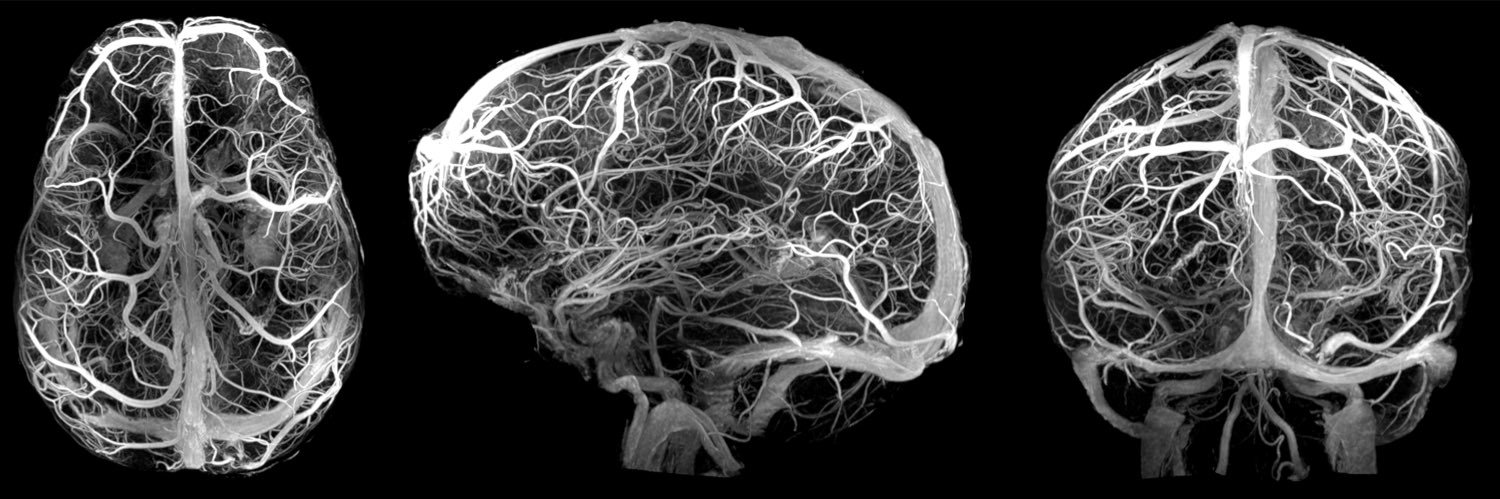
The new Bold.Forward. documentary gives a behind-the-scenes look at how @MayoClinic is advancing healthcare. I’m privileged to have my team’s work highlighted amongst so many incredible stories. We’re also grateful to our incredible patient, Cindy, who was willing to share her journey for the benefit of others considering #DBS treatment!
https://t.co/EVh040Jv2k
There are a number of issues that contribute to MTS misses. A primary reason is that we don’t do a great job teaching what to look for. We tried to help summarize the key findings here:
https://t.co/4VE23DktNl
Over-reliance on gross volume change or whole hippocampal volumetrics is fundamentally flawed and will always lead to misses in some cases. Also, FLAIR is NOT for hippocampal assessment! Everything you want to know is on high res coronal T2 and will result in fewer mistakes.
There is also another important pathology that I think is wrong in Fig 3. While FCD is a possibility, the history and coexistent findings of ipsilateral MTS highly suggest the temporal pole is “temporal pole blurring” rather than FCD. This dysmyelination from chronic excitotoxicity is not uncommon in patients with TLE onset at a young age. The coexistent Type I MTS would also lead towards this since it is more common in patients with young onset. It can also be misinterpreted on path as FCD. I have seen more than 1 case that I had an experienced neuropathologist review and correct. I didn’t see a mention of path in this case, but at the very least both should be on the Ddx here. This is another common miss that rarely gets talked about!
Perhaps more importantly, we also have to consider what the patient defines as success. A lot of ongoing R&S relies fairly heavily on quantitative outcome scores such as TRS or UPDRS, but what may be quantitatively judged as a successful surgery may or may not actually result in patient satisfaction. Learning how to deliver precision care that can be tailored to each individual and their own concerns is the critical path forward and what we have been focused on at Mayo Clinic!
The new Bold.Forward. documentary gives a behind-the-scenes look at how @MayoClinic is advancing healthcare. I’m privileged to have my team’s work highlighted amongst so many incredible stories. We’re also grateful to our incredible patient, Cindy, who was willing to share her journey for the benefit of others considering #DBS treatment!
https://t.co/EVh040Jv2k
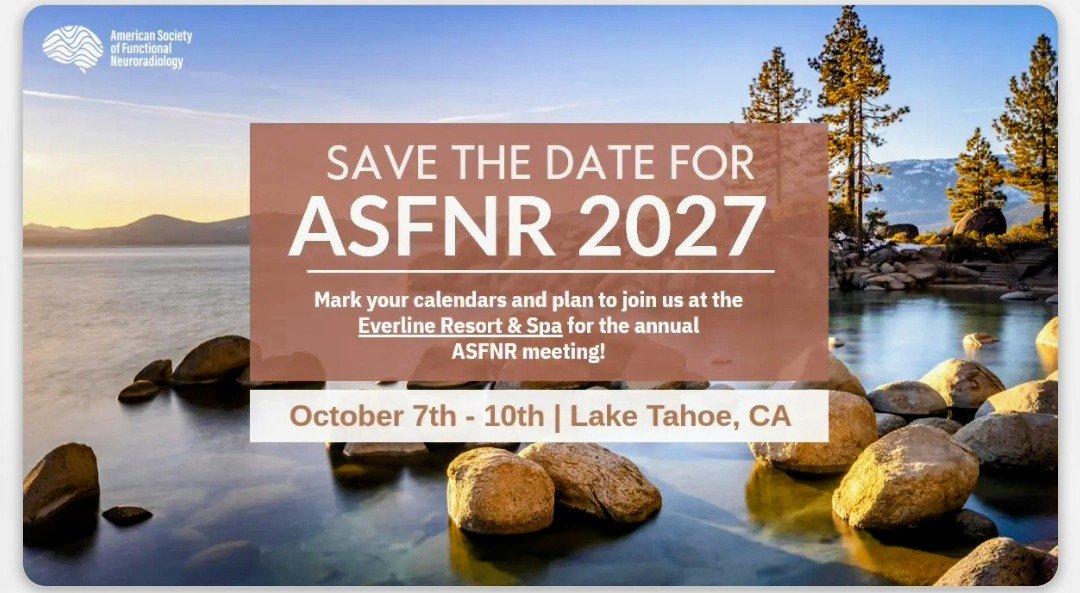
Out here representing the one and only @theASFNR! Save the date now for the 20th anniversary ASFNR meeting on October 7-10, 2027 in beautiful Lake Tahoe! #ASFNR27
@drmankad Like an increasing number of questions—when you really want the answer, the gold standard is 7T 😬
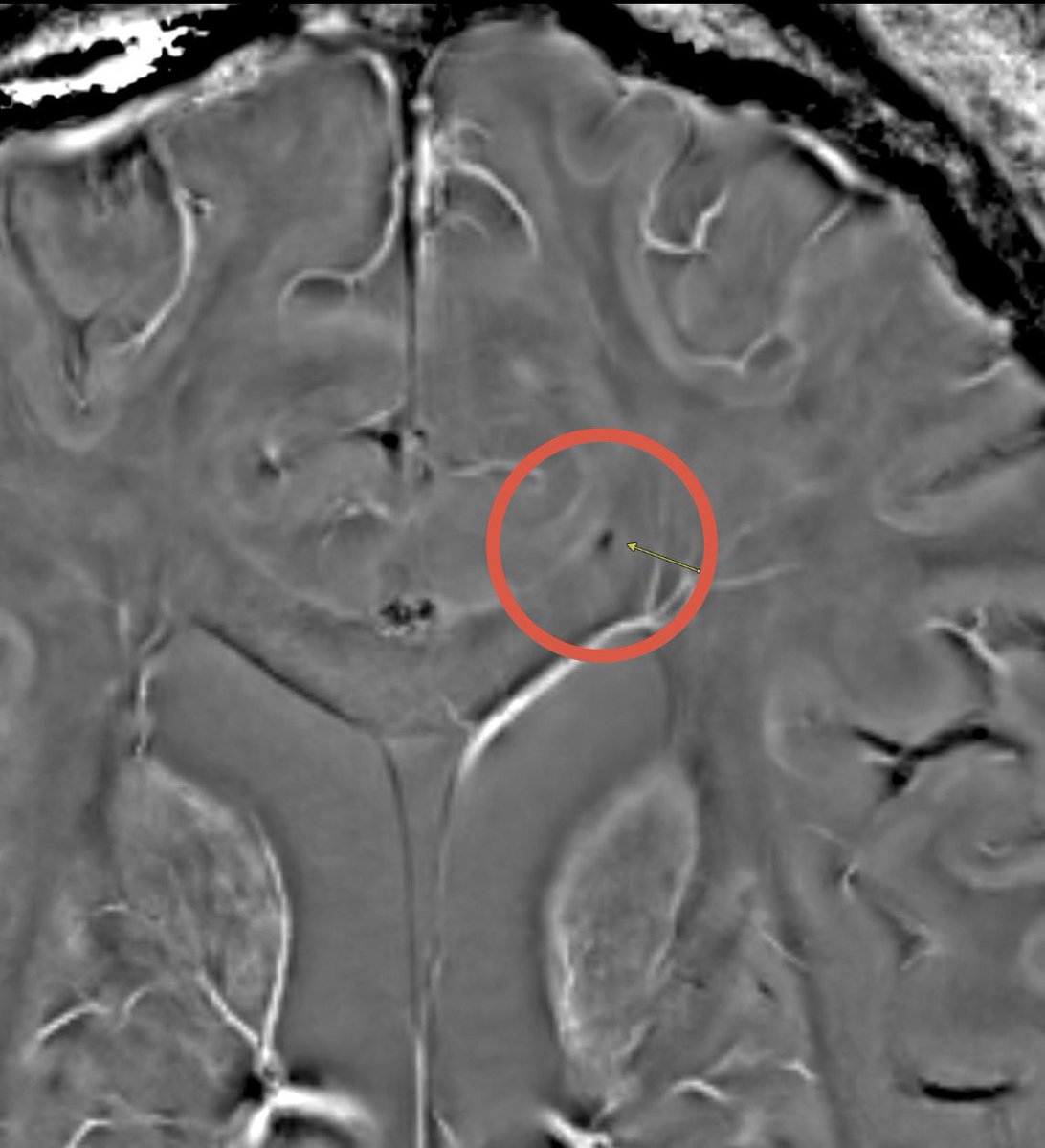
We have a paper to be released soon on the topic, but here is an example
One of life’s great experiences to be a guest at the renowned @UMN_CMRR to talk about 7T MRI at the home of 7T and give the Cyrile and Stephen Kieffer Lecture! It was special to see 3 generations of the Kieffer family attend and have the chance to learn about Dr. Kieffer’s legacy. Thank you also to @UMNRadiology for hosting me in their department and showing all of the exciting things happening!
A great part of living in Florida is spending a November weekend on the water outside and in perfect weather! Now on the way to Minneapolis but definitely not getting in the water! 🥶❄️
🚀 #PETALUTE: From low-field to ultra-high-field (UHF) #MRI#MRSI, from preclinical to clinical scanners, continues to demonstrate its versatility across imaging platforms. dynamic 3D hyperpolarized ¹³C metabolic imaging, capturing metabolism in action! https://t.co/KtycBSmzfP
The boy and I gearing up for the last (outdoors) trip of the year! The late fall camps are always some of my favorite—beautiful, crisp weather with a nice campfire🔥
🎉 Jeffrey Stone, M.D., a Mayo Clinic neuroradiologist in Florida, has been inducted into the inaugural class of Distinguished Fellows of the North American Spine Society (@NASSspine)! The recognition honors sustained contributions and leadership in spine care. #MayoClinic
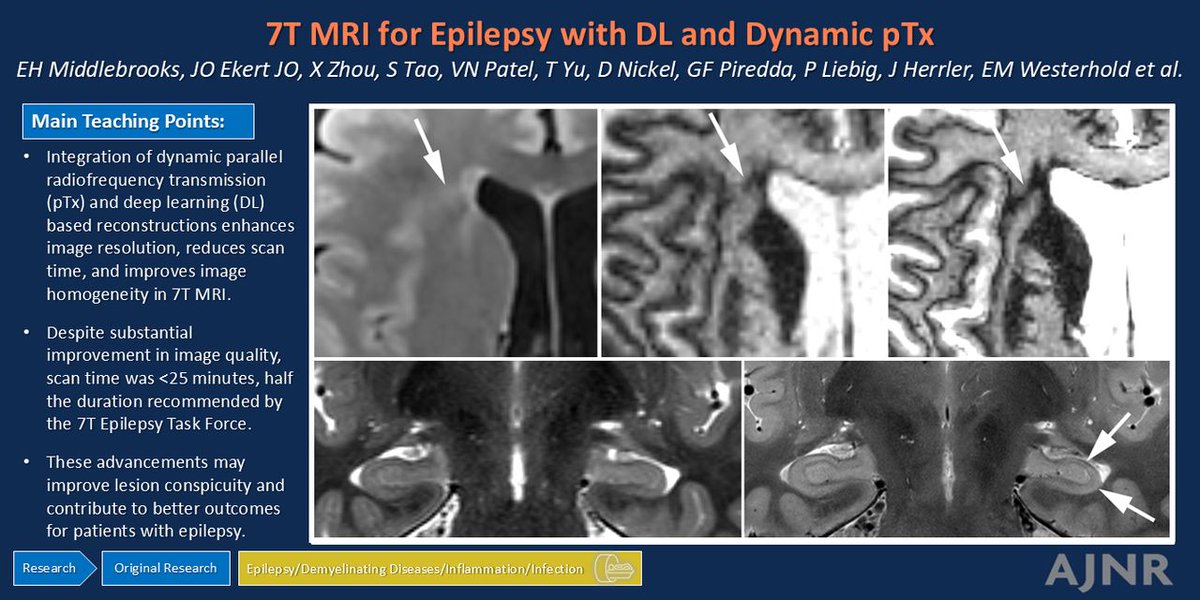
"The combined application of dynamic parallel radiofrequency transmission and deep learning-based reconstructions provides an improvement in the feasibility of routine clinical 7T epilepsy imaging, enabling ultra-high-resolution, homogeneous, and time-efficient protocols."
"A Comparative Evaluation of 7T MRI for Epilepsy with Deep Learning–Based Image Reconstruction and Dynamic Parallel Transmission"
https://t.co/ylBMO80D2k
"A Comparative Evaluation of 7T MRI for Epilepsy with Deep Learning–Based Image Reconstruction and Dynamic Parallel Transmission"
https://t.co/ylBMO80D2k
Mark your calendars now! Also plan to attend one of our pre-meeting workshops that offer in-depth and hands-on instruction in BOLD, Perfusion, PET/MR, Neuromodulation, or AI! @theASFNR@TheASNR#NeuroRad#radres
📣SAVE THE DATE📣
#ASFNR27 venue and dates have been announced by our Program Chair @EMiddlebrooksMD. Mark your calendar⬇️
📍Lake Tahoe, CA
🗓 10/7-10, 2027
We’re excited to build on the success of #ASFNR26 and take your learning and experience to the next level at #ASFNR27🧠
🎉 Meet four of our 2026 Academy Distinguished Investigators! In the weeks leading up to #RSNA, we’re celebrating all 55 honorees advancing radiology and biomedical imaging.
01/05 Thread