ENGINEERING Energy is an international journal that presents frontiers, innovation, and interdisciplinary research in in energy science and engineering.
🔬Advancing electrocatalysts for fuel cells
The oxygen reduction reaction (ORR) remains one of the most critical challenges for improving fuel cell performance. A recent review highlights important progress in M–N–C single-atom electrocatalysts, which offer a promising pathway toward efficient and cost-effective catalysts.
Key highlights from the study:
✅ Overview of recent advances in single-atom M–N–C catalysts for ORR
✅ Design strategies including dual-metal and multi-metal active sites
✅ Insights into carbon structure regulation and coordination engineering
✅ Discussion of how synergistic interactions between metal sites can significantly enhance catalytic activity and stability
These developments provide valuable guidance for designing next-generation catalysts for proton exchange membrane fuel cells and other energy conversion technologies.
📄 Read the full article: https://t.co/FjJmztA9WX
#FuelCells #Electrocatalysis #SingleAtomCatalysts #EnergyMaterials #CleanEnergy #Catalysis #EnergyResearch
🌍 Turning plastic waste into clean energy: are we closer than we think?
A new mini-review highlights how solar-driven photoreforming can convert waste plastics into hydrogen fuel and high-value chemicals — offering a sustainable alternative to landfill and incineration.
🔬 Key highlights:
• Photoconversion enables simultaneous plastic degradation and hydrogen production
• Advances in photocatalyst design significantly improve efficiency
• Reaction thermodynamics and kinetics are systematically analyzed
• Different plastics (e.g., PET) can be converted into valuable chemical feedstocks
• AI shows strong potential in accelerating catalyst discovery
⚡ While still at the laboratory stage, this technology could play a crucial role in the circular economy and renewable energy transition.
📖 Read more: https://t.co/0i4h4eRq7A
#Hydrogen #Sustainability #PlasticRecycling #CleanEnergy #Photocatalysis #CircularEconomy #ResearchImpact
🚀 Flexible perovskite/silicon tandem solar cells reach 30.04% efficiency – a new paper worth reading
Researchers have tackled a key challenge in flexible photovoltaics: interfacial stress between the silicon bottom cell and perovskite top cell. Their solution? Optimizing both wafer thickness and pyramid texture size.
📈 Key results:
✅ Enhanced minority carrier lifetime (τ) and implied VocVoc
✅ Better perovskite film quality and interfacial contact
✅ Power conversion efficiency = 30.04% on monolithic flexible tandem devices
This work shows strong potential for lightweight, durable, and low-cost flexible solar cells in aerospace, wearables, and building-integrated photovoltaics.
Read the full paper here: https://t.co/UNPsT33Dj1
#Perovskite #SiliconSolar #TandemSolar #FlexiblePV #EnergyResearch #MaterialsScience
🚀 Can we replace expensive platinum in energy devices?
Researchers designed a clever strategy using steric hindrance to stabilize single-atom Fe catalysts—preventing metal clustering and boosting active sites.
💡 The result?
✔️ ORR performance rivaling (and even surpassing) Pt/C
✔️ Excellent durability & methanol tolerance
✔️ Outstanding Zn–air battery performance (370 mW cm⁻²!)
🔬 By using tert-butylphenyl porphyrins, they created highly dispersed Fe–N–C sites with better conductivity and mass transfer.
⚡ A simple yet powerful route toward scalable, low-cost electrocatalysts for energy conversion!
🔗 Read the full article: https://t.co/yom9xjZYF7
#SingleAtomCatalysts #ORR #Electrocatalysis #ZnAirBatteries #EnergyMaterials #Catalysis #CleanEnergy
🌞🔬 New insights into solar-driven CO₂ conversion
Turning CO₂ into useful fuels using sunlight is a key step toward carbon neutrality—but efficiency and stability remain major challenges.
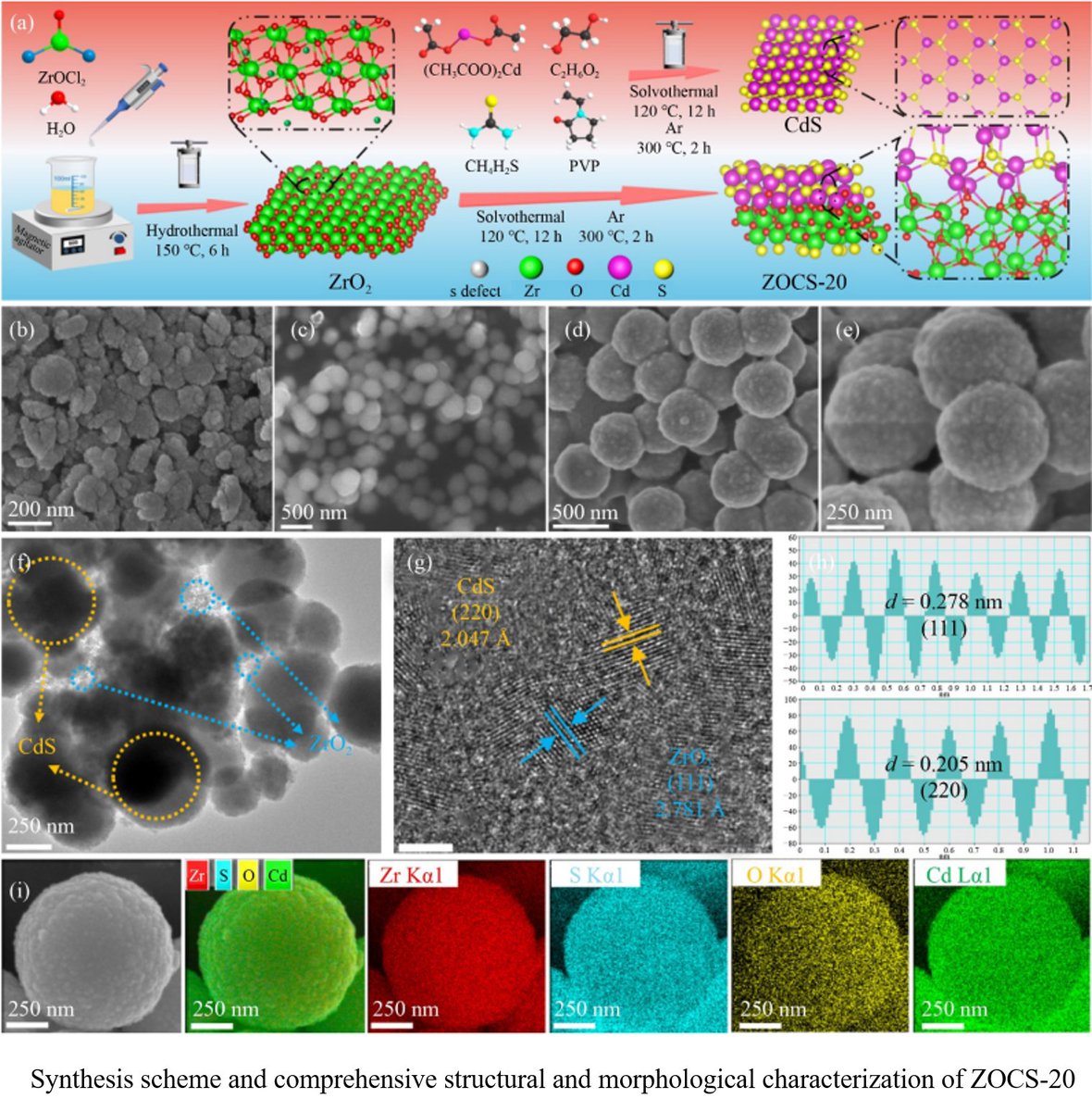
Researchers report a ZrO₂/CdS core–shell photocatalyst (ZOCS-20) that significantly boosts CO₂-to-CO conversion through interface engineering.
🔍 Key highlights:
✅ Built-in electric field enhances charge separation
✅ Strong interfacial coupling improves CO₂ adsorption & activation
✅ Reduced energy barrier for the rate-determining step (*CO₂ → *COOH)
✅ Near 100% selectivity toward CO
✅ High CO production rate: 330.23 μmol·g⁻¹·h⁻¹
💡 Why it matters:
This work demonstrates how tailoring interfacial electronic structure can unlock efficient, selective, and stable solar CO₂ conversion—offering a promising pathway for carbon recycling and sustainable fuel production.
🔗 Read the full article: https://t.co/ACcntM4XUS
#CO2Reduction #Photocatalysis #SolarEnergy #CleanEnergy #CarbonNeutrality #MaterialsScience #EnergyInnovation
🚀 Call for Papers – Special Issue on High-Rate Electrocatalysis for Renewable Energy Conversion
We are pleased to invite submissions to this special issue of ENGINEERING Energy (IF 6.2), focusing on advancing electrocatalysis under industrially relevant conditions.
Topics for the Special Issue:
1. High-rate water/seawater electrolysis
2. Electrochemical CO2/CO reduction
3. Paired electrolysis and energy-saving anodic reactions
4. Reactor engineering for high-rate operation
5. In situ/operando characterization, modeling, and mechanistic understanding
6. Durability and practical implementation
We welcome original research, reviews, and perspectives addressing both fundamental insights and practical implementations.
📅 Submission Deadline: December 31, 2026
📝Submission system: https://t.co/r5xwMwY1mE
📩Contact for more information:
[email protected][email protected]
#Electrocatalysis #RenewableEnergy #Hydrogen #CO2Utilization #EnergyResearch #AcademicPublishing
🔋 Lithium metal batteries promise ultra-high energy density—but interface instability still holds them back.
This paper breaks down how electrolyte design can stabilize the Li–electrolyte interface, covering key strategies like WSE, HCE/LHCE, and molecular-level design—and, more importantly, why combining these approaches is the future.
🔹Key Highlights:
• Tailoring Li⁺ solvation can control SEI chemistry and suppress dendrites
• Advanced electrolytes enable more uniform, dense Li deposition
• Synergistic strategies outperform single-design approaches
Impact:
👉 Offers a clear roadmap for designing next-gen electrolytes
👉 Brings lithium metal batteries closer to real-world applications
Free Read: https://t.co/ocKpZ7I7P3
#LithiumBatteries #EnergyStorage #BatteryResearch #Electrochemistry #MaterialsScience
🌱♻️ Can we turn waste into energy and chemicals using light?
This new research highlights:
✅ A unified mechanism for biomass & plastic conversion
✅ Key role of C–C bond cleavage in product formation
✅ Strategies to boost efficiency via catalyst design & pretreatment
✅ Future pathways toward scalable, real-world applications
💡 The takeaway: smarter catalyst engineering + system design could unlock sustainable waste-to-value technologies.
📖Free read: https://t.co/4DOCvAUUbd
#SustainableChemistry #EnergyTransition #PlasticRecycling #GreenTechnology #Photocatalysis
🌐ENGINEERING Energy is an international journal presenting frontiers, innovative, and interdisciplinary energy research. Indexed in SCIE (2024 IF: 6.2, JCR Q2).
🚀Now recruiting Youth Editorial Board Members!
👉Apply now: https://t.co/i04ETzt0X5
🚀 Call for Youth Editorial Board Members!
Join our journal and help shape the future of energy research.
🌍 Expand your academic impact
🤝 Connect with global scholars
📈 Grow with the journal
Learn more and apply now 👉 https://t.co/2Y3p07pl73
#AcademicJobs#EnergyResearch #Hydrogen #EarlyCareer #EditorialBoard
🚀 Lithium metal batteries could power the next generation of EVs and high-energy storage systems — but unstable interfaces and lithium dendrites remain major roadblocks.
This new review systematically explores how advanced electrolyte engineering strategies can stabilize the Li metal–electrolyte interface 🔋
The paper highlights:
⚡ Electrolyte additives
⚡ Weakly solvating electrolytes (WSEs)
⚡ High-concentration & localized high-concentration electrolytes (HCEs/LHCEs)
⚡ Novel molecular design strategies
Even more importantly, the authors propose “synergistic electrolyte design” as a future pathway toward safer and longer-lasting Li metal batteries.
Read the article here: https://t.co/aBaOhg6CCn
#LithiumMetalBatteries #BatteryResearch #EnergyStorage #Electrolyte #SolidElectrolyteInterphase #Batteries #MaterialsScience #Electrochemistry #EVBattery #CleanEnergy
🔋✨A smarter way to stabilize zinc batteries!
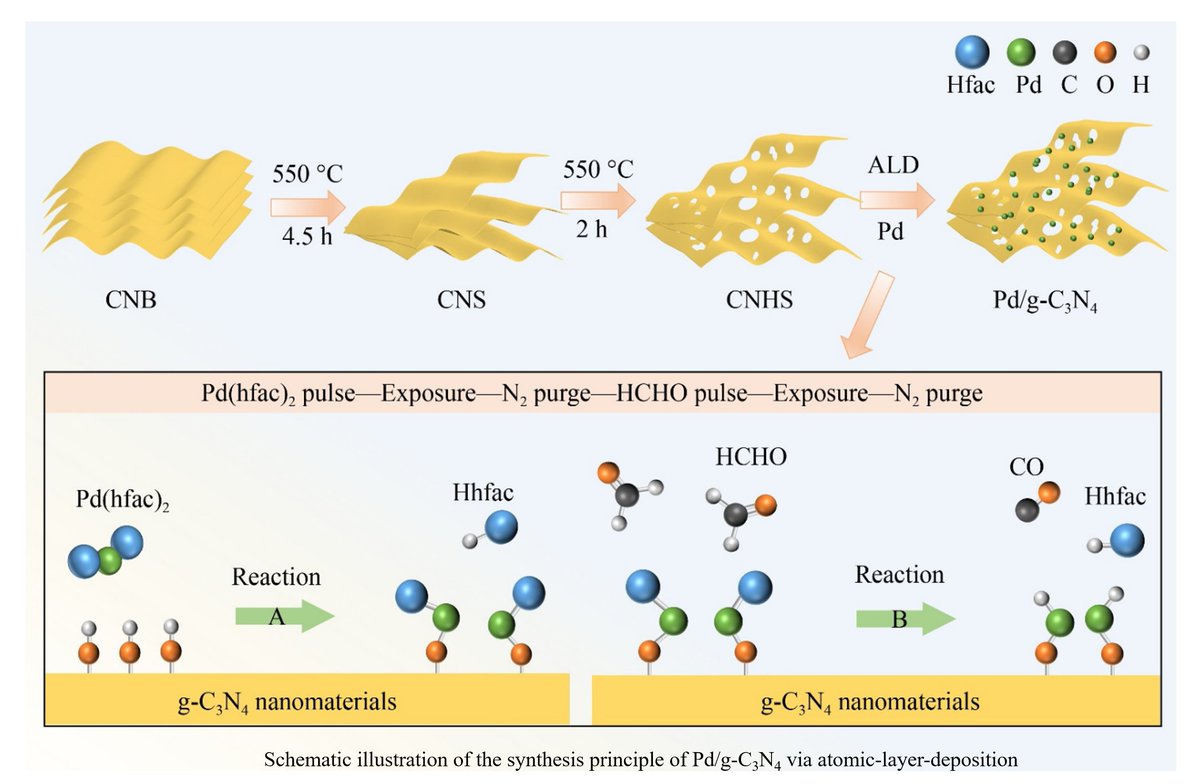
Dendrites, corrosion, and side reactions have long limited aqueous Zn batteries. This work introduces a hydrophobic–zincophilic Pd/g-C₃N₄ coating that guides uniform Zn deposition and blocks unwanted reactions.
🚀 Result?
✔️ Ultra-stable cycling over 2500 hours
✔️ Up to 99.56% Coulombic efficiency
✔️ Suppressed dendrites & hydrogen evolution
Read the article for free: https://t.co/hoiApcw7Nw
#ZincBatteries #EnergyStorage #BatteryResearch #MaterialsScience #Electrochemistry #Nanotechnology #CleanEnergy
⚡ Turning low-cost materials into high-performance catalysts!
This work designs a hollow CoP/Co₂P heterostructure embedded in N,P-doped carbon, boosting both hydrogen evolution (HER) and oxygen evolution (OER) for efficient water splitting.
💡 Why it matters:
• More active sites from hollow structure
• Faster charge transfer via heterointerfaces
• Excellent durability (100 h stable operation!)
A promising step toward scalable green hydrogen production 🌱
🔗 https://t.co/3VBALtVIfd
#Hydrogen #WaterSplitting #Electrocatalysis #CleanEnergy #MaterialsScience #EnergyResearch
🌍 How can we store renewable energy more efficiently at large scale?
A recent review highlights the rapid progress of thermo-mechanical energy storage (TMES) technologies and their potential in combined cooling, heating, and power (CCHP) systems.
🔍 Key highlights:
· Covers four major TMES technologies: CAES, LAES, PTES, and CO₂-based systems
· Achieves 40–130% round-trip efficiency and up to 190% overall energy efficiency
· Enables multi-energy output (electricity + heat + cooling), improving system flexibility
· Offers lower environmental impact and long operational lifetime
· Identifies AI-driven optimization as a critical future research direction
💡 This work suggests TMES could evolve into smart multi-energy systems for cities, supporting the transition to sustainable energy infrastructures.
🔗 Read the full article: https://t.co/B8L9Y3kCN4
#EnergyTransition #EnergyStorage #TMES #CCHP #Decarbonization #SmartEnergy #NetZero #AI
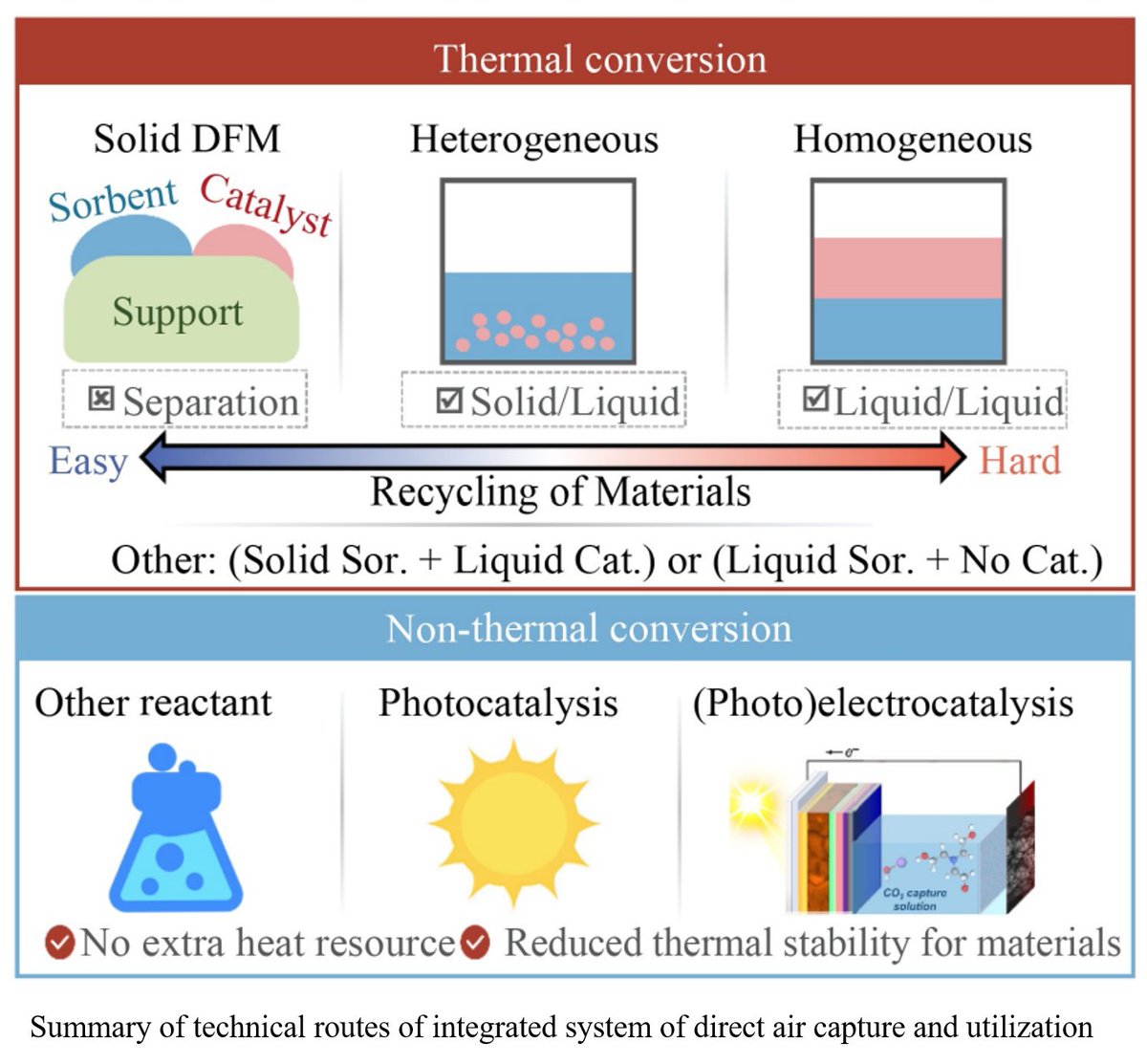
🚀 Turning air into fuel? Researchers review a cutting-edge approach that captures CO₂ directly from air and converts it in the same reactor into valuable fuels & chemicals!
🔬 This integrated system (IDACU) avoids energy-intensive steps like CO₂ separation and transport — making carbon capture more efficient and scalable.
💡 Key highlights:
• Dual-functional materials enable capture + conversion
• Products include methane, methanol & more
• Non-thermal routes (photo/electro-catalysis) show huge promise
🌍 A big step toward carbon-neutral energy systems!
🔗 Read more: https://t.co/2xnewC1jlF
#CarbonCapture #DAC #CCUS #ClimateTech #EnergyTransition #NetZero #Catalysis #SustainableEnergy
🚨 Improving safety in lithium-ion batteries during thermal runaway
The latest research explores a novel solution to capture toxic hydrogen fluoride (HF) gas released during battery failure.
🔬 What researchers did:
Researchers designed porous “flower-like” CeO₂ microspheres and integrated them into a high-temperature-resistant filter system.
✨ Key highlights:
• Up to 82.24% instantaneous HF removal within 40–50 s
• Stable performance with optimized loading (1.2 g)
• Retains ~76% efficiency after 10 regeneration cycles
• Works under real thermal runaway conditions
💡 Why it matters:
HF gas is highly toxic—even small amounts are dangerous. This work offers a practical pathway to protect firefighters and improve battery safety systems.
📄 Read the full paper: https://t.co/kFtObG36fY
#BatterySafety #LithiumIonBatteries #ThermalRunaway #EnergyMaterials #Sustainability #CleanEnergy #Engineering
🌍 Turning CO₂ into value: where is the research heading?
A comprehensive bibliometric study (2015–2023) maps global trends in CO₂ reduction (CO₂RR) across electrocatalysis, photocatalysis, and thermocatalysis.
🔑 Key insights:
• Explosive growth: publications ↑ 12.7% annually
• China & US lead global collaboration
• Hot topics: selectivity, heterojunctions, single-atom catalysts
• Photocatalysis & electrocatalysis dominate research
💡 Future focus: better catalysts, higher efficiency, and integrated multi-catalytic systems.
🔗 Read the full paper: https://t.co/J0y9Wncvma
#CO2RR #CarbonNeutrality #Catalysis #Electrocatalysis #Photocatalysis #EnergyTransition #ClimateTech
🌊⚡ New advance in seawater electrolysis for sustainable hydrogen production
Direct seawater electrolysis is a promising route for green hydrogen—but scaling (mineral deposition) on electrodes has been a major barrier to long-term operation.
Researchers Huxiao Wang and Tianyi Kou (Shandong University @ShandongU) report a charge-engineered Pt catalyst modified with halide ions that tackles this challenge effectively.
🔍 Key highlights:
✅ Halide ligands tune Pt electronic structure, optimizing hydrogen evolution reaction (HER)
✅ Like-charge repulsion pushes OH⁻ away from the surface, preventing scaling
✅ Enables long-term stable operation (up to 5000 h)
✅ Co-produces >99% purity Mg(OH)₂, adding economic value
✅ Achieves continuous hydrogen generation at industrially relevant current density (100 mA cm⁻²)
💡 Why it matters:
This work addresses a critical bottleneck in seawater electrolysis—cathode fouling—while introducing a strategy that combines performance, durability, and value-added co-production.
🔗 Read the full article:
https://t.co/DnoiSY8wSB
#HydrogenEnergy #SeawaterElectrolysis #Electrocatalysis #CleanEnergy #EnergyInnovation #MaterialsScience #NetZero