1/ 💥Sharing podcast (and transcript) of discussion with @eosnos, one of the most perceptive chroniclers of China's national journey. He takes us into his reporting from "Age of Ambition" to how he ended up quoting a fortune teller in his latest piece.
https://t.co/l94Jwsq1Ex
For months, this podcast series, The Beijing Brief, from @BrookingsInst has been the rare absolute-must-listen for me. So, the invitation to visit was a thrill. Thanks to @ryanl_hass@jonczin for an analysis that spans "the ages" -- a reference decoded by the end.
🎧 Listen to @ryanl_hass, @jonczin, & @eosnos as they look at China from the ground up. What do people want & how has that changed over the past decade? How are they living through a period of slower growth, tighter control, and rapid technological change? https://t.co/ltoySQxjgN
On Thursday at 6 PM, the Scowcroft Center is hosting @RanaForoohar of @FT for the launch of her new book on America's race for #Arctic supremacy, moderated by @eosnos of @NewYorker. She was previously at the @AtlanticCouncil to appear on the @ACGeoEcon podcast.
Event: https://t.co/qwUFqEswHL
Podcast: https://t.co/9UaA6Hpq2U
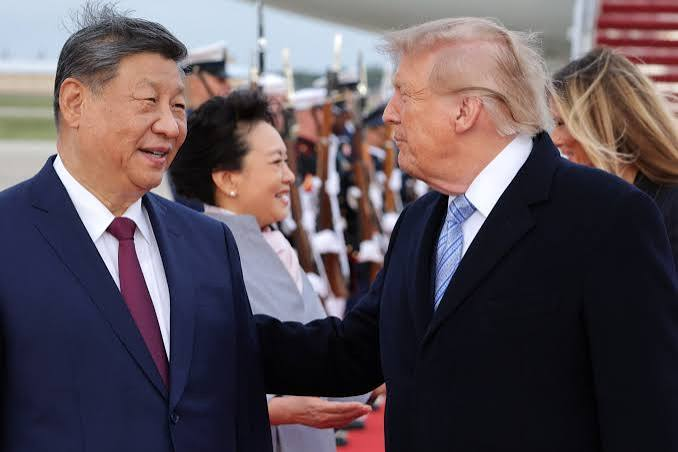
1/ The contrast in approaches between Trump and Xi for this state visit has been pretty striking. For Trump, the pageantry appears to be the point. The focus is on forging personal bonds with Xi and signaling that both leaders can keep competition under control. 🧵
The fact there is no grand bargain to be had between the US and China on AI must not become an excuse for inaction. Beijing prizes political security, but the alarming incidents recently have caught their attention and create an opportunity.
Xi on track to land in DC tonight with a deceptively modest goal: keep things basically as they are. Extend the trade truce. Push off pressure over Taiwan and AI. Give Trump his cordial relationship. Above all, prolong what Beijing sees as a window of geopolitical opportunity.
Working with focus groups, Longwell keeps a bead on what voters are really thinking, and how to combat Trumpism. She presents the playbook to the New Yorker staff writer Evan Osnos. https://t.co/8dNKVquBYQ
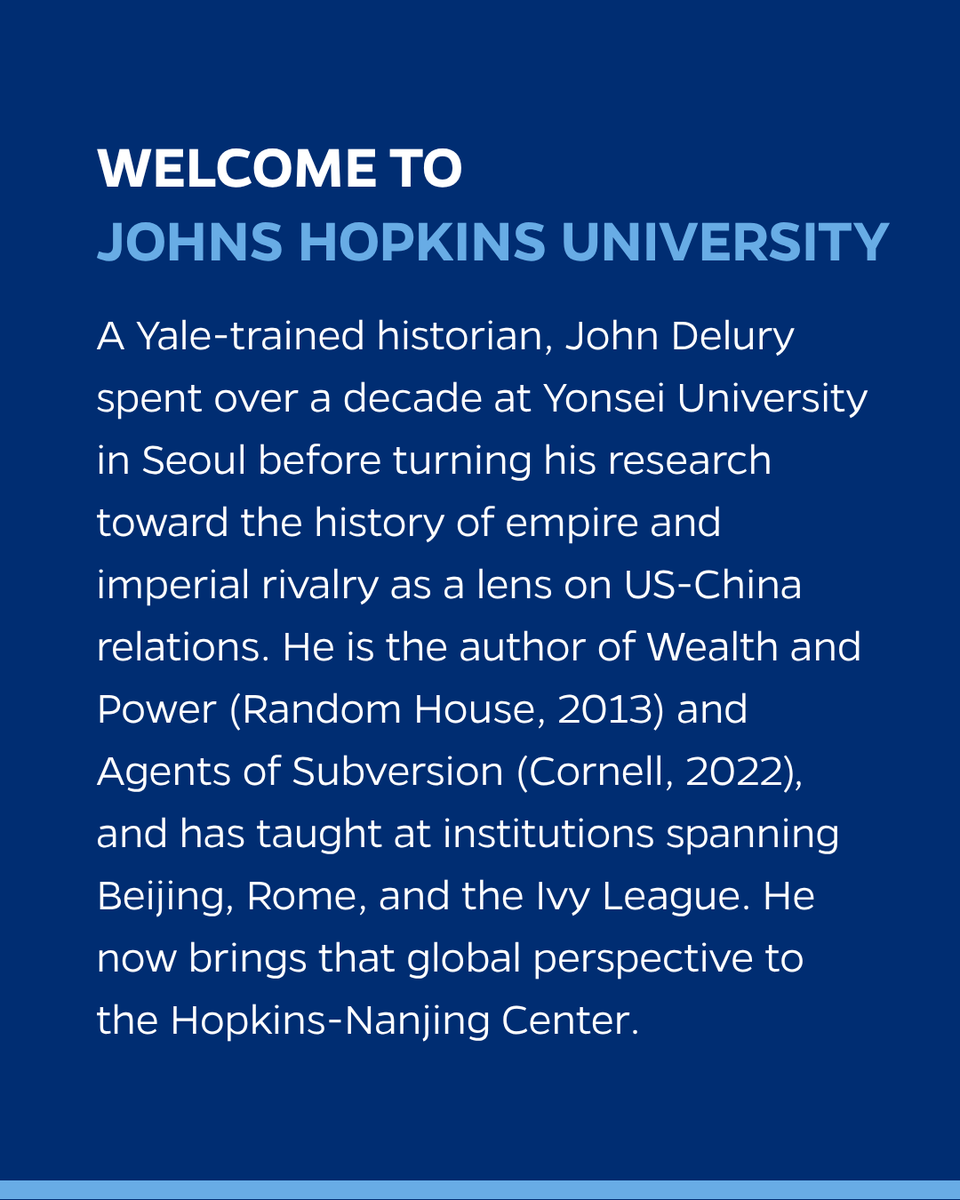
Johns Hopkins SAIS welcomes John Delury as Resident Professor of International Politics at the @HopkinsNanjing. A leading voice on China, US-China relations, and the Korean Peninsula, Delury’s appointment begins this fall.
Welcome to the SAIS community, Professor Delury. 👏
China spends a fraction of what the US does on data centers, and lacks the most advanced AI chips.
Why, then, does its AI industry appear to be catching up, and rivaling Silicon Valley?
I asked @NewYorker staff writer @eosnos who lived in China for eight years, and just returned from another reporting trip there with some fresh insights:
Honored to be a 2027 #NewAmericaFellow. Some of my favorite books and films and have emerged from this @NewAmerica program, which backs journalists, scholars, filmmakers, policy experts etc in digging into powerful stories and issues. The new crew: https://t.co/vsUn1poQJl
On GPS, at 10am & 1pm ET today on @CNN: I’ll discuss Pres. Trump’s sudden Korea pivot with @VictorDCha; China’s AI prowess with @eosnos; this summer’s extreme wildfires with @KHayhoe; and US democratic decline with @DAcemogluMIT, who has a diagnosis & a prescription in his new book, “What Happened to Liberal Democracy?” Finally, I'll examine the bipartisan vitriol against AI data centers—and what might change it
I spoke with @eosnos, @scmallaby, and @MarietjeSchaake about how AI is changing the World. An often-chilling conversation about the technology, the people behind it, and how very different societies are trying to cope. You don't want to miss this episode. https://t.co/6nFLgbbaPp
Sorry, folks, but it IS America's reverse pivot FROM Asia. Yes, we can rationalize this or that discrete action as having logic, as a bargaining ploy, or by invoking some sort of "madman theory" of leverage in a supreme effort at what I call "Trump strategic retrofitting" — the habit of imputing Bismarckian strategic genius after the fact to explain Trump's impulsive or transactional statements and actions.
I think we just have to see the whole picture and take it together. To be (1) bogged down in a war in another region, (2) pull all carriers and other assets from the Pacific, (3) burn through munitions and people that will be needed to deter, much less prevail, in a fight in Asia, (4) withdraw from trade pacts that many of the major regional economies are in — and that Washington's own allies urged it to join, (5) tariff everyone including allies, (6) coerce investment, (7) withdraw or raise the cost of market access, and more is not, in fact, a sign that the United States is "intensifying" its engagement in the world's most vital and dynamic region.
As I told Joe Kelly at @australian this week, "anyone that says this whole package of steps is a net positive for deterrence is deluded. We’ve gone from a stillborn ‘pivot to Asia’ to a reverse pivot from Asia.”
Or as Chico Marx, disguised as Groucho, told Mrs. Teasdale in Duck Soup, "who ya gonna believe, me or your own eyes?"
Cynically yours.
Trump's decision to slim down military exercises to curry favor with Kim Jong Un and his commitment to consult with Xi on arms sales to Taiwan both make clear that Trump is offering deference to leaders that is not being reciprocated. He's being played for a fool.
“The instant I stepped through its glass doors, it felt like I had been teleported back to China, not the country I knew, but one I imagine it can be.” Gorgeous essay from @yangyang_cheng as usual https://t.co/OJHUAWaFpy
"The balance of power in the world is shifting," writes expert @RushDoshi. "American national capacity alone is no longer adequate to balance China's growing strength. For the first time in its modern history, the United States faces a rival with greater scale across most of the dimensions that matter for great power competition."
Read the analysis for the Future of American Strategy initiative: https://t.co/F0N8FJtlGW