Polytheistic Platonism: Collected Essays (2026). US orders from Kindred Star Books https://t.co/xbTGF2aWHX; UK and elsewhere from The Prometheus Trust https://t.co/6wNu8VEoyt
स्कन्दं च विशाखं चैव वन्दे रुद्र-सुताव् उभौ ।
शूलिनौ श्रीसमुपेतौ पुनर्वस्वोः सम-त्विषौ ॥ १ ॥
कुक्कुटेन मयूरेण सहितौ रण-मूर्धनि ।
दैत्य-सैन्य-प्रमथिनौ महा-बल-समन्वितौ ॥ २ ॥
1. I worship Skanda and Viśākha, both sons of Rudra, both bearing tridents, endowed with splendor, and equal in radiance to the two Punarvasu stars.
2. Together with the cock and the peacock, the two stand at the forefront of battle, crushing the armies of the Daityas, endowed with immense strength.
New: the twelve class reports from our reading of Proclus' On Providence, in one PDF (203 pages).
Theodore the engineer says the cosmos is a machine. Proclus answers that fate and providence are two causes, and that the gods know what we will choose without making it necessary.
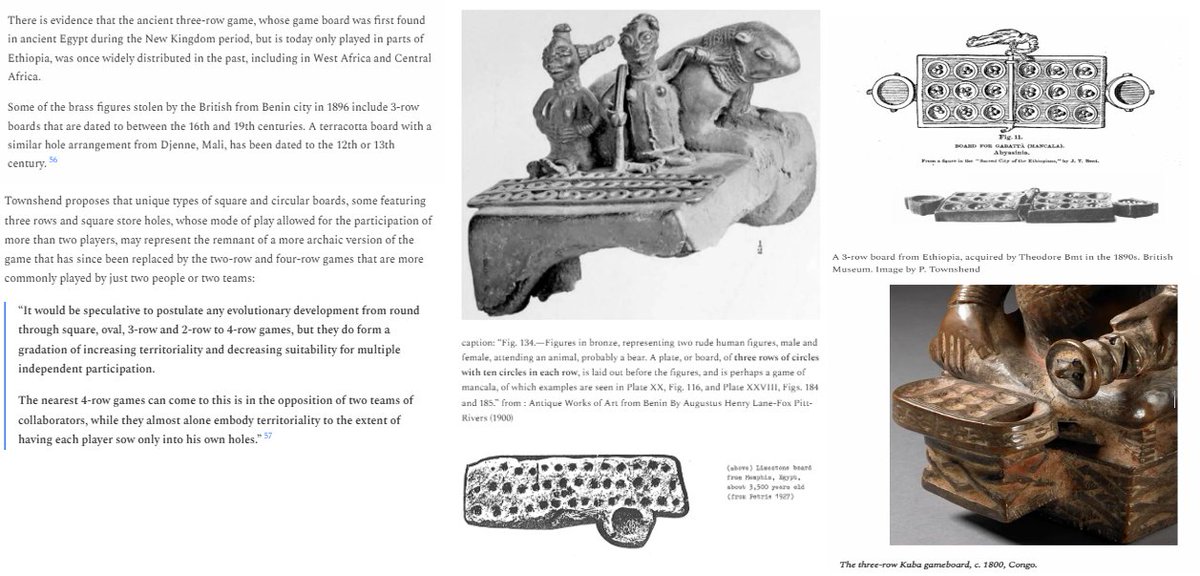
An ancient version of the game, which is first attested in Egypt (c. 1500BC) but is today only found in Ethiopia,
was once found in medieval West Africa (Djenne & Benin, c. 1250-1850 CE) and Central Africa (Kuba, c. 1650-1850)
It has since disappeared from virtually every region
The city of #Ayodhya is radiant for #Deepavali — the reclamation and rebuilding of the Ram Temple stands as the pinnacle of one of history’s longest and most determined decolonization efforts.
For five centuries, a billion-strong Hindu subaltern, pushed back against successive waves of conquest and erasure: Islamic invaders, British colonial rule, and seven decades of socialist elites who treated the reclamation of this site as politically inconvenient.
The grassroots won.
May the same spirit of restoration one day see the Temple of Artemis/Diana in Turkey returned to the Greeks and the Romans, and the temples of Huitzilopochtli and Tlaloc reclaimed by the native peoples of Tenochtitlan in North America.
“Proclus is unique in the ancient world […] in saying that the principle of cosmic intelligibility is none other than Time itself.”
From my book Time's Causal Power: Proclus and the Natural Theology of Time (Brill, 2021).
@anaynalhayat Which would simply be comical, if it weren’t for the implications when such terms are applied to living traditions on the supposed analogy with Western antiquity.
Nirīśvaravāda means not believing in an Overlord God rather than disbelieving in the existence of gods altogether (Sāṃkhya and Mīmāṃsā). Cārvāka most resembles modern atheism. It was never a part of Brahmanical religion. NĀSTĪKA Jains and Bauddhas also have gods.
@EPButler The idea of an atheist Epicurus is both absurd and rather amusing, especially given that we even have examples such as the inscription attesting that the high priest of the Temple of Belos at Apamea was an Epicurean.
My Guruji was telling me recently that Mahalakshmi is पातालवासिनी, one who dwells in Patala.
It sounds odd at first, because we picture her in Vaikuntha, on the chest of Narayana, not beneath the earth.
Yet the Shastras quietly agree with him. The Devi Bhagavata says that among kings she is Raja-Lakshmi, in our homes she is Griha-Lakshmi, and in Patala she is Naga-Lakshmi.
When Narada came back from the lower worlds, he told the devas in Svarga itself that Patala was more beautiful than their heaven, lit by the jewels the Nagas wear.
The Mahabharata goes further.
Shri tells Indra that she lived with the Asuras from the beginning of creation, for yugas together, and she stayed because they earned her.
Their homes were clean, they tended the sacred fire, they cared for the old, the sick and the helpless, and none of them ate a good meal alone.
She left only when that conduct decayed.
In another episode Indra watches her step out of the body of Bali himself and asks why she is leaving.
She says she lives in truth, in giving, in vows, in tapas, in valour and in dharma, and Bali had fallen from all of them.
Then she says something every devotee should remember: neither the Creator nor the Ordainer commands her, it is Kala that moves her from one place to another.
Lakshmi belongs to no side, not even the devas. She has only conditions.
Now see Diwali through this lens.
When Vamana took the three worlds, Bali was sent below, and Narayana himself agreed to stand guard at his door.
The Puranas then record Bali’s request: that for 3 days every year his rule should return to the earth, and that Lakshmi should stay in every home that lights lamps during his reign.
The Bhavishya Purana describes the king proclaiming on Kartika Amavasya that today Bali rules this world, and the Dharmasindhu says lamps offered in Bali’s reign make Lakshmi steady in the house.
So the night we invite Mahalakshmi home is, by the Shastra’s own account, the night the king of Patala rules the earth.
The Bhavishya Purana also tells the women of the house to beat winnowing fans after midnight and drive Alakshmi out.
Our grandmothers in UP and Bihar still do it at dawn, going through every corner of the house with an old soop and saying “Ishvar paise, daliddar bhage”, let the Divine enter and poverty run.
She stayed with the Asuras for yugas while they kept dharma, and she left Bali the day he fell from it. Above the earth or below it, her terms have never changed.
Shubh Deepavali.
@windshaman13 (Note that the version of this article appearing on Jackson's Academia page is an earlier draft than the one which appears from the journal, and lacks some important content.)
@windshaman13 We're also learning a good deal from the Herculaneum papyri, some of which was already put to good use by Paul T. M. Jackson in his article "Polytheism of the Epicureans" from Walking the Worlds 2.2, 2016. https://t.co/cI1lxFqloM (#advertisement)
#BREAKING Racist disruption of #Diwali celebrations by Jake Lang and Thomas Allen in Seattle, WA – showing signs saying “Deport all Dotheads” and “Stop Hindu Replacement of Christians.” We urge the Hindu community to stay vigilant and report any suspicious or hateful activity to local law enforcement. #StopHinduHate
@SeattlePD@FBI@TheJusticeDept@AHADHindu
https://t.co/1xPrgxaexM