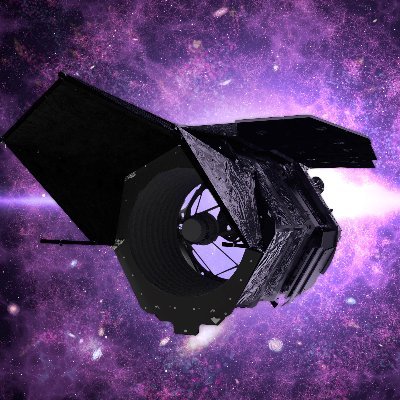
🕵️ The #DarkUniverse detective just dropped its biggest case file yet 📁
Observations of more than one billion objects.
Today's data release lays the foundation for @ESA_Euclid ’s best-ever 3D map of the Universe 👉https://t.co/9y7XHPSmC6
1/15
🧩 Puzzle piece by piece
Euclid, the #DarkUniverse detective 🕵️ has recently revealed around 15 000 strong gravitational lensing candidates.
@ESA_Euclid 's data makes up the largest strong lens catalogue ever published, bigger than all previous catalogues combined 👉 https://t.co/dZjdEQInAW
🔊 Turn the volume up and enjoy a cosmic journey through Euclid's latest data release 🤩
📸 This 500 gigapixel mosaic is just one patch of sky Euclid observed 👇
https://t.co/eXLlZKmJUU
Today’s dataset (below) only covers about 14% of the total sky area Euclid will survey.
The full Data Release 1, to come in mid-2027, will build on today’s release and add more crucial parts to the cosmic puzzle, including observations of weak lensing, among others.
Stay tuned!
15/15
Across its entire fields, Euclid revealed today 15 000 strong lensing candidates.
Together, they make up the largest-ever catalogue of strong cosmic lenses, bigger than all previous catalogues combined.
10/15
🧩 Euclid, the #DarkUniverse detective 🕵️, is getting ready to bring some puzzle pieces to the table.
Stay tuned on 12 November 12:00 CET for the big reveal 👀
@ESA_Euclid
. @ESA_Euclid discovers its first comet ☄️
That's quite impressive for a #DarkUniverse detective 🕵️ meant to take deep, steady images of distant galaxies, not fast-moving tiny objects.
Discover more about the comet 👉 https://t.co/dAlQthnpXQ
🎙️ Final stop on Expedition Sound
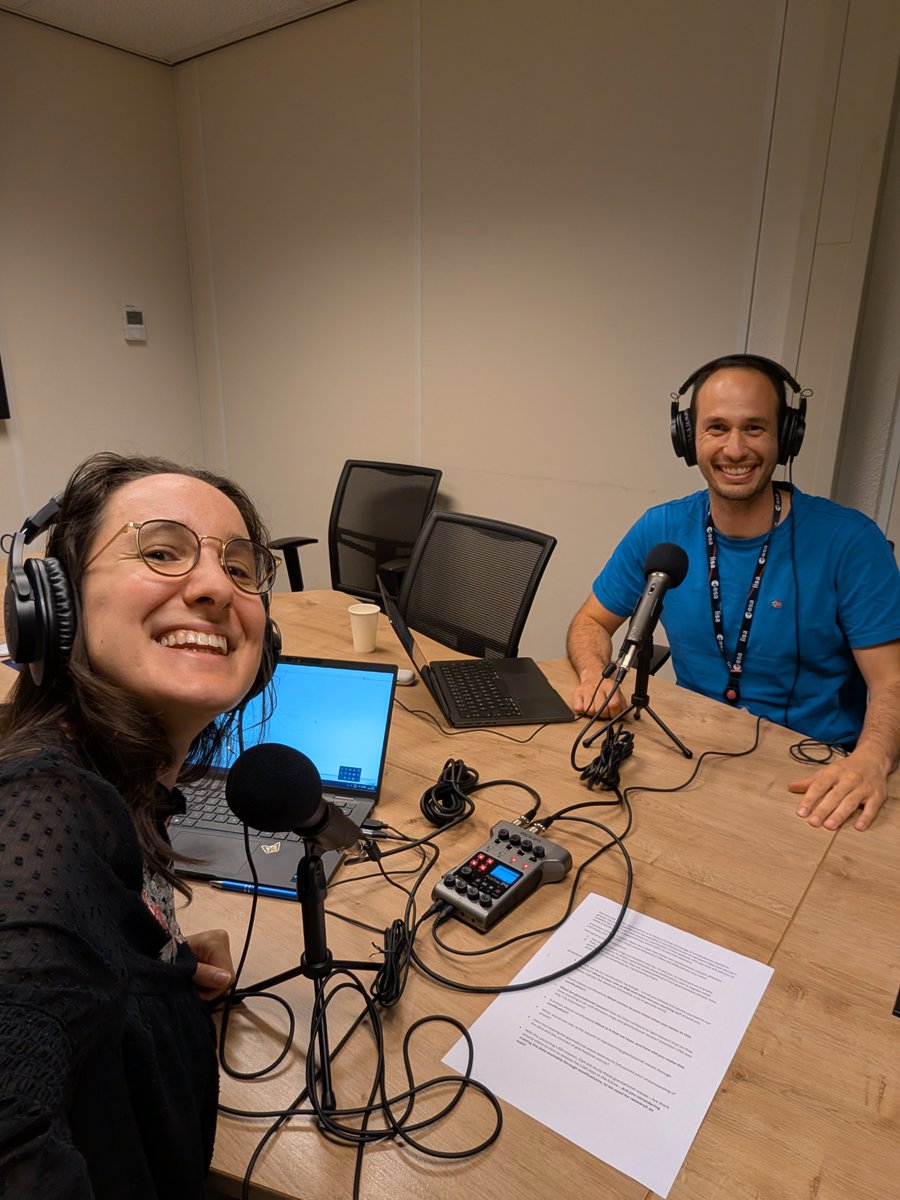
We ventured into deep space to talk gravity, galaxies, and the cosmic web with Valeria Pettorino, Euclid’s Project Scientist and Lorenzo Speri, research fellow in the LISA mission 🌌✨
Tune in to ep. 4️⃣ of ‘Expedition Sound’ 👉 https://t.co/Ne3Sn2gjty
🎧 Ever wondered what a black hole collision would sound like?
Find out in the fourth episode of our Expedition Sound podcast! 🎙️
Join us as we travel into deep space to explore the mysterious effects of gravity we can observe with our space missions 👉 https://t.co/hRtj6kuIRn
Our space telescope Euclid has discovered 31 ancient quasars in the early Universe, including the two oldest ever observed.
Their light has travelled for more than 13 billion years, taking us back to when the cosmos was just 5% of its current age. 🌌
Read more 👉 https://t.co/qNfbebKeHd
Il telescopio spaziale
@ESA_Euclid ha identificato 31 antichissimi quasar.
Due di essi risalgono a quando l’Universo aveva 670 milioni di anni – appena il 5% della sua età attuale.
I quasar sono le galassie piu' lontane a noi note, che emettono una enorme quantita' di energia dalla regione nucleare.
Per saperne di più su questo nuovo studio di @ESA_Euclid
https://t.co/VE1bm8DqVr
@esascience
📣 Most ancient quasars ever found!
@ESA_Euclid has discovered 31 ancient quasars. Two of them shone with the light of a trillion Suns back when the Universe was 670 million years old – just 5% of its current age.
Discover more 👉 https://t.co/xKhIvS2mFD
A 3rd launch anniversary gift for you! 🎁 📹
In just 26 hours, @ESA_Euclid imaged millions of stars at the heart of our galaxy 🤩
Hidden among them are planets we cannot see.
Yet, thanks to gravity and chance alignment, we can detect their presence.
How? 👇
https://t.co/Xn8SOH2iWK
It’s #AsteroidDay! Did you know that the Dark Universe detective can also help to measure asteroid rotation periods? Check it out in this recent paper: https://t.co/RmwERAadCE
@esascience
Our Dark Universe detective 🕵️ earns its spot in ESA's June highlights – with the largest, most detailed image of the Milky Way's heart ever taken in visible light 👉 https://t.co/yRdDomKEFO
@ESA_Euclid
You've seen @ESA_Euclid 's dazzling image of the Milky Way’s crowded heart. Now explore it yourself.
Zoom in, zoom out, go wherever your curiosity takes you 🤩 – in #ESAsky 👇
https://t.co/uDmSvnMSOd