@daiddrisu Agriculture, which was then considered as the backbone of the Ghanaian economy, is dramatically losing it some quarters now, WHY? What action have policy makers taken to address this? About 70% of this answer will relate to illegal mining.
Figures have been produced, but no work
@daiddrisu Great work, Dr. You are putting Ghana on the map of statistical indicators. You and your team are trying to measure everything in the Ghanaian economy. We wish your basket and IQ never dry up. In 5 years, statistics will have 90% voice in changing the .lives of Ghanaians
@StatsGhana Such information is not supposed to be shared here. You had a contract with the institution. Don't post such things to degrade the image of the institution.
Today, I share key insights from the November 2025 Monthly Indicator of Economic Growth (MIEG) released by the Ghana Statistical Service
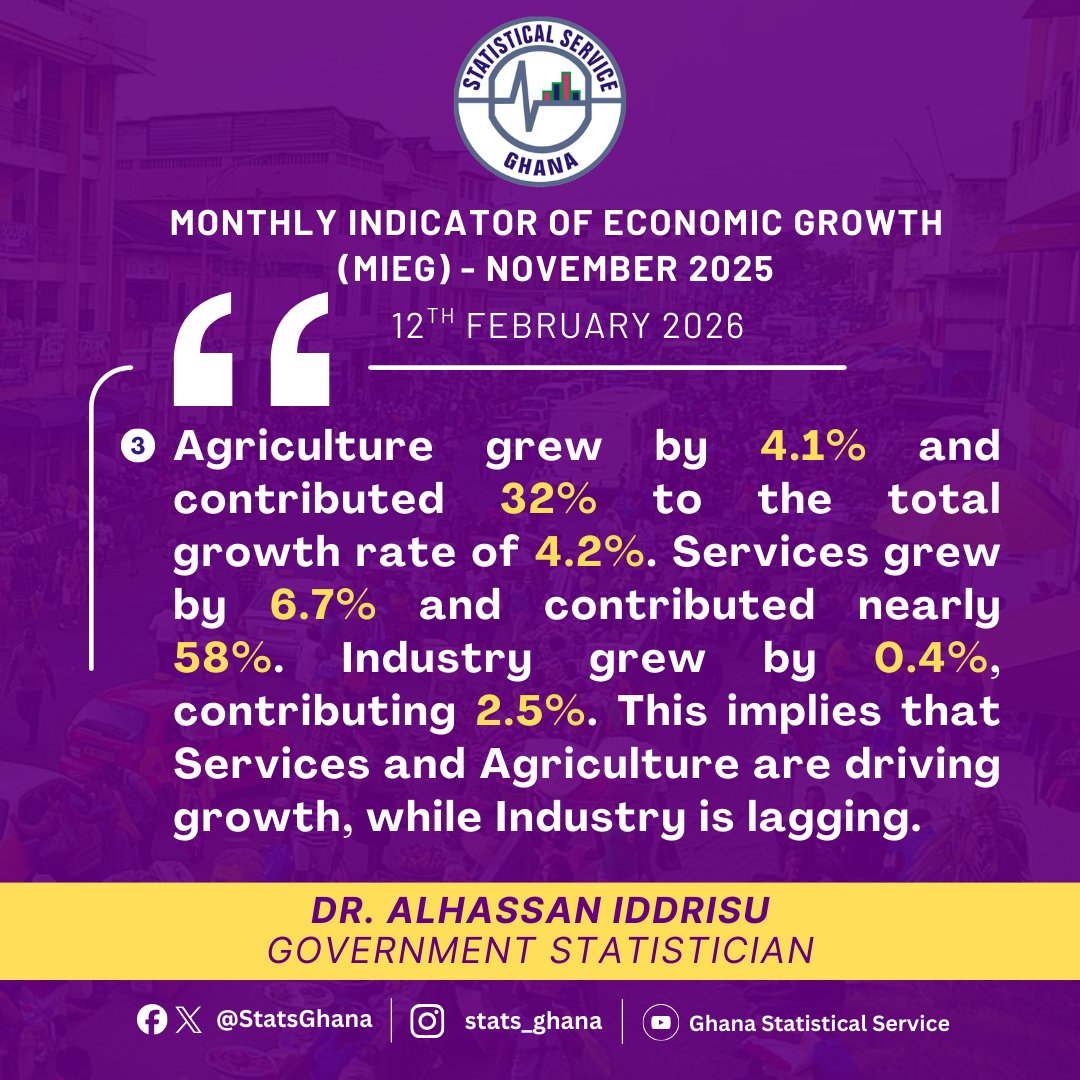
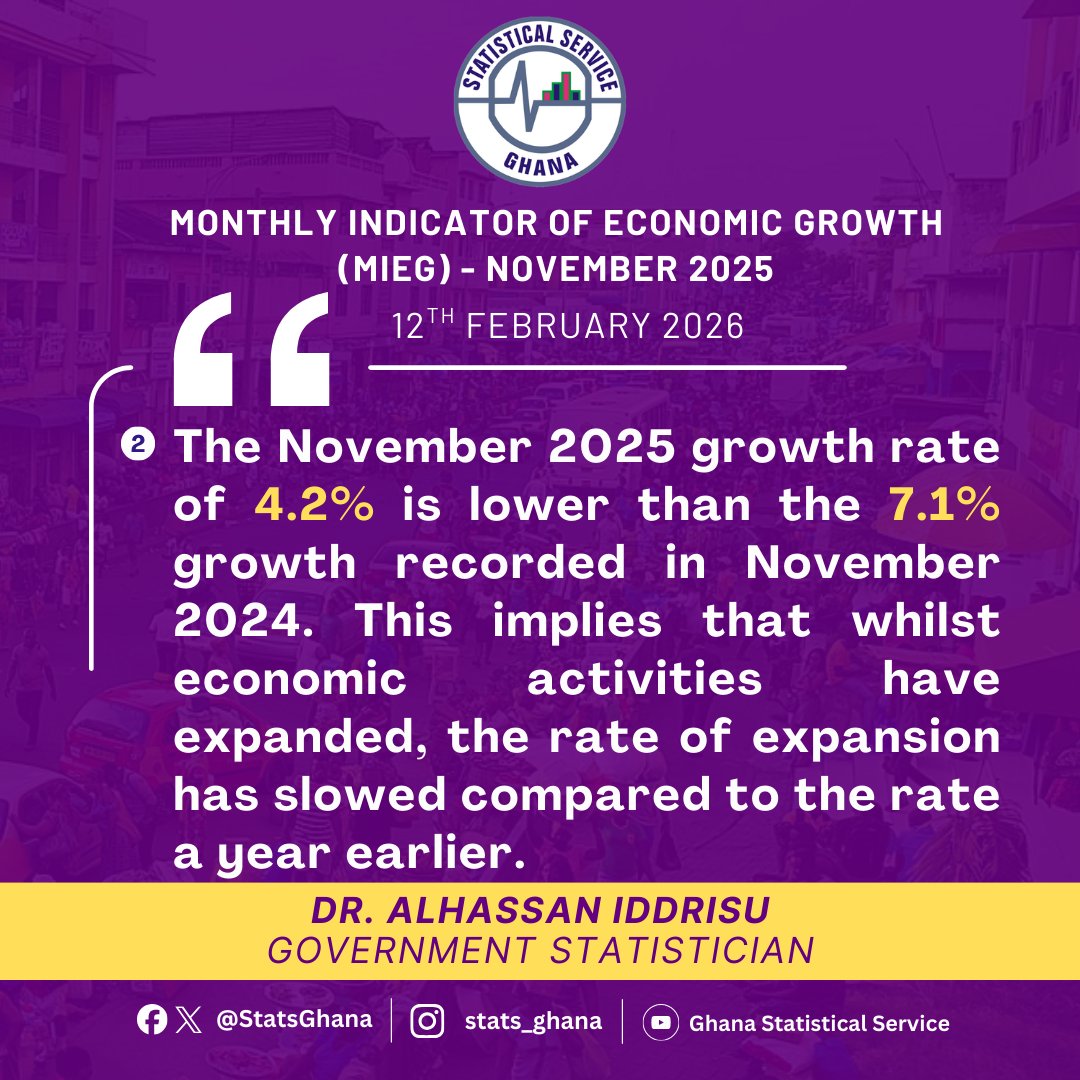
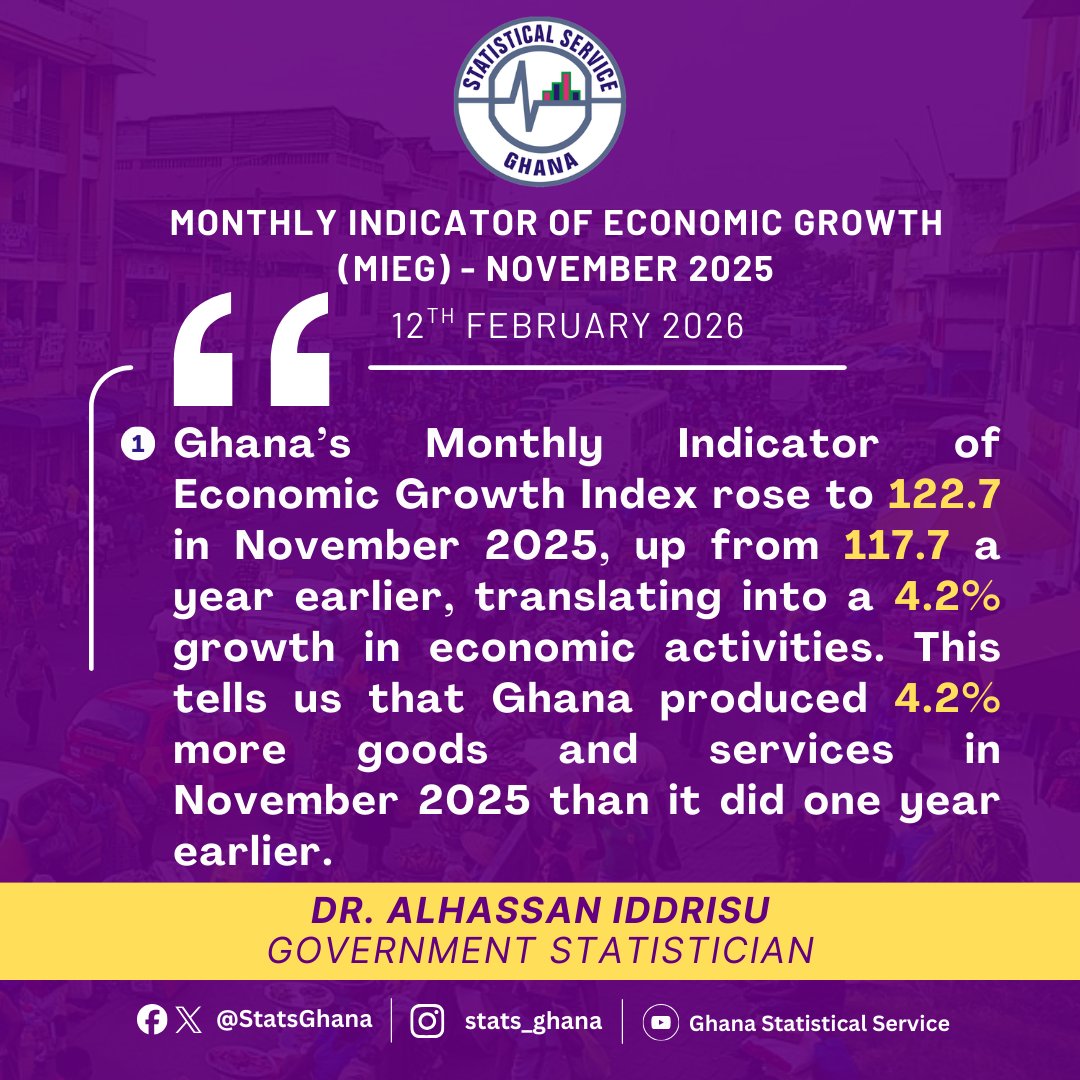
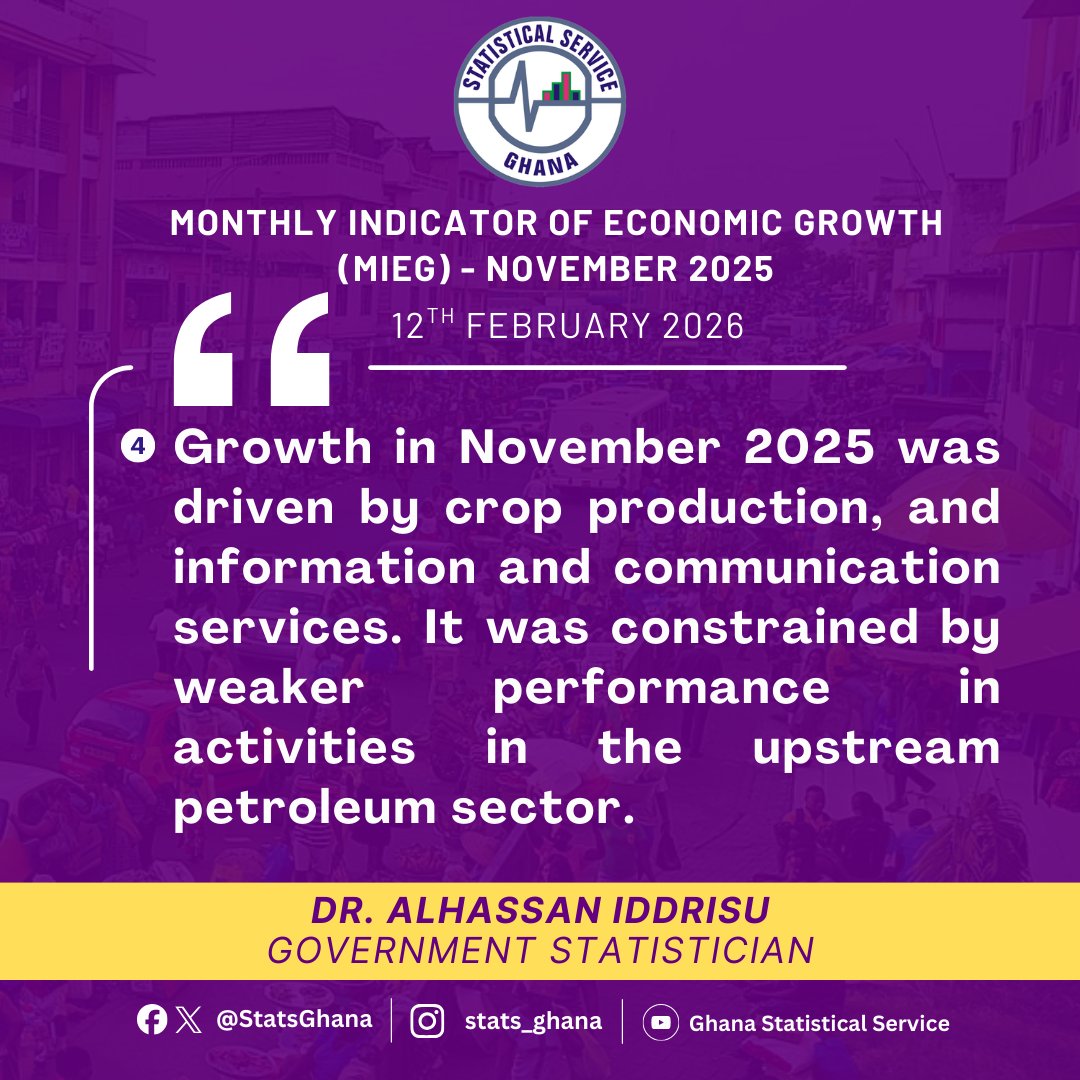
The MIEG helps us understand, in real time, how Ghana’s economy is performing before the full quarterly GDP figures are released. The latest data shows that the economy continued to grow in November 2025, supported mainly by Agriculture and Services, while Industry faced clear headwinds, particularly in the upstream petroleum sector.
These numbers tell a story about how businesses are operating, how households are earning incomes, and where policy attention is most needed. They also provide early signals of what to expect for 2025 Quarter 4 GDP performance.
Our goal at the Ghana Statistical Service is simple: to make economic data timely, clear, and useful for everyone-from policymakers and investors to students, households, and civil society. Evidence matters, and good decisions start with trusted data.
I would like to sincerely thank all data-providing institutions, our development partners, and the dedicated staff of the Ghana Statistical Service whose professionalism and commitment made this release possible. Your contributions continue to strengthen Ghana’s statistical system and support evidence-based national development.
As always, we remain committed to producing credible, transparent, and internationally comparable statistics for Ghana.
Thank you for engaging with the data.
#MIEG #GhanaEconomy #Nov2025 #GSS #EconomicGrowth #DataDriven
To reduce the price of food produced by farmers, the reduction of transport fare by 15% should be effective in rural areas.
Mostly, transport fare reduction only takes effect in urban locality, resulting in a stable or increase in prices of farm produce goods.