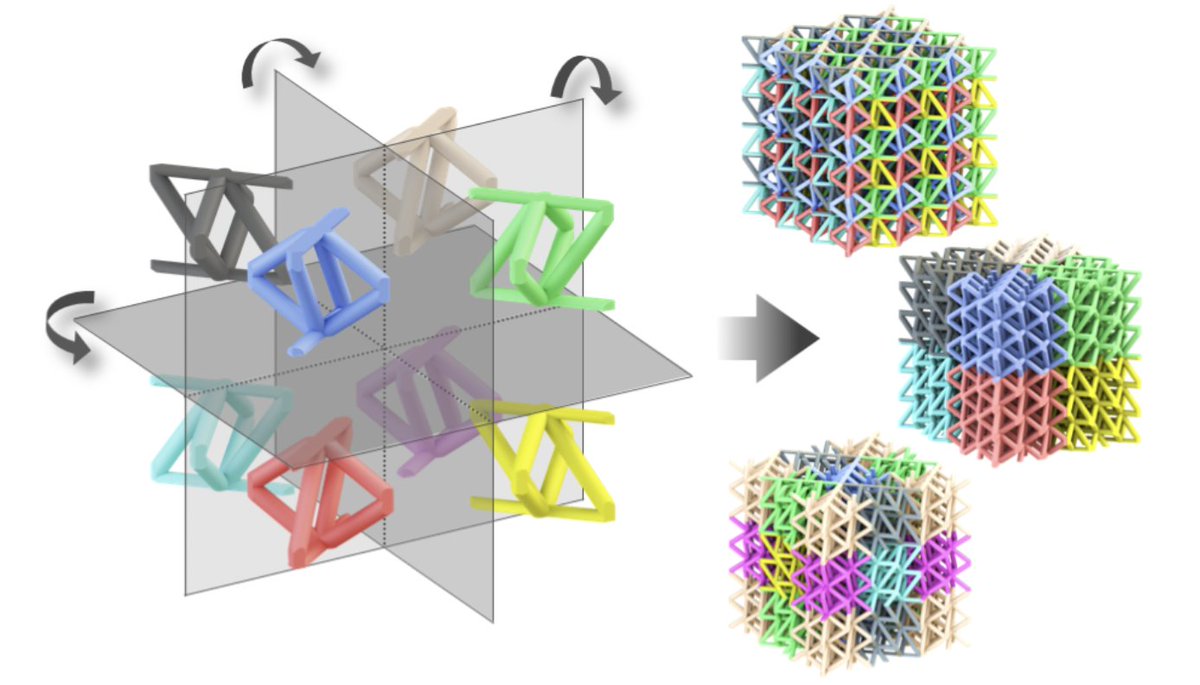
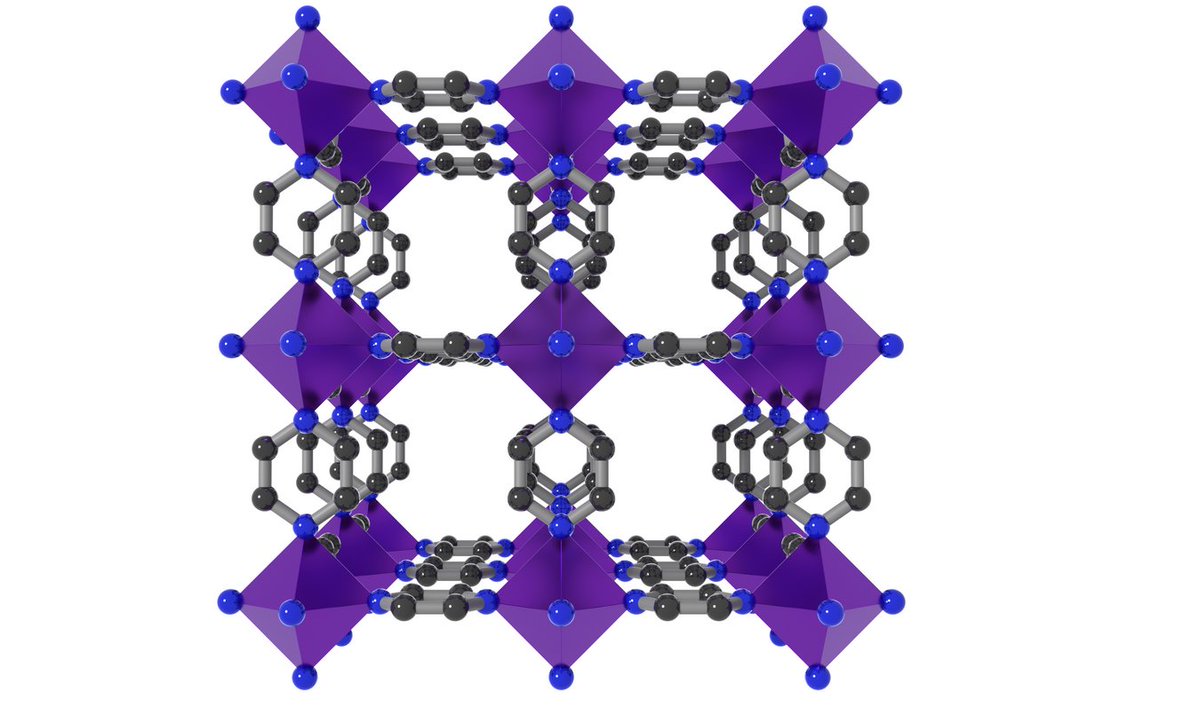
A new catalytic reactor for in situ and operando high-energy X-ray scattering studies has been designed at the ID31 beamline.
More info: https://t.co/8avsJskD1p
X-rays reveal hidden step in glass relaxation
Nuclear resonance experiments performed at the ESRF have clarified the relationship between two types of molecular motion in liquids approaching the glass transition.
https://t.co/0RL8s17YCH
Inspired by Nature. Designed for coeliac disease.
A team of scientists scientists have designed a newly-designed enzyme, dubbed celiacase, that could potentially alleviate celiac disease.
https://t.co/yQ4Nqx7KmM
Avui, matinem per anar a mesurar @BM25_SpLine al @esrfsynchrotron a Grenoblem
Intentem viatjar de manera sostenible i anem en tren, o sigui que creuem els dits!
The heart's electrical wiring unveiled
New study from the Human Organ Atlas collaboration.
Researchers from @uclnews@esrfsynchrotron have produced the first 3D map of the heart’s electrical wiring in Tetralogy of Fallot, one of the most common congenital heart problems
Jour 105, orbite 1629 – Cette vidéo accélérée montre l’installation de MatISS‑4, une expérience française qui vise à collecter et étudier la biocontamination de l’air à l’intérieur du module européen Columbus. La biocontamination – cellules de peau, éternuements, postillons, bactéries 🦠 – est inévitable. Nous nettoyons les surfaces chaque semaine (je publierai bientôt un timelapse de ménage !), mais certaines zones sont particulièrement difficiles d’accès…
Depuis plus de 10 ans, MatISS démontre que les systèmes de la Station sont très efficaces ; après plusieurs mois d’exposition, le niveau de contamination à l’intérieur des boîtiers reste faible. MatISS‑4 présente un nouveau design, qui permettra d’analyser les membranes contaminées à l’aide d’un instrument de nano-imagerie X du synchrotron européen @esrfsynchrotron de Grenoble 🔬. Vive la science !
MatISS a également permis aux chercheurs d’identifier des surfaces plus résistantes à la biocontamination, ouvrant la voie à de nombreuses applications sur Terre : dans les transports publics, où des milliers de personnes touchent les mêmes surfaces chaque jour , dans les lieux où limiter la contamination est essentiel, tels que les hôpitaux, les navires de croisière et les sous‑marins, et même dans les élevages. Moins de biocontamination = moins de nettoyage avec des produits chimiques !
🎥 @esa / @NASA_Johnson
#εpsilon • @esaspaceflight • @esa_fr • @Space_Station • @NASA_Johnson • @CNES
Day 105, orbit 1629 — This accelerated video shows the installation of MatISS-4, a French experiment that aims to collect and study the biocontamination of the air inside the European Columbus module.
Biocontamination – such as small skin cells, droplets from sneezes or saliva, and bacteria 🦠 – is unavoidable, so we make sure to clean surfaces every week (I’ll publish a housekeeping timelapse soon!), but some areas are particularly hard to reach…
Over 10 years, MatISS has shown that the Station’s systems are very efficient; after several months of exposure, the contamination level inside the MatISS cases remains low. MatISS-4 features a new design, which will allow the contaminated membranes to be analysed at the @esrfsynchrotron in Grenoble using an X-ray nano-imaging instrument 🔬. Go science!
MatISS has also enabled researchers to identify surfaces that are more resistant to biocontamination, opening up many applications on Earth: in public transportation, where thousands of people touch the same surfaces every day, in places where limiting contamination is key, such as hospitals, cruise ships, and submarines, and even in livestock farming. Less biocontamination = less cleaning with chemical products!
🎥 @esa / @NASA
#εpsilon • @esaspaceflight • @Space_Station • @NASA_Johnson • @CNES
A new cryogenic CT imaging setup is now available for users at ESRF's tomography beamlines! The new sample environment allows researchers to study materials at extremely low temperatures (-196°C/ 77 K) using non-destructive synchrotron microtomography.
https://t.co/MofqzziEUg
A new cryogenic CT imaging setup is now available for users at ESRF's tomography beamlines!
The new sample environment allows researchers to study materials at extremely low temperatures (-196°C/ 77 K) using non-destructive synchrotron microtomography.
https://t.co/MofqzziEUg
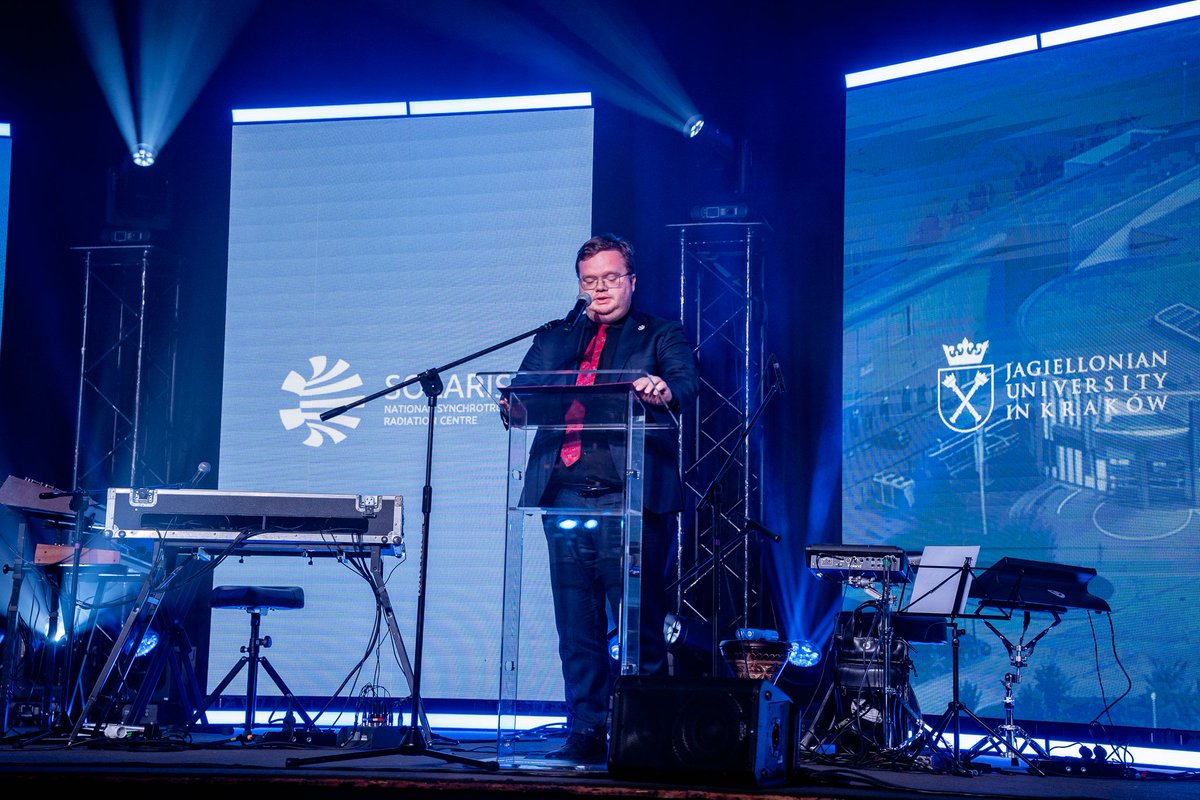
22 maja br. odbyły się obchody jubileuszu 10 lat działalności Centrum SOLARIS.
Wśród gości znaleźli się przedstawiciele władz @JagiellonskiUni, @MNiSW_GOV__PL , administracji rządowej i samorządowej, partnerzy międzynarodowi reprezentujący europejskie infrastruktury badawcze, ośrodki synchrotronowe, instytucje współpracujące z SOLARIS, a także pracownicy Centrum.
W jubileuszu uczestniczyli https://t.co/eA1sX6XRYR. prof. dr hab. Piotr Jedynak, Rektor @JagiellonskiUni , prof. dr hab. Wojciech Macyk, Prorektor UJ ds. nauki, Michał Goszczyński, Dyrektor Departamentu w @MNiSW_GOV__PL , @StanislawKracik , Zastępca Prezydenta Krakowa, a także przedstawiciele władz wojewódzkich, środowiska naukowego i infrastrukturalnego z Polski oraz zagranicy, w tym prof. Jean Daillant, Dyrektor Generalny @esrfsynchrotron oraz prof. Thomas Feurer, Dyrektor @EuropeanXFEL.
Jubileusz był okazją do podsumowania dekady działalności jedynego synchrotronu w Europie Środkowo‑Wschodniej oraz refleksji nad rolą nowoczesnej infrastruktury w rozwoju nauki i współpracy międzynarodowej.
Dziękujemy wszystkim za to, że od lat razem współtworzymy SOLARIS!
___
Zdjęcia: Joanna Kowalik / SOLARIS
Pełne podsumowanie jubileuszu na stronie: https://t.co/o4yfYWx0cX
The 17th International Particle #Accelerator Conference #IPAC2026 is taking place this week in Deauville.
The ESRF is proudly present with staff from different divisions including our DG Jean Daillant and our Director of the Accelerator Division Qing Qin.
🙂 IMDEA Materials Institute was pleased to recently welcome a guest seminar from Dr. Can Yildirim from @esrfsynchrotron entitled: Looking Inside: Multiscale Diffraction Imaging from Millimetres to Nanometres.
Researchers from @CNRS@univbordeaux used high-resolution synchrotron X-ray fluorescence imaging at the ESRF to map manganese inside neurons with nanoscale precision, revealing key sites where the metal accumulates that are linked to neurotoxicity.
https://t.co/h8feCVTwEU
E' attesa entro il 2027 la prima scansione completa del corpo umano: è il prossimo passo dell'ambizioso Atlante degli organi umani che permette di esplorare in 3D l'organismo umano fino all'interno delle singole cellule.
@esrfsynchrotron
https://t.co/wiHKRjBVw1
Compensated ferrimagnet persists over broad temperature range
ESRF X-rays have helped to characterise a material with internally cancelling magnetism that persists over a broad temperature range. The results are published in @NatureChemistry
https://t.co/L4pTcZzvRG
A new 4D view of battery failure
Researchers have used high-speed 4D (3D + time) X-ray imaging at ESRF’s ID19 to investigate how internal damage develops and propagates in real time when lithium-ion batteries fail during thermal runaway
https://t.co/veljC1MRrM