The four main detriments for divergence between Africa and Asia, (and internal continental divergence):
1. Post-indepedence policy (or lack thereof)
2. Colonial and pre-colonial bureaucratic capacity
3. Structural factors
4. Geography
Ethiopia was never colonized.
For much of its history, it was one of the poorest countries on the continent.
Meanwhile, Vietnam was colonized by the French, devastated by decades of war, and is now on its way to serious economic prosperity.
If colonialism were the answer to why Africa is poor, Ethiopia should be rich and Vietnam should be broke. Neither is true.
Can we please retire this excuse?
The first line of discussion should be: Why do disparities exist?
The second line of discussion should be: What are the solutions to "the problem of disparities"?
The third line of discussion should be: What solutions are practically applicable that I can implement in my day-to-day life?
The fourth line of discussion should be: What solutions are idealisms that I cannot practically do anything with, but I can spread as ideas in the community?
? This conversation started with exactly what I said: Your community response to killers of Black Americans & how your gang bangers don't do anything to them despite slaughtering black people on a daily basis.
You brought up Nigerians yourself, trying to shift the discussion. You acknowledge that this is a real problem, but your instinctive response was to bring up problems in Nigeria.
And your reason for this is, Nigerians don't acknowledge their own problems? I'd say the average Nigerian acknowledges the fucked state of their country more than the average Black American wants to accept the issues in their communities.
Nigerians talk about the problems of black people from all over the globe, but they're probably the most vocal about their own.
@FlowerTower87@AdaNore44 You're right, but I'm not sure why you're being so defensive of gang bangers who primarily murder other black men, and spread havoc in black communities.
Top 10 African economies by GDP per capita (PPP) (World Bank)
1. Seychelles ~$33,200: tiny population (~130,000), built on luxury tourism and offshore financial services. Its low PPP/nominal ratio (1.9x) signals it's already a genuinely high-price, high-income economy rather than a cheap one that merely looks rich under PPP.
2. Mauritius ~$31,800: went from sugar monoculture to textiles, then tourism, financial services and ICT. Strong institutions and political stability mean the wealth is broad-based, not extractive.
3. Gabon ~$21,500: Oil wealth divided by a small population (~2.4m). Classic petro-economy arithmetic: high per-capita output, but heavily dependent on crude and far less diversified than the two island states above it.
4. Botswana ~$20,500: Diamonds plus decades of prudent fiscal management, low corruption and stable democracy turned mineral wealth into sustained real income.
5. Egypt ~$19,100: In nominal terms Egypt is only ~$3,300 per capita, its high PPP rank is almost entirely a price-level effect (5.7x uplift). A large, diversified economy (agriculture, manufacturing, tourism, Suez revenues, remittances) combined with very cheap domestic goods and services.
6. Algeria ~$17,600: Hydrocarbons (oil and especially gas) fund a large state and subsidised domestic prices, which lift the PPP figure (3.1x). Income is real but state-dependent and exposed to energy prices.
7. Equatorial Guinea ~$17,600: Oil divided by a very small population (~1.7m) produces a high headline number, but this is the cautionary opposite of Botswana: the wealth is narrowly held, development indicators lag badly, and output is declining as fields mature. The per-capita figure flatters the lived reality.
8. South Africa ~$15,500: The most industrialised and diversified economy on the continent: mining, sophisticated manufacturing, finance and services. The average is dragged by extreme inequality (among the highest in the world) and ~32% unemployment, so the PPP figure overstates the typical experience.
9. Tunisia ~$14,500: A diversified middle-income economy (manufacturing, tourism, agriculture, services) with relatively low domestic prices giving a meaningful PPP uplift (3.5x), despite recent economic strain.
10. Libya ~$14,300: Oil wealth over a small population. Its ranking is the most volatile and source-dependent on this list because conflict, disrupted production and weak data make the figures swing year to year.
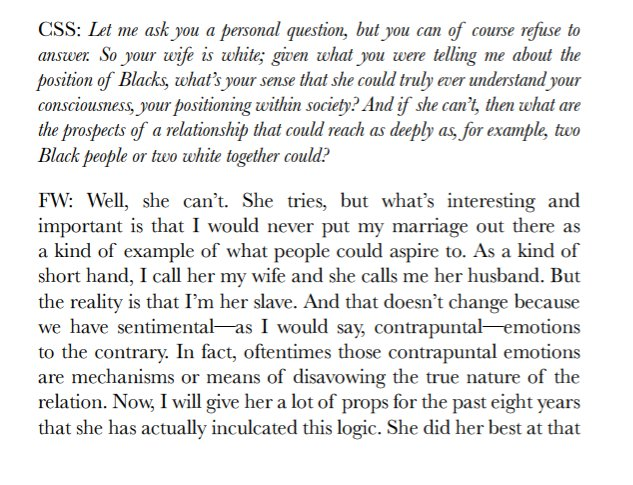
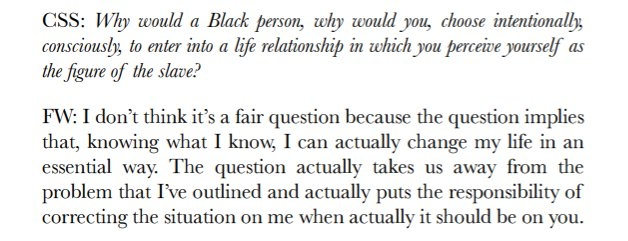
The only thing disagreeable here is "the responsibility of correcting the situation" being on "you" (Whites) as opposed to the responsibility being on himself and Blacks in general.
Those are the limits of Afropessimism, it correctly theorises the problem but that's all it does. It isn't supposed to provide a solution to the problem and nor does it claim that there is a solution. So all that is left for for Black people to navigate it in our everyday life, that's our "slavery".
I'd say this applies Black immigrants to Western or Eastern countries just as much as it applies to Black Americans. Africans and Caribbeans, even in their own countries, aren't beyond it either.
The goal should be to surpass the reality of Afropessimism.
Rwanda keeps setting the bar for what local materials can do when paired with genuine architectural intention.
Komera Leadership Center. Eastern Province, Rwanda. BE_Design.
The roof forms, brick patterns, and woven eucalyptus screens are drawn directly from Imigongo, a traditional art form originating from this region. The building does not borrow from a foreign visual language. It speaks the one that already exists here.
The flexible interior is the most intelligent part. Large hinging translucent panels transform the same space into three separate classrooms, a community meeting hall, or a large event space for performances and ceremonies. One building. Multiple functions. No wasted square footage.
The vast majority of materials were locally sourced. The workforce was local. Women made up an average of 40 percent of the construction team, with on-site skills training, fair wages, and safety equipment provided throughout.
This is architecture as economic intervention. The building did not just serve the community when it opened. It trained and paid the community while it was being built.
Komera means to stand strong, to have courage. The building earns that name.
BE_Design | Komera Leadership Center | Eastern Province, Rwanda
📷 BE_Design | Via Architizer
There are many misconceptions about Africa because most people only study the continent to find what they think is missing, rather than what's available
Because the evidence of what is available can be overwhelming, but its easy to be ignorant and dismissive than to be educated
You're referencing a document that was submitted 13 years ago to explain a recent trend on Twitter. I think you need a bit more than that. Also, nothing in the document suggests that the Depart of Defense will covertly highlight Chinese racism on social media platforms.
But even if they are? So what?
If the material didn't exist, there would be nothing to highlight. And the material is horrific.
It has some practical value for Black people, particularly destroying the naivete of the average Black with regard to how Chinese people actually think.
Ideally, Chinese racism should be being a strategic consideration by the African countries that engage with China.
Of course, not a lot of what is "ideal" seems to pass through the minds of African governments.
I would not share those dehumanising videos, but I don't get why people gaslight those theorists & their adherents who like talking about the pervasive global anti-blackness. Also, the Negro race still needs race consciousness & Pan-Africanism. For how long is the Negro race...
@TDHBXG The agenda is clear.
They want to force out the very, very, very small amount of Black students on elite courses just so they can fit in a few more Asians, despite Asians already dominating these courses.