Attacks on Christians in Europe are up by nearly half year over year, a European watchdog group reported this week. The organization also warned of “growing social and political tensions” on the continent.
The Observatory on Intolerance and Discrimination Against Christians (OIDAC) said on Nov. 16 that “personal attacks on Christians in Europe” rose by 44% in 2025, with the group’s annual report identifying 2,465 “anti-Christian hate crimes and incidents” in Europe last year.
The crimes and incidents included nearly 400 attacks on individuals, including physical violence and threats. Among those identified by the report were the stabbing murder of Iraqi Christian Ashur Sarnaya in Lyon as well as the killing of a priest in Poland.
The report also reviewed instances of reported employment discrimination, such as that of Scottish teacher Sarah Morse, who was fired for expressing her Catholic pro-life beliefs when asked about them by a student, as well as court actions against pro-life advocates praying outside of abortion clinics.
Anja Tang, the executive director of OIDAC Europe, said in a press release that the figures reflect “people who have been threatened or attacked because of their faith.”
“Many of those affected also point to hostile media portrayals and growing social and political tensions,” she said. “Their experiences deserve serious attention and a response that strengthens a culture of true tolerance.”
In addition to direct attacks and government-led antagonism of religious belief, the report also identified what it said was “negative stereotyping of Christians in political and media discourse,” including imbalanced media reports related to religions and religious individuals.
It cited, for instance, the German television station ZDF reportedly using a children’s program to present an “exclusively positive” account of Islam alongside a “wholly negative account” of Christian history.
The report urged public authorities in Europe to protect peaceful religious expression, including the religious and moral convictions of parents, while improving hate crime reporting systems and victim support.
It further suggested that the European Union establish a coordinator on “combatting anti-Christian hatred.” And it called on mass media to “report accurately and responsibly” and avoid stereotyping.
More: https://t.co/af0mBkqomQ
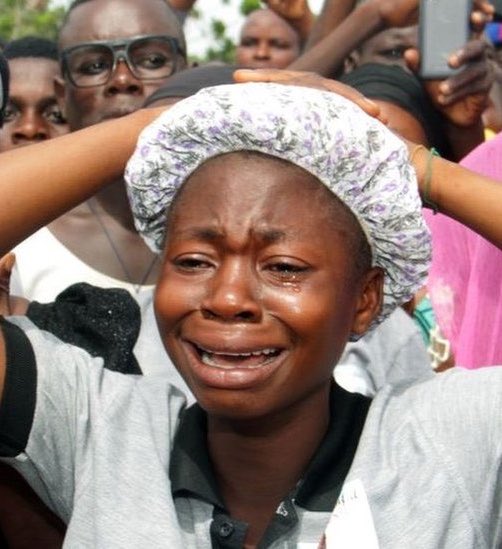
1 in 6 Christians lives in a country where religious freedom is violated.
413 million Christians are persecuted, threatened, or discriminated against.
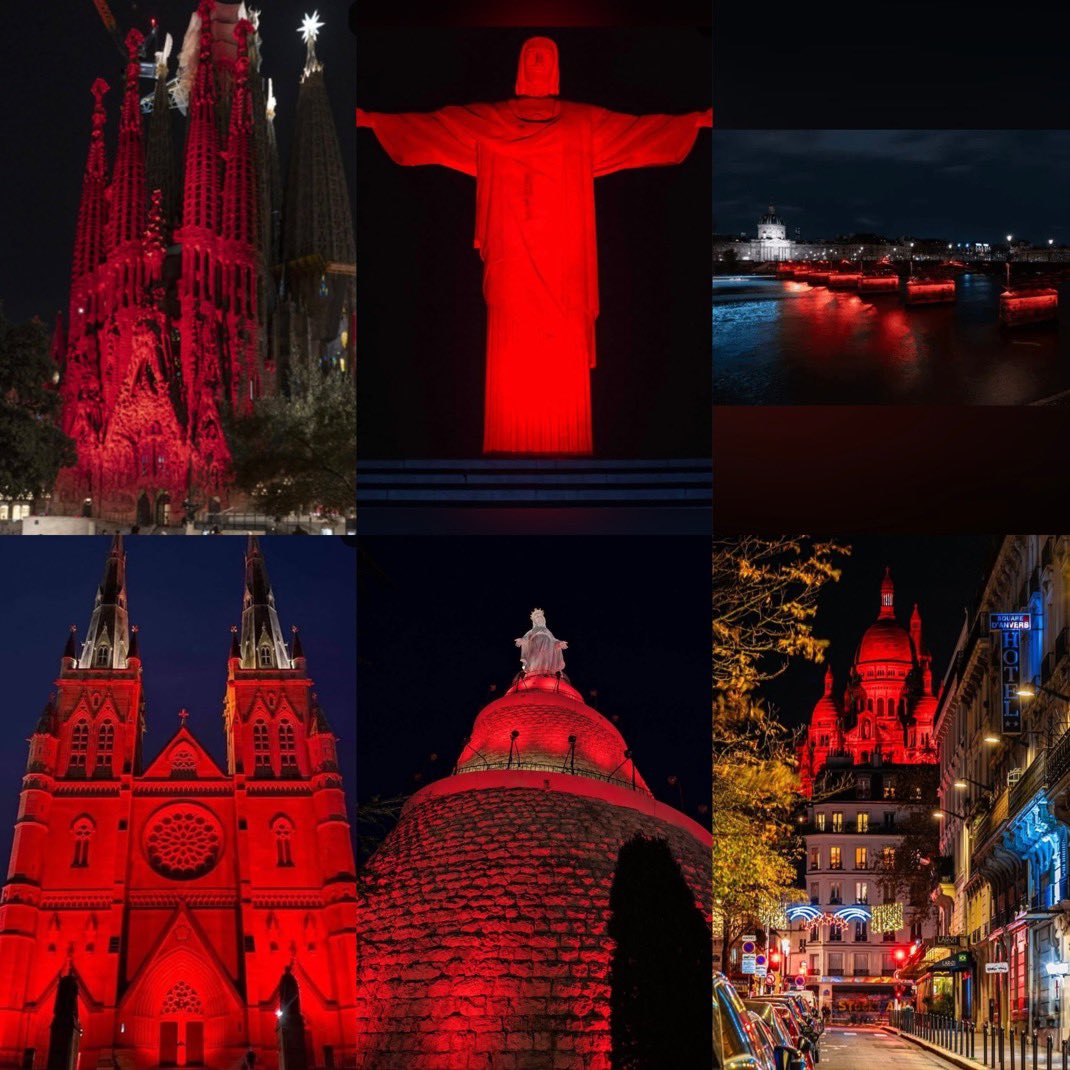
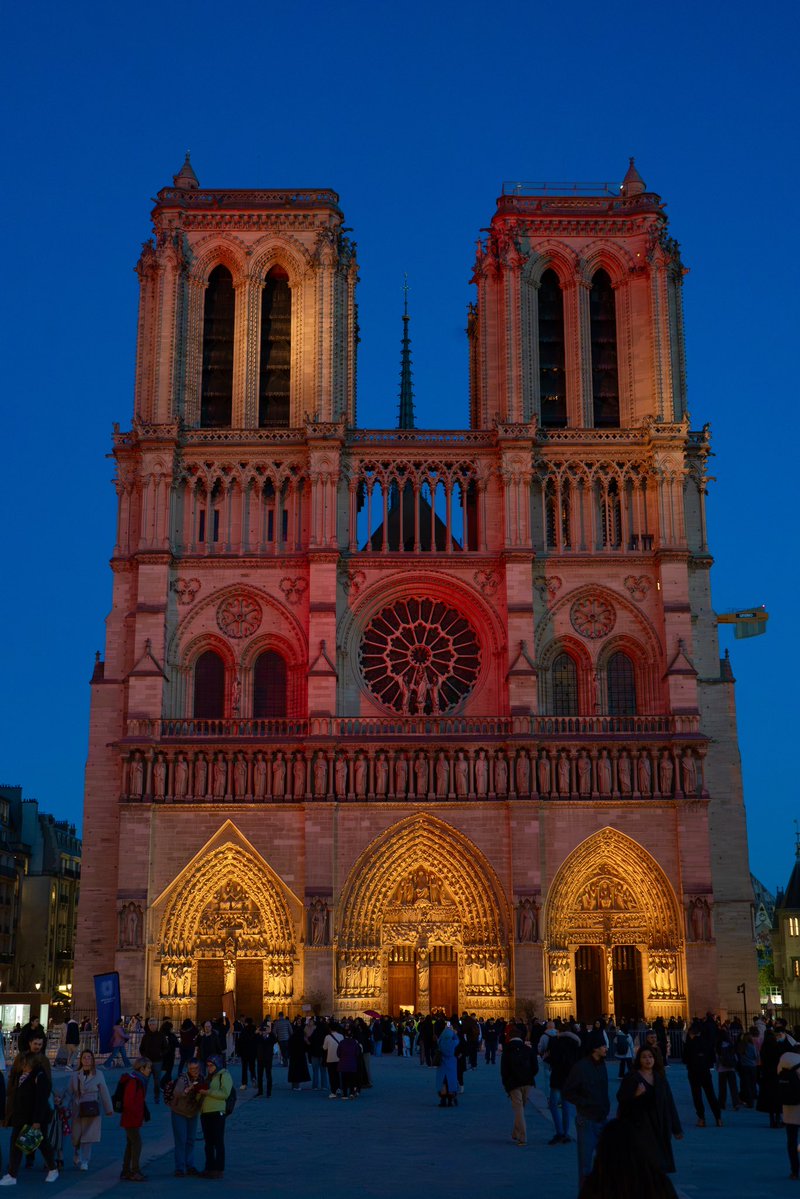
During “Red Week”, monuments and churches are being illuminated in red, a reminder of the blood of the martyrs! ✝️💔
Cardinal Ernest Simoni, at the conclusion of Holy Mass on Tuesday at the Shrine of St Pio of Pietrelcina, invited those present to strengthen their faith, turn to prayer and seek the protection of St. Michael the Archangel.
He then recited in Latin the ancient prayer of exorcism against Satan and the rebellious angels, published by Pope Leo XIII.
During the recording, some shrieks, groans and yelling can clearly be heard, commonly attributed to a demon manifesting itself through the person and expressing hostility and resistance to the exorcist’s prayers, or reacting to being expelled.
Churches and monuments around the world are being lit up in red as part of “RedWeek”.
Red is the color of the martyrs’ blood, and the aim of the campaign is to give a voice to the silent victims of Christianophobia.
Today, 1 in 6 Christians lives in a country where religious freedom is violated: 413 million Christians are persecuted, threatened, or discriminated against.
🚨 England have been punished by UEFA for anti Catholic and racist anti Irish chants during their Nations League game against Spain in Madrid
Footage on social media showed expletive filled chants against Pope Leo XIV
Pope Leo calls the Pontifical Mission Societies “a living sign of unity and ecclesial missionary communion.”
Looking ahead, his theme for World Mission Sunday 2027 is “The love of Christ sends us forth” (cf. 2 Cor 5:14).
Learn more: https://t.co/Y6LajYVX1d
#PopeLeo#TPMS
The Daily Routine of Flannery O’Connor
Miss O’Connor would awaken at 6:00 O’clock every morning. She would begin each day with prayers from her breviary.
After prayer, she would head to the kitchen to share coffee with her mother while they listened to the weather report on the radio. Then, she would head to 7 O,clock morning Mass at Sacred Heart church in Milledgeville, Georgia, which was located about 10 minutes from her family’s farm, Andalusia.
After Mass, O’Connor would return home to write for 3 hours straight from 9-12. She typically averaged three pages a day, but once told a reporter, “I may tear it all to pieces the next day.”
Flannery O’Connor suffered from lupus, and was typically exhausted by the time the afternoon arrived. Because of this, she would spend the afternoon relaxing with visitors, painting, or caring for her flock of birds, particularly her beloved peacocks.
She would head to bed at 9, exhausted and ready for sleep. Each evening, she would pray the night office from her breviary and would read Thomas Aquinas. She once said, “I read a lot of theology because it makes my writing bolder.”
She only lived until the age of 39, but lived a life devoted to Christ, spending her time creating beautiful works of literature.
St. Rose Philippine Duchesne opened the first free school for girls west of the Mississippi. The Potawatomi called her “Woman-Who-Prays-Always.”
Through MCA, her story teaches kids that prayer is part of mission too.
Join our mission: https://t.co/I98z4uvZo5
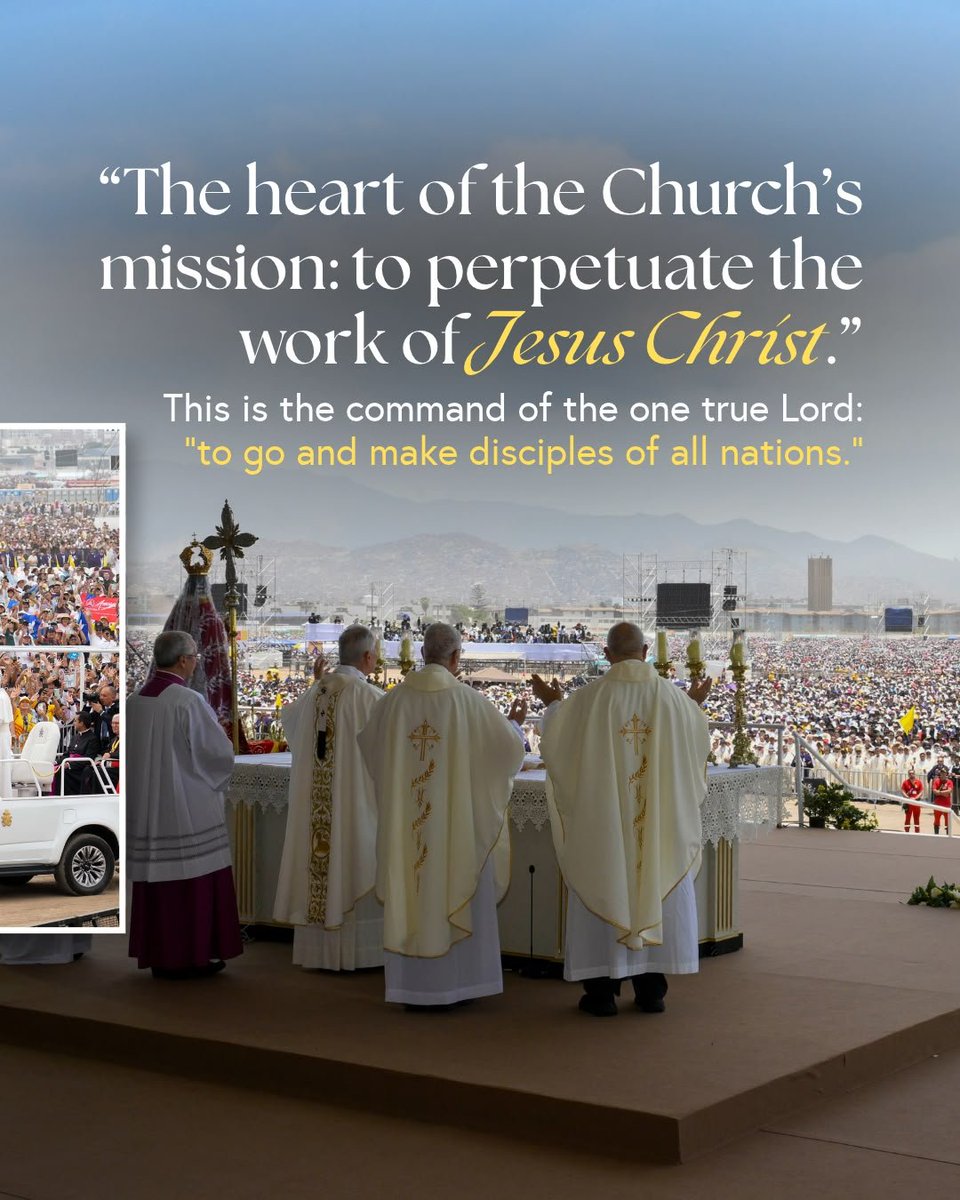
As his Apostolic Journey to Peru came to a close, @Pontifex sent the faithful forth: “the mission continues. Bear witness to what you have seen and heard. Let no one be left without knowing this Good News."
His words. The daily Gospel. The mission.
Sign up for Journey with the Pope: https://t.co/9rdIA8M3iz