Veggie trimmings, potato skins, green stalks… don’t bin them! 🥕
Chefs agree: almost every part of a vegetable can be used. Here are 3️⃣ of their favourite tips 👇
More tips in our #Cook4Climate cookbook, with 27 recipes from across Europe: https://t.co/TsTnrH5FKG
📣 Join EUFIC’s Collaborative Projects Team!
🎓 Internship for MSc students in food science, nutrition or related fields
📅 Starts March 2027 | Min. 6 months
⏰ Apply by 31 October 2026
👉 https://t.co/FWqs4whKU7
How much food could you save by changing just one habit? 👀
Here are 8 simple tips to help your groceries last longer and save you money 👇
Start with one that fits your routine, then build from there.
#FoodWaste#Cook4Climate#FoodChoices4LIFE
Wasting food = also means wasting the resources
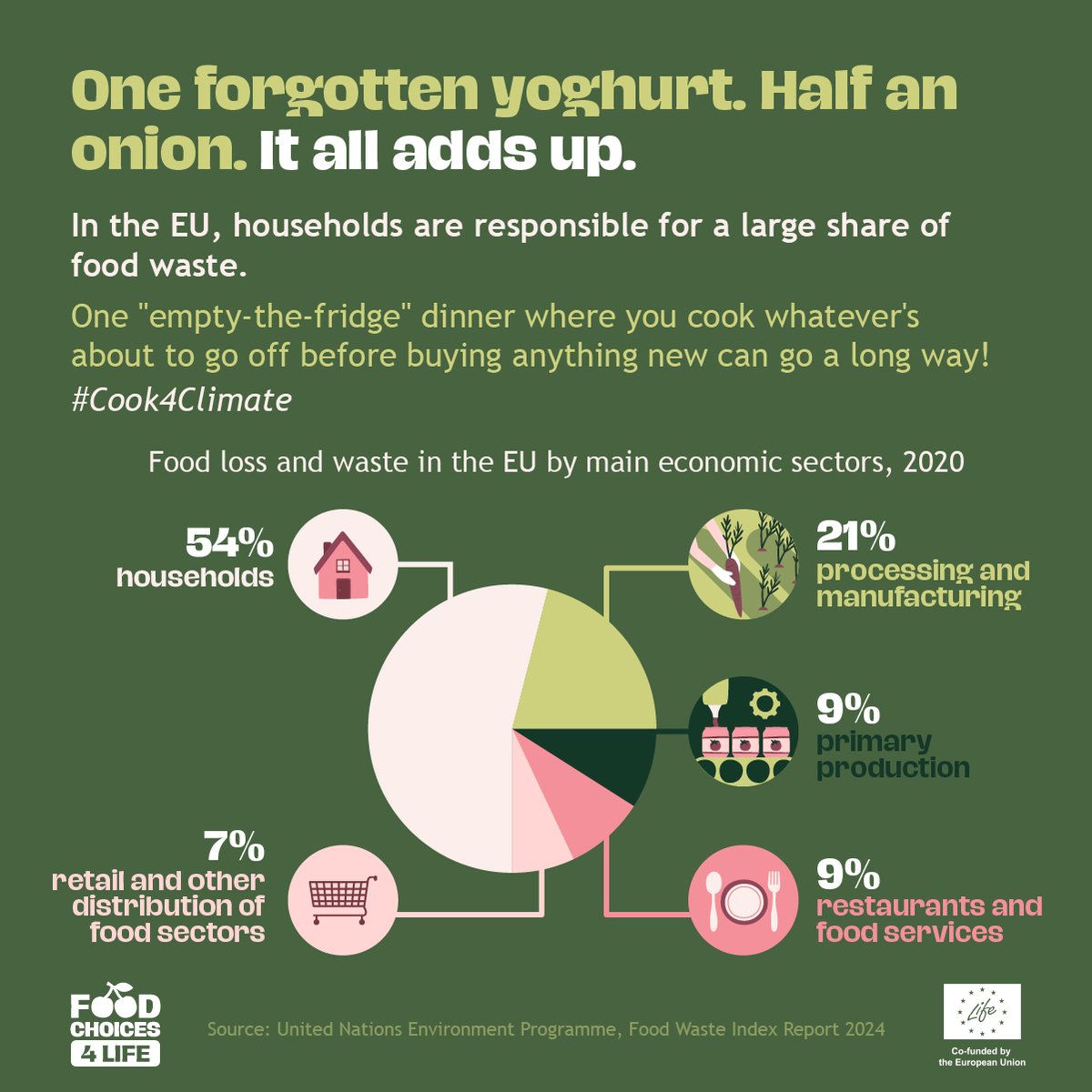
🏠 📊 In the EU, households generate 54% of all #FoodWaste: about 72 kg per person per year. That’s why small steps at home can make a real difference.
👉 Check your fridge before shopping, plan meals around what you have and freeze food before it spoils.
#WorldStatisticsDay #Cook4Climate
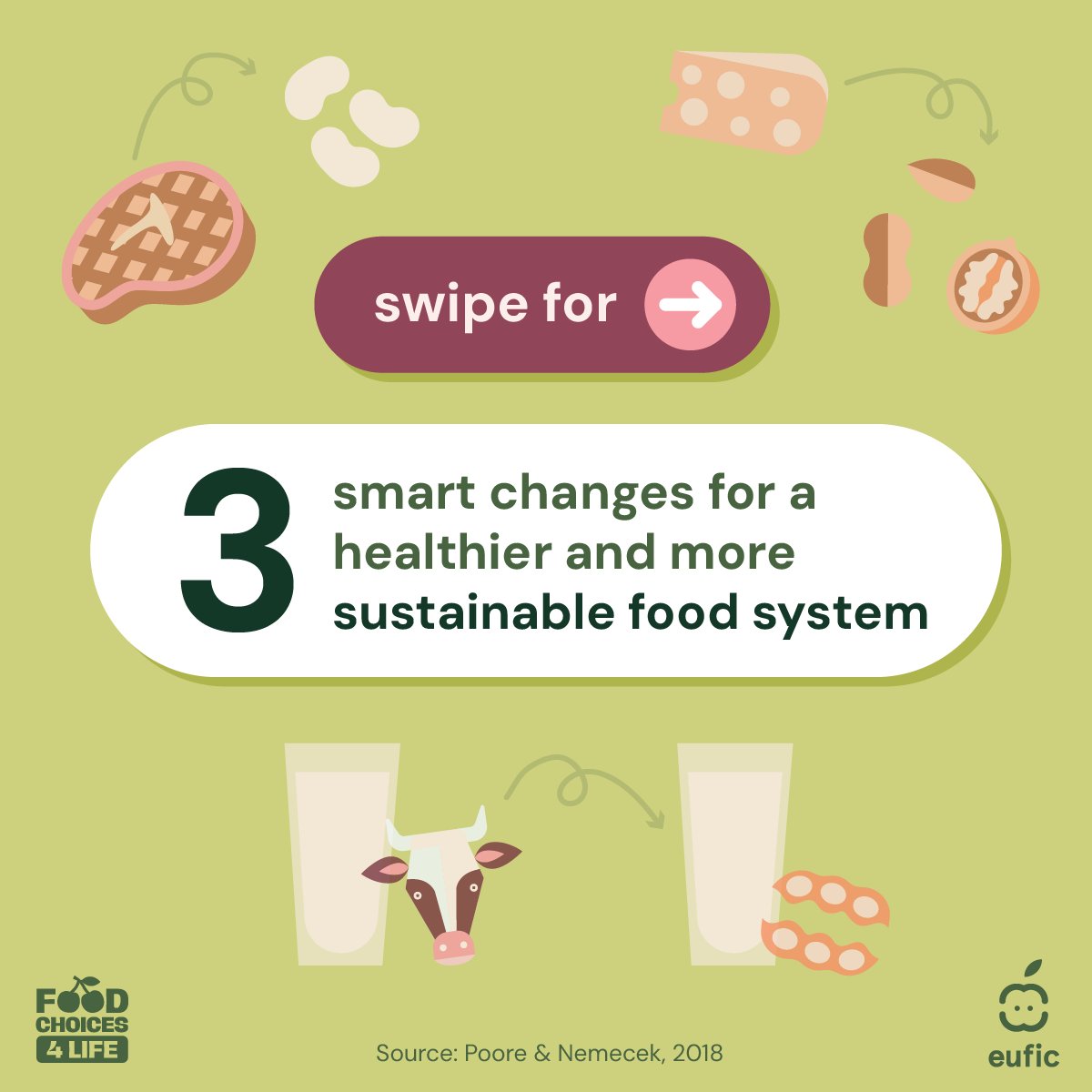
A healthier, more sustainable diet can start with a few simple swaps. 🌍
From breakfast to dinner, small changes can bring more whole grains, pulses and plant foods to your plate.
See what you can swap this week! 👇
#Cook4Climate#FoodChoices4LIFE
Can you have enough food to eat and still be undernourished? 🤔
For #WorldFoodDay, see how researchers are investigating “hidden hunger” and Europe’s #micronutrient gaps.
➡️ https://t.co/CY1CNogp1m
#ResearchImpactEU#Science4EU
"Pulses take too long to prepare."
"My family won't eat them."
Sound familiar? 🫘 Here are some easy ways to add more #pulses, such as beans, lentils & chickpeas, to your meals 👇
#Cook4Climate
Happy #WorldEggDay! 🥚
Two #Cook4Climate tips to make your #eggs last longer:
1️⃣ Store them pointed end down to keep the air pocket intact
2️⃣ Keep them in their carton, in the main fridge (not the door, where the temperature fluctuates)
More tips 👉 https://t.co/mXtXyhXnwY
🗓️ Tomorrow: last chance to join!
Is dividing your audience into “experts vs non-experts” really enough to communicate effectively? 🤔
Learn how to segment and engage diverse audiences for nutrition & health communication in our live training.
🔗https://t.co/kXAhKVuP88
Happy #WorldEggDay! 🥚
Two #Cook4Climate tips to make your #eggs last longer:
1️⃣ Store them pointed end down to keep the air pocket intact
2️⃣ Keep them in their carton, in the main fridge (not the door, where the temperature fluctuates)
More egg tips 👉 https://t.co/mXtXyhXVmw
Here's a kitchen trick you'll want to try. 🤫
Next time you make chilli, bolognese or tacos, swap half the beef for lentils or beans. More #fibre, better for the planet, and most people won't even notice!
#Cook4Climate
No meat, no protein, no strength? Not quite. 💪
Most of us already eat plenty of #protein, and a varied diet with pulses, tofu, nuts, seeds, whole grains, eggs & dairy can cover our needs. Many top athletes eat little or no meat and still perform at their best.
#Cook4Climate
Eating more sustainably doesn't have to mean giving up meat.
🍗🍖 Chicken & pork have much lower greenhouse-gas emissions than beef, so swapping beef for either can already cut your meal's climate impact. Swap it for beans or peas and you'll lower it even more.
#Cook4Climate
Small dietary shifts can make a huge difference!
Just replacing some meat, particularly beef and processed meat, with more legumes and other plant foods can substantially reduce dietary greenhouse gas emissions, water and land use while supporting health.
#Cook4Climate
The data in the graph come from a study done by Poore & Nemecek (2018), a large global analysis covering around 38,000 farms across 119 countries and a wide range of production systems. It's not a comparison based only on US grain-fed beef. The study does indeed find substantial variation in emissions between producers. However, even lower-impact beef production generally has much higher greenhouse-gas emission than plant-based protein sources. One important reason is that cattle themselves produce methane during digestion, regardless of whether they are predominantly grass- or grain-fed.
Is buying local always the greener choice? Not necessarily! 🌍
Most food greenhouse gas emissions come from production, not transport. So a meal built around vegs and legumes usually beats a meat-based one, even if that meat was produced nearby.
#Cook4Climate
Thanks for raising this. Grasslands can indeed store carbon in their soils, and improved grazing practices can increase soil carbon storage under some conditions. But that doesn't mean grass-fed beef is automatically carbon neutral or “capturing carbon”.
The important comparison is how much additional carbon the grazing itself stores, while also accounting for the methane cattle continue to produce and the land required. Soil carbon storage is also limited and slows over time. So while better grazing practices can reduce the climate impact of some beef production systems, the evidence doesn't show that this generally offsets their greenhouse-gas emissions.
And on the avocado comparison: absolutely, season and transport method can matter. Air-freighted foods are an important exception to the general finding that transport makes up a relatively small share of food emissions. But that doesn’t change the point of this graph: WHAT food is produced is generally a much larger determinant of its greenhouse-gas footprint than HOW FAR it travels.
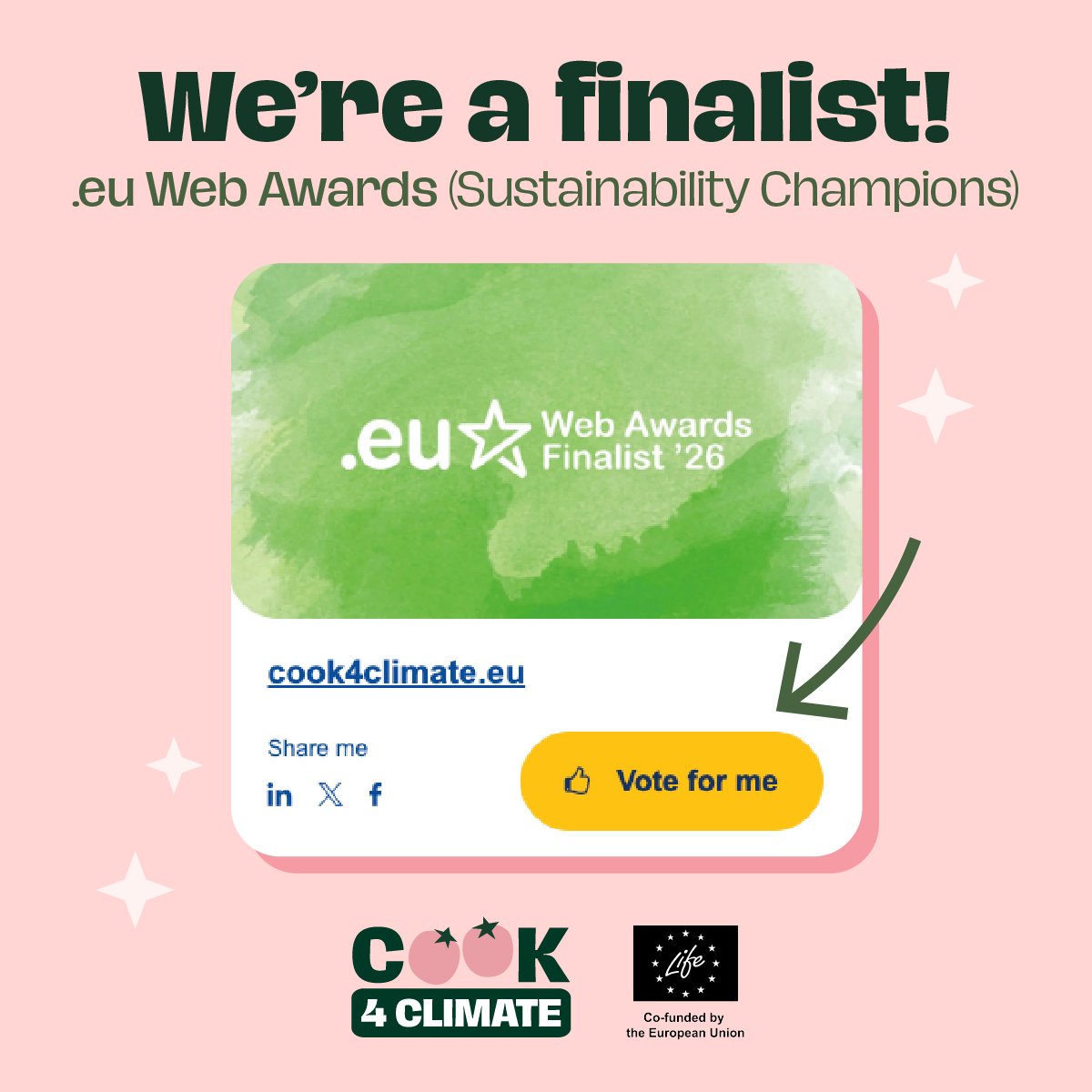
🏆 https://t.co/uQ1Ohf1yJT is a 2026 .eu Web Awards finalist for Sustainability Champion 🌍
Food is a big part of our climate footprint, and this campaign shows how to cook greener.
Help us win! Vote by 31 Oct 🗳️ https://t.co/qHRbXnkF6a
#26euWA#FoodChoices4LIFE#Cook4Climate