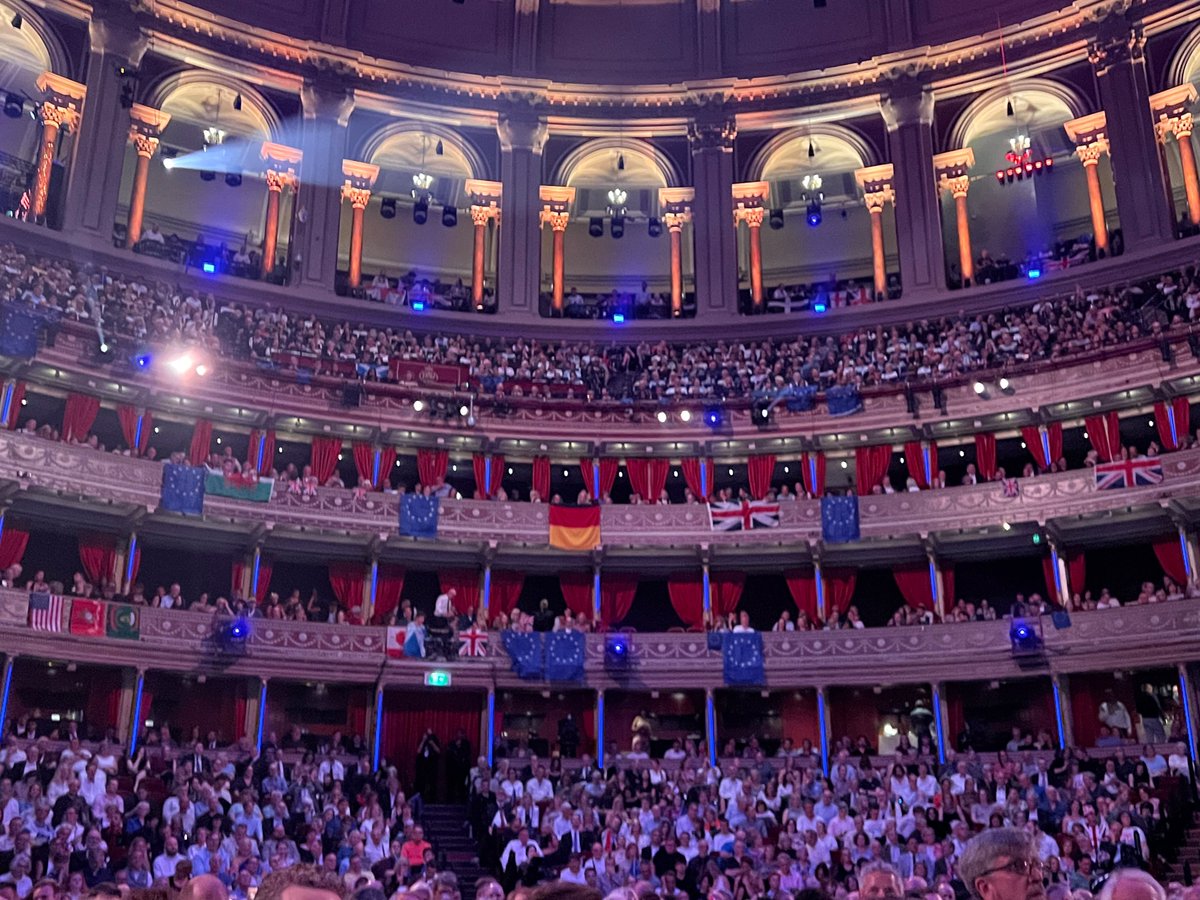
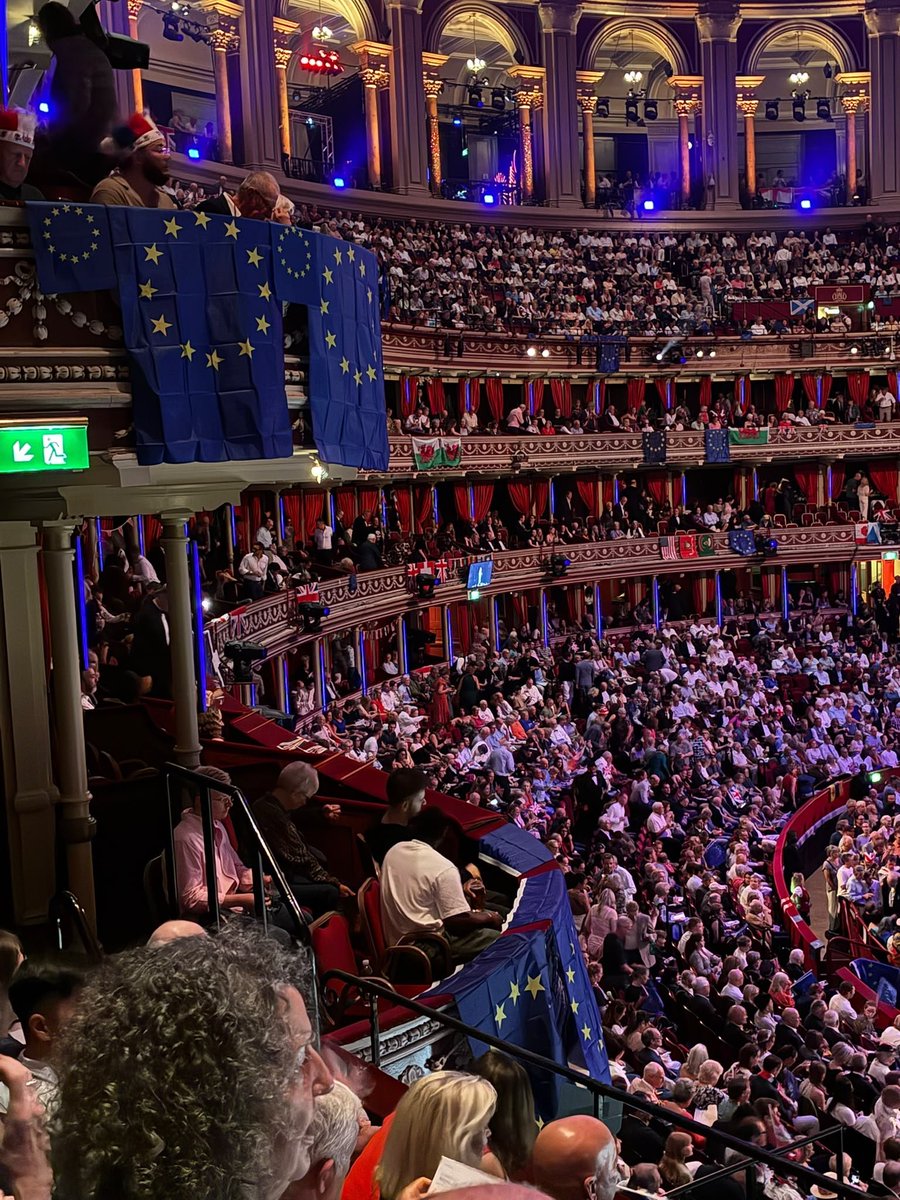
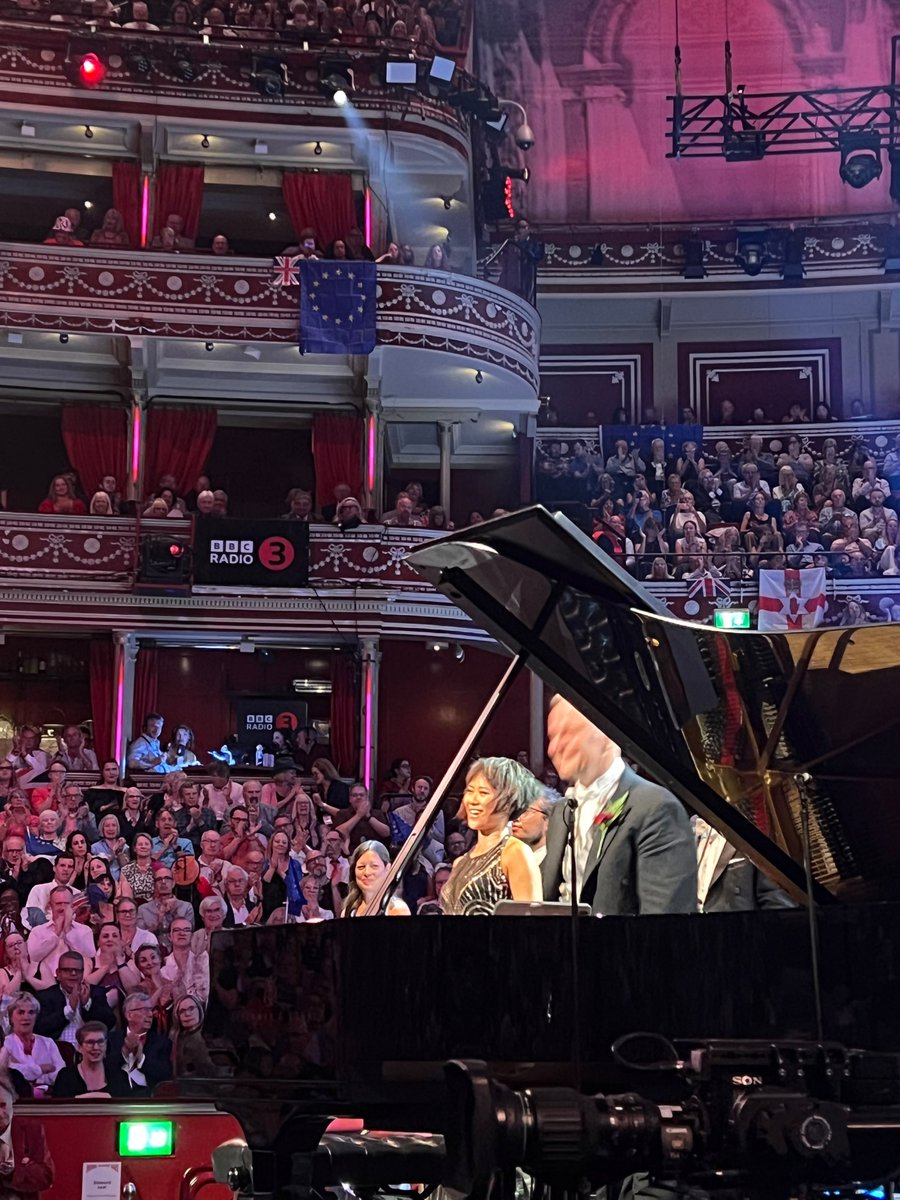
@jameswnaish. Thank you for raising the devastating impact of #Brexit on EU/UK touring in the #HoC today. We welcome @andyburnham's clear response to you:
"I would like to see the return of visa-free access to Europe for British musicians and performers."
(12 Oct, 2026, 17:17).
I’ve merely been responding to your posts. My original post was about our EU Flags at the Proms movement, showing solidarity with struggling musicians.
You asked whether we sing I Vow to Thee, My Country. I pointed out that Holst’s father was Swedish. No response. I explained that the hymn is not simply a nationalist song, but a spiritual one about “another country”, heaven. No response.
I then challenged your claim that musicians are “privileged” by providing evidence of the financial impact of Brexit on touring musicians. You went off on a tangent about economic value, using a rather bizarre choice of measurements, while providing no credible economic source for your assertions.
In each case, you appear to select the data that fits your preconceived position. But I suppose we’re used to that with anything Brexit-related.
Thanks for humouring me.
You have explained nothing and, despite being asked, provided no economic sources for your calculation. You are committing a basic economic category error: GDP and international trade are different measures, with different denominators. Using GDP as the denominator to describe the UK’s share of trade with the EU is misleading and makes the actual level of EU-UK trade appear smaller than it is. It is crass statistical manipulation.
@MarcusDromgoole UK total trade = £1.9 trillion
Trade with the EU = £859.2 billion
EU share of total UK trade = 45.2%
Non-EU trade = 54.8%
Source: https://t.co/cZrHk0hBTa
You’re using an unusual denominator to make UK-EU trade look smaller than it is. GDP measures domestic production; it is not the denominator used to measure a country’s trade. International trade is measured through exports and imports. On that standard measure, the EU accounted for 45.2% of UK total trade in 2025.
I see where you are getting confused. You’re conflating GDP with trade. GDP measures what’s produced in the UK. Trade measures what we buy and sell internationally. Exports count towards GDP; imports don’t, because they aren’t produced here. Your 8% figure is therefore simply wrong and misleading.
This recent table (Table 1) from #theofficeofnationalstatistics contradicts your bizarre claim that the EU accounts for just 8% of our total trade. The official figures show that the EU accounted for around 41% of UK exports in 2025 in the context of "total trade".
https://t.co/tykGLheoWp (see Table 1)
This is simply wrong. Please show me a credible source for the 8% figure that you keep pushing.
The latest House of Commons Library figures show that in 2025 the EU accounted for 41% of UK exports and 50% of UK imports. The EU is clearly a hugely significant trading partner for the UK, not 8% of our trade.
https://t.co/cCAFNPkAtC
The UK did not pay the EU £50bn a year after Brexit. Before Brexit, the UK's average net contribution to the EU budget was around £7–7.5bn a year in 2016–19. The Brexit financial settlement is forecast at roughly £30–35bn spread over decades, not £50bn a year.
"In 2025, the EU accounted for 41% of the UK’s exports (48% of goods exports and 37% of services exports). This share has fluctuated between 41% and 44% since 2015." https://t.co/tQtGEzLfWx
Sovereignty doesn't pay the bills.
Border control? How's that going?
#Brexit has caused the problem. The problem did not exist before the #BrexitChaos. Together with the Musicians’ Union, we are campaigning for a solution that enables UK musicians to regain the access they lost, which is costing the UK economy more than £100 million in lost economic value each year, according to commissioned DCMS research.
@MarcusDromgoole Not really surprising that a commissioned report on the impact of #Brexit on UK touring musicians’ ability to tour in the EU "is based on touring in the EU."
@MarcusDromgoole The findings point to £208 million less economic value being generated in the UK economy between 2022 and 2024 as a result of reduced touring opportunities and increased costs. Funny that!
The Government's own findings, published last month, contradict your common misconception about the ability of our gifted musicians to tour after #Brexit. I do recommend reading the report if you haven't done so already, particularly its findings on the significant economic benefits of touring.
https://t.co/KeDdC8yrK9
@MarcusDromgoole And I am sure you realise that the point of the hymn is not nationalistic at all; it evokes heaven as the shared spiritual home of humankind, beyond geographical borders, with “ways of gentleness and all her paths are peace.”
Thank you for your constructive point, Sara. We do this to support struggling musicians who are still being negatively impacted by #Brexit. Nobody thought through the unintended consequences of reintroducing borders for our creative communities. We’re asking the Government to honour its manifesto commitment and help musicians and creatives overcome the crippling bureaucracy and costs now facing UK touring musicians after leaving a collaborative union.