Assoc. Prof. Learning Sciences, Harvard GSE. Study learning in early childhood using computational modeling & empirical studies. Speaking for self only. She/her
Now out in @Behavsci_MDPI: "Young Children’s Directed Question Asking in Preschool Classrooms" 🤔❔🙋
https://t.co/Yb8gtf0YyL
Even in less structured settings like free play, children are strategic in their question-asking behavior... (1/3)
Now out in Cognition!
➰"Ambivalence by Design: A Computational Account of Loopholes"➰
by Qian, Bridgers, Parece, @MayaTaliaferro, and me
https://t.co/MQdbvFUDje
Oh hey, our new paper is out! Led by Katarina Begus, we explored 16m olds reasoning. Infant's theta response discerned between predicted confounded & uncon events, suggesting that infants can strategically direct attention to events that are likely to reveal informative evidence.
16-month-old infants showed heightened theta oscillations for informative versus uninformative causal evidence. This relationship was more pronounced in infants who subsequently made correct predictions based on this information. @E_Bonawitz https://t.co/IIkGqGpDZT
16-month-old infants showed heightened theta oscillations for informative versus uninformative causal evidence. This relationship was more pronounced in infants who subsequently made correct predictions based on this information. @E_Bonawitz https://t.co/IIkGqGpDZT
Hey everyone! I'm excited to share that I'll be giving a talk on young children's ability to reason about multiple, mutually exclusive object identities at #SPP2024!
Come check out our new work with @levels_of!
🗓️ Saturday, June 22
🕒 3:30 PM
📍 North Ballroom, Session 6A
Artificial Intelligence Quantified (AIQ) @DARPA abstracts are due June 25th at noon. 2 pages. Submit your best ideas!
Info and abstract template: https://t.co/H19ywJPsV5
(The formatting of the template, not the word doc, matters)
Submit! https://t.co/uie5TJU5PU
I'm sad I can't be at #SPP2024 this year, I have a dog on my feet and it won't let me.
But, I'm happy for those who are going.
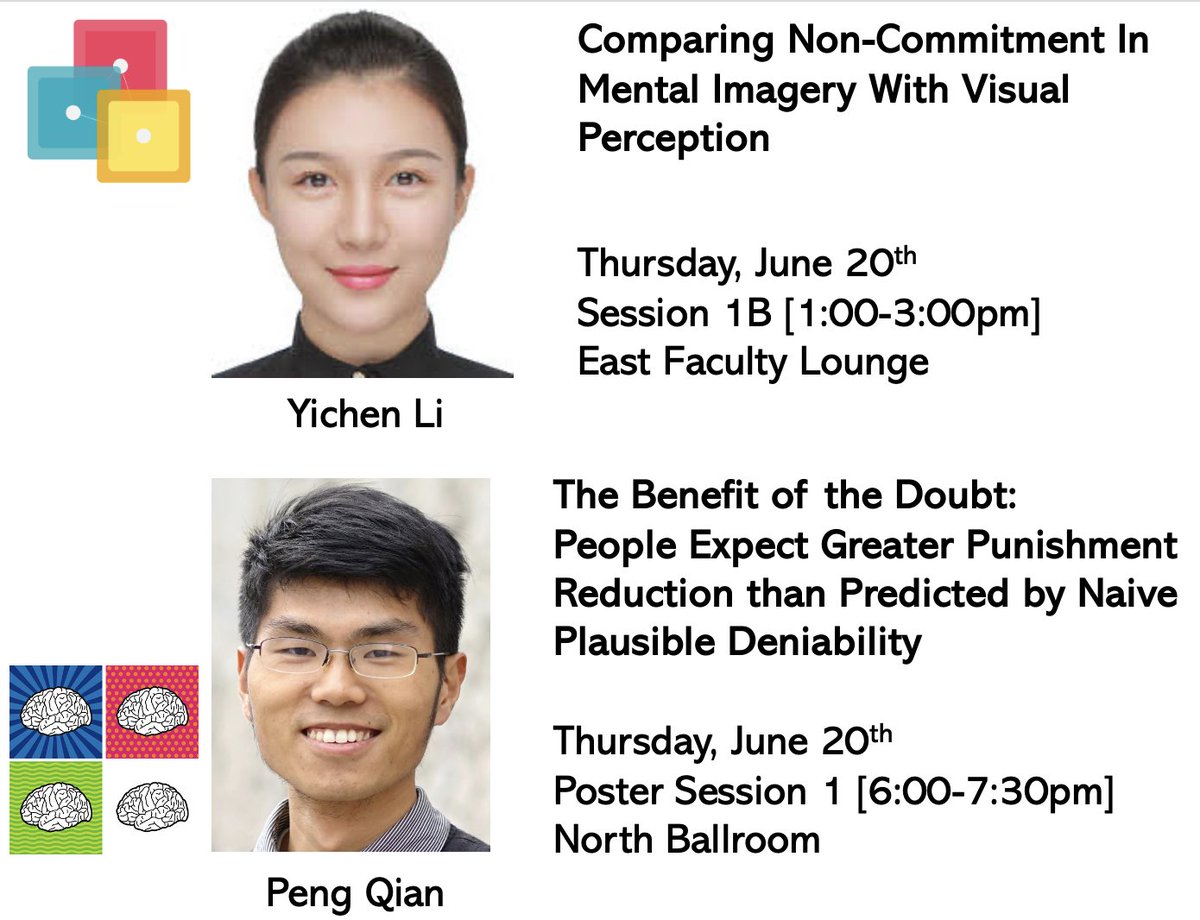
If you're there, check out presentations by Yichen Li @Yichen74893764 and Peng Qian!
If you’re at #SPP2024, I’m presenting work on preschoolers’ possibility reasoning using a novel task: do they know possible from necessary?!
Saturday 3:30pm, 6A
w/co-authors Luisa Andreuccioli, Katarina Begus, @E_Bonawitz , Stephanie Denison, and @CarenMWalker
Come hang out!
For those attending #SPP2024, come check out Igor Bascandziev present some of our new findings on the roles for error detection in children's theory revision. (Friday 11AM, Session 3b), w/ co-authors
@adani.bsky.social
@CarenMWalker
& myself.
now officially out in Cognitive Science!
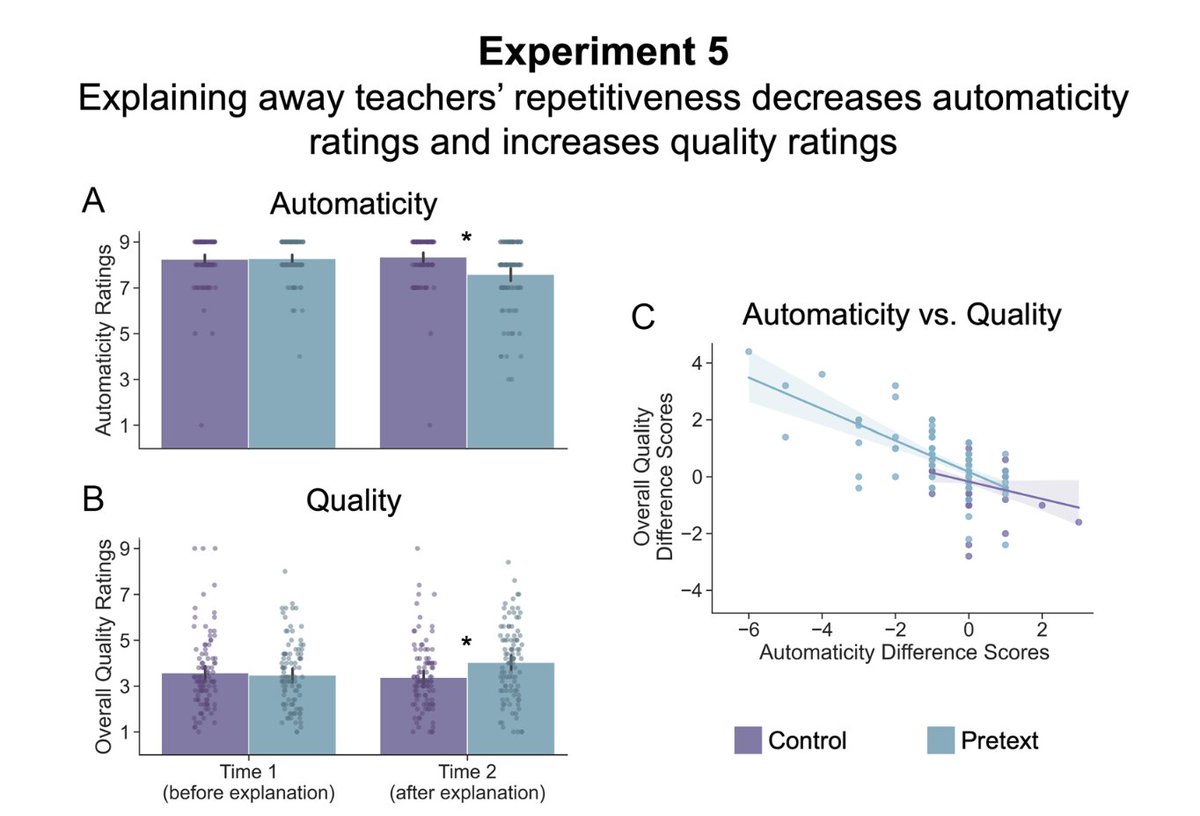
"Teaching Without Thinking: Negative Evaluations of Rote Pedagogy"
(by Bass @LonnieMBass, Espinoza @cristian_e, Bonawitz @E_Bonawitz, and me)
https://t.co/fJh0Ze3c8q
commentary out now in BBS (with Sophie Bridgers):
"Genies, lawyers, and smart-asses: Extending proxy failures to intentional misunderstandings"
(a response to John et al.'s recent fun piece on "proxy failures")
free pre-print here:
https://t.co/Z3qpOTjmTX
And I am thrilled to participate to BCCCD25 to give a talk (on curiosity in development, AI and education) next to @E_Bonawitz and @antoniahamilton, thanks a lot for the invitation @cogdevceu 🙏
Excited to share our new paper (& model!) advocating for combining adult research w/ comp models AND developmental perspectives to examine complex interactions b/w congruency & episodic memory! @CarlaKeyanna special thanks! @E_Bonawitz https://t.co/tyw8496SQi
Thanks @RomanFeiman for taking us on a fascinating tour to one of the most foundational questions in cognitive science: "What is a thought?" 🤔💭 Roman's work shows how linguists' formal theories of meaning can serve as computational theories of thought.
you can read more in the links, but briefly --
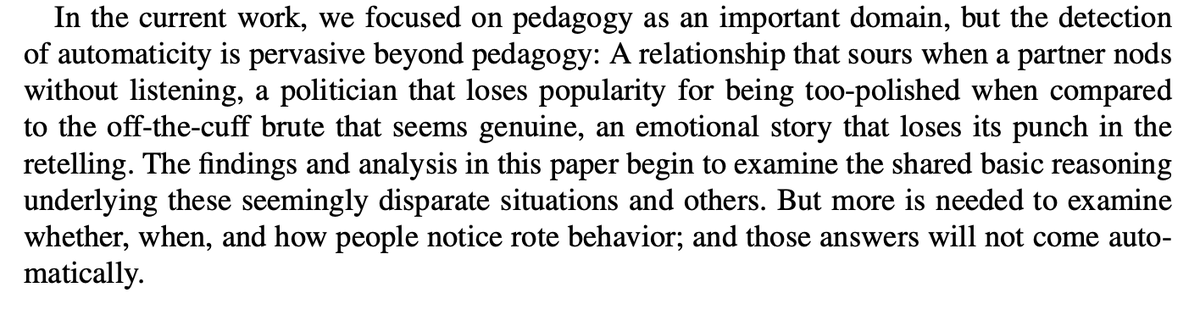
research topic is in common-sense, particularly theory-of-mind & pragmatics. While not strictly required, I have an interest in how we reason about ‘scripted’ behaviors - how/when we perceive *others* as being “on automatic"
I'd like to hire a post-doc, to start this summer or fall.
It'd be great if you could share this widely with people you think might be interested.
More details on the position & how to apply: https://t.co/NMDE0fJhIR
Official posting: https://t.co/hwjKoxYt6m
Now in “Mind, Brain & Education” - Thanks @GaabLab @_CPollack @E_Bonawitz@Joanna22c & whole team for this great overview piece for @hgse & the field of edu neuroscience as a whole .
@IMBESoc@WileyGlobal
@WileyPsychology