In 1989 a solar storm hit Earth so hard
the aurora borealis was visible in Cuba.
People who had never seen the northern lights looked up at something they had no language for.
Compound interest works the same way for most people who encounter it seriously for the first time. Not because it's complicated - because the scale of it doesn't match what they expected.
$10,000 working at real yield for 20 years doesn't produce a number that feels like the same money. It produces something that looks like a different category.
The infrastructure generating that has been running long before you looked.
It will run long after.
The only variable is when you enter it.
https://t.co/jBlMWirpb9 🌊
June 1. 00:00:00.
The platform went live.
Right now - 7 days, 13 hours and 57 minutes later - it's still running.
Yield accumulated every second of that.
XP counted every login.
Chests opened every morning.
The leaderboard updated without pause.
Nobody made an announcement.
Nothing dramatic happened.
It just ran.
That's the whole point. 🌊
https://t.co/jBlMWirpb9
The average person works 90,000 hours in their lifetime.
For most of those hours - their money works zero.
It sits. In an account. Losing value to inflation every single day. Silently. Without drama.
Without anyone to blame.
The uncomfortable truth about money isn't that people don't earn enough. It's that most people have only ever learned one way to create value - trading their time for it.
90,000 hours of your time working.
0 hours of your money working.
That ratio is the entire problem.
And it has nothing to do with how much you earn.
It has everything to do with whether your money ever works a single hour on its own.
https://t.co/jBlMWirpb9 🌊
Today we went live.
Three questions came up more than any others.
"Where exactly are my assets?"
Held in Fireblocks institutional custody. The same infrastructure used by BlackRock, BNY Mellon, and 1,800 other institutions. Multi-signature: no single person can move your funds unilaterally. Not us. Not anyone.
"How is the yield actually generated?"
Your staked assets are deployed into audited on-chain yield infrastructure. Networks pay for the capital you provide. That payment is your return. Not from new users. From real economic activity.
"When is Phase 2?"
After Phase 1 is solid. We won't announce a date until the architecture is ready. That's how we built Phase 1. That's how we'll build Phase 2.
"I've been asked about promises my entire career. The only answer I trust is: check the structure."
That's the whole AMA in one sentence.
https://t.co/jBlMWirpb9 🌊
80% of retail traders lose money. That isn’t a statistic pulled out of thin air. It comes from European Union regulators, which have required brokers to disclose these figures since 2018.
The 20% who make money are, for the most part, making it from the 80% who lose it. If you had bought $1,000 worth of Bitcoin in 2013 and simply done nothing, it would be worth $650,000 today. Most people who bought in 2013 are no longer holding. They sold during the first correction in 2014.
Or in 2018. Or in 2022. Every time, it felt like the right decision.
Our founder puts it this way:
“I’ve watched three cycles. The only people who came out ahead were the ones who stopped trying to be smarter than the market.”
The market doesn’t reward the smartest. It rewards the most patient.
That is an uncomfortable truth - because patience cannot be packaged and sold as a course. 🌊
Three people discovered crypto the same year.
The first one trades every day. Charts before breakfast, a system that gets adjusted every week into a better system. Eight years later he has less than he started with - not because he's stupid, but because the market moves faster than any individual inside it. 💀
The second bought Bitcoin in 2017 and hasn't touched it. He's up significantly. He also can't sleep during corrections. His net worth swings by thousands of dollars before his morning coffee. He calls this investing.
The third one staked her assets and checks in once a week. Not to react - just to observe. Her yield compounds daily. Her leaderboard position moves because she shows up consistently, not because she predicted anything correctly.
All three started in the same place.
The difference isn't intelligence. It isn't timing. It's the relationship each one has with time itself. One fights it. One endures it. One uses it.
That's the only edge left in crypto that actually compounds. 🌊
Today the team goes live on Discord.
No prepared answers. No filtered questions. Every question about the platform, the architecture, the team, the future - answered in real time.
Join us today at 8 PM in Discord.
Whale Earn🐋
Three days in. Here's what we'd ask you not to do.
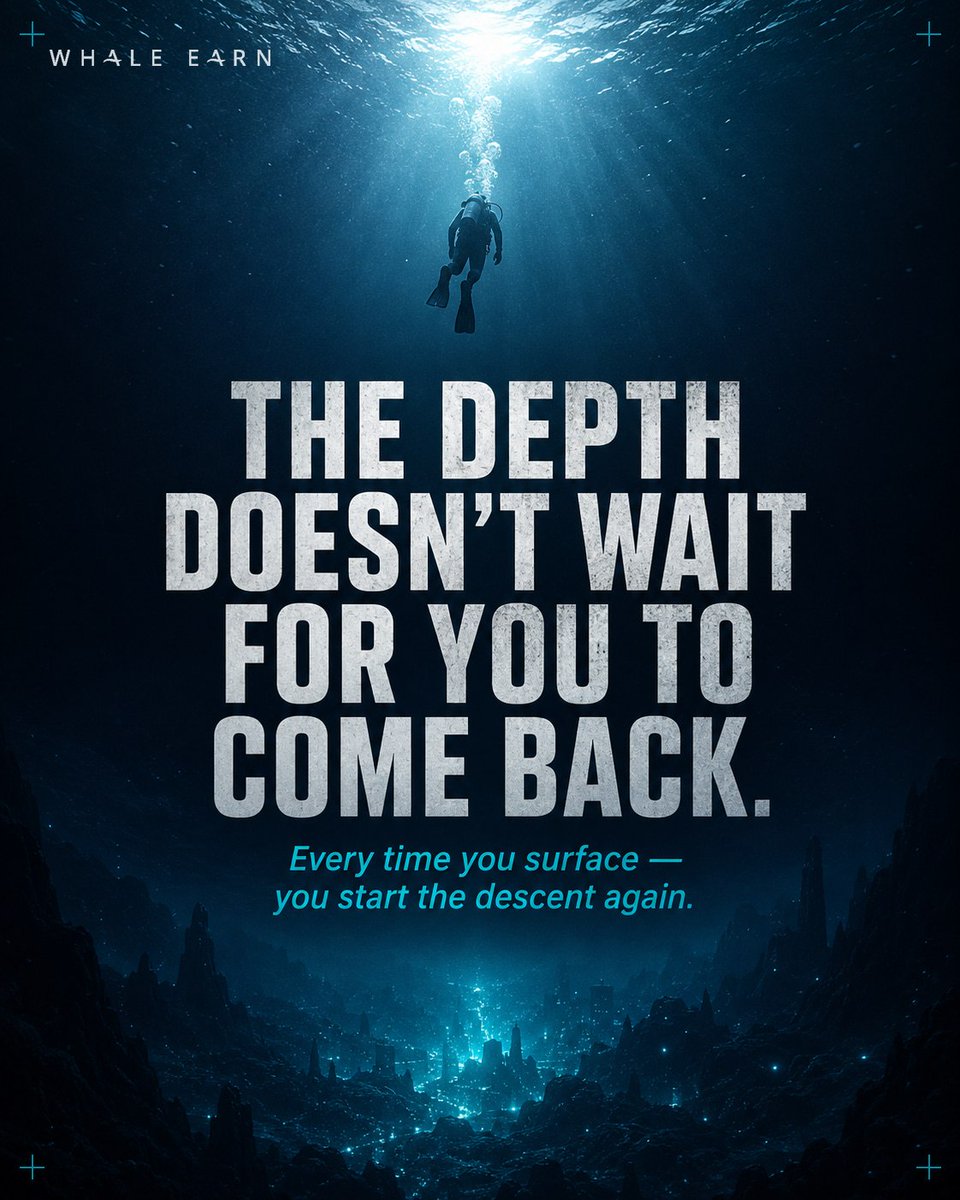
Don't check your depth every hour. A diver who surfaces every ten minutes never reaches anything worth seeing.
Don't compare your position to someone who deposited more.
The leaderboard measures XP.
The ocean doesn't care about wallet size.
Don't withdraw to "see if it works."
The moment you surface the depth you built resets.
You start the descent again from zero.
Don't wait for a better moment to go deeper.
The pressure doesn't get easier.
It gets more familiar.
The platform doesn't need you to do anything clever.
It just needs you to stay below the surface.
That's the entire strategy.
Four people...
Different backgrounds. Different eras of crypto.
Different reasons for being here.
One thing in common 👀
They all saw the same problem from completely different angles and ended up in the same room
in Abu Dhabi in 2023.
What happened in that room
opens tomorrow.
Backed by those who believed
before there was proof:
Roboto Ventures · Fabric Ventures
Framework · Wintermute · Amber Group
Brevan Howard Digital · Coinbase Ventures
https://t.co/jBlMWirpb9 - June 1.
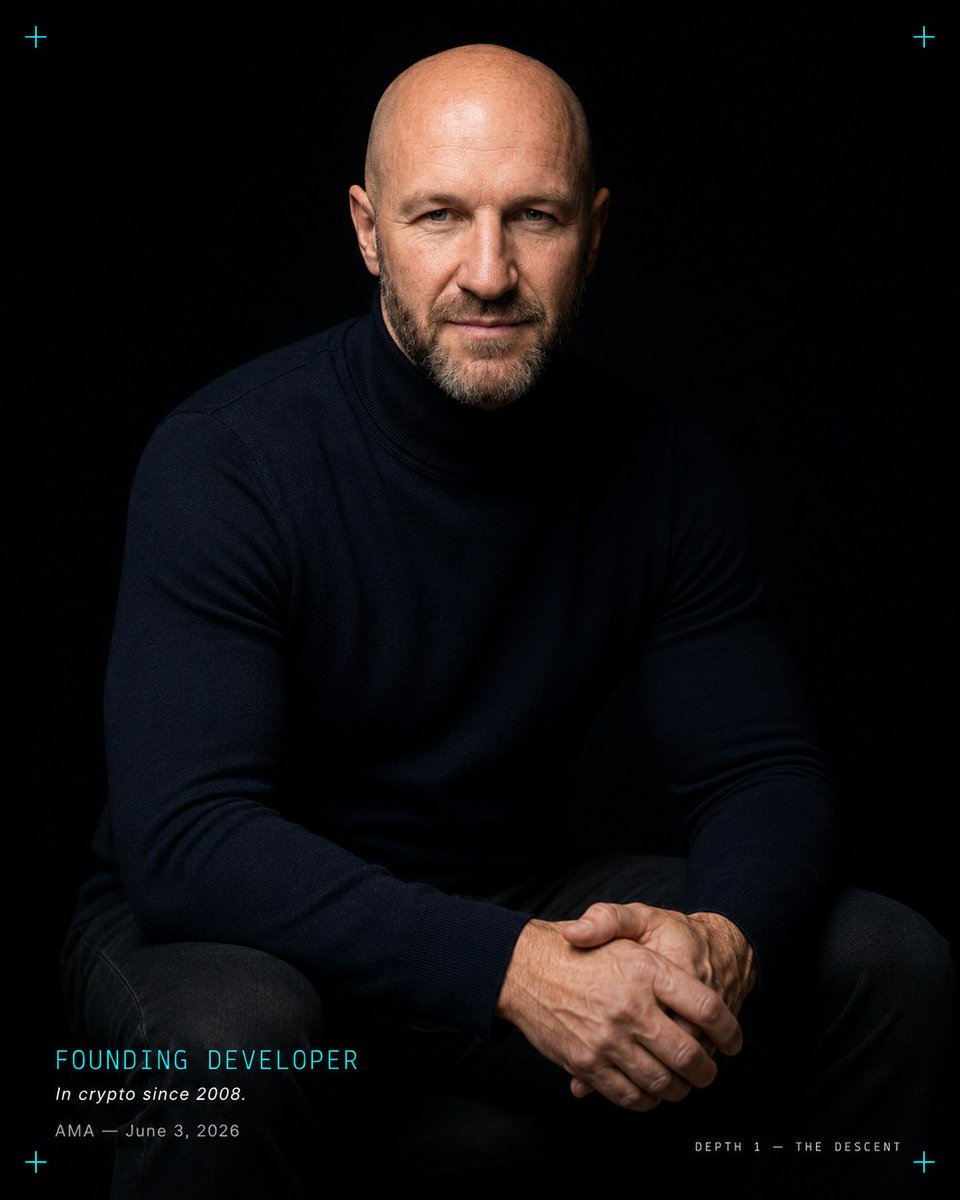
We sat down with one of Whale Earn's founding developers.
He's been in crypto since 2008.
He doesn't do interviews often.
This is what he said. 👇
I've been in this space since 2008. Before exchanges. Before apps. Before anyone called it crypto.
I've seen everything that promisedto change finance.
Most of it disappeared.
Some of it destroyed people's lives.
A few things - quietly, without noise - actually worked.
The ones that worked shared one thing:
You could verify the structure without trusting the team.
That's what we built into Whale Earn from the first line of code. Not because it sounds good in a deck.
Because I watched what happens when you don't.
To everyone who found this early -
I hope this gives you something that actually lasts.
That's why we built it.
Built since 2023. Opening June 1.
Since the beginning, there have been signals.
Some were obvious.
Most weren't.
Tomorrow - a log entry that explains everything.
If you've been paying attention - you already know more than you think.
ping: 0-0-12
Something we've been working on.
The full story of why Whale Earn exists - and where it's going.
From the first time humans tried to store value.
To where intelligence meets yield.
Part of what's coming after June 1.
Watch until the end. 🎬
On June 1, Whale Earn opens with 15 assets.
USDT. And 14 others.
Why does this matter?
Because your XP grows regardless of which asset you stake.
You're not choosing between rewards.
You're choosing your depth strategy.
Some assets suit flexible staking.
Some suit locked periods.
Some suit a long-term position.
15 assets. One ecosystem.
One XP system across all of them.
Your depth - regardless of what you hold.
Whale Earn × Ocean Protocol.
Ocean Protocol built the infrastructure
for data ownership in Web3.
Your data. Your rules. Your reward.
In a world where Google and Meta built billion-dollar businesses from your data without asking - Ocean Protocol created
the alternative.
Decentralized. Transparent. Owned by you.
Two ecosystems. One direction.
What intelligence needs - Ocean has.
Where intelligence earns - Whale Earn builds.
Deeper. Together.
Most leaderboards work the same way - the biggest wallet wins. Everyone else watches from the bottom and pretends they don't care. That's not competition. That's a wealth display...
The Whale Earn leaderboard measures something different.
XP is earned through daily activity - logins, quests, chests, consistent staking, referrals that actually participate. And here's where it gets interesting.
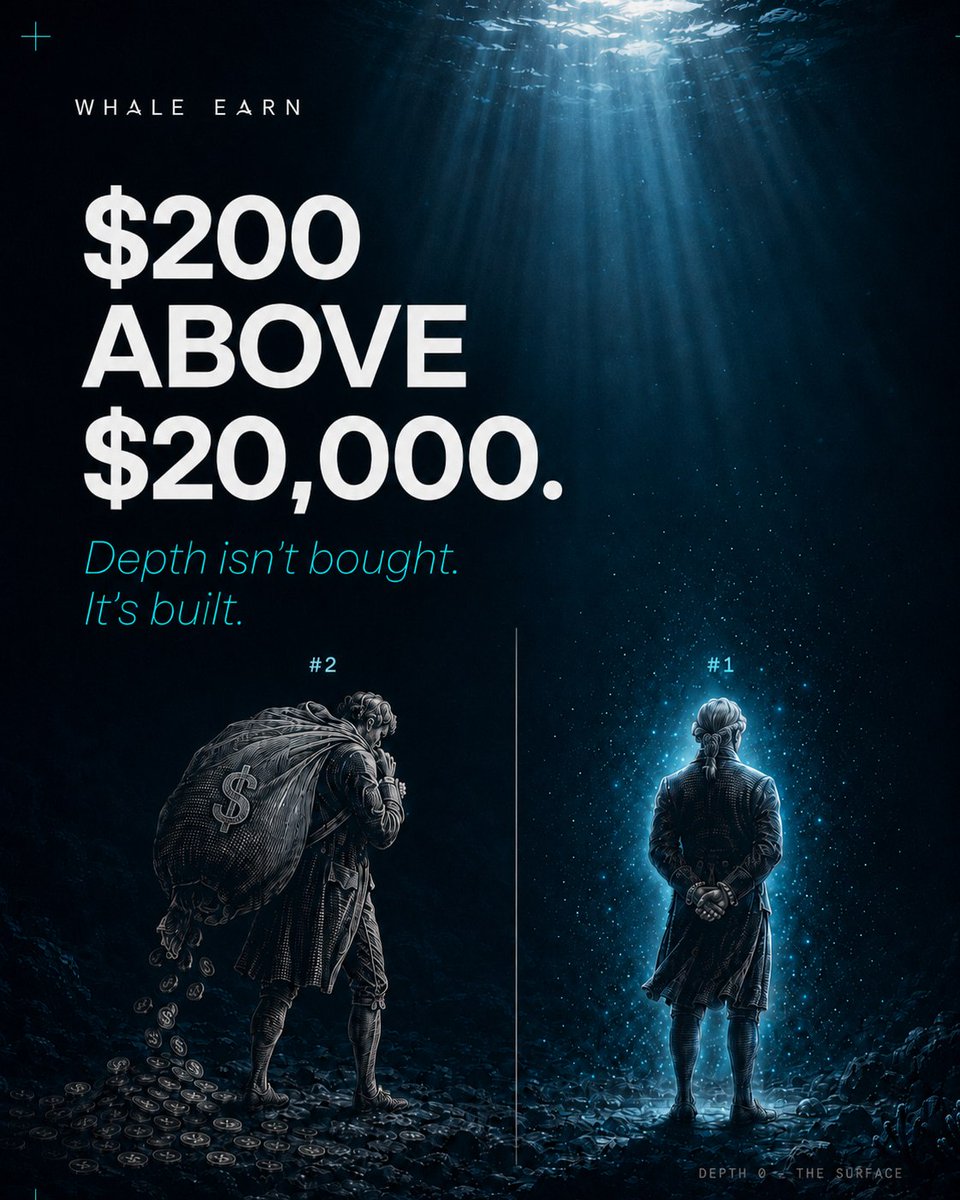
Someone with $200 who shows up every day and completes every quest can rank above someone with $20,000 who deposited once and disappeared.
$200 above $20,000.
Not because the system is broken. Because the system is honest. 🎯
Two leaderboards run simultaneously:
- Individual ranking by personal XP acros all participants
- Team ranking by combined group depth
The top positions don't go to the wealthiest. They go to the most committed. 🌊
When was the last time a financial platform gave everyone that kind of chance?
Referral programs have a bad reputation. Understandable...
But let's look at the facts? 👀
Binance generated over $1.2B in referral rewards to users in 2023 alone.
Coinbase has run referral campaigns since 2014 - one of the first in the industry.
OKX, Kraken, Bybit - every major exchange in the world uses referral programs.
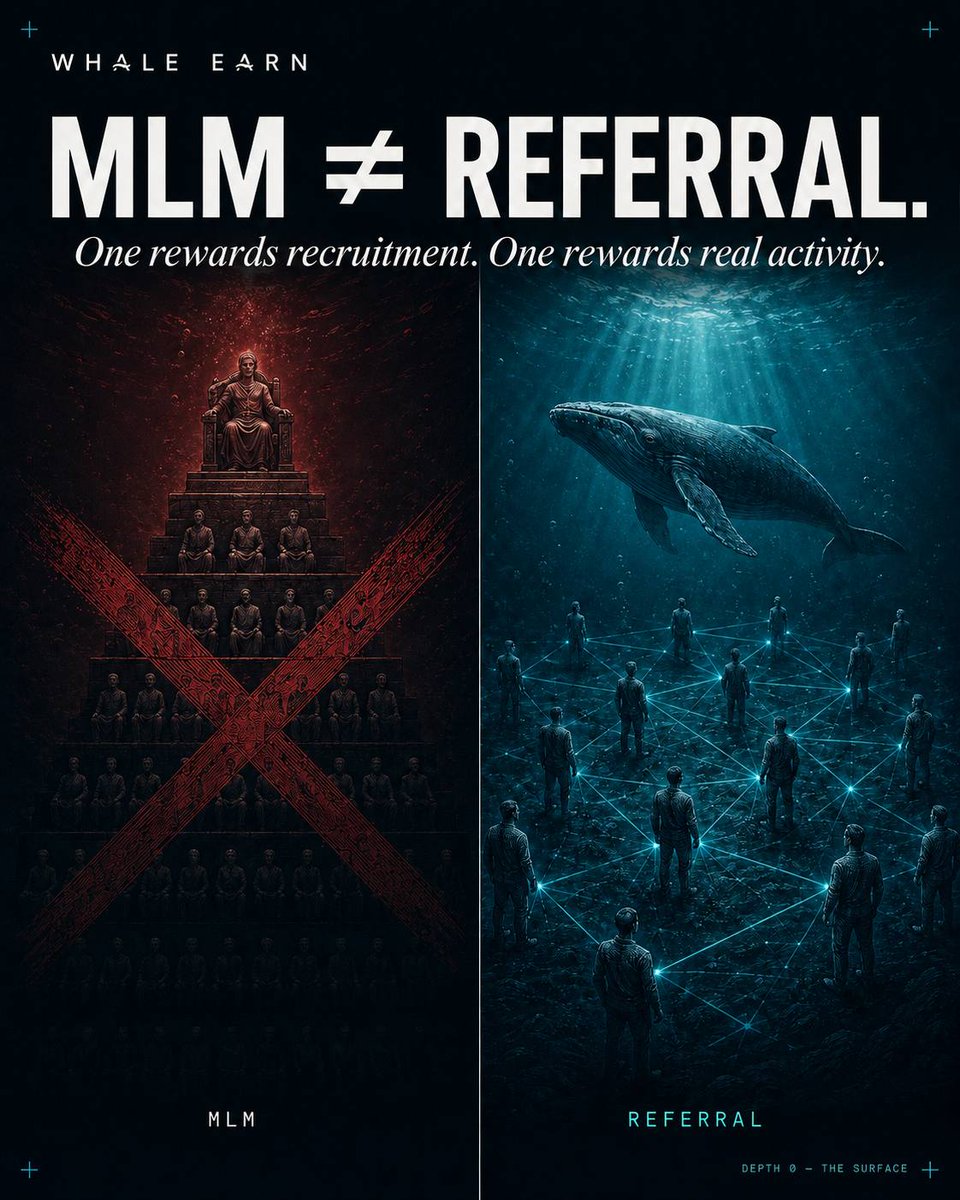
These are not pyramid schemes.
These are customer acquisition tools that reward real users for real activity.
So what actually separates a referral program from a pyramid?
In a pyramid 🔺 the product is irrelevant.
Money flows from new recruits to existing members. When recruitment stops - it collapses. Always. Without exception...
The last people in lose everything....
In a referral program 🌊 the product has to actually work.
Your reward comes
from your friend's activity - not from the fact that they signed up.
No activity, no reward. Simple as that.
The math is honest. The structure is transparent.
The product has to stand on its own.
There's one question that reveals everything about any opportunity :
"What happens when no new people join?"
A real product keeps running.
A pyramid disappears overnight.
Which one would you rather be part of? 👇
You see these two letters everywhere...
APR. APY.
Most platforms use them
interchangeably hoping you won't notice.
They are not the same thing.
APR - Annual Percentage Rate. Simple interest. 🤔
$1,000 at 12% APR = $120 at the end of year. Paid once. No compounding.
APY - Annual Percentage Yield. Compound interest. 👀
$1,000 at 12% APY = $127 at the end of year. Because your earnings earn earnings.
The difference seems small at first.
At $10,000 over 5 years
APR: +$6,000
APY: +$7,623
At $50,000 over 10 years
APR: +$60,000
APY: +$93,000
Same rate. Very different outcome Always ask which one.
Always.
June 1. Here's exactly what opens.
Staking 🐋 15 assets from day one. USDT and 14 others.
Flexible or locked.
30 / 90 / 180 / 365 days.
XP System.
Every action earns experience.Every day you show up - it compounds
10 Tiers!
Plankton → Megalodon.
Each one earned. None bought.
Chests.
Bronze. Epic. Legendary. Mythic. One every day. Forever.
Quests.
Always a next step. Always a reason to come back.
Leaderboard.
Who's deepest. Updated live.
Referrals.
Bring someone in. The ocean remembers.
Achievements.
Permanent. Visible. Yours.
This is Phase 1.
Phases 2 and 3 are already being built.
10 days…. 🐋
Specimen 06 / 10 - Blue Whale
The largest. The quietest.
The most patient.
The Blue Whale doesn't hurry.
It doesn't need to.
At this depth, time works differently.
Every day compounds.
Every week builds.
Every month the gap widens
between those who stayed
and those who didn't.
Most never reach Blue Whale tier.
Not because it's impossible.
Because it requires what most
aren't willing to give.
Time.
Habitat - -1000 to -8000m
Behavior - endures. compounds. outlasts.
Depth status - the weight of the deep
https://t.co/jBlMWirpb9