😀👋 I'm Beth, a 'crossover researcher' in geoscience, communication, and disaster risk reduction. I study how people live with natural hazards in an effort to live more sustainably on this fantastic planet. 🌋🌎 #SciComm#HazComm
And if you missed it live you can now watch it at x2 speed while you do your dishes! Feedback and thoughts are very much welcome—and encouraged. How can we improve use of scientific information for risk reduction?
Big thanks to @SZ4D1@SZ4Grads
https://t.co/0bDYzG2lyF
📣Calling students and early career scientists! Apply now to the US & Chile Exchange Program. Conduct research in the partner country // Collaborate with international scientists // Form long-term scientific relationships!
https://t.co/rCTBOOAUbY
The @SZ4Grads webinar series is back! This season will feature presentations in English & Spanish.
Today 11AMPT: Beth Bartel will discuss how understanding evacuation behavior can inform geoscience questions: Fuego volcano, Guatemala.
Get your Zoom link: https://t.co/vVvNQa6ZBp
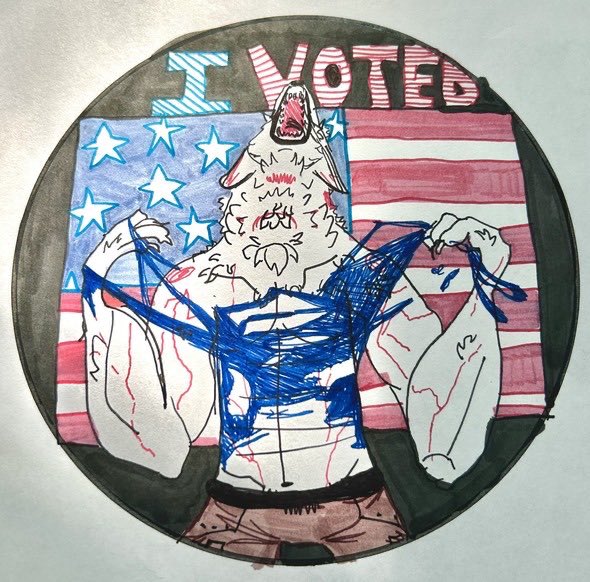
Personally lobbied for this sticker with my City Clerk. If there is ever a year to have an unhinged werewolf ripping its shirt off as the “I Voted” sticker…it’s 2024.
A group of us have been working to adapt our 2021 @EGU_NHESS paper (https://t.co/dz2eGBwyqx) into an open-access eLearning course.
The initial version (feedback welcome!) is now live...
https://t.co/5YPjLYLUMg
It aims to help natural hazard scientists better contribute to DRR.
Terrifying when you see your home region called out in the national news for being unprepared. It’s true though, and will continue to be unless we invest in safety infrastructure.
Comments from colleagues @geosmx & Corina Allen https://t.co/CP6p6mftV3
Not all guided tours consider the true risk of your adventure. Fuego volcano, Guatemala is a case in point.
[Incl. commentary from Matt Watson, Ailsa Naismith, Roberto Mérida Boogher.] https://t.co/wlLF03LHtV
@nickgraehl That’s such a good example of competing (or in this case just multiplied) risks. The guides are subjecting themselves repeatedly to all those hazards—and both the guides and robbers are driven by financial opportunities afforded by the tourists to take on risks.
@geosmx @MoldyProton That’s partly what makes this so interesting! Would be cool to see this for classes all across the country to see how they compare. It would also be good to know where people are from. I suppose a survey of high school students would probably get at the place factor better.