One thing I’ve always found strange about crypto is how proving a transaction is legitimate often means exposing far more information than necessary.
Why should someone need to see your balance, transaction history or financial activity just to verify that something happened correctly?
That’s one of the problems we’re exploring with Lacuna.
Zero-knowledge proofs make a different approach possible: proving that something is valid without revealing all the sensitive information behind it.
To me, that’s an important part of making crypto more practical for everyday use.
We’re building Lacuna around that belief.
Privacy shouldn’t come at the cost of verification. And verification shouldn’t come at the cost of privacy.
In conventional blockchain transactions, information about your financial activity is often publicly visible.
Zero-knowledge cryptography introduces a different approach.
Instead of exposing all the underlying information,
you can prove that an action is valid without revealing the sensitive details behind it.
this is one of the tech powering lacuna
Through zero-knowledge cryptography and its shielded pool,
We are building a way for users to carry out on-chain activity while keeping their balances and transactions confidential.
The network can still verify activity, while the sensitive information behind that activity remains protected.
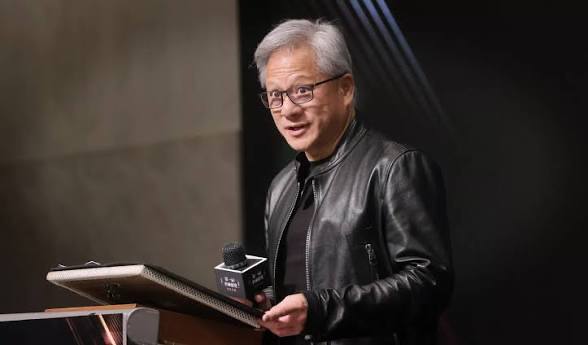
Here is a man who has helped reshape the computational foundations of the modern world.
Yet the details of his private life now command more attention than the decades of work that earned him that attention in the first place.
That inversion says more about us than about him.
We have a reflex for elevating people to near-mythic status, then treating their first visible flaw as proof the myth was a lie. It never was.
Greatness was always attached to a human being, and human beings are inconsistent by nature.
Brilliance in one domain guarantees nothing about conduct in another.
Someone can be extraordinary professionally and deeply flawed personally.
There’s a difference between being able to verify a financial system and being able to inspect everyone’s personal finances.
Public blockchains are powerful because transactions can be independently verified.
But making every balance, payment, and financial relationship permanently visible creates problems for everyday users and businesses.
We want to make privacy a standard part of using crypto.
Through a mobile-first, non-custodial wallet powered by zero-knowledge proofs and shielded pools
We’re working toward a future where people can transact privately without sacrificing control of their assets.
And with selective disclosure, users can still choose when to prove relevant financial activity.
A bear market is for traders to navigate, not builders to disappear.
Markets move in cycles. Sentiment changes, liquidity returns, and good times come around again.
Our job is to keep building, keep shipping, and keep improving while the noise fades.
When the market turns, the builders who stayed consistent will be ready.
@LacunaLabs isn't building for one market cycle. We're building for the long run.
@vladtenev hey vlad
any planning to bring ipo onchain
it will be epic if robinhood bring the anthropic ipo directly on the robinhood chain & will kickstart another season on robinhood
Fable 5.2 is out: up to 30% faster output, lower price, and a thousand-agent team that formalized Fermat’s Last Theorem.
Agents are about to do real work and move real money. They’ll need private rails to do it on.
That’s the part we’re building at @Lacunalabs.
Introducing Claude Fable 5.2 and Claude Mythos 5.2, designed to tackle the most daunting technical challenges.
They’re capable collaborators on ambitious projects in many fields, and show improvements in areas like coding, reasoning, and vision.
So let me get this straight.
The CEO of the most important chip company on earth was, allegedly, the target of a foreign intelligence op. Not through a zero-day. Through dinner.
Now there’s a board investigation, an apology email, and a stock down 4% in a day. All because one man’s private life turned out to be less private than he thought.
Everyone’s asking the same thing: how can someone that smart be that exposed?
Friend, have you looked at your wallet?
Every swap, every transfer, every bag you’d rather forget. Public forever, searchable by anyone with a browser. No spy required. No dinner either.
In crypto we accept a level of exposure that would end careers anywhere else, and we call it “transparency.”
That’s why we’re building @Lacunalabs. Not because people have something to hide. Because everyone has something to lose.
Privacy is needed everywhere: boardrooms, wallets, group chats.
And no sarcasm on this part: the person I feel for is his wife. She didn’t take the meeting, didn’t sign anything, didn’t opt in to any of it, and still got the whole story by push notification. I hope she has good people around her.
@vladtenev As AI agents become economic participants, financial privacy becomes even more important.
The future isn't just autonomous finance. It's private autonomous finance.
Building towards that future with @LacunaLabs.
Expanding on why I believe "ETH as store of value (SoV)" makes much more sense to focus on than "ETH as fee-burning token".
Three primary reasons:
1. ETH as fee-burning token never was as strong as it seemed
2. Optimizing for ETH as fee-burning token would demand Ethereum and ETH function in ways that are very hard to make compatible with decentralization and capture resistance.
3. Meanwhile, optimizing for ETH as SoV is aligned with Ethereum focusing on its unique strengths (decentralization and CROPS)
EIP-1559 (including its burn) is fine and good, we should keep them. But we should not feel sad if fee burn is < 10% of breakeven indefinitely; the value of ETH comes from elsewhere.
The core idea: the big thing that people appreciate about Ethereum is decentralization and CROPS. The main pragmatic benefit that these things translate into is stability. SoV is the category where that is not an unneeded extra we merely put effort into for ideological reasons, but rather a pragmatic strength from the perspective of people putting in their assets. And in the era of AI disruption, stability will be highly valued.
SoV only works if holding is safe from more than price. Right now anyone can read every wallet’s balance and history on Ethereum, which is a strange property for an asset people are supposed to park wealth in.
The P in CROPS is the one L1 under-delivers on most. Privacy pools, stealth addresses, and client-side proofs all exist; none are default. Making them default is what turns “decentralized” into “stable enough to store value in” for people who aren’t here for the ideology.
(Working on one piece of this at @LacunaLabs.)
@0xeddiekim Agreed, that’s the plan. Owner-flagged allowlist on-chain, and the wallet shows exactly that warning before a shield into any mint with a live freeze authority. Privacy is the pool’s promise; withdrawability of a freezable token is the issuer’s, and we’ll say so.
1/
@LacunaLabs is a wallet with a privacy pool built in.
Shield, send privately, swap privately, unshield to any address. Zero-knowledge proofs, built on your device. Solana and EVM.
Here’s what’s under the hood 🧵
Good catch-no, it doesn’t, and it should. The check only inspects Token-2022 extensions and passes classic SPL mints through untouched. A live freeze authority on a legacy mint can freeze the vault ATA just like you say.
The fix is straightforward: reject any mint with freeze_authority.is_some() on shield, same for mint_in/mint_out on swaps. We’ll ship it and note it in the changelog.
Honest trade-off to flag though: that excludes USDC, USDT, and most stablecoins, they all keep a freeze authority. We’ll likely gate it per-token rather than hard-block, with the risk stated in the UI. Open to opinions on that.