We are the first open-access Chinese education research journal in English, publishing impactful and cutting-edge education research in China and the world.
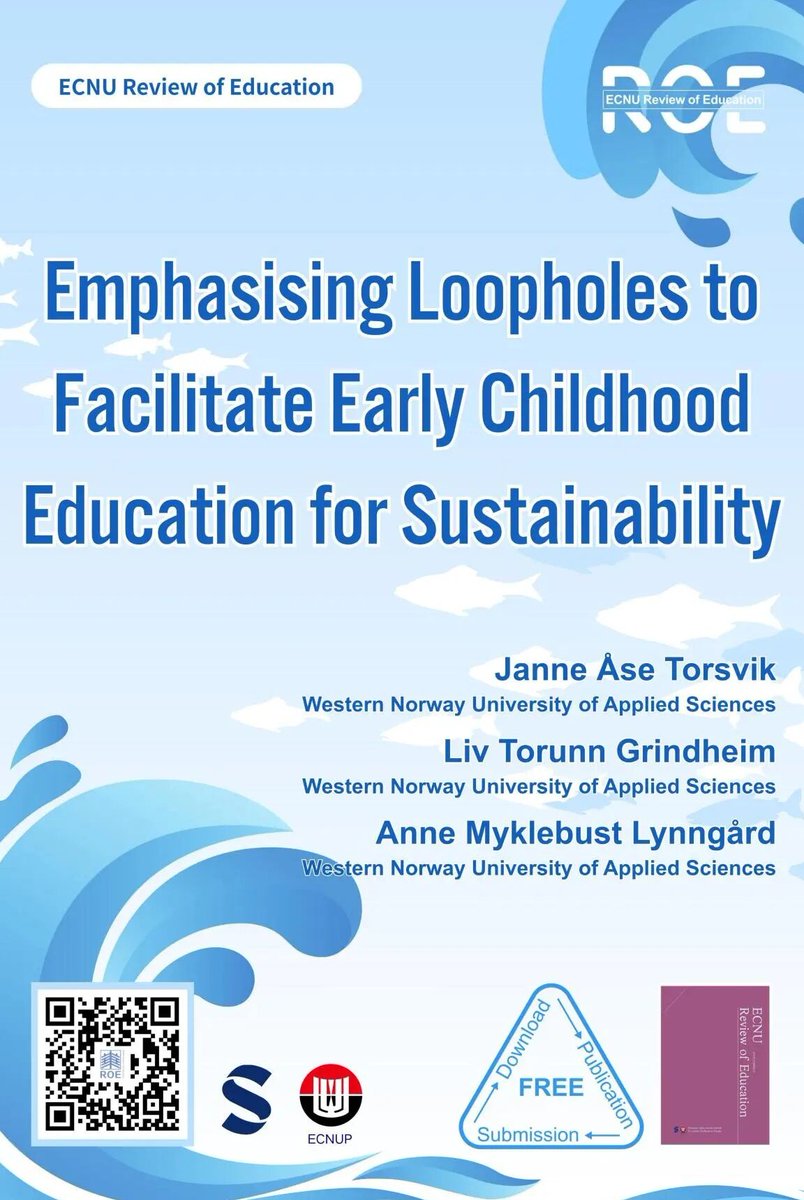
How do young kids learn to care for the ocean?
This ROE study by Torsvik and colleagues @HRehablab follows Norwegian children and teachers exploring the seashore together.
Play and curiosity create "loopholes" that turn beach time into real learning.
https://t.co/ThssmxIgH4
#UNESCO #Post2030Education #UNOceanDecade
How do young kids learn to care for the ocean?
This ROE study by Torsvik and colleagues @HRehablab follows Norwegian children and teachers exploring the seashore together.
Play and curiosity create "loopholes" that turn beach time into real learning.
What if school focused less on beating others and more on finding your unique greatness?
That’s what Prof. Yong Zhao @YongZhaoEd and Ruojun Zhong @EducationYee propose in this ROE article.
Human interdependence over meritocracy.
This ROE study reopens Fukuyama's "End of History" @FukuyamaFrancis with an AI twist, by Yilei Shao @ECNUER.
Technology is racing ahead while governance lags.
So education has to act as new infrastructure for a world run by humans and machines together.
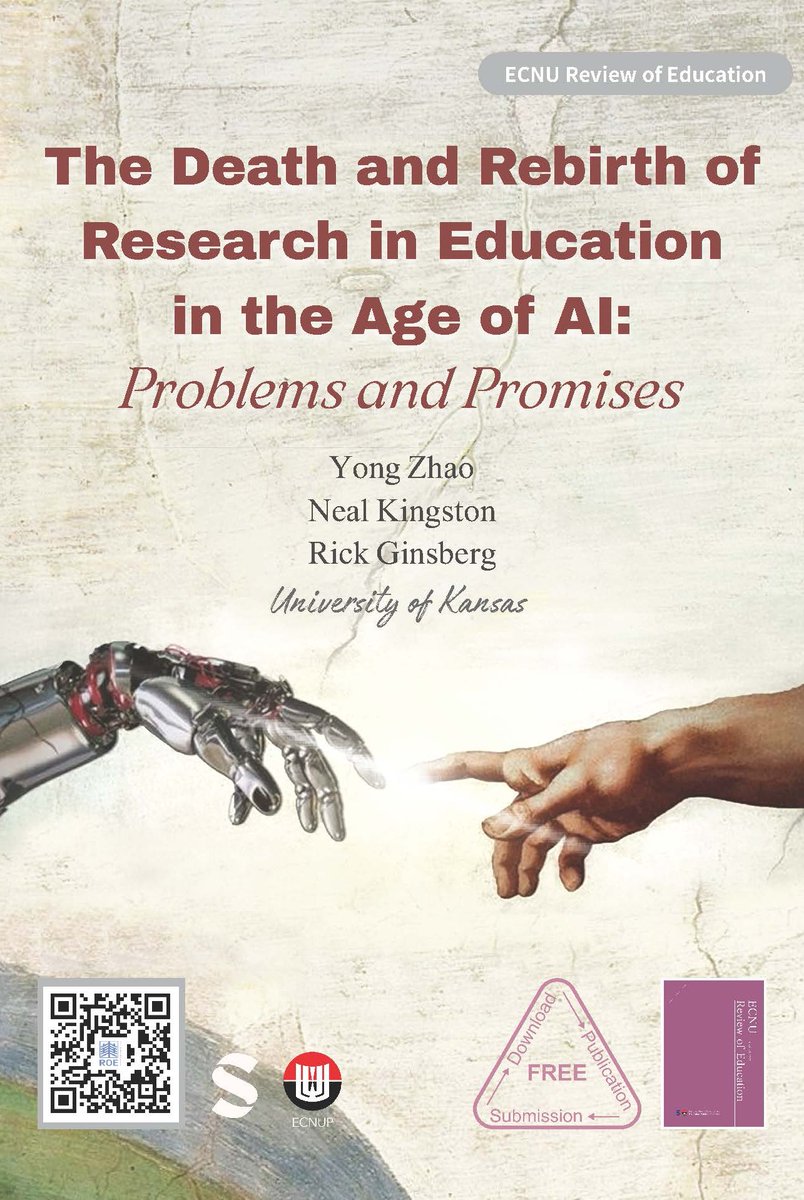
AI is shaking up how we do research.
Yong Zhao @YongZhaoEd, Neal Kingston & Rick Ginsberg @RickGinsberg@KUSOEHS explore the death of old methods and a rebirth with new tools, pluralism, and ethical thinking.
Most school reforms want every kid to be the same.
But Ruojun Zhong @EducationYee & Yong Zhao @YongZhaoEd, in this ROE research, offers a smarter way: shared foundations plus personal passions.
A double-helix for real learning.
What if multicultural education didn't copy Western ideas?
In this ROE study, Lisa Yiu @Stanford looks at a middle school in Chinese Taiwan, where teachers use harmony, fairness, and whole-person growth to help diverse students thrive together. A fresh, East Asian take.
Too much pressure from school and extra classes?
China tried a bold fix. This ROE research examines the "double reduction" policy—its early wins and tough hurdles, by Licui Chen & Shuangmu Lin @ZJU_China.
A rare look at real reform. Read it.
Can teacher training really improve how teachers interact with young kids?
This study by Chunhong Han and colleagues @ECNUER@BNU_1902@CUHKofficial ran a randomized trial in Shanghai.
The result: better emotional and instructional support in classrooms. Evidence that works.
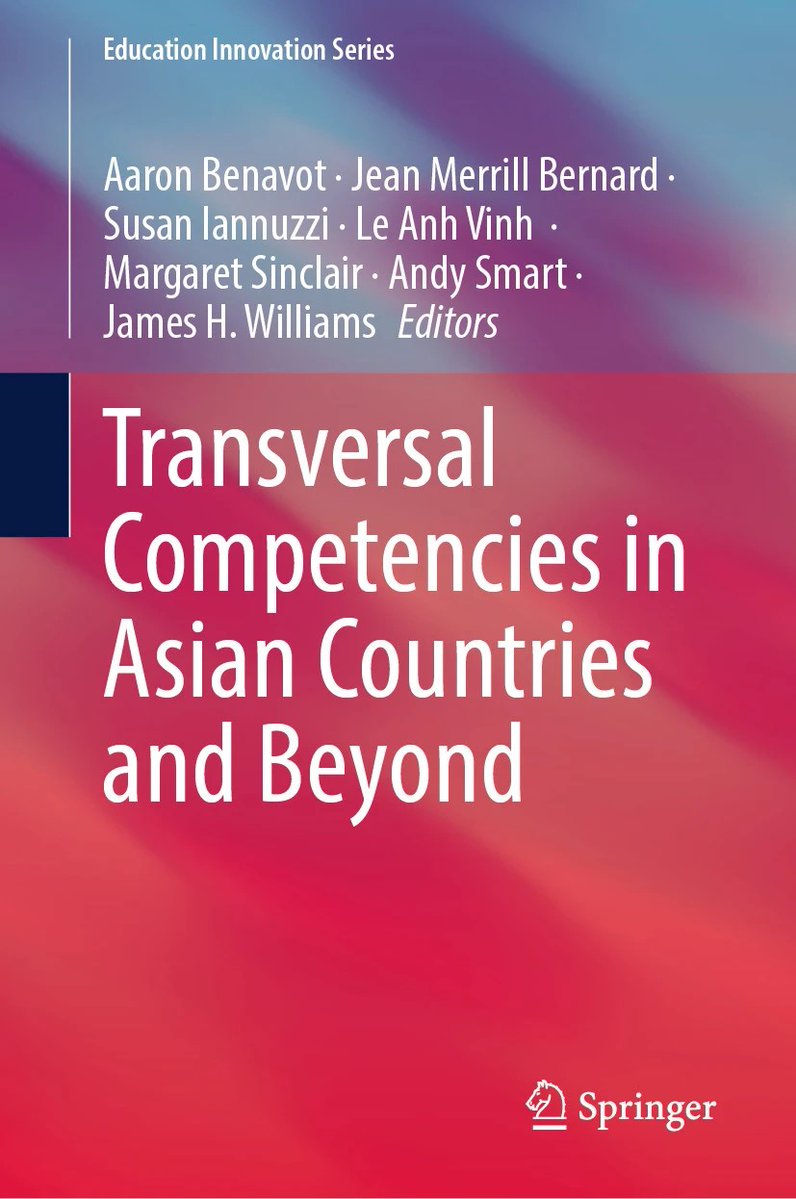
📣Congratulations to Aaron Benavot @BenavotAA & colleagues on two new books exploring how education can build key competencies and support more resilient futures.
Read more:
1⃣https://t.co/gsoNGzaduI
2⃣https://t.co/WEZiNSL4WN
Most AI talk tries to fit new tech into old school rules.
This ROE study by Prof Yong Zhao @YongZhaoEd says: stop that. Imagine education built around student-driven learning and real problems instead.
No more one-size-fits-all.
Smart classrooms promise better learning, yet this ROE study by Yahui Chang et al. finds a hidden cost @SNNUChina@waynestate.
Constant digital monitoring can make students perform, crush real interaction, and silence their voices.
Technology isn‘t always a friend to curiosity.
Can training preschool teachers in social-emotional learning make a difference?
Yes, says this ROE study by Lasi and colleagues from @AKUGlobal and @BallState.
In Pakistan, kids showed fewer peer problems and more prosocial behavior, and classrooms became more supportive.
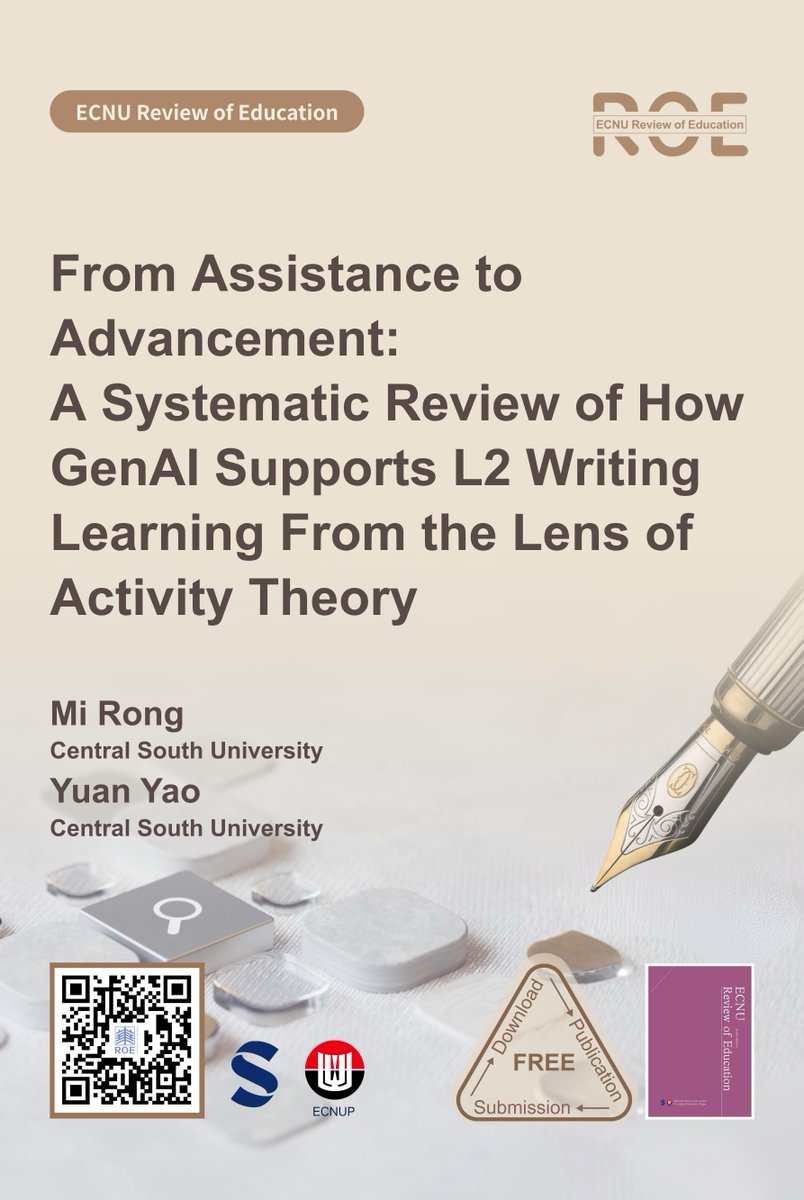
How does GenAI really help people write in a second language?
This ROE review of 55 studies breaks down the roles of tools, rules, and teamwork, by Mi Rong & Yuan Yao.
Turns out, AI can be a great partner—but it comes with tricky side effects too.
Students don't let AI do all the thinking.
Haoming Lin @haoming_lin, Wei Wei @weiweiresearch & Fulan Liu find that when revising critical reports, learners focus on key areas like research quality and evidence—showing smart, selective use of AI tools, not blind trust.
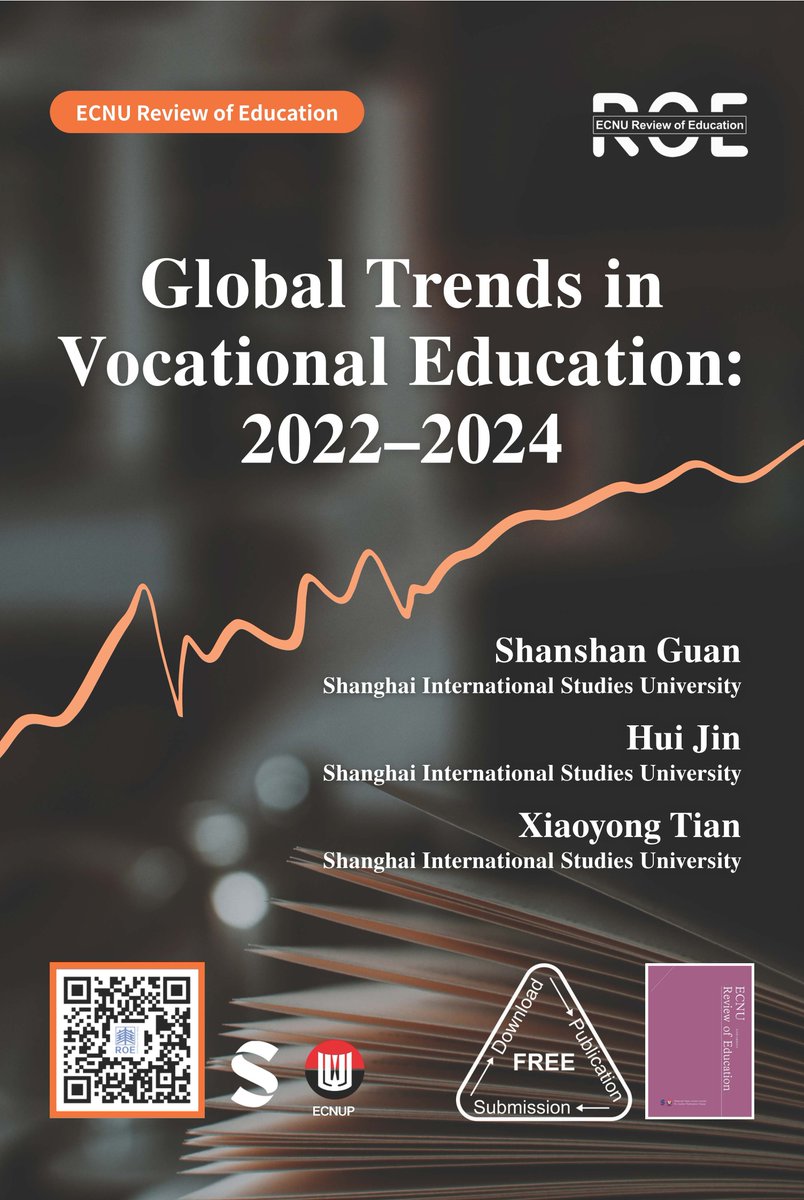
What's next for job training?
Shanshan Guan, Hui Jin & Xiaoyong Tian @SISUShanghai highlight ten big shifts in vocational education—from AI in classrooms to green skills and stronger school-industry ties.
These changes show how job training is evolving for a new economy.
Even top-performing education systems like Finland and Hong Kong struggle with student stress.
This ROE study by Xiya Feng and colleagues @PhilipL66006643@FEHD_EdUHK@EPL_EdUHK maps the research and calls for better ways to compare well-being across different school cultures.
China’s "double reduction" policy limits homework and tutoring to ease student stress.
Licui Chen & Shuangmu Lin @ZJU_China look at its promise and challenges in this ROE study.
Can it truly balance quality and equity?
Meritocracy sounds fair but Prof. Yong Zhao @YongZhaoEd and Ruojun Zhong @EducationYee say it actually harms learning.
Ranking kids by narrow tests ignores jagged talents.
Time to move toward human interdependence and real collaboration.
AI is moving faster than our rules and laws.
Yilei Shao @ECNUER calls it a “legitimacy gap” in this ROE research.
The fix? A dual reconfiguration of education to build trust in human–machine society. Read how in ROE.