Sustainability & circularity for better business decisions.
We turn complex environmental data into practical strategies for products, companies & supply chains
Try this 15-minute sustainability audit:
Walk through your workplace and identify:
• One unnecessary energy use
• One source of material waste
• One inefficient process
• One disposable item that could be reused
• One supplier question you've never asked
Then pick ONE to fix
Complete the sentence:
“The biggest misconception about sustainability is ______.”
I'll start:
“That small actions don't matter.”
They do — especially when they become systems.
One useful question for every sustainability project:
“What changes because we did this?”
If the answer is unclear, the initiative probably needs a clearer objective.
Sustainability reporting isn't the same thing as sustainability.
A beautiful report can't compensate for:
❌ rising waste
❌ inefficient operations
❌ poor supplier practices
❌ vague targets
Reporting should document progress.
It shouldn't become the progress.
Want to identify quick sustainability wins?
Look at these five areas first:
Energy
Water
Materials
Transport
Waste
Don't start with a 100-page strategy.
Start with the obvious inefficiencies.
Sustainability and profitability aren't automatically opposites.
Reducing:
→ energy use
→ material waste
→ unnecessary transport
→ resource consumption
can also mean reducing costs.
The best strategy often improves both.
���Sustainable” doesn't automatically mean “better.”
A solution should be judged by its full lifecycle, not its marketing label.
Ask:
Where did it come from?
How was it produced?
How long will it last?
What happens at the end?
Labels are useful. Analysis is better.
The human toll of air pollution is staggering.
And it's only part of the picture. Air pollution also increases healthcare costs, reduces productivity, and places a growing burden on economies.
#CleanAirDay should be every day for healthier people and stronger economies: https://t.co/RmbQ7CMOXr
2 billion people around the world still lack safe drinking water.
Clean water is a human right.
Get ideas on what #WaterAction you can take.
@UN info ➡️ https://t.co/cE0UZlCXFo
How much is 2.5 mill. hectares?
- About 1.2 times the size of Wales
- About 82% the size of Belgium
- Roughly the size of North Macedonia
or
- Equivalent to around 3.5 million standard football pitches
In Saudi Arabia, one of the world’s most ambitious restoration project is on the way: the goal is to restore 2.5 million hectares of land by 2030.
How is it possible? Find out more about this newly awarded #GenerationRestoration flagship by @SGISaudi:
https://t.co/sFvCQeqo9e
Before launching another sustainability initiative, score it from 1–5 on:
• Environmental impact
• Financial impact
• Cost
• Implementation difficulty
• Measurability
Prioritize the initiatives with the strongest overall case.
Simple ≠ simplistic.
What's harder for organizations trying to become more sustainable?
A) Knowing what to do
B) Getting leadership buy-in
C) Finding the budget
D) Measuring results
Curious what you're seeing.
A simple way to think about sustainability:
Measure → Prioritize → Act → Measure again.
The mistake?
Spending months measuring everything and never getting to the “act” part.
Unpopular opinion:
Recycling shouldn't be your company's sustainability strategy.
First ask:
Can we avoid the material?
Can we reduce how much we use?
Can we reuse it?
Only then: can we recycle it?
The best waste is often the waste you never create.
Sustainability doesn't have to mean doing everything at once.
Start with the actions that have:
→ High impact
→ Reasonable cost
→ Clear ownership
→ Measurable results
Sustainable progress beats sustainability perfection.
#ecocyclestrategies#lca#lifecycleassessment
🍂 September is here, and we’re back from the summer with exciting news!
📚 Our #LCA4BIO partner Aalborg University has published a new scientific paper on best practices for comparative LCA of bio-based alternatives to fossil-based products.
🔗 https://t.co/Rxj8Aes4PF
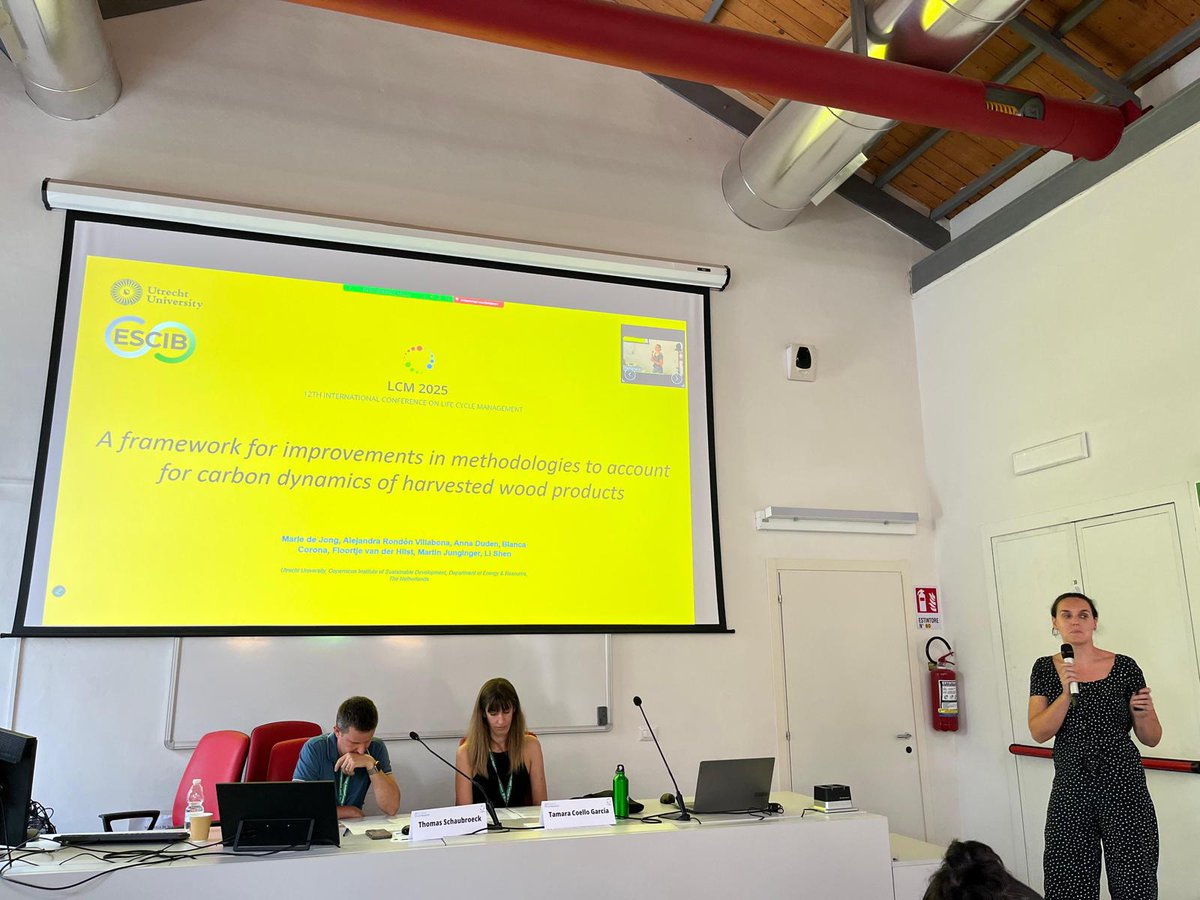
Great to see our #ESCIB project represented at the #LCM2025 conference in Palermo! 🗣️
Kudos to our partners Marle de Jong (Utrecht University) & Muhammad Zeeshan Khan (TUM) for their excellent oral presentations.
#LifeCycleManagement#Sustainability#Research#ESCIB_EU
Jolliet, O., Saade-Sbeih, M., Shaked, S., Jolliet, A., & Crettaz, P. (2015). Environmental Life Cycle Assessment (1st ed.). CRC Press. https://t.co/uiUNCJh2Ip