International think tank focused on protecting people from debanking risks, supporting countries' economic security and advancing Venezuela's reconstruction.
$240 billion is roughly $70 billion more than most analysts assumed. It is over twice the size of our economy and 14 times its 2025 oil revenues.
This number is not realistic. In fact, the $170 billion number is not realistic either, given the complexities of the Venezuelan debt and the country’s reconstruction needs.
Instead of focusing on paying a debt using the cash flows of a country in shambles, we need a framework that ensures the rebuilding of the Venezuelan economy.
Without this step, neither Venezuela will grow nor the creditors will get paid.
The goal here is to make Venezuela investable, governable, and able to pay sustainable obligations without sacrificing the recovery.
We believe the reconstruction of Venezuela cannot be improvised. It requires preparation, expertise, and a generation of leaders ready to act when the moment arrives. Initiatives like this one are how that readiness is built.
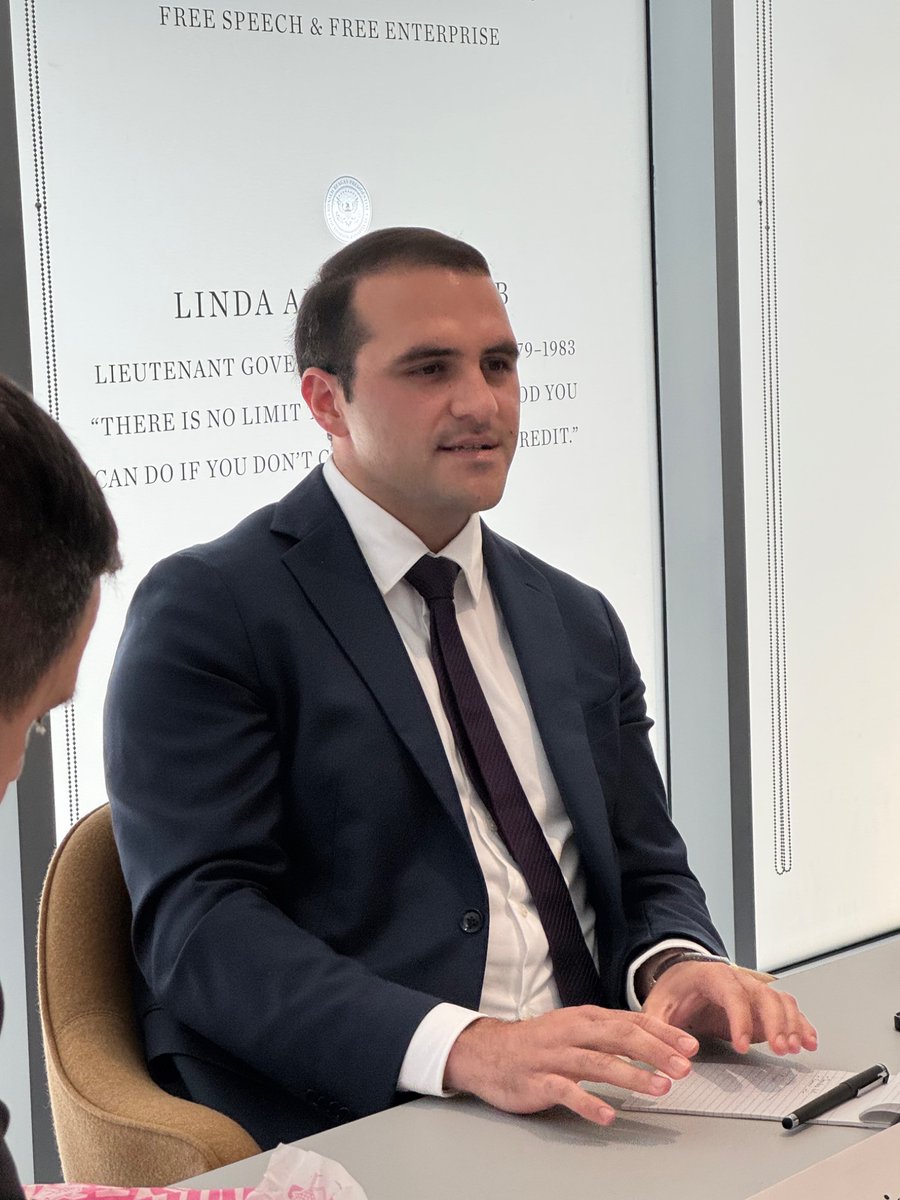
Thanks to the @ReaganInstitute for hosting us, and to every participant who contributed to the discussion
We believe the reconstruction of Venezuela cannot be improvised. It requires preparation, expertise, and a generation of leaders ready to act when the moment arrives. Initiatives like this one are how that readiness is built.
Thanks to the @reaganins for hosting us, and to every participant who contributed to the discussion
Esta semana estoy en Washington:
1. Testificaré ante el Congreso de los Estados Unidos. He sido invitado para explicar cómo los venezolanos hemos logrado superar años de controles financieros gracias al uso de activos digitales como Bitcoin y USDT. Explicaré cómo los Estados Unidos debe incorporar a los activos digitales en sus esfuerzos por avanzar la democracia y el libre comercio a nivel mundial.
2. Co-organizaré un roundtable junto al @ReaganInstitute Será una conversación de alto nivel con jóvenes venezolanos que pueden incidir en la reconstrucción del país, junto a expertos de Estados Unidos y Europa. La idea es gestar soluciones a los grandes problemas del país.
3. A lo largo de la semana, tendré más de 10 reuniones con senadores, congresistas y sus equipos. Conversaremos sobre políticas concretas para el futuro económico y la reconstrucción institucional de Venezuela.
Venezuela necesita construir una red de personas competentes, preparadas y honestas, que entiendan a fondo nuestros problemas y quieran contribuir seriamente a la recuperación del país. Esta semana forma parte de ese trabajo.
Jorge Jraissati @JraissatiJorge : "La mayoría de las restricciones de Venezuela son autoinfligidas" El presidente del Economic Inclusion Group, explica por qué la inversión no llega por decreto y por qué muchas trabas que frenan al capital las creó el propio régimen. https://t.co/1HY6Ywxxez via @incisos
Interview | What can Colombia learn from Venezuela’s experience?🇻🇪🇨🇴
Our Board Chairman, Luis Henrique Ball @ball1_ball, sat down with @GamboaNews to analyze the risks ahead of Colombia’s elections and what’s at stake if the left remains in power.
Full interview ⬇️
https://t.co/UnQDVX7Z6e
Después de tantos años sin luz, es natural que muchas personas se entusiasmen al ver a General Electric en Venezuela.
Pero es importante entender exactamente qué se anunció.
No se firmó un contrato definitivo de inversión. Lo que se anunció fue un Memorando de Entendimiento entre el gobierno venezolano y GE Vernova, la antigua división energética de General Electric que hoy opera como una empresa independiente.
Un Memorando de Entendimiento no equivale a un contrato de inversión ejecutable. Normalmente establece una intención de cooperación y permite avanzar hacia negociaciones más concretas.
La señal es positiva, pero no debe exagerarse. Muestra que empresas internacionales de primer nivel están volviendo a evaluar a Venezuela, pero que es necesario hacer grandes reformas para realmente reactivar la economía venezolana.
Venezuela’s $170 billion debt is twice the size of its economy and 10 times its 2025 oil revenues.
This is why investment banks are lining up to take one of the most complex sovereign debt restructurings in the world.
But behind these $170 billion, there is a lot to unpack 🧵
Lionheart Capital, a Miami-based investment fund is discussing whether to merge its publicly listed affiliate with Keo Energy, a group with oil assets in the Maracaibo Basin in northwestern Venezuela.
The merger would create the first Nasdaq-listed company that would provide US and institutional investors direct access to Venezuelan oil assets.
Venezuela is currently exporting 1.25 million barrels per day.
Out of those, about half is going to the United States, with the other half going to either India or Europe.
Before January 3rd, roughly 80% of Venezuela's oil exports were going to China.
Venezuelan oil accounted for 4 percent of China’s imports, refined mostly in Shandong.
This afternoon, @ball1_ball, Chairman of our Board of Directors, will speak at @CarnegieMellon on Venezuela, oil, and democracy.
Venezuela, beyond being a case of political collapse, it shows how a country with vast natural resources can destroy its productive base, weaken its institutions, and convert national wealth into a mechanism of corruption, dependency, and political control.
Oil does not generate prosperity on its own. What matters is the institutional framework around it: property rights, credible rules, constraints on political power, and the capacity to channel resource wealth into investment, productivity, and long-term growth. When those conditions disappear, resource wealth can deepen fragility rather than reduce it.
Grateful to Carnegie Mellon University and Carnegie Mellon Institute for Strategy & Technology for hosting this conversation.
Europe has produced zero companies worth more than $100 billion in the past fifty years.
During the same period, the United States created six companies worth more than $1 trillion.
If Europe does not fix its energy mix, this situation will get even worse.
🧵
What is the link between the financial system and national security strategy of a country?
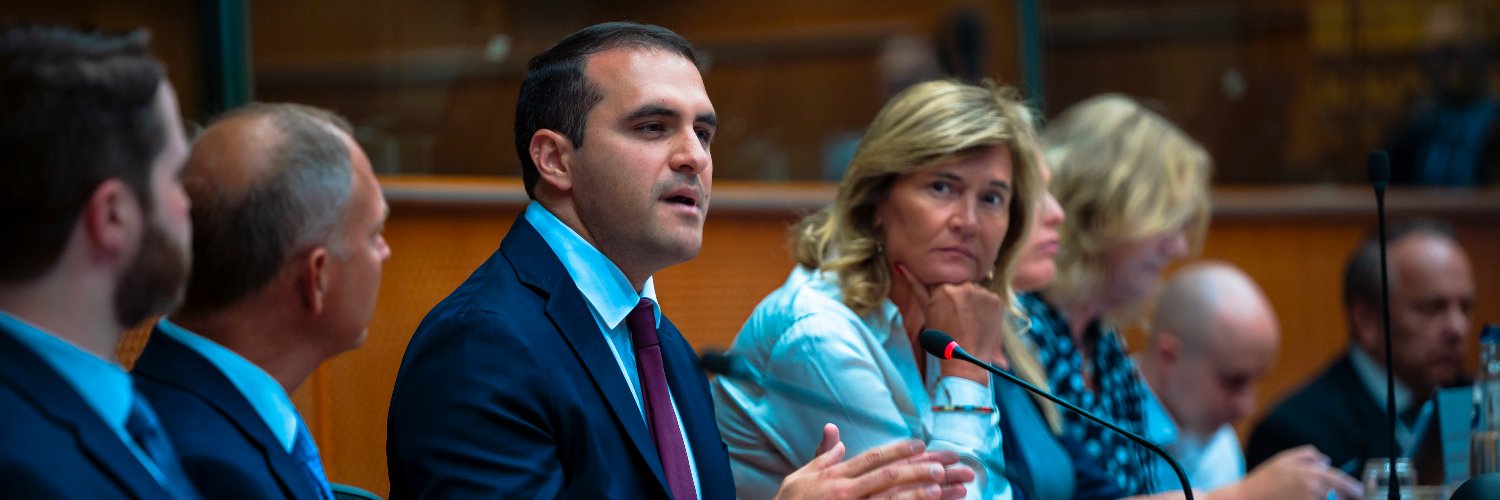
In a partnership with @axelspringer_EN this week we co-organized a roundtable discussion in Berlin with the sole purpose of analyzing this question.
Most policymakers are not aware that a country’s legal system, economic freedoms and political rights can be undermined by foreign states through financial means.
We believe that finding solutions to this issue should be priority #1 for all countries.
It is clear that states cannot uphold their democracy and market economies if their financial systems are vulnerable to foreign interference.
We want to thank @antjeschippmann for hosting us at @axelspringer beautiful journalist club. We are grateful to everyone who participated in our roundtable, including @LyudaKozlovska@RushanAbbas@ahrferrier@mark_turrell@nicolange_@ninsie3
Just returned from the World Economic Forum.
Across several side events, I gave speeches about asset tokenization, shifts in global investment flows, and the concrete challenges to rebuilding Venezuela’s economy.
A few takeaways from Davos 🧵
"I actually try to focus on the real tangible things that the Bitcoin community and investors can get from Venezuela, which is way higher than any kind of confiscated amount of Bitcoin in Venezuela."
- Jorge Jraissati, President @Econ_Inclusion
https://t.co/JfES1Trcre
What does #Venezuela's future look like, and what were the policies that led to its economic collapse?
@JraissatiJorge, President of policy advisory firm @Econ_Inclusion breaks it down for @NTDNews
@iamGermania@iamGermania as our President says: the security of Venezuelan people must at the forefront of the US policy in the country:
https://t.co/Le5HEefqlF
What does #Venezuela's future look like, and what were the policies that led to its economic collapse?
@JraissatiJorge, President of policy advisory firm @Econ_Inclusion breaks it down for @NTDNews
What does #Venezuela's future look like, and what were the policies that led to its economic collapse?
@JraissatiJorge, President of policy advisory firm @Econ_Inclusion breaks it down for @NTDNews
What does #Venezuela's future look like, and what were the policies that led to its economic collapse?
@JraissatiJorge, President of policy advisory firm @Econ_Inclusion breaks it down for @NTDNews