The Arbitrum Security Council has taken emergency action to freeze the 30,766 ETH being held in the address on Arbitrum One that is connected to the KelpDAO exploit. The Security Council acted with input from law enforcement as to the exploiter’s identity, and, at all times, weighed its commitment to the security and integrity of the Arbitrum community without impacting any Arbitrum users or applications.
After significant technical diligence and deliberation, the Security Council identified and executed a technical approach to move funds to safety without affecting any other chain state or Arbitrum users.
As of April 20 11:26pm ET the funds have been successfully transferred to an intermediary frozen wallet. They are no longer accessible to the address that originally held the funds, and can only be moved by further action by Arbitrum governance, which will be coordinated with relevant parties.
We’re fully aware of the rsETH exploit and have been in active remediation with the @KelpDAO team since the incident and continue to monitor. All other applications remain safe.
We are still identifying the root cause alongside @_SEAL_Org and others. We will publish a complete post-mortem with @KelpDAO as soon as we have all information.
Resolv has experienced an exploit that allowed the attackers to mint 50mn of unbacked USR.
The team has currently paused all the protocol functions to prevent further malicious actions and is actively working on recovery.
Earlier today, a user attempted to buy AAVE using $50M USDT through the Aave interface.
Given the unusually large size of the single order, the Aave interface, like most trading interfaces, warned the user about extraordinary slippage and required confirmation via a checkbox. The user confirmed the warning on their mobile device and proceeded with the swap, accepting the high slippage, which ultimately resulted in receiving only 324 AAVE in return.
The transaction could not be moved forward without the user explicitly accepting the risk through the confirmation checkbox.
The CoW Swap routers functioned as intended, and the integration followed standard industry practices. However, while the user was able to proceed with the swap, the final outcome was clearly far from optimal.
Events like this do occur in DeFi, but the scale of this transaction was significantly larger than what is typically seen in the space.
We sympathize with the user and will try to make a contact with the user and we will return $600K in fees collected from the transaction.
The key takeaway is that while DeFi should remain open and permissionless, allowing users to perform transactions freely, there are additional guardrails the industry can build to better protect users. Our team will be investigating ways to improve these safeguards going forward.
Some of our best hires were totally unqualified on paper.
They always had the same qualities: entrepreneurial, high agency, smart, mission aligned, and they got shit done.
If you’re hiring, especially in early stages, seek out & bet on these people. Don’t over-index on resumes.
@trq212@levelsio I don’t think the folks at Anthropic will have time to go back to nerf the models. Just like any startup, there are more important features and bug fixes to be done. Nerfing something is probably not even in the backlog
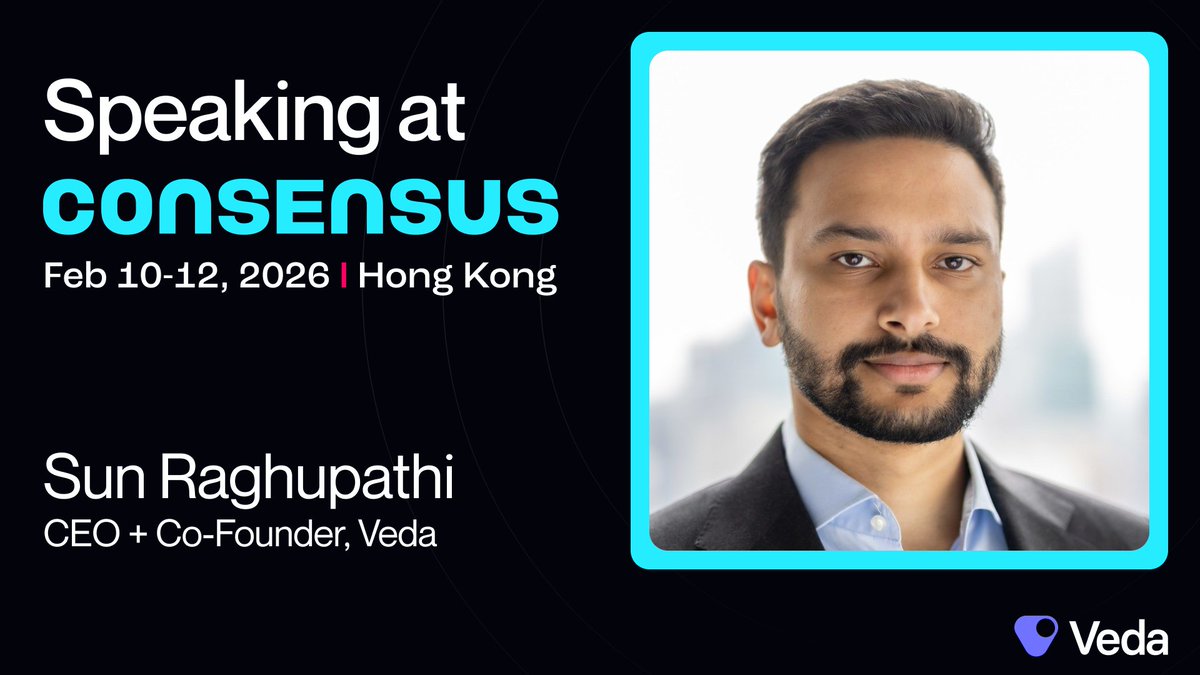
Consensus Hong Kong is coming up fast 🇭🇰🌏
Next week, Veda CEO @sunandr_ will be speaking onstage @consensus_hk, sharing insights on DeFi, vaults, and enterprise crypto:
Okay this is actually really exciting. @veda_labs vault integrating with @krakenfx is a big deal - finally getting proper solutions that don't feel clunky.