Environment Agency staff can no longer respond to “category 3&4” pollution events due to a lack of funding. So how do they assess how serious a pollution problem is? They let whoever reports it guess. Full story in the new Private Eye, in shops now.
@RoyalMail pleeeease can we have some letters in Tooting? I haven't seen a postman for days and I know a letter was posted to me first class within London last Wednesday #sw17
Hint for Americans: He wasn't a great businessman, it was just a TV show, he wasn't worth billions, he lied about his worth, he is not a great deal maker, a ghost writer wrote the book, he inherited 400 million and lost it all, he bankrupted 6 businesses, he cheated stockholders
🚨 Most people haven't realized that the Ghibli Effect is not only an AI copyright controversy but also OpenAI's PR trick to get access to thousands of new personal images; here's how:
To get their own Ghibli (or Sesame Street) version, thousands of people are now voluntarily uploading their faces and personal photos to ChatGPT. As a result, OpenAI is gaining free and easy access to many thousands of new faces to train its AI models.
Some people will argue that this is irrelevant because OpenAI could simply scrape the same images from the internet and use them to train its AI models. This is not true, for two reasons:
1. Privacy “Bypass”
In places like the EU, when OpenAI scrapes personal images from the internet, it relies on legitimate interest as a lawful ground to process personal data (Article 6.1.f of the GDPR).
As such, it cannot harm people or go against their interests, and therefore, it must take additional protective measures, including potentially refraining from training its models with these images (see my previous articles on the topic, including on Opinion 28/2024). Other data protection laws specify additional protections in the case of scraped images, including for images of minors.
However, when people voluntarily upload these images, they give their consent to OpenAI to process them (Article 6.1.a of the GDPR). This is a different legal ground that gives more freedom to OpenAI, and the legitimate interest balancing test no longer applies.
Moreover, OpenAI's privacy policy explicitly states that the company collects personal data input by users to train its AI models when users haven't opted out (*link to opt out below - check out my newsletter article).
2. Fresh New Images
My second argument for why this was a clever privacy trick is that people are uploading new images, including family photos, intimate pictures, and images that likely weren't on social media before, just to feel part of the viral trend.
OpenAI is gaining free and easy access to these images, and only they will have the originals. Social media platforms and other AI companies will only see the “Ghiblified” version.
Moreover, the trend is ongoing, and people are learning that when they want a fun avatar of themselves, they can simply upload their pictures to ChatGPT. They no longer need third-party providers for that.
*
OpenAI obtained these new images voluntarily using a simple PR trick. What trick?
👉 Continue reading my article using the link below (and join 56,800+ subscribers who never miss my analyses).
A pang for the past, when the Indian Elvises did Karaoke battle at the Rose and Crown in Tooting Bec and that Elvis from Streatham used to walk around in painter's overalls studded with wine gums and embroidered with gold glitter glue. #hounddogs
@RudiEdsall It's less well known that there was a Continuity, or 'Real' Uncle O'Grimacey who kept shipping milkshakes disguised in tankers of Guinness into at least the mid 80s.
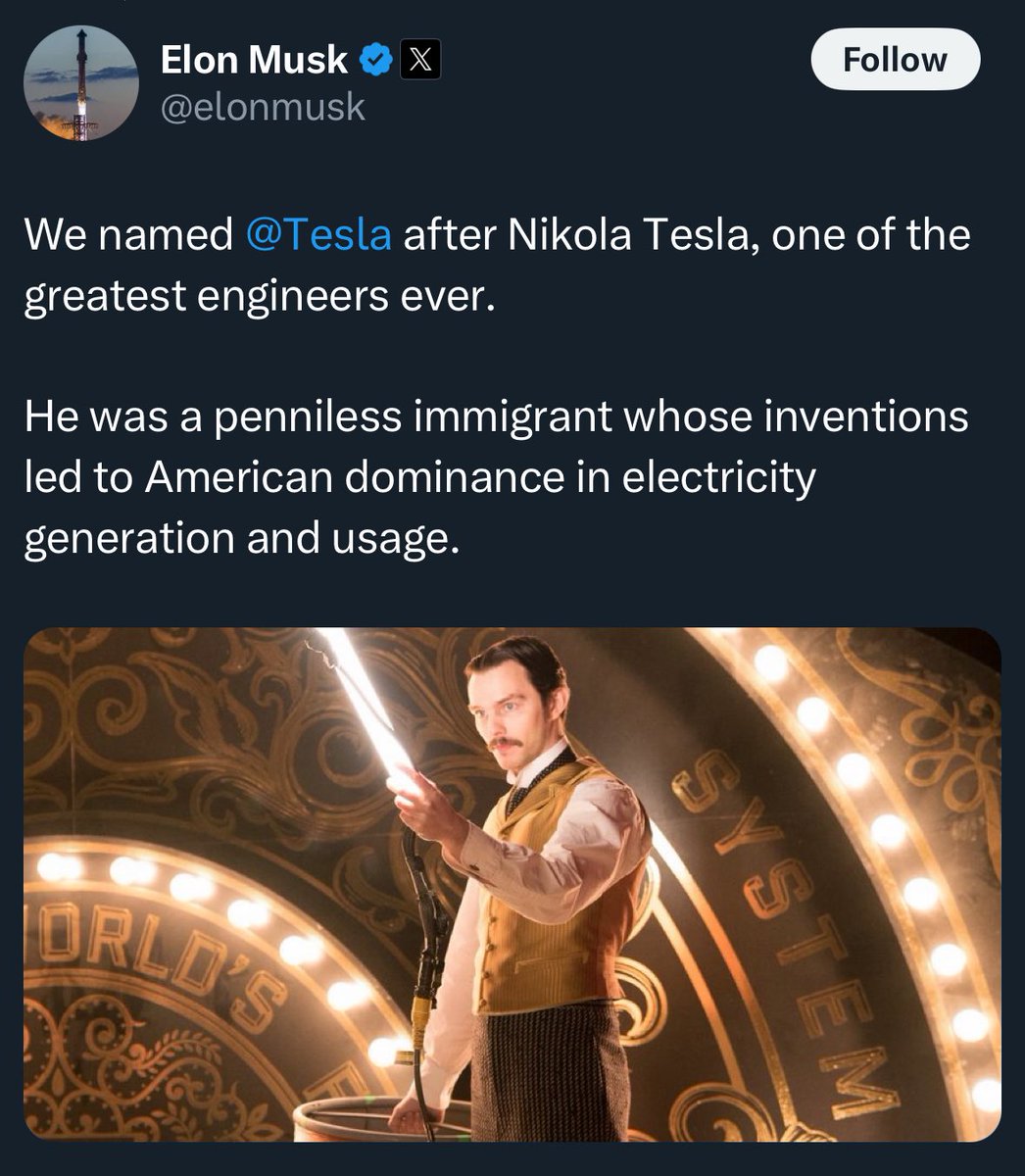
There he goes lying again….he didn’t name Tesla….it was already named that when he bought it and kicked out the founders…the company was named Tesla Motors in 2003 by Martin Eberhard and Marc Tarpenning