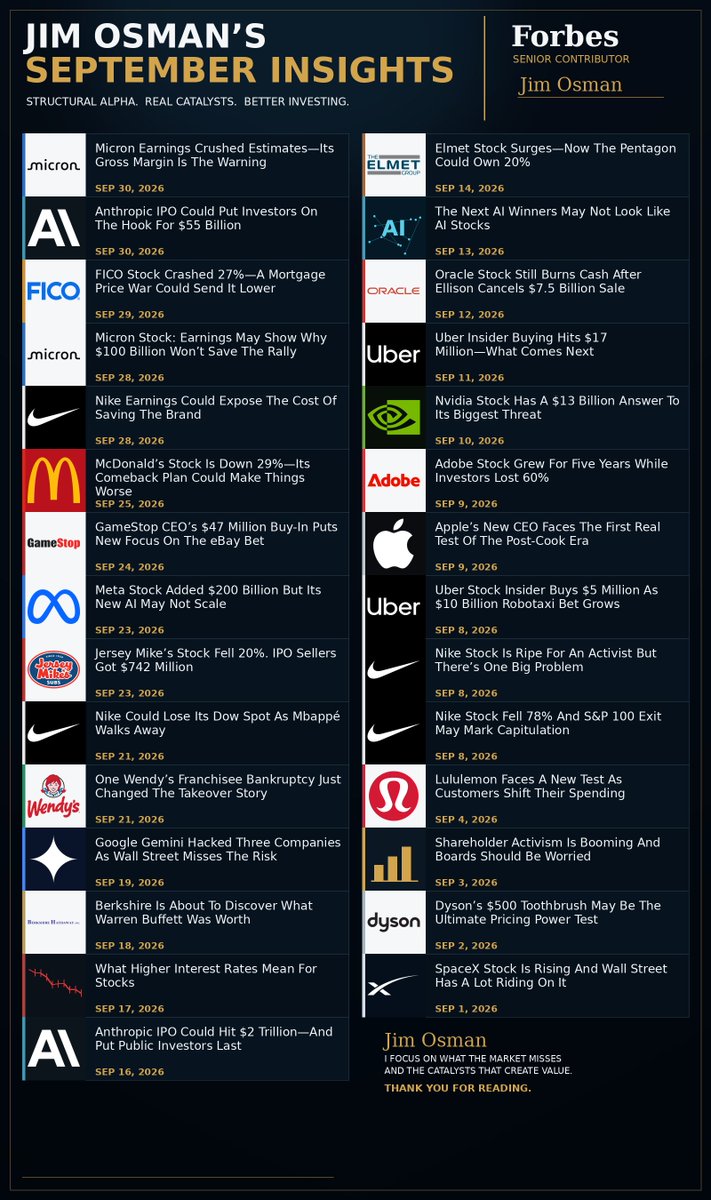
29 Forbes articles in September.
Nike. GameStop. Micron. McDonald’s. Meta. Wendy’s. Anthropic.
Different companies. Same question:
What changed beneath the headline—and what has the market still failed to price?
My September Insights.
Wall Street is about to learn an expensive lesson.
Paying any price for growth was never an investment strategy.
I’ve been warning about the rotation into value. We’re seeing the early signs.
The next fortunes won’t be made chasing yesterday’s winners.
They’ll be made buying what everyone else has forgotten.
How I see it:
ASML: best structural position
Micron: biggest upside, most exposed when supply catches up
TSMC: deepest moat, highest ongoing bill
AI demand is proven. That’s why these stocks can fall even if the boom continues.
Tesla doesn't need to sell more cars in Europe. It needs to activate software in the ones already there.
€99/month FSD subscription in the Netherlands. 100,000 subscribers = ~€119M annual revenue. 500,000 = ~€600M.
The cars are already built and connected. No factory needed. Just an installed base, and Tesla has barely begun to monetise.
#Investing #Tesla #Europe
Wall Street tracks how many cancer tests Natera runs. That may be the wrong number.
Natera has data from ~300,000 patients tested repeatedly during treatment and remission.
The Street is focused on how many tests they do. From my perspective, they're building this compelling database. - Brandon Geisler
Is Natera processing tests or building an asset?
#Investing #AI #Natera
Good morning, everyone. ☕🐾
Feeling much better today. A heartfelt thank you to everyone who sent well wishes. Means a lot.
The dogs have been keeping me company and, as you can see, brushing up on their investment knowledge!
Life’s simple pleasures.
Wishing you all a wonderful Thursday. ❤️