Int. MS in Biotech. @IBB-SPPU, Pune 🐛 → Junior Research Fellow @icmr_niv, Pune 🦠 🦟 → Scientific Intern, Chromatin structure and Rhythms lab @ISTAustria 🧬
Applications open for the online entrance exam (OEE) for addmission to 5 year Integrated https://t.co/upLGbOc37Z Biotechnology at IBB, SPPU. 12th PCM/B students can apply https://t.co/EjzQyWtkD9
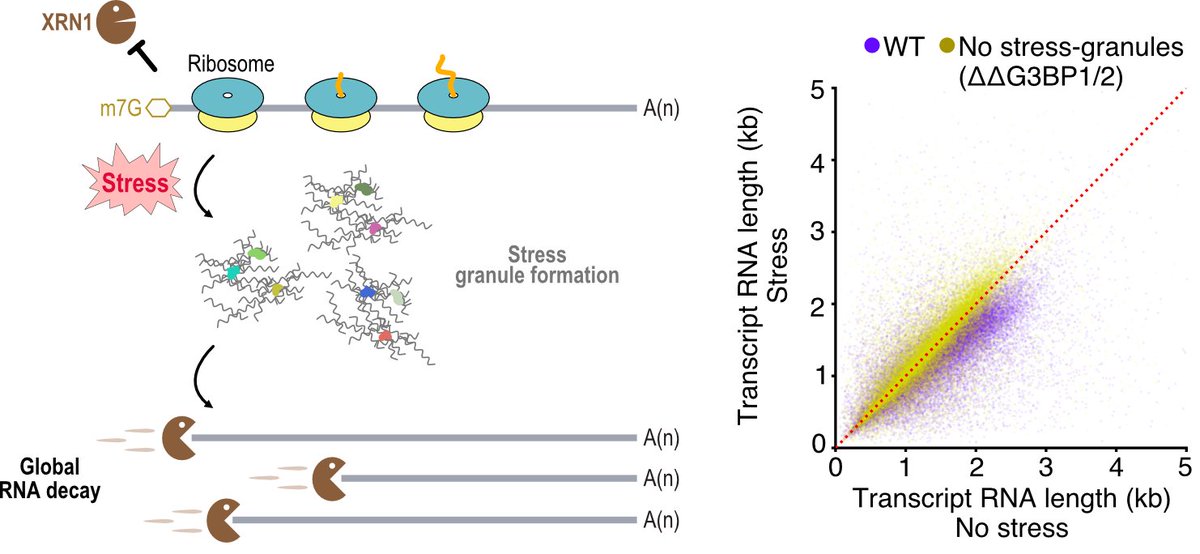
How does cellular stress affect #RNA? We sequence entire RNA molecules with @nanopore sequencing. We find 👉Global RNA decay mediated by XRN1, independent of poly(A) tail! 👉Decay absolutely depends on stress-granule formation! https://t.co/hwxlDxNuf1
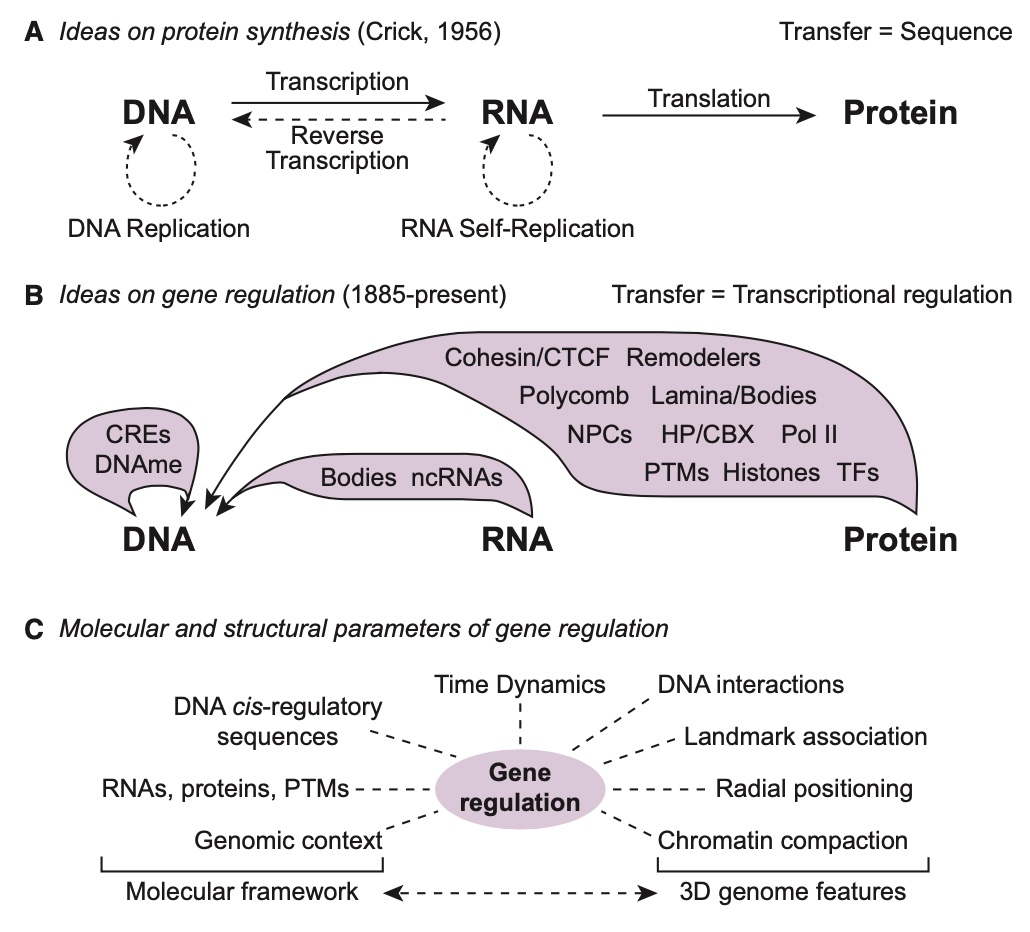
Our perspective on epigenetic regulatory layers of the 3D nucleus is out in @MolecularCell! https://t.co/CC9jerhcio. A solid teamwork with @domSzabo and @apombo1; @LabPombo. 1/3
Happy New Year to the Vibrant Scientific Community!! I hope we keep pushing the boundaries and have a year of remarkable success.
Here’s to Peace and Humanity ❤️
Happy to see the SUM-seq preprint out - our approach for scalable droplet-based single-cell ATAC+RNA (up to 1M cells, hundreds of samples)! 🧬
https://t.co/FYb0h1lQnV
ARE METABOLIC ENZYMES ON CHROMATIN?
Yes, they are ⤵️!
We optimized a chromatin enrichment protocol to improve the extraction of chromatin-bound proteins (chromatome) and applied it to > 140 samples, including cancer cell lines and healthy epithelia from 10 different tissues. 🧵
Here’s a cool study that found that direct PCR (putting cells directly into the PCR mix) can be used for DNA barcoding marine and freshwater microalgae from liquid culture, saving a lot of money and time compared to conventional DNA extractions.
A key step for some strains is to give the algal suspension a quick centrifuge and resuspension in sterile distilled water. This removes PCR inhibitors carried over from the growth media (e.g. salt for marine algae), and concentrates the algal cells.
It may seem like a small discovery, but this method by Fei et al. (2020) could make it much easier for researchers, students, or the scientifically curious, to investigate these amazing microscopic organisms using PCR and sequencing.
And, given how many species of algae there are (around 50,000 described, and maybe up to 800,000 in total), and how important they are ecologically, the easier it is to DNA barcode and research them the better!
You can find the article here:
Fei et al. (2020). A quick method for obtaining high-quality DNA barcodes without DNA extraction in microalgae. Journal of applied phycology, 32, 1165-1175.
https://t.co/bzJ4rInJbT
Image public domain, credit to University of Rhode Island/Stephanie Anderson. - NASA Earth Expeditions