Editor specializing in development econ., social protection, and climate resilience. Proud former ink-stained wretch. @Stanford, @MedillSchool alum. Go Cubs Go!
If you're in the position to donate, please do. We are facing a lot of vet bills at the moment and this is another unexpected one but I couldn't let this sweet old man die a slow and painful death out there.
This is the type of shit that needs no words to troll itself.
This is actually real… he’s really posting infomercials plugging this…
Using America’s 250th Anniversary too…
More like… “As my dad tanks the economy as fast as he can, nothing is more patriotic than getting your hands on some Don Jr Gold to celebrate America’s 250th Anniversary in case it’s our last”
This is SNL material or even better #smokefleet material
The shape of your pollinator garden matters more than its size.
Most native bees have small foraging ranges. Peer-reviewed research on solitary bees found female flight distances of just 73 to 121 meters from the nest. A small bee born in your neighbor's yard might not reliably reach a flower patch in the middle of your yard if there's a length of mowed grass between them.
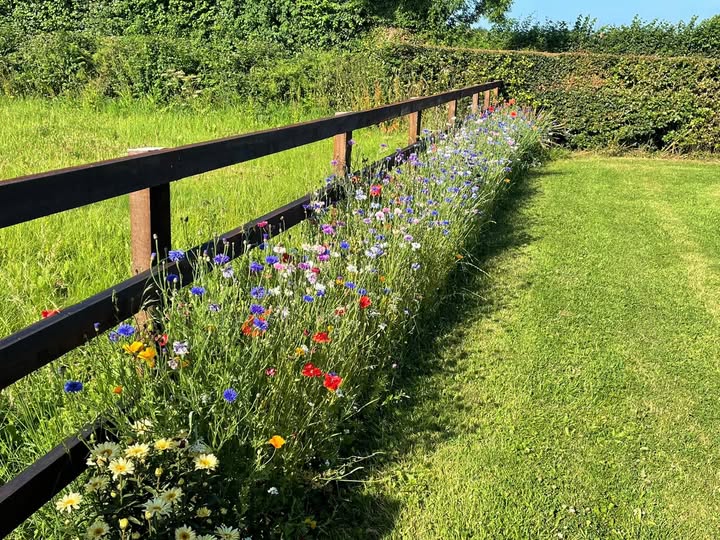
What works is linear pollinator habitat. A strip along a fence line, a corridor along the driveway, or a narrow band of natives running the full length of the property is best.
A 2018 study in the journal Ecography found that the length of linear semi-natural habitat was the single strongest predictor of wild bee species richness and connectivity in agricultural landscapes. Bees track edges.
A 2-foot-wide strip running 50 feet does more ecological work than a 10x10 island in the middle of the lawn. The strip gives pollinators a route to follow, something that guides their movement across the landscape.
The effect multiplies when your neighbors do the same. A strip along your fence meets a strip along theirs, and so on.