Desiderii Marginis: Deadbeat
Everything commences from inside a human firmament. “Deadbeat I,” enters the flame; a poignant piece of music, it flows nobly from the speakers. This does not merely open the proceedings; it ignites it. A vast cry echoes through a series of funereal forms, pulling in immense waves of melancholia. It is as though every abandoned memory has been enveloped into a single human fireball; now it is burning at the centre of an immoral universe. Mourning becomes exhilarating when it refuses to remain buried. Grief is firmly compressed until it generates a shockwave composed of pure bouts of light.
“Mantrap” and “In Harm’s Way” carry the listener into a blackening void. Metallic echoes close around the procession, breaking down the familiar shape of the self. Injury is no longer remembered from a safe distance. It becomes the chamber through which any transformation must pass.
With “God’s Shadow on Earth” and “Angelus,” the enclosed darkness begins to open up. Murmurs and immense resonances hover above the ruins signalling a loss that cannot be named. For the human in a freewill there is no simple salvation, but the material of suffering is refined. A weight remains, life is in retreat.
“And Never the Twain…” holds opposing realms apart: earth and heaven, body and spirit, burial and release. Elsewhere, “Souls Lost” fills a division with voices suspended between disappearance and return. No one is rescued; each are carried forward in a torrent part of the flow
“Deadbeat II” revisits the opening fire after its first combustion. A sorrow hovers, but its form has changed. What began as an unbearable cry now possesses distance, structure and repetition.
It leads to “A Bolt Out of the Blues”, this cascades through the darkness with a filmic hum. “Beyond Retrieval” then accepts that no transformation can restore what has been lost in its original form. Something within has been destroyed, whilst another entity has yet to emerge from the remains. The tracks follow a sequence on the album, beginning with “Deadbeat I” and closing the original programme with “Beyond Retrieval.”
Deadbeat moves from decomposition towards brief moments of illumination . Its ascent never abandons a sense of dread. It uses mourning as fuel, turning a funeral cry into music for the mind.
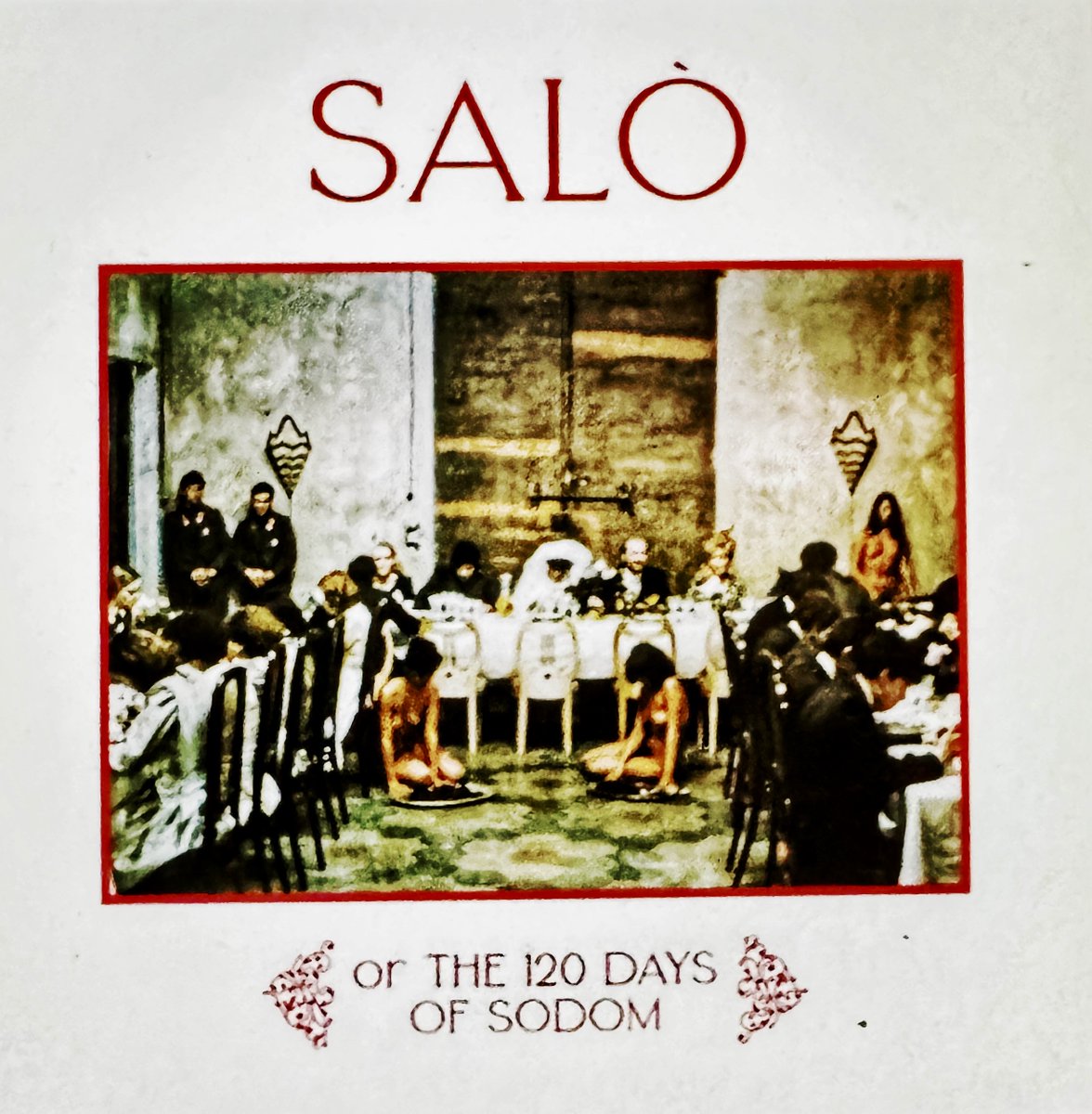
Various Artists: Salò, or The 120 Days of Sodom
The soundtrack to Pier Paolo Pasolini’s Salò surrounds the ruling elite with the musical language of high end cultivation. Yet each composition steadily strips that pretension of any noble authority.
“Son Tanto Triste” opens with polished melancholy. Its elegance initially appears to elevate the setting, but the images soon turn the refinement into irony. The music supplies the libertines with the atmosphere of civilised men while their actions reveal appetite, cowardice and primitive domination beneath the high end tailoring.
The pieces by Bach, Chopin, Orff and Puccini deepen the contradiction. Their cultural prestige suggests order, discipline and spiritual elevation, but Pasolini places them against the addiction to humiliation and death. The music therefore does not dignify the libertines; it pricks their pretensions. Every graceful phrase enlarges the distance between how they imagine themselves and what they really are.
Chopin’s melancholy becomes especially corrosive. Rather than humanising the persecutors, it roasts their emotional fraudulence. They defile beauty without compassion; everything is an object which has an orifice. Their taste seethes with corruption: evidence of superiority is displayed by those incapable of recognising the humanity of the other cast before them.
Orff’s ceremonial force is darker still. Its grandeur exposes power as nothing more than a theatrical performance. Authority marches, declares and arranges bodies, but beneath the spectacle lies its own cadences of humiliation. The music gives power its desired magnificence while the celluloid withdraws it.
Cultivation collapses into grotesque entertainment, showing how what is deemed to be aspirant is a delusion.
“Addio a Pier Paolo Pasolini” finally changes the direction of the record. The soundtrack moves from the counterfeit deification of the libertines towards a genuine lament. Unlike their rituals, Morricone’s tribute possesses grief at the spread of the human abjection. It does not provide enlightenment to shine it mourns the snuff movie that flows in its wake.
The record’s movement shifts from cultivated pretension to immoral exposure. The music promises transcendence while the images reveal a ruling class crawling on filth mirrored in its polished shoes.
Death in June and Les Joyaux de la Princesse: Östenbräun. FIST
Östenbräun is not so much an album as a sealed room containing the residue of a vanished European nightmare. Originally issued as a 1989 collaboration between Death in June and Les Joyaux de la Princesse, its material reshapes existing Death in June recordings through loops, orchestral fragments, martial percussion and historical voices. The later CD edition condensed the original cassette and added further collaborative pieces.
The music appears already damaged. Melodies surface through the debris of dust, locked in repetition, cranking distant mechanical movement, as though discovered on decomposing film. Drums advance without celebration, strings carry sorrow without offering release whilst voices arrive as fragments of command, testimony or memory, stripped of the reassurance supplied by a visible speaker.
This gives Östenbräun its unsettling strength. The record does not recreate history clearly enough for the listener to stand outside it. Instead, history becomes atmosphere: a contaminated inheritance circulating beneath the present. “The Congress,” “SD XXI” and the title collaborations turn political theatre into psychic debris. The grand gesture has collapsed, leaving behind uniforms without bodies and ceremonies whose purpose has become indistinguishable from death.
Its use of authoritarian imagery remains deliberately dangerous. Symbols can expose the seduction of power, but they can also acquire fresh glamour through their haunting melodies. Östenbräun frequently balances on that narrow edge. Its ambiguity is artistically potent, though never morally neutral.
The album’s deepest movement is from fascination towards desolation. What initially resembles pageantry gradually reveals itself as emotional frost. Triumph becomes an empty procession; sacrifice becomes an abandoned landscape; nostalgia discovers that the homeland it seeks was constructed from graves.
There is no purification at the end. The record merely removes the banners and leaves the listener facing the human absence concealed behind them. Östenbräun is beautiful because its beauty has been poisoned, compelling because it never pretends the poison has just disappeared.
Raison D’Etre - Anima Caelum #FIST
Less like a conventional CD album than a dig into the soft earth under the floorboards of human consciousness. Older compositions are drawn together and reforged into a sustained ceremony of descent. It leads to exposure of the primal matter and offers an uncertain renewal.
Bells chime against corroded machinery, subterranean drones and mutilated choruses drag the listener below a tidal flow. Mourning and the Inner Depths of Sadness along with The Shadow of the Soul do not just describe the descent of grief, they flutter in the miasma.
Each closes the door and allows despair to cloak the atmosphere. An aura is then stripped of its usual definitions until only the vibration of memory is left to undulate.
Yet there is no wallowing, instead pale voices sway to the wind : each echoes amongst the ruins. With no provision of home comfort nor the offer of any resilience, pain is allowed to become audible before a diagnosis is imposed.
Repetition of sound provides an audible paean to End of a Cycle and Metamorphyses announces there is no celestial receptionist who can stamp the souls passport.
With a closure it is announced Without the Shedding There is No Forgiveness that whilst the psychic wound occupies the architecture. It does not oversee the bricks of the building.
There is no instant redemption: it enters the darkness and awaits a shape to emerge. Heaven does not hover above the world it is assembled within the human wreckage
#psychologicallyinformedenvironments
Hi Helen
This is the book you and Peter took the ideas from for PIEs back in 2011. I sent you a galley draft because what you sent me was problematic. St Mungos later verified what you wrote and what is in here was very similar.
@Alexjock9753 @NathanTaylorYes @antmiddleton They don’t understand the psychopathologies of power, that’s why
However Ant Middleton is pure loon - he should not be near an alcoholic drink - he’s already drunk with his reflection
@JoshHalliday
Hi Josh
I have another story about Nottinghamshire County Council Social Services, the Mental Health Team and Private Care Providers involved in a major racket regarding elderly care.
I have just making a police statement - if this is something you are interested in
Regards
Dean
Swans
Birthing (2025) #FIST
John the Baptist sank and cried into the deserted wilderness: an end is coming/ embrace the nihilism for redemption finally will arise. Gira steeped in Americana draws on this sheer bedrock of desolation - whereas the religious messiahs saw signs of hope - (for their saviour) - this album aims to birth a new…..
Enter this world: Sink into the shallow pool of the brimming tides of effluvia: wanton destruction is being enacted for yet more piles of not so much wanted accumulation.
Humanity is being driven to the brink of its extinction : seemingly it cannot change direction. Asphyxiated , the flames of annihilation are coming - they are lapping away at the most stupid of base lifestyles. The western man believes he is ‘developed’ such is the delusion: he is merely isolated and drowning.
Here the tomes are set to epic visualisations, screaming drones are sucking out the air from dry battered lungs- distended voices sing their lilts into airy spaces. It is a heavenly picture of earthly hell: Gira becomes the soothsayer - ironic pastiche of a know it all pastor - earnestly lecturing his flock. The earth cracks asunder and new worlds collide but it is a long gestation.
Twinkling as primal stars - the chants offer respite from incessant pounding - the pace softens and then Bowies heroes launches a fusillade. A message of hope is finally delivered in an immoral wasteland - Nietzschean Zarathustra revelries call for an affirmation of the carnival of life.
Whereas the weight of existence aims to grind the individual into dust to reproduce the passive consumer: the new consciousness reaffirms the chant for a new man: enter the noble artist. The mark of a new consciousness is the re-creator of life: he doesn’t buy it - he lives it. But it means being aware of the mire when reaching for the stars.
Ramleh
Too Many Miles (2000)
A Spaced out rock is hurtling through the vacuum of space, fragments are splintering into - all-encompassing holistic vibrations. The universe is not at one.
Violent particulates are embracing these cosmic sensations - they hum and quiver. Clinging together there is a pulsation of a golden heart beat. A beating is swiftly being delivered in tandem to the psychic throb of Gaia: this rotten feeling is being sent to earth - making sure it throbs and contracts.
But then a dull growing spectre flits within the shadows of the mind: constantly it flickers. Verbal taunts are being shouted out: but nothing can be heard : there is blizzard of feedback showering the narrative.
It is a disturbed world of paralysis that is being presented: fissures flare and cracks widen. 12 songs in overall are delivered - each strangely lulling whilst deeply unsettling / the listener is left to pick up the pieces with the warping of any perceived ‘normal’; feeding the listener a rock structure / then blowing it apart.
The world normally viewed is benign: the world inside the head tries to impose order on external flux: this tears it apart. Most people cannot stand too much reality: maybe microdose on each tune before taking one big hit?
Walls Have Ears
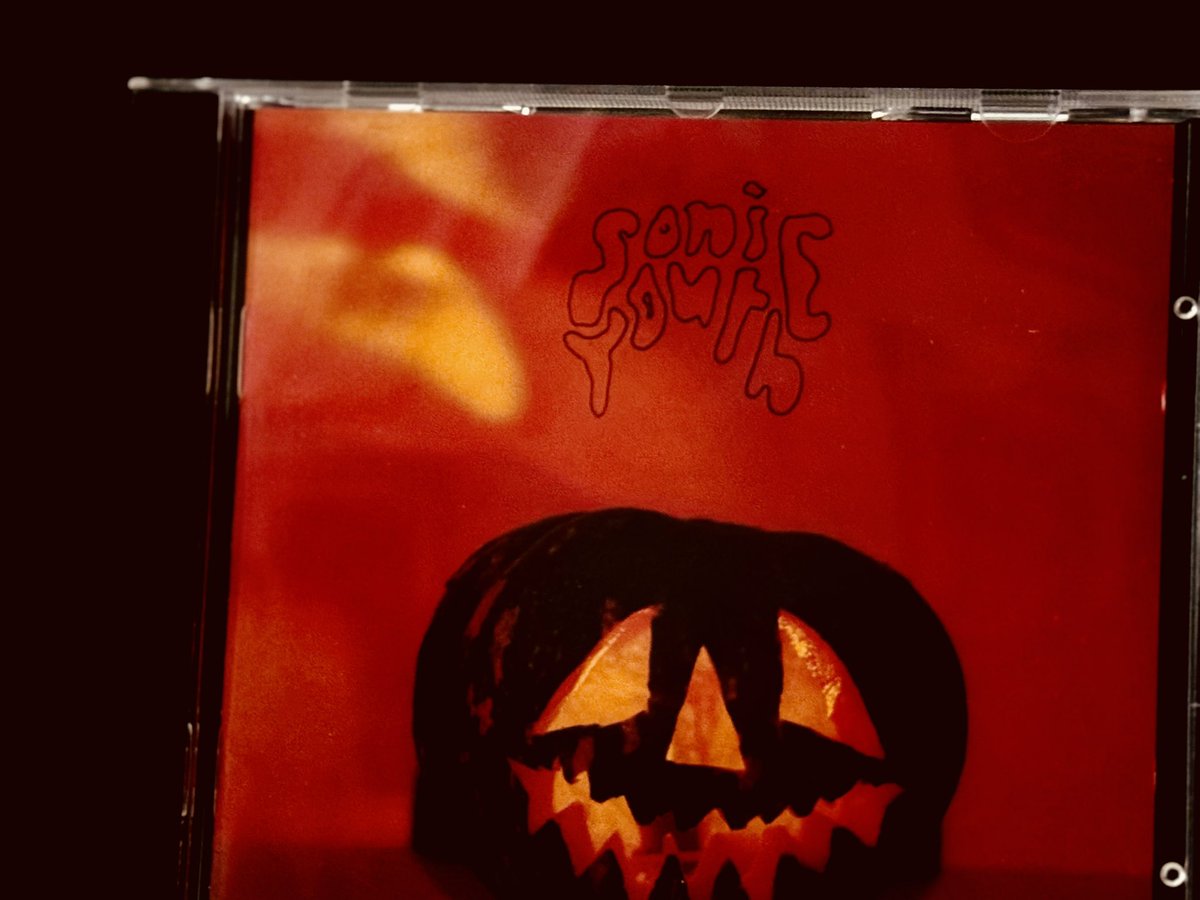
Sonic Youth (1986)
Dissonance as art - the attempt to puncture the idea that the world is harmonious and truly endearing: the opposite end of the line to the US schmaltzfest.
Behind the cooing for Teddy Bears and sighing for Momma, lies the ‘psychotic colon’. It is filled with indigested effluvia of over-processed manufactured mush. The owner is destined for an early death.
Sonic Youth tapped into those life flows: the same vitriolic levels of anger that raged throughout the 1980’s pours into these sonic veins. Cathedrals of electronic squalls wash over a time of great economic dislocation: the world seemed void, bereft and without hope or vision. Reagan and Thatcher had stepped in; the future of humanity lay in constant acquisition and hoarding.
Art later suffered as a result of increased patronage, with an audience suffused with growing satiation. As material conditions changed, so did outlook and demeanour. The raw energies of the 1980s dissipated: they became turned out into monetary signs and values. Hoarding then became de rigeur.
Here the attempts to capture a world lying beyond the modern mundane: they are harnessed in free-flow jams. 1960s epic encounters between harmony and its antithesis - ‘clang and clash’ - shift away from hippy self-preoccupation around ‘meaning man’: instead they jab, poke and provoke in the slang of the NY punk.
Manson, another west coast world away from NY - reappears as a New York Ghost - akin to Siouxsie sporting a swastika - the icon of great offence. The man from the Catholic run approved school who later took in the outcasts from lineages and the middle-classes to recreate a family - casts a long troubled shadow. In various guises he lives throughout these NY themes - the antithesis to the soft schmaltz porn of the 1970s Waltons.
Death Valley 69 and the ‘tunes’ culled from the first batch of platters are given rough hewn live work outs: the electricity sizzles and soars. It prickles and then with the full force of a Boeing in a spectacular throttle : it takes off with pure levels of violence.
It is a reminiscence piece - a bootleg later reincorporated into the cannon: accepted as a long lost son and given a makeover. It is worth its history to reveal a time and place where the walls may have ears but the ears were remarkably open.