I’m starting The Curious Mind 🧠 as a small experiment here on eduKateSG.
One curious question a day on learning, science, life and the world. AI-assisted, human-reviewed. No ads.
Today’s question: Why can we understand a lesson but struggle to solve a question alone?
Results can open a useful conversation about how your child learns.
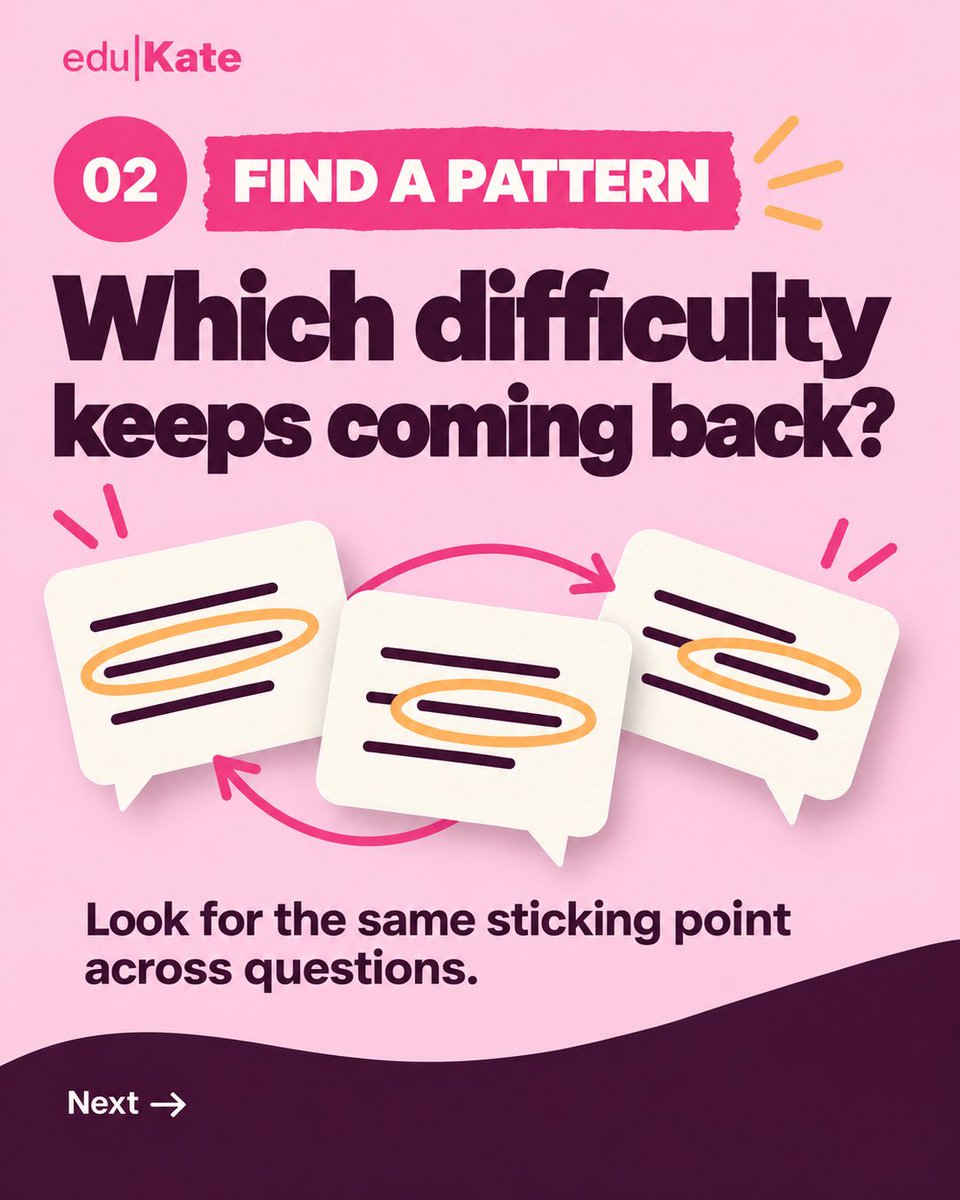
Before choosing the next class or another practice paper, ask: What went well? Which difficulty keeps returning? What can you explain on your own?
Listen to the explanation and choose one manageable next step together. A strength is worth keeping; a recurring difficulty is worth understanding.
Save this for results day, or share it with someone who will be having that conversation too.
#eduKate #learningprogress #parentingtips
How does Superintelligence actually work?
Not just the model.
Not just the prompt.
Not just the answer appearing on your screen.
To understand Superintelligence, follow the whole system:
Human Intent
↓
Information
↓
AI Models
↓
Context
↓
Retrieval
↓
Reasoning
↓
Tools
↓
AI Agents
↓
Autonomy
↓
Verification
↓
Human Control
The model is only one part of the machine.
A powerful AI model can reason and generate—but a working Superintelligence system also needs the right information, permissions, tools, checks and boundaries.
And that distinction matters.
Being intelligent is not the same as being autonomous.
Generating an answer is not the same as taking an action.
Calling a tool is not the same as proving the task succeeded.
Remembering context is not the same as retraining a model.
The future of Superintelligence will therefore be about much more than making models smarter.
It will be about building complete systems that can reason, retrieve, act, verify—and remain under meaningful human control.
How Super Intelligence Works | Complete Guide
https://t.co/JKYjWJQDyA
#Superintelligence #ArtificialIntelligence #AGI
What if the future of civilisation looks less like a robot… and more like a single living cell?
A cell survives through inheritance.
It preserves information.
It interprets that information.
It finds energy.
It manufactures.
It repairs.
It reproduces the system.
Human civilisation has been building something strangely similar for thousands of years:
Speech → Writing → Libraries → Schools → Science → Factories → Computers → Internet → AI.
Each step makes human intelligence a little less mortal.
Now something new is happening.
AI can interpret stored knowledge.
Robotics can act on it.
Autonomous manufacturing can turn information back into physical capability.
Machine repair may eventually help preserve that capability across generations of machines.
That changes the question.
The future of AI may not simply be:
“How intelligent can a machine become?”
It may be:
“Can a technological civilisation inherit itself?”
Civilisation | What is Next?
Vol.05 — The Single Cell Civilisation
https://t.co/jp9H2U1wap
#Civilisation #ArtificialIntelligence #FutureOfAI
Secondary 3 A-Math students often read:
fg(x)
and think multiplication.
It isn’t.
It means:
f(g(x))
One function acts AFTER another.
Suppose:
f(x) = 2x + 1
g(x) = x²
Then:
fg(x)
= f(g(x))
= f(x²)
= 2x² + 1
But reverse the order:
gf(x)
= g(f(x))
= g(2x + 1)
= (2x + 1)²
These are different.
So:
fg(x) ≠ gf(x)
in general.
Why?
Because ORDER matters.
Think of two machines.
Machine g squares the input.
Machine f doubles it and adds 1.
Square first, then double:
2x² + 1
Double and add 1 first, then square:
(2x + 1)²
Different journey.
Different output.
This is a powerful Secondary 3 Additional Mathematics idea because it teaches students to see functions as PROCESSES rather than formulas.
Input
→ operation
→ output
→ next operation
→ final output.
Later this same structural thinking becomes useful in:
inverse functions
graph transformations
Chain Rule
modelling
and higher mathematics.
Don’t memorise fg(x).
Run the machines.
Secondary G2/G3 Additional Mathematics Study Guide:
https://t.co/5ZZFxUpodB
#AdditionalMathematics #AMath #Secondary3 #Functions #CompositeFunctions #AddMaths #SingaporeEducation
Secondary 3 Additional Mathematics gets much easier when students understand one thing early:
ALGEBRA IS THE OPERATING SYSTEM.
Consider:
y = (x² − 9)/(x − 3)
At first it looks complicated.
Factorise:
x² − 9 = (x − 3)(x + 3)
So:
y = x + 3
provided:
x ≠ 3.
Three important A-Math ideas appeared in a few lines:
Factorisation reveals structure.
Simplification makes later mathematics easier.
The restriction x ≠ 3 does NOT disappear simply because the factor cancelled.
This algebraic control matters everywhere later:
Functions.
Partial fractions.
Logarithms.
Trigonometry.
Differentiation.
Integration.
Coordinate geometry.
Students sometimes think they have a calculus problem when the real weakness is several layers earlier.
That is why Secondary 3 is so important.
Build algebra properly now and the later A-Math syllabus becomes much more manageable.
Our new Secondary G2/G3 Additional Mathematics Study Guide brings the learning system together:
https://t.co/kZvLJeZoQA
#AdditionalMathematics #AMath #Secondary3 #AddMaths #Algebra #G3 #SingaporeEducation
How to study Additional Mathematics:
Diagnose before revising.
Find the FIRST line where your mathematics became wrong.
Repair prerequisites.
A calculus mistake may actually be an algebra mistake.
Learn relationships, not isolated formulas.
Ask WHY the method works.
Practise retrieval.
Can you choose the method without seeing the chapter heading?
Mix topics.
Real examinations do not announce:
“This is a Chain Rule question.”
Keep an error map.
Concept?
Algebra?
Method selection?
Domain?
Interval?
Exact form?
Verification?
Retest later.
Being able to solve something immediately after studying it is not the same as learning it.
Transfer.
Try a different-looking problem requiring the same mathematical structure.
That final step matters.
The goal of A-Math revision is not:
“I remember this question.”
It is:
“I recognise what mathematics this NEW question requires.”
We built our new Secondary G2/G3 Additional Mathematics Study Guide around that larger learning problem:
https://t.co/GK0c0IQDZN
#AdditionalMathematics #AMath #AddMaths #StudyTips #MathRevision #ExamPreparation #SingaporeEducation
What should a Secondary G2 or G3 student know before trying to get better at Additional Mathematics?
First:
A-Math is cumulative.
Weak algebra does not stay inside the algebra chapter.
It travels.
Weak factorisation can damage:
→ quadratic equations
→ partial fractions
→ trigonometry
→ differentiation
→ stationary points
→ integration
Weak functions can damage:
→ graphs
→ inverse functions
→ composite functions
→ transformations
→ calculus
Weak trigonometry can damage:
→ identities
→ equations
→ graphs
→ differentiation
→ integration
So when marks fall, asking:
“Which chapter should I practise?”
may be the wrong first question.
Ask:
“Where is the FIRST weak dependency?”
Then repair that.
Our new Secondary G2/G3 Additional Mathematics Study Guide maps the subject as a connected learning system rather than a pile of separate chapters.
For students studying A-Math in Singapore:
https://t.co/GK0c0IQ6af
#AdditionalMathematics #AMath #G2 #G3 #SecondarySchool #MathTuition #SingaporeEducation
How do you actually study Additional Mathematics well?
Not by doing more questions blindly.
A-Math becomes much easier when students understand how the subject is connected:
Algebra
→ Equations
→ Functions
→ Graphs
→ Trigonometry
→ Differentiation
→ Integration
→ Applications
→ Examination problems
A weakness near the beginning of that chain often appears later as a “calculus problem” or “trigonometry problem”.
That is why we built the new eduKateSengkang:
ADDITIONAL MATHEMATICS STUDY GUIDE
for Secondary G2 & G3 students.
It brings together:
• A-Math concepts and foundations
• algebraic manipulation
• functions and graphs
• logarithms and exponentials
• trigonometry
• differentiation
• integration
• problem-solving
• revision strategies
• examination preparation
• common mistakes
• study methods
The objective is not merely to finish the Additional Mathematics syllabus.
It is to understand enough of the mathematical system that unfamiliar questions become solvable.
Full guide:
https://t.co/GK0c0IQDZN
#AdditionalMathematics #AMath #AddMaths #SecondaryMath #G2 #G3 #SingaporeEducation
A straight-line gradient is not just “rise over run”.
It is a RATE.
Suppose:
y = 3x + 5
The gradient is:
That means:
For every increase of 1 in x,
y increases by 3.
If x increases by 4:
change in y = 3 × 4 = 12.
That simple interpretation becomes much more powerful when you move into Secondary 3 Additional Mathematics.
Suppose:
2x + 3y = 12.
Rearrange:
3y = −2x + 12
y = −2/3 x + 4
So the gradient is:
−2/3.
The negative sign tells us the direction.
As x increases, y decreases.
The fraction tells us the rate.
This is why coordinate geometry is more than plotting points.
A line is describing a relationship between two changing quantities.
And that idea leads directly toward calculus.
For a curve, the gradient is no longer constant.
Instead, the gradient changes from point to point.
Differentiation gives us a way to measure that changing gradient.
So:
Straight-line gradient
→ constant rate
Curve gradient
→ changing rate
That is one of the bridges from Secondary 3 algebra and coordinate geometry into calculus.
Learn the early structure properly and later mathematics has somewhere solid to stand.
https://t.co/kZvLJeZoQA
#AdditionalMathematics #AMath #Secondary3 #CoordinateGeometry #Gradients #Functions #Calculus #SingaporeEducation
Sometimes the calculator gives you a logarithm key you cannot directly use.
That is where Change of Base becomes useful.
Suppose you need:
log₂ 10
The calculator may easily handle:
log 10
and:
log 2
Use:
log₂ 10 = log 10 / log 2
So:
log₂ 10 ≈ 3.322
But the important idea is not the calculator button.
Why does the rule work?
Let:
log₂ 10 = x
That means:
2ˣ = 10.
Now take logarithms:
log(2ˣ) = log 10
So:
x log 2 = log 10
Therefore:
x = log 10 / log 2.
The Change of Base formula is therefore not an arbitrary trick.
It comes directly from the definition of a logarithm.
This matters in Secondary 3 A-Math because logarithms are easier to control when students understand the relationship underneath the laws.
Index form:
2ˣ = 10
Logarithmic form:
log₂10 = x
Change of base:
log₂10 = log10/log2
Three representations.
One mathematical relationship.
When you see the structure, the formula stops looking like something to memorise.
https://t.co/OrigJdbIfI
#AdditionalMathematics #AMath #Secondary3 #Logarithms #ExponentialFunctions #Algebra #SingaporeEducation
A Secondary 3 A-Math function can be read in three different languages.
Take:
f(x) = x² − 4x + 3
In expanded form:
f(x) = x² − 4x + 3
we can see the algebraic structure.
Factorise:
f(x) = (x − 1)(x − 3)
Now the roots are immediately visible:
x = 1 and x = 3.
Complete the square:
f(x) = (x − 2)² − 1
Now the turning point is visible:
(2, −1)
Same function.
Three forms.
Three different pieces of information.
Expanded form → useful for algebra.
Factor form → useful for roots.
Completed-square form → useful for maximum/minimum and graph structure.
This is one of the most important Secondary 3 A-Math lessons:
Do not ask only:
“What is the formula?”
Ask:
“Which form tells me what I need to know?”
A student who knows one form has a formula.
A student who can move between forms has control.
That distinction becomes increasingly important as A-Math moves into functions, graphs, inequalities and calculus.
https://t.co/oDHVyNjkyz
#AdditionalMathematics #AMath #Secondary3 #Quadratics #Functions #Algebra #SingaporeEducation
Some Secondary 3 trigonometric equations are secretly quadratic equations.
Consider:
2sin²θ − 3sinθ + 1 = 0
At first glance:
Trigonometry.
But look at the structure.
It is quadratic in:
sinθ.
Let:
u = sinθ.
Then:
2u² − 3u + 1 = 0
Factorise:
(2u − 1)(u − 1) = 0
So:
u = 1/2
or
u = 1.
Return to the original variable:
sinθ = 1/2
or
sinθ = 1.
Now the trigonometry begins.
For:
0° ≤ θ ≤ 360°
we get:
θ = 30°, 150°
and:
θ = 90°.
Therefore:
θ = 30°, 90°, 150°.
The clever move happened BEFORE the calculator.
We recognised:
quadratic structure.
Then we temporarily renamed the repeated expression.
That is an underrated A-Math technique:
When a complicated expression keeps appearing, give it a name.
Solve the simpler problem.
Then translate back.
Secondary 3 is where students begin learning that difficult-looking mathematics is often easier once you identify the structure underneath.
The question may wear a trigonometry costume.
But underneath, it may be algebra.
https://t.co/kZvLJeZoQA
#AdditionalMathematics #AMath #Secondary3 #Trigonometry #QuadraticEquations #ProblemSolving #SingaporeEducation
Two lines are perpendicular.
What does that actually mean?
It means their gradients are connected.
If:
m₁
is the gradient of one line, then the perpendicular line has gradient:
m₂ = −1/m₁
because:
m₁m₂ = −1.
Suppose a line has gradient:
A perpendicular line must therefore have gradient:
−1/3.
Not −3.
Not 1/3.
The NEGATIVE RECIPROCAL.
Why?
The gradient measures vertical change divided by horizontal change.
Turning a line through 90° reverses that relationship.
So the ratio flips—and the direction changes.
This becomes extremely useful in Secondary 3 Additional Mathematics:
coordinate geometry
straight-line problems
circle geometry
tangents
normals
and later calculus.
In fact, calculus eventually gives us tangent gradients directly:
dy/dx.
Then geometry takes over:
Tangent gradient = m
Normal gradient = −1/m.
Same mathematical relationship.
Different chapter.
That is one of the secrets of A-Math.
The chapters are not separate islands.
They keep reusing the same structures.
Learn the relationship once.
Recognise it everywhere.
https://t.co/gSwwcTkA8T
#AdditionalMathematics #AMath #Secondary3 #CoordinateGeometry #Gradients #Geometry #SingaporeEducation
A function has two sides:
What may GO IN.
What may COME OUT.
Students usually learn the first one.
Domain.
But RANGE is just as important.
Take:
f(x) = (x − 1)²
The domain is all real x.
But can the output ever be negative?
No.
Because:
(x − 1)² ≥ 0
So the range is:
f(x) ≥ 0.
Now notice something beautiful.
The graph makes the same fact visible.
The lowest point is:
(1,0)
The graph never falls below:
y = 0.
Algebra and graph are saying the same thing in different languages.
This becomes powerful in Secondary 3 Additional Mathematics when you start working with:
functions
composite functions
inverse functions
transformations
quadratics
graphs
and restrictions.
Before asking:
“What is f(x)?”
also ask:
“What values can f(x) actually produce?”
A function is not just a formula.
It is a mapping with boundaries.
Input has rules.
Output has consequences.
That is why domain and range are not vocabulary exercises.
They are the architecture of the function.
https://t.co/TynhwBMBrL
#AdditionalMathematics #AMath #Secondary3 #Functions #Domain #Range #SingaporeEducation
Your calculator gives:
θ = 30°.
Correct.
And possibly incomplete.
Suppose:
sin θ = 1/2
for:
0° ≤ θ ≤ 360°.
The calculator may immediately suggest:
θ = 30°.
But sine is positive in TWO quadrants.
Quadrant I.
And Quadrant II.
So the full solution is:
θ = 30°
or
θ = 150°.
This is why Secondary 3 A-Math trigonometry is not simply:
press SHIFT SIN.
The calculator gives a principal value.
The QUESTION gives an interval.
Your job is to find every angle inside that interval that satisfies the equation.
Think:
Find the reference angle.
Determine where the trig function has the required sign.
Generate every valid solution.
Check the stated interval.
For:
cos θ > 0
think Quadrants I and IV.
For:
sin θ > 0
think Quadrants I and II.
For:
tan θ > 0
think Quadrants I and III.
The deeper idea is periodicity.
Trigonometric functions repeat.
So one numerical answer does not necessarily identify one angle.
This is one of the first places where students learn an important A-Math lesson:
A calculator can calculate.
It cannot finish the reasoning for you.
https://t.co/SGNcfUcF0X
#AdditionalMathematics #AMath #Secondary3 #Trigonometry #TrigEquations #Mathematics #SingaporeEducation
Sec 3 Additional Mathematics Coordinate Geomtry: One small tangent can unlock an entire geometry proof.
Suppose a tangent touches a circle at A.
A chord AB is drawn.
The angle between the tangent and chord AB is:
42°.
What is the angle in the alternate segment subtended by AB?
Also:
42°.
That is the Tangent-Chord Theorem.
But memorising:
“tangent angle = alternate segment angle”
is not enough.
The useful question is:
WHICH CHORD?
The chord identifies the matching angle.
This matters because crowded geometry diagrams contain many angles.
Students often see the tangent, remember the theorem, then match the WRONG pair.
A stronger method:
Find the tangent point.
Identify the chord involved.
Ask which angle elsewhere in the circle is subtended by THAT SAME chord.
Transfer the angle.
Look for what this new equality unlocks.
Often the theorem is only the FIRST bridge.
For example:
Tangent-chord theorem
→ equal angles
→ AA similarity
→ proportional sides
→ required length.
That is how Secondary 3 Additional Mathematics proof becomes powerful.
One theorem creates another structure.
Another structure creates the answer.
Do not collect geometry facts like flashcards.
Learn how one fact OPENS the next door.
https://t.co/jSSONFN0ZT
#AdditionalMathematics #AMath #Secondary3 #Geometry #TangentChord #MathematicalProof #SingaporeEducation
A function can have a perfectly good formula—and still refuse certain inputs.
That is what DOMAIN means.
Consider:
f(x) = 1/(x − 4)
Can we put x = 3 into the machine?
Yes.
Can we put x = 10?
Yes.
Can we put x = 4?
No.
Because:
f(4) = 1/(4 − 4)
= 1/0
and division by zero is undefined.
So the domain must exclude:
x = 4.
Now consider:
g(x) = √(x + 2)
If we are working with real numbers:
x + 2 ≥ 0
Therefore:
x ≥ −2.
This is an important Secondary 3 A-Math upgrade.
A function is NOT merely a formula.
It is:
RULE + ALLOWED INPUTS.
The restriction is part of the mathematics.
And later this becomes crucial for:
• composite functions
• inverse functions
• logarithms
• rational expressions
• square roots
• equation solving
For example, if:
f(x) = 1/(x − 2)
and:
g(x) = x + 3
then:
f(g(x)) = 1/(x + 1)
So now:
x ≠ −1.
Why?
Because g(x) must never feed the forbidden value 2 into f.
Think of domain as the entrance policy of a mathematical machine.
Before asking:
“What does the function do?”
sometimes ask the more important question:
“What is actually allowed to enter?”
#AdditionalMathematics #AMath #Secondary3 #Functions #Domain #Algebra #SingaporeEducation
https://t.co/ub8l73MWCs
A student says:
“I knew how to do the question. I just made a careless mistake.”
Maybe.
But in Secondary 3 Additional Mathematics, repeated sign errors are often not random.
They are a CONTROL problem.
Consider:
−2(3x − 5)
The correct expansion is:
−6x + 10
Not:
−6x − 10
That single sign can now travel.
Into the next equation.
Into factorisation.
Into a graph.
Into differentiation.
Into the final answer.
One weak line can contaminate ten correct-looking lines underneath it.
That is why good A-Math working should be deliberately boring.
One transformation at a time.
Clear brackets.
Visible negative signs.
Equal signs aligned.
Do not perform three risky operations mentally and write only the result.
For example:
3 − 2(4x − 5)
First:
= 3 − 8x + 10
Then:
= 13 − 8x
The extra line costs seconds.
Repairing an invisible sign error can cost minutes—or the whole question.
Secondary 3 is the right year to build this discipline.
Because later, the algebra sits underneath:
logarithms,
trigonometry,
coordinate geometry,
differentiation,
integration,
and mixed A-Math questions.
A student may understand calculus perfectly and still lose the answer through unstable algebra.
So when A-Math starts feeling difficult, do not always ask:
“Which new chapter do I need to practise?”
Sometimes ask:
“Which old mathematical habit is failing under the new load?”
That is where repair begins.
https://t.co/3zCvEEcumS
#AdditionalMathematics #AMath #Secondary3 #Algebra #MathTuition #ProblemSolving #SingaporeEducation