I debate @JasonFurman—Pres. Obama’s Chair of the Council of Economic Advisors—at Harvard over the effect of tax increases on the expected value of innovative risk-taking and the magnitude of changes needed to equilibrate America’s fiscal policy.
https://t.co/ge2e0sFvc4
Scientists at Columbia University successfully edited the DNA of early human embryos via a process called "base editing," which has "unprecedented accuracy" relative to techniques like CRISPR.
Chris Miller argues that Beijing believes its lead in advanced manufacturing advantages China vis-a-vis the US. Washington, in turn, believes the US edge in AI will dramatically increase US power relative to Beijing.
Remote junior workers received 18% less feedback than their non-remote peers. The unemployment uptick in “remotable” roles during the pandemic persisted, and explains 64% of the increase in unemployment of young college grads btw 2017–2019 and 2022–2024.
The previously eradicated New World screwworm has been detected in a calf in Texas. The reemergence of the screwworm could have a significant impact on the American cattle industry.
India purports to have improved its statistical methodology, yielding higher GDP growth than previously reported for two of the past three fiscal years. Subramanian cautions, “the jury is out because of … inexplicable movements in two of the deflators.”
As recently as 2019, Narendra Modi warned India was facing a “population explosion.” Today, India's total fertility rate of 1.9 is below replacement, and the TFR in major cities like Delhi (1.2) is lower than that of advanced economies.
~9pp of the ~23pp decline in US men’s LFP relative to that of women btw 1976 and 2024 is due to a negative group-specific trend among less-educated men and about 6pp is due to an analogous positive trend among high-education women.
Lustig argues that bondholders in advanced economies are realizing they are facing higher inflation risk and thus may “sit at the bottom of the capital structure rather than the top,” given transfers recipients’ political power.
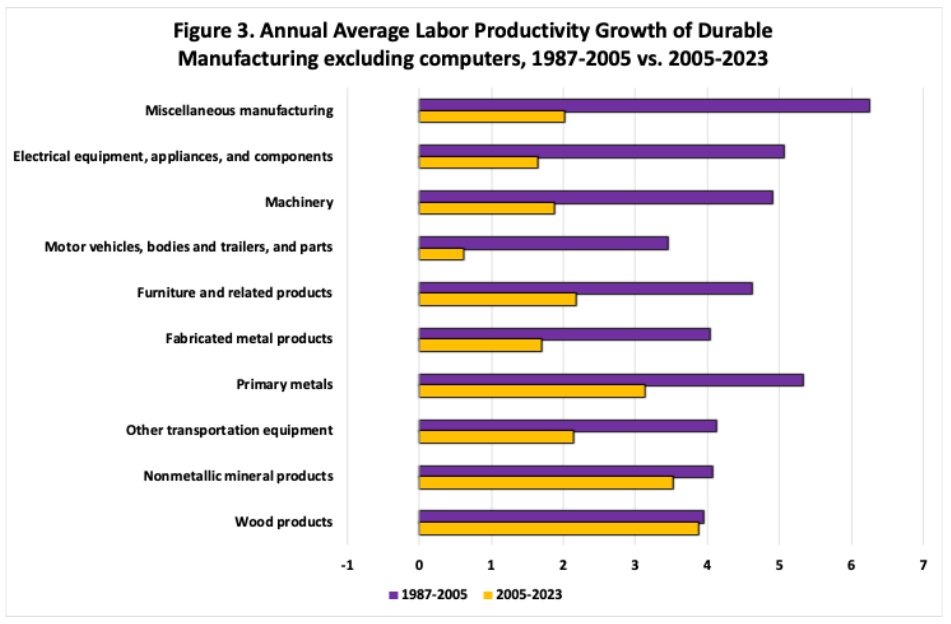
Citing complementarities btw production and innovation, Gordon et al trace the origins of the end of productivity growth in U. S. manufacturing back to 2000, when sectoral output growth ceased amid increased import competition
Google is planning to build generation capacity alongside data centers to avoid power bottlenecks to bringing data centers online. The firm spent $4.75B to buy Intersect power, and signed a three-year deal with Voltus.
The USG will review new AI models before their release. While some view the new process as "watered-down" relative to a previous proposal, Dean Ball argues the executive order is "clearly teeing up the infrastructure for a model licensing regime."
Addressing whether intra-country growth comparisons should use constant or current price PPPs, Klein notes that for Japan, both give the same conclusion. ICT‑related price and quality‑adjustment asymmetries—while present—have not yielded large PPP drift.
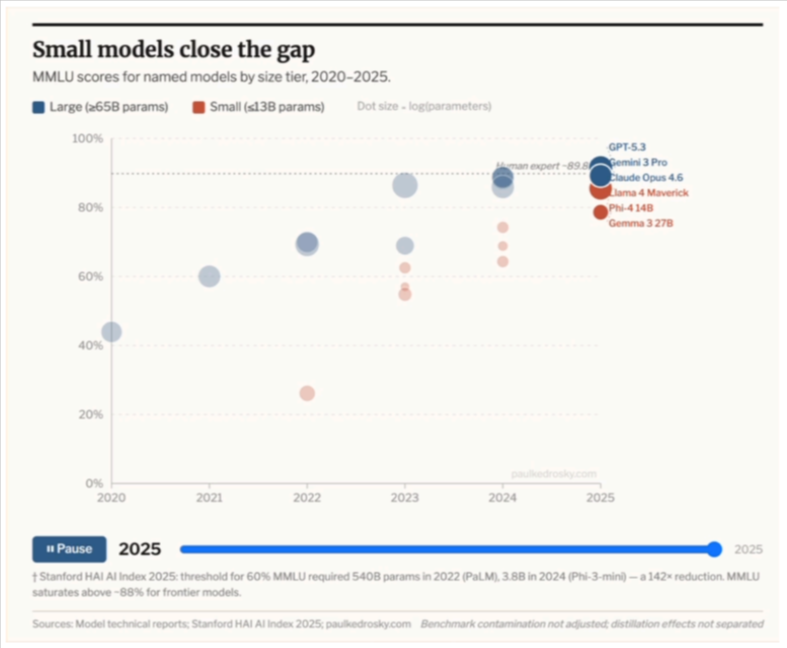
Small models have increasingly closed the performance gap with frontier models. To Kedrosky, this implies “edge compute becomes real,” which in turn, at the margin, means reduced relative demand for data center-based versus local compute.
As the use of GLP-1 drugs for weight loss expands, lingerie sales are rising. Victoria's Secret has posted four consecutive quarters of annual revenue growth, and its stock is up ~236% since the fall of 2024.
According to CBRE, at least 184 American firms, including Tesla and Caterpillar, moved their headquarters to Austin, Dallas or Houston btw 2020 and 2025. During that period, Texas drove ~20% of all net job creation in the US.
Changes in American inequality btw 1980 and 2000 were largely due to changes in employee compensation, whereas changes in inequality since 2000 have largely been driven by changes in capital income, particularly that of the .1%.
GS finds that large firms with low floats at IPO have 54% of their shares in circulation two years later. If SpaceX/Anthropic/OpenAI “follow this pattern, then the weight of new equity supply could well become unbearable next year or in 2028.”
Google is issuing $80B in equity to finance its AI buildout. It expects capex to be ~$190B in 2026 and to rise from that in 2027; the stock fell on the news.
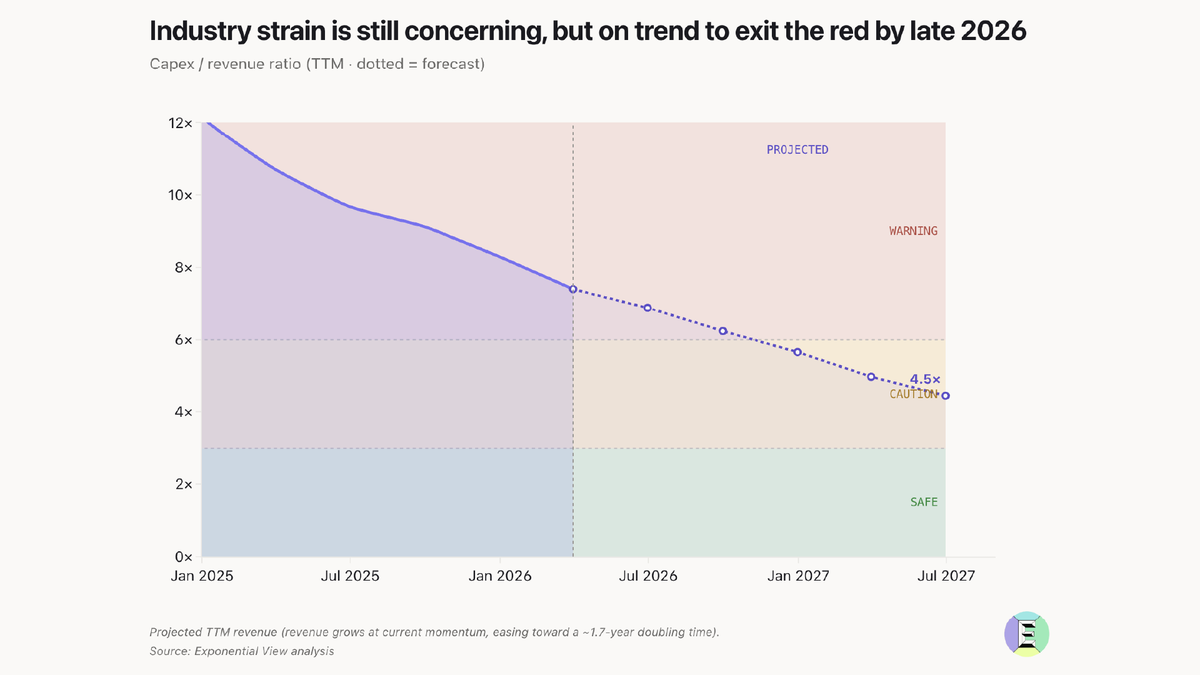
Azeem Azhar and Nathan Warren argue that while the large AI labs' capex relative to revenue growth is “concerning…if revenue growth holds on trend and capex forecasts don’t revise upward, it should exit the red by the end of the year.”