My philosophy: "Tidak ada yang pernah melakukannya" itu tidak sama dengan "tidak ada yang bisa melakukannya."
Kumpulan tulisanku di Twitter terkait teknologi, pembelajaran, dan kurikulum. ✍️📒🧑💻
Mari dibaca!
@bukik Pertanyaan selanjutnya adalah:
Bagaimana cara sekolah mengadopsi pembelajaran mendalam dalam keterbatasan sumber daya? Apa kebijakan yang bisa mendukung perubahan ini?
@bukik "Deep Learning" atau pembelajaran mendalam memang penting, tetapi perubahan sistem pendidikan membutuhkan lebih dari sekadar pendekatan ini. Faktor lain seperti gaji guru, kualitas guru, kebijakan kurikulum, akses ke teknologi, dan manajemen pendidikan juga harus dibenahi.
Introducing Sora, our text-to-video model.
Sora can create videos of up to 60 seconds featuring highly detailed scenes, complex camera motion, and multiple characters with vibrant emotions.
https://t.co/YYpOAcrXQ3
Prompt: “Beautiful, snowy Tokyo city is bustling. The camera moves through the bustling city street, following several people enjoying the beautiful snowy weather and shopping at nearby stalls. Gorgeous sakura petals are flying through the wind along with snowflakes.”
Reading stamina—the ability to stay focused when reading longer, complex texts—is critical for comprehension. Yet stamina has not been extensively studied in reading research. In today's digital world, sustaining attention long enough to read lengthy texts is increasingly difficult for students.
https://t.co/Zz3dAxaYbW
However, new "knowledge-building" curricula that have coherent themes and provide sets of related texts can aid stamina development if used strategically in the classroom.
Teachers should spend class time having students read texts together and discuss them. This builds community, accountability, and focus on the text. Teachers can also gradually increase the length and complexity of reading assignments over time to strengthen stamina. Using whole texts rather than just excerpts allows for fuller understanding of concepts, characters, and plot arcs that is lacking with only excerpts.
Additional strategies include quizzing students on assigned reading to motivate them to complete the reading at home. Monitoring comprehension of texts read in class helps teachers adjust supports and instruction. Starting early to build reading stamina is key in elementary grades. Routines like teacher read-aloud, then student read-aloud, then silent reading can scaffold young readers' skills. Managing sentence length in early grades helps too.
The ultimate goal is increasing the amount of time students can spend reading in a sustained, focused way. New curricula alone don't build stamina—teachers need to incorporate consistent in-class reading, accountability measures, and gradual increases in text demands and length. Implementing these research-based tips can develop the reading stamina critical for student comprehension and success.
One of my favourite (education) articles. And with that, I must sign off for a few days. Happy holidays to all!
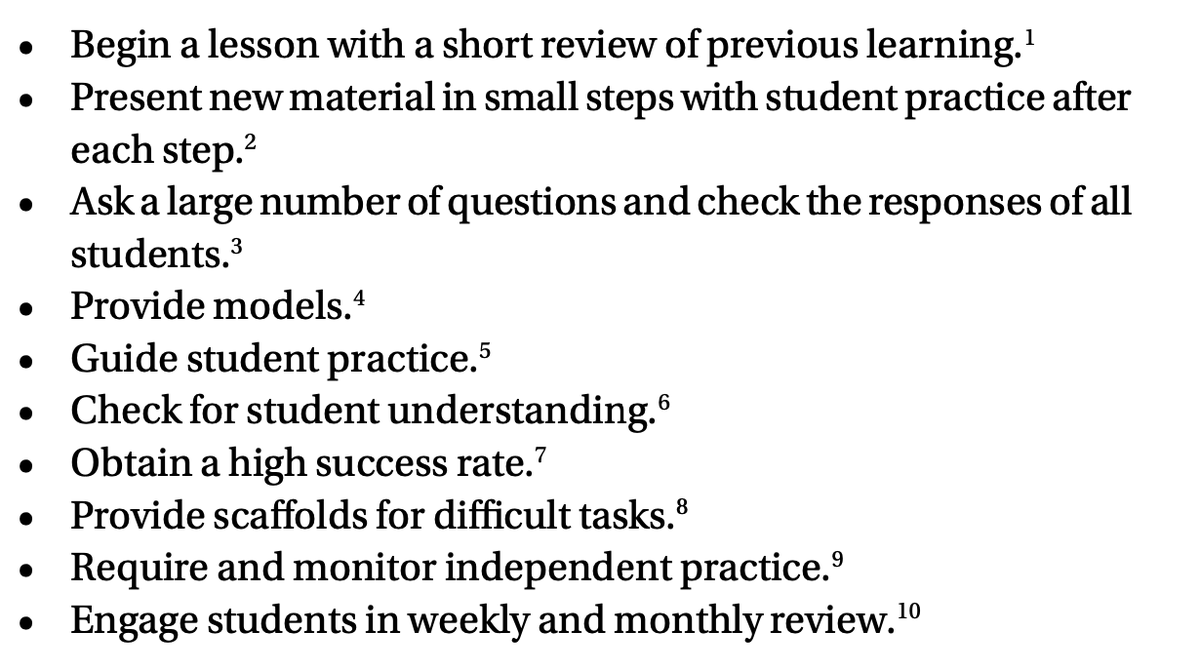
Principles of Instruction: Research-Based Strategies That All Teachers Should Know by Barak Rosenshine
https://t.co/80DSljJuNx
Kita harus membedakan gelar dan pengetahuan. Memiliki gelar tinggi berarti tidak sama dengan memiliki pengetahuan tinggi.
Selalu bertemu dengan banyak orang dengan pengetahuan tinggi di luar sana yang tdk memiliki gelar.
Be humble.
2023 Research Highlight: Despite the naysayers, #SEL programs benefit students’ social-emotional growth and their academic success. 🙌
Discover the 9 other #EducationResearch studies that made our 2023 list: https://t.co/IhyNLL17np
🧵1/8
Another knowledge-building practice I hope to see emphasized in 2024:
Great attention to content-rich instruction in the very early years.
Preschool, kindergarten and first grade children thrive on learning about their world.
Read more ⤵️
https://t.co/jZPvAIivJY
A central problem with PISA assessment is that many of the test items aren’t directly comparable because of the translation problem from one language to another. This is a very good example from David Berliner:
A central problem with PISA assessment is that many of the test items aren’t directly comparable because of the translation problem from one language to another. This is a very good example from David Berliner: