Un plaer haver participat en la V Trobada "Canviar l'educació per canviar el món", organitzada per la @Lafede_cat. 🌐
🗣️ La nostra responsable d'Observatori, @vroblesmoreno, hi va presentar l'estudi 'Participació a l'Origen' i els tallers d'interculturalitat a les AFA!
⚠️ Diverses barreres impedeixen que les famílies nouvingudes esdevinguin actives a la comunitat educativa, entre elles la discriminació.
📄 Aviat presentarem l'estudi 'Participació a l'Origen', on explorem com millorar la participació d'aquestes famílies als centres educatius!
Hay mucha vitamina provechosa en el discurso libertario, pero donde es difícil transar es en su desdén por la desigualdad.
Mostraremos, de seguidas, porque la desigualdad económica y social es un problema en Venezuela (y en la región). Síguenos🧵
📜🖋️Here is a revisit to an IHE article by @TDelaquil on women’s leadership in higher education, where she discusses the unfinished road to gender equity
#IWD2024
I'm excited to announce that TODAY is the official release date for 𝘿𝙞𝙜𝙞𝙩𝙖𝙡 𝙄𝙣𝙩𝙚𝙧𝙣𝙖𝙩𝙞𝙤𝙣𝙖𝙡𝙞𝙯𝙖𝙩𝙞𝙤𝙣 𝙞𝙣 𝙃𝙞𝙜𝙝𝙚𝙧 𝙀𝙙𝙪𝙘𝙖𝙩𝙞𝙤𝙣: 𝘽𝙚𝙮𝙤𝙣𝙙 𝙑𝙞𝙧𝙩𝙪𝙖𝙡 𝙀𝙭𝙘𝙝𝙖𝙣𝙜𝙚, edited by Taylor C. Woodman, Melissa Whatley, and myself!
Little did we know when we started this project back in 2021 the types of transformations we would experience in the years ahead -- as virtual and augmented reality, AI, and LLMs begin to impact internationalization.
The book offers perspectives from recognized leaders in international education who provide critical analysis of the intersections of #technology, #equity, #sustainability, and #collaboration.
Here are just a few examples:
Nadezhda Braun and Melissa Whatley call attention to equity issues in digital spaces: "The digital environment is not without its own set of inherent inequalities...The uneven access to technological resources across geographic locations and contexts can severely limit an individual's ability to interact within the shared space of digital learning." (Afterword, Digital Internationalization)
Pii-Tuulia Nikula, Ailsa Lamont, and Evelien Renders argue for sustainability as a driver of digital internationalization: "Although its contribution to sustainability efforts by way of reduced carbon emissions appears thus far to be a byproduct of digital internationalization rather than its explicit purpose, Chapter 4 calls for a more central focus on sustainability efforts through digital internationalization in the field moving forward." (Chapter 4, Digital Approaches to Sustainability)
Catherine Esposito redefines place in online environments: "Place in the digital environment is permeable and hybrid...By exploring the framework presented in this chapter, internationalization administrators and practitioners may leverage the unique features of digital places to help all students feel connected and engaged." (Chapter 8, Neither Here nor There: Exploring Place in Digital Internationalization)
I could share so many more examples of how the scholars and leaders who contributed to the book seek to advance equitable and sustainable forms of digital internationalization.
For more information about the book, visit https://t.co/kQuE56NTC1
🚀 Regresión lineal en #MachineLearning. Quizás el modelo más importante para construir una fuerte intuición de modelos de aprendizaje estadístico!
😉 Explicación interactiva paso a paso: https://t.co/Iny7dgyVRH
https://t.co/gjUVnIMfkF
#Datavisualization#dataviz#stats#ML
👀 ¡No se pierdan hoy la presentación del libro "En el umbral: desafíos de la integración venezolana en el Perú" por parte de nuestra investigadora @scastillojara! Pueden seguir la transmisión en vivo por el canal de YouTube de @RedColVen: https://t.co/Q9Ew8MZdli
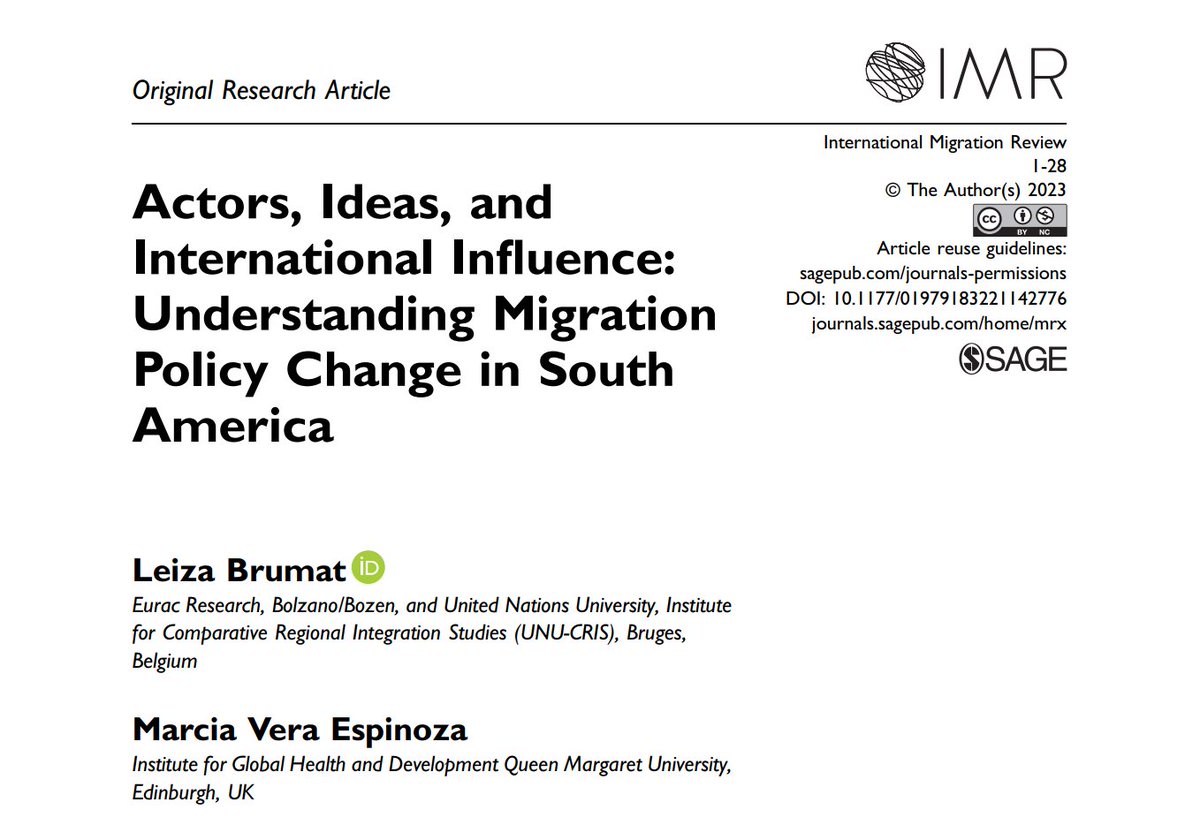
Latin America presents the most liberal migration policies in the world. However, between 2015 and 2019, there was a shift towards more restrictive policies. What explains this? In their recent publication, @LeizaBrumat & @MarciaVeraE offer an answer to this question🧵👇
Meet @AsukaIchikawa, a PhD Candidate at @bclynchschool researching experiences of international students & their families.
Asuka’s research explores international student #migration, intercultural mental health, and critical #feminist studies in international higher education.
Learn about her journey to becoming a researcher in this insightful interview with @JLMittelmeier
https://t.co/3TtUJZmB20
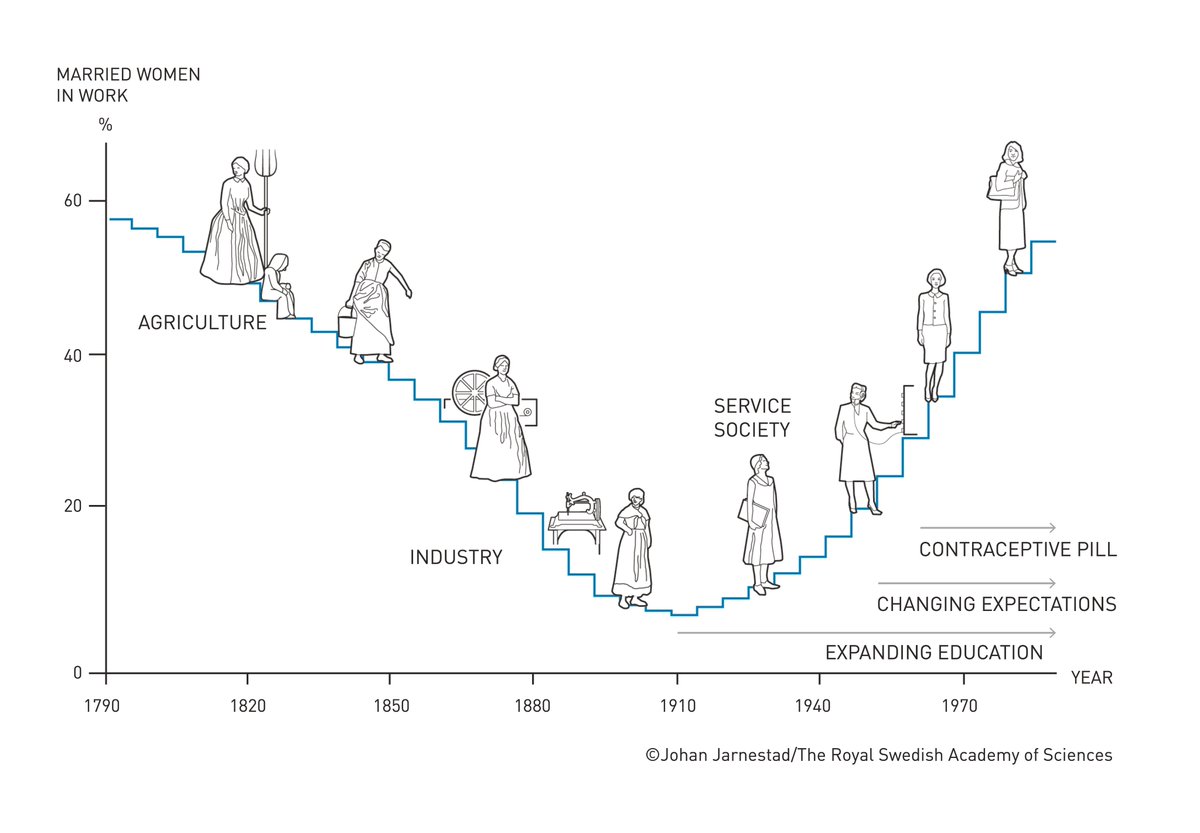
This year’s economic sciences laureate Claudia Goldin showed that female participation in the labour market did not have an upward trend over a 200 year period, but instead forms a U-shaped curve.
The participation of married women decreased with the transition from an agrarian to an industrial society in the early nineteenth century, but then started to increase with the growth of the service sector in the early twentieth century. Goldin explained this pattern as the result of structural change and evolving social norms regarding women’s responsibilities for home and family.
#NobelPrize
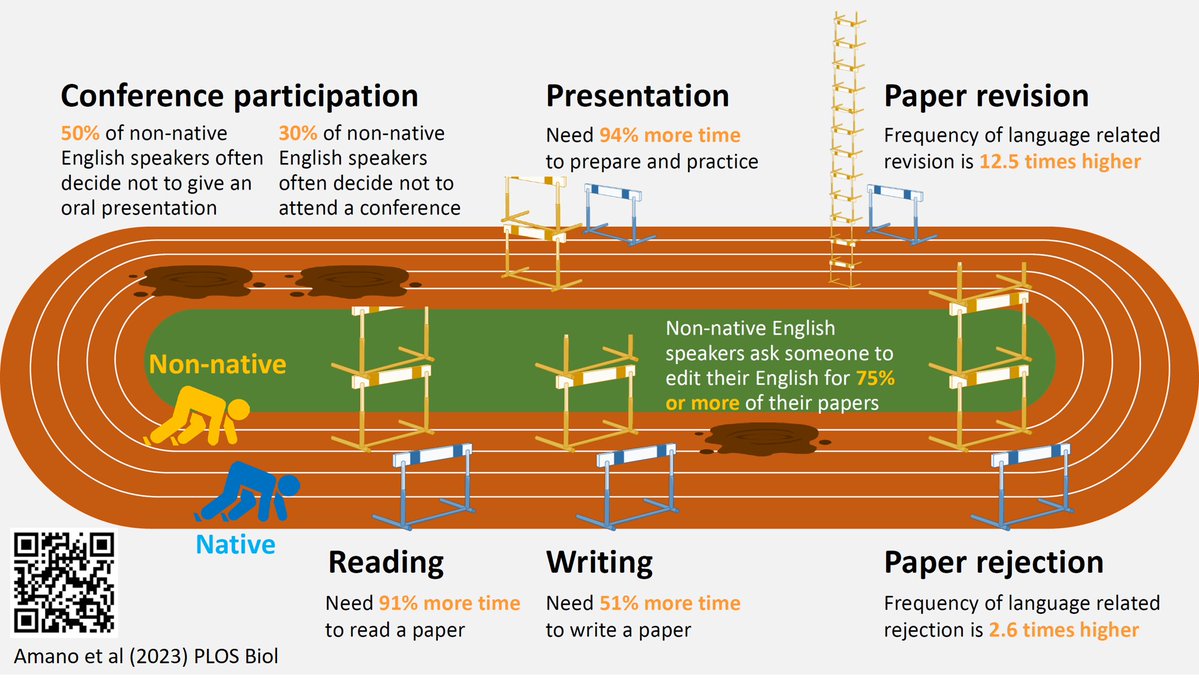
How hard is it to do science in a language that’s not your first language? We quantified the severity of #languagebarriers for non-native English speakers when reading/publishing papers and attending/presenting at international conferences.
https://t.co/Z6za22rMgg
1/9
@raulpacheco Raul, seeing this case and its persistence, how could we do to reverse this kind of practices? Reflecting on this comment, it seems to me that just when we are in undergraduate, even postgraduate, the discourse is to cite because it is a requirement rather than nurture research.